


Building Blocks
This section contains fundamental products for the synthesis of organic and biological compounds. Building blocks are the essential starting materials used to construct complex molecules through various chemical reactions. They play a critical role in drug discovery, material science, and chemical research. At CymitQuimica, we offer a diverse range of high-quality building blocks to support your innovative research and industrial projects, ensuring you have the essential components for successful synthesis.
Subcategories of "Building Blocks"
- Boronic Acids & Boronic Acid Derivatives(5,756 products)
- Chiral Building Blocks(1,242 products)
- Hydrocarbon Building Blocks(6,095 products)
- Organic Building Blocks(61,038 products)
Found 196817 products of "Building Blocks"
Sort by
Purity (%)
0
100
|
0
|
50
|
90
|
95
|
100
4-Hydroxybenzamide
CAS:<p>4-Hydroxybenzamide is a fatty acid with the hydroxyl group at the 4 position. It has been shown to inhibit the activity of human protein by interfering with hydrogen bonding and amide formation. The chemical structures of 4-hydroxybenzamide have been studied by electrochemical impedance spectroscopy (EIS) and found to be a competitive inhibitor of 1-hydroxy-2-naphthoic acid, an adenosine receptor antagonist, and p-hydroxybenzoic acid. This compound has also been shown to be acutely toxic in rats at high doses.</p>Formula:C7H7NO2Purity:90%Color and Shape:PowderMolecular weight:137.14 g/molEthyl 6-Bromoindole-2-carboxylate
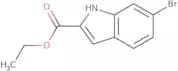
CAS:<p>Please enquire for more information about Ethyl 6-Bromoindole-2-carboxylate including the price, delivery time and more detailed product information at the technical inquiry form on this page</p>Formula:C11H10BrNO2Purity:Min. 95%Molecular weight:268.11 g/mol(3-Hydroxy-4-methoxyphenyl)acetone
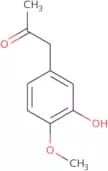
CAS:<p>(3-Hydroxy-4-methoxyphenyl)acetone is a versatile building block that can be used as a reagent or in the synthesis of complex compounds. It is a useful intermediate in the synthesis of pharmaceuticals, agrochemicals, and other specialty chemicals. This compound also has the potential to serve as a scaffold for drug discovery.</p>Formula:C10H12O3Purity:(%) Min. 85%Color and Shape:PowderMolecular weight:180.2 g/mol5-Methyl-1H-indole-2-carbaldehyde
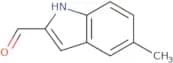
CAS:<p>Versatile small molecule scaffold</p>Formula:C10H9NOPurity:Min. 95%Molecular weight:159.18 g/mol5-(Propan-2-yl)furan-2-carboxylic acid
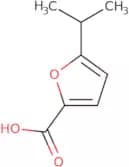
CAS:<p>5-(Propan-2-yl)furan-2-carboxylic acid is a reagent that can be used in the synthesis of complex compounds. It is a speciality chemical that has been found to be useful as a building block and intermediate. 5-(Propan-2-yl)furan-2-carboxylic acid can be used in the synthesis of many different types of compounds, including pharmaceuticals, agrochemicals, and fine chemicals. The compound is also used as a research chemical and a versatile building block for more complex molecules.</p>Formula:C8H10O3Purity:Min. 95%Molecular weight:154.16 g/mol3,5-Dimethoxyphenylacetic acid methyl ester
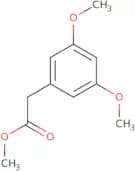
CAS:<p>3,5-Dimethoxyphenylacetic acid methyl ester is a synthetic compound that inhibits the growth of human pathogens by inhibiting protein synthesis. It has been shown to inhibit the biosynthesis of DNA and RNA in human cancer cells. 3,5-Dimethoxyphenylacetic acid methyl ester also binds to aluminium ions and prevents their absorption into the body. This agent is not active against bacteria or fungi because they do not have a cell membrane.</p>Formula:C11H14O4Purity:Min. 95%Color and Shape:Colorless Clear LiquidMolecular weight:210.23 g/mol2-[4-(Methylsulfanyl)phenyl]-2-oxoacetaldehyde
CAS:<p>Versatile small molecule scaffold</p>Formula:C9H8O2SPurity:90%Color and Shape:PowderMolecular weight:180 g/mol2-Amino-1-methoxypropane
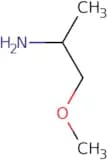
CAS:<p>2-Amino-1-methoxypropane (AMP) is a bifunctional amine that has been used as a diluent for lipase. It has been shown to have deprotective properties against metal surfaces and to be able to react with the nucleophilic group of an amine, which is useful in organic synthesis. The constant temperature of AMP, which is useful in organic synthesis, was obtained by recycling it through a constant temperature bath. This process also prevents the formation of unwanted products during the reaction.</p>Formula:C4H11NOPurity:Min. 95 Area-%Color and Shape:Clear LiquidMolecular weight:89.14 g/molEthyl 5-methylindole-2-carboxylate
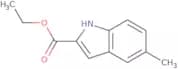
CAS:<p>Ethyl 5-methylindole-2-carboxylate is an antioxidant that is used as a reagent in the synthesis of other compounds. It has been shown to inhibit cancer cell growth in vitro via its ability to inhibit the metabolic activity of human hepatoma cells. Ethyl 5-methylindole-2-carboxylate has also been shown to have cytotoxic activity against human hepatoma cells in vitro, and may be a potential anticancer drug candidate.</p>Formula:C12H13NO2Purity:Min. 95%Color and Shape:PowderMolecular weight:203.24 g/mol5-Hydroxy-L-tryptophan
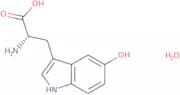
CAS:<p>5-hydroxy-L-tryptophan (5HTP) is a naturally occurring amino acid that is an intermediate in the synthesis of the neurotransmitter serotonin. 5HTP appears to be able to increase levels of serotonin in the brain and may be used to treat mood disorders, including depression and anxiety. In clinical trials, 5HTP was found to be as effective as some antidepressant drugs for treating depression. Studies have shown that 5HTP increases locomotor activity and dopamine concentrations. It also increases physiological functions such as temperature regulation, heart rate, blood pressure, and respiration rate. The mechanism by which 5HTP achieves these effects is not yet fully understood but may involve its ability to bind to specific receptors on cells in different regions of the brain.<br>5HTP has been shown to inhibit polymerase chain reactions (PCR) in vitro by binding to DNA gyrase and topoisomerase IV enzyme activities. It also inhibits fatty acid oxidation in vitro by binding</p>Formula:C11H12N2O3Purity:Min. 95%Color and Shape:PowderMolecular weight:220.22 g/molEthyl 3,5-dichloro-4-methoxybenzoate
CAS:<p>Ethyl 3,5-dichloro-4-methoxybenzoate is an organic compound that has a variety of uses. It is an intermediate in the synthesis of various other compounds and as a reagent, it reacts with amines to form ureas. Ethyl 3,5-dichloro-4-methoxybenzoate can also be used as a complex building block for synthesizing other compounds. This chemical can be used as a speciality chemical or research chemical. As a versatile building block, ethyl 3,5-dichloro-4-methoxybenzoate can be used to make reaction components for synthesizing polymers or pharmaceuticals.</p>Formula:C10H10Cl2O3Purity:Min. 95%Color and Shape:PowderMolecular weight:249.09 g/mol3,5-Dimethoxyphenylacetic acid
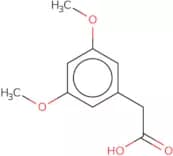
CAS:<p>3,5-Dimethoxyphenylacetic acid is a reagent that can be used in the synthesis of many organic compounds. It is also a high quality chemical with a CAS number of 4670-10-4. 3,5-Dimethoxyphenylacetic acid is useful as a research chemical and as an intermediate for the synthesis of more complex compounds. This compound has been shown to be a versatile building block and useful scaffold in the synthesis of highly complex chemicals.</p>Formula:C10H12O4Purity:Min. 95%Color and Shape:White PowderMolecular weight:196.2 g/molIndole-2-carboxylic acid tert-butyl ester
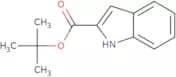
CAS:<p>Indole-2-carboxylic acid tert-butyl ester is a synthetic compound that exhibits potent antiapoptotic activity. It has been shown to inhibit the bcl-2 family of proteins, which are involved in the regulation of apoptosis. Indole-2-carboxylic acid tert-butyl ester has also been shown to inhibit the growth of cancer cells in cell culture and induce apoptosis in these cells. This compound also inhibits the production of furan, which is a functional group found on some carcinogenic chemicals. Indole-2-carboxylic acid tert-butyl ester is an inhibitor of Bax protein, a proapoptotic protein that plays a role in regulating cell death.</p>Formula:C13H15NO2Purity:Min. 95%Color and Shape:PowderMolecular weight:217.26 g/mol4-Hydroxyacetophenone oxime
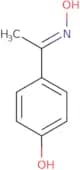
CAS:<p>4-Hydroxyacetophenone oxime is a reactive amide that can be synthesized by the Suzuki coupling of 4-hydroxyacetophenone and an allyl bromide. This product reacts with aluminium, chloride, and hydrochloric acid to produce a nucleophilic attack. The reaction products are alkanoic acids, which are recycled for use in the next process in this synthetic process. Trifluoroacetic acid is used as a catalyst, protonating the 4-hydoxyacetophenone oxime and producing trifluoroacetic anhydride.</p>Formula:C8H9NO2Purity:Min. 95%Color and Shape:PowderMolecular weight:151.16 g/mol6-Fluoroindole
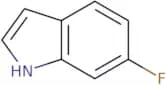
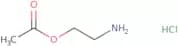
CAS:<p>6-Fluoroindole is an aromatic organic compound that has been shown to have anti-inflammatory and antioxidant properties in vitro and in vivo. 6-Fluoroindole is a 5-methoxyindole and can be synthesized from the amino acid tryptophan, which is a precursor of serotonin. 6-Fluoroindole has also been shown to be active against plant pathogens, human protein, and human pathogens. It can produce hemolytic activity at high concentrations and its chemical stability was tested by incubating it with various acids such as hydrochloric acid or acetic acid. 6-Fluoroindole showed no reaction with either of these acids. The vibrational spectra of 6-fluoroindole was measured using dipolar coupling constants and found to have a dipole moment of 0.01 D for the molecule.</p>Formula:C8H6FNPurity:Min. 98 Area-%Color and Shape:White Yellow PowderMolecular weight:135.14 g/mol2-Aminoethyl Acetate Hydrochloride
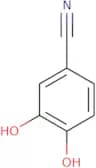
CAS:<p>Versatile small molecule scaffold</p>Formula:C4H9NO2·HClPurity:Min. 95%Color and Shape:PowderMolecular weight:139.58 g/mol3,4-Dihydroxybenzonitrile
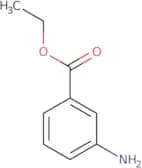
CAS:<p>3,4-Dihydroxybenzonitrile is a chemical compound that is found in soybean lipoxygenase. The molecule has been shown to be an excellent Michaelis-Menten substrate and hydrogen bonding partner. It also reacts with chlorine to form chlorinating agents such as 3,4-dichlorobenzonitrile and 3,4-dibromobenzonitrile. 3,4-Dihydroxybenzonitrile can act as a nucleophile and forms stable complexes when reacted with hydroxyl group compounds such as protocatechuic acid or reaction solution. This chemical is reactive and can be activated by redox cycling or light.<br>3,4-Dihydroxybenzonitrile has been used to treat protocatechuic acid levels in the blood of patients with chronic liver disease who are being treated for alcoholism.</p>Formula:C7H5NO2Purity:Min. 95%Color and Shape:PowderMolecular weight:135.12 g/molEthyl 3-aminobenzoate
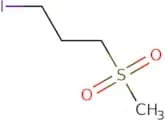
CAS:<p>Ethyl 3-aminobenzoate is a chemical that is used as an anesthetic. It is administered intravenously and has been shown to have effects on the cardiovascular system, such as lowering blood pressure, decreasing heart rate and increasing the time it takes for the heart to recover after a contraction. Ethyl 3-aminobenzoate also affects the central nervous system by causing anesthesia and changes in brain function. Its effects are reversible with administration of naloxone or flumazenil.</p>Formula:C9H11NO2Purity:Min. 95%Color and Shape:PowderMolecular weight:165.19 g/mol1-Iodo-3-methanesulfonylpropane
CAS:<p>Versatile small molecule scaffold</p>Formula:C4H9IO2SPurity:Min. 95%Color and Shape:PowderMolecular weight:248.08 g/molCis-2-Benzyltetrahydropyrrolo[3,4-C]Pyrrole-1,3(2H,3Ah)-Dione
CAS:<p>Cis-2-Benzyltetrahydropyrrolo[3,4-C]Pyrrole-1,3(2H,3Ah)-Dione is a compound that is used as a chemical intermediate in the research and development of new medicines. It has been shown to be an effective building block for the synthesis of complex compounds with interesting biological activity.</p>Formula:C13H14N2O2Purity:Min. 95%Color and Shape:PowderMolecular weight:230.26 g/mol


![2-[4-(Methylsulfanyl)phenyl]-2-oxoacetaldehyde](/_next/image/?url=https%3A%2Fstatic.cymitquimica.com%2Fproducts%2F3D%2Fthumb-webp%2FICA95088.webp&w=3840&q=75)

![Cis-2-Benzyltetrahydropyrrolo[3,4-C]Pyrrole-1,3(2H,3Ah)-Dione](/_next/image/?url=https%3A%2Fstatic.cymitquimica.com%2Fproducts%2F3D%2Fthumb-webp%2FPHA34840.webp&w=3840&q=75)