Building Blocks
This section contains fundamental products for the synthesis of organic and biological compounds. Building blocks are the essential starting materials used to construct complex molecules through various chemical reactions. They play a critical role in drug discovery, material science, and chemical research. At CymitQuimica, we offer a diverse range of high-quality building blocks to support your innovative research and industrial projects, ensuring you have the essential components for successful synthesis.
Subcategories of "Building Blocks"
- Boronic Acids & Boronic Acid Derivatives(5,756 products)
- Chiral Building Blocks(1,242 products)
- Hydrocarbon Building Blocks(6,095 products)
- Organic Building Blocks(61,038 products)
Found 196817 products of "Building Blocks"
Sort by
Purity (%)
0
100
|
0
|
50
|
90
|
95
|
100
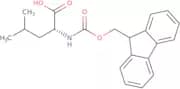
Fmoc-D-Leu-OH
CAS:<p>Fmoc-D-Leu-OH is a disulfide bond containing molecule with an intracellular Ca2+ chelating activity. It has been shown to have cytoprotective effects against oxidative stress and cell death, and has also been found to have antiinflammatory properties. Fmoc-D-Leu-OH can inhibit the activities of various enzymes such as cyclooxygenase, lipoxygenase, phospholipases, and diamine oxidase. This molecule also exhibits cytotoxic activity against bladder cancer cells in vitro. The pharmacokinetic properties of Fmoc-D-Leu-OH are similar to other molecules that are used as antibiotics.<br>Fmoc-D-Leu-OH is a cyclic peptide with antimicrobial peptide (AMP) activity that inhibits bacterial growth by disrupting their cell membranes or inhibiting protein synthesis. It binds to bacterial 16S ribosomal RNA and inhibits protein synthesis, leading</p>Formula:C21H23NO4Purity:Min. 98 Area-%Color and Shape:White PowderMolecular weight:353.41 g/molFmoc-D-Val-OH
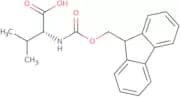
CAS:<p>Fmoc-D-Val-OH is a synthetic acetal that is used as a substrate for protein modification. It has been shown to bind to the active site of enzymes such as butyrylcholinesterase and esterases, which are involved in the metabolism of fatty acids. Fmoc-D-Val-OH also binds to mammalian cells and can be conjugated with other molecules, such as nanoribbons, to improve their solubility in water.</p>Formula:C20H21NO4Purity:Min. 98 Area-%Color and Shape:PowderMolecular weight:339.39 g/molFmoc-L-Asn-OH
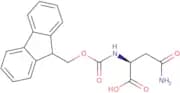
CAS:<p>Fmoc-L-Asn-OH is an organic compound that belongs to the group of amides. It reacts with a reactive site in the molecule and is able to form an amide bond. Fmoc-L-Asn-OH has been shown to be effective in the treatment of Alzheimer's disease by inhibiting the formation of beta-amyloid plaques. This compound has also been shown to have a role in cancer prevention, as it can inhibit tumor growth and reduce tumor size. Fmoc-L-Asn-OH can be used as a potential antiinflammatory agent because its mechanism studies have revealed that it inhibits prostaglandin synthesis.</p>Formula:C19H18N2O5Purity:Min. 95%Color and Shape:PowderMolecular weight:354.36 g/mol5-Fluoro-dUMP sodium
CAS:<p>Please enquire for more information about 5-Fluoro-dUMP sodium including the price, delivery time and more detailed product information at the technical inquiry form on this page</p>Formula:C9H12FN2O8P•NaxPurity:Min. 95%Fmoc-Lys(5-TAMRA)-OH
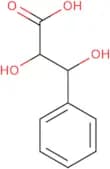
CAS:<p>Please enquire for more information about Fmoc-Lys(5-TAMRA)-OH including the price, delivery time and more detailed product information at the technical inquiry form on this page</p>Formula:C46H44N4O8Purity:Min. 95%Molecular weight:780.9 g/mol2,3-Dihydroxy-3-phenylpropanoic acid
CAS:<p>2,3-Dihydroxy-3-phenylpropanoic acid is a monocarboxylic acid and a benzenes. It has been shown to have antimicrobial properties against bacteria such as Staphylococcus aureus, Proteus vulgaris, and Klebsiella pneumoniae. The monocarboxylic acid inhibits bacterial growth by binding to the beta subunit of the enzyme DNA gyrase, which is necessary for DNA replication. 2,3-Dihydroxy-3-phenylpropanoic acid also binds to the beta subunit of the enzyme RNA polymerase and prevents mRNA synthesis, thus inhibiting protein synthesis in bacteria. !-- --> !-- --> !-- --> !-- --> !-- --> !-- --> !-- --></p>Formula:C9H10O4Purity:Min. 95%Color and Shape:PowderMolecular weight:182.17 g/molFmoc-D-7-Aza-Trp-OH
CAS:<p>Please enquire for more information about Fmoc-D-7-Aza-Trp-OH including the price, delivery time and more detailed product information at the technical inquiry form on this page</p>Formula:C25H21N3O4Purity:Min. 95%Molecular weight:427.45 g/molFurosine hydrochloride
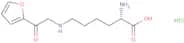
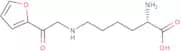
CAS:<p>Furosine hydrochloride is a white crystalline chemical with a molecular formula of C6H7N3O4S. It is soluble in water and has a melting point of about 140 degrees Celsius. Furosine hydrochloride is a useful building block for the synthesis of polymers, pharmaceuticals, organic semiconductors and other organic compounds. Furosine hydrochloride is used as an intermediate to produce fine chemicals such as polyurethanes, polyamides and amino acids. It can also be used as a reaction component in the synthesis of complex compounds such as 2-amino-5-nitrothiophene or 2,2'-dithiobis(benzothiazole). Furosine hydrochloride can be used as a scaffold for the production of various drugs such as antihypertensives or antidepressants.</p>Formula:C12H18N2O4·xHClPurity:Min. 98 Area-%Color and Shape:PowderMolecular weight:254.28 g/molFinerenone
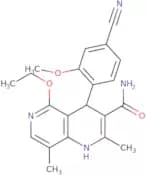
CAS:<p>Please enquire for more information about Finerenone including the price, delivery time and more detailed product information at the technical inquiry form on this page</p>Formula:C21H22N4O3Purity:Min. 95%Color and Shape:PowderMolecular weight:378.4 g/molFmoc-Thr(tBu)-Ser-OH
<p>Fmoc-Thr(tBu)-Ser-OH is a building block that is often used in organic synthesis as a reagent or scaffold. It can be used in the synthesis of complex compounds, such as peptides and proteins. Fmoc-Thr(tBu)-Ser-OH has been shown to be useful in the preparation of high quality reagents and research chemicals. This chemical can also be used as an intermediate for the synthesis of other compounds, such as pharmaceuticals and pesticides. Fmoc-Thr(tBu)-Ser-OH is soluble in organic solvents, which makes it versatile for use in a wide variety of reactions. Fmoc-Thr(tBu)-Ser-OH has a CAS number that can be found by searching on the Chemical Abstract Services website (CAS).</p>Formula:C26H32N2O7Purity:Min. 95%Color and Shape:PowderMolecular weight:484.54 g/mol4-Methoxybenzenediazonium tetrafluoroborate
CAS:<p>4-Methoxybenzenediazonium tetrafluoroborate is a reactive chemical that is used as a component of a number of reagents, including those used in organic chemistry. This compound has been used as an intermediate for the synthesis of other chemicals, such as 4-methoxybenzenediazonium chloride and 4-methoxybenzenediazonium bromide. 4-Methoxybenzenediazonium tetrafluoroborate is also an excellent building block for complex compounds and fine chemicals. The CAS No. for this chemical is 459-64-3.</p>Formula:C6H16N2Molecular weight:116.2 g/mol2,5-Furandicarboxylic acid
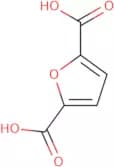
CAS:<p>Interest in renewable based polymers has led to 2,5-furandicarboxylic acid being proposed as a green, sustainable alternative to the widely used petroleum-based terephthalic acid in the synthesis of polyesters. 2,5-Furandicarboxylic acid is produced from oxidation of 5-hydroxymethylfurfural (HMF) which is obtained from the dehydration of bio-based sugars such as fructose.</p>Formula:C6H4O5Purity:Min. 98 Area-%Color and Shape:White Clear LiquidMolecular weight:156.09 g/molFurosine dihydrochloride
CAS:<p>Reference material for food analysis</p>Formula:C12H18N2O4•2HClPurity:Min. 98 Area-%Color and Shape:PowderMolecular weight:327.20 g/mol5-Fluoroanthranilic acid
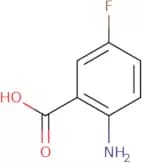
CAS:<p>5-Fluoroanthranilic acid is a synthetic compound that belongs to the class of anthranilic acid derivatives. It inhibits the growth of bacteria by reacting with the hydroxyl group on the bacterial cell wall and binding to its target, which is a cellular component found in Gram-positive bacteria. The molecular modeling and gene analysis have shown that this compound has an optimal reaction at pH 8.5, which is not in accordance with the natural environment of bacteria. 5-Fluoroanthranilic acid has been shown to have anticancer activity against wild-type cells but not against resistant mutants.</p>Formula:C7H6FNO2Purity:Min. 95%Color and Shape:PowderMolecular weight:155.13 g/moltrans-Ferulic acid
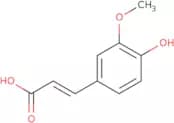
CAS:<p>Hydroxycinnamic acid; inhibitor of 5-LO and 12-LO enzymes</p>Formula:C10H10O4Purity:Min. 99.0 Area-%Color and Shape:White PowderMolecular weight:194.18 g/molFmoc-L-valine N-hydroxysuccinimide ester
CAS:<p>Fmoc-L-valine N-hydroxysuccinimide ester is a pegylated, cytotoxic drug that is used in the treatment of cancer. It is delivered to cells by an organic solvent, which causes uptake into the cell and intracellular delivery. Fmoc-L-valine N-hydroxysuccinimide ester forms particles that are excreted from the body through the kidneys. This drug has been shown to be effective against a number of different types of cancer cells, including breast cancer, lung cancer, and colon cancer cells. Fmoc-L-valine N-hydroxysuccinimide ester has been shown to be cytotoxic in vivo and in vitro against tumor tissue and MFC-7 cells with no effect on normal tissue or healthy cells.<br>Fmoc-L-valine N-hydroxysuccinimide ester can also be used as a</p>Formula:C24H24N2O6Purity:Min. 98 Area-%Color and Shape:White PowderMolecular weight:436.46 g/mol5-Fluoroindole-2-carboxylic acid
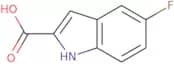
CAS:<p>5-Fluoroindole-2-carboxylic acid is a new substance that has been found to be an inhibitor of the influenza virus. It prevents the virus from replicating by inhibiting the synthesis of viral proteins and nucleic acids. 5-Fluoroindole-2-carboxylic acid can be prepared by dispersive solid phase extraction of a mixture of fluoroindole, fumaric acid, and potassium hydroxide in water. The compound has also been shown to potentiate the effects of carbamazepine on caspases and enhance mass spectrometric analysis for gaseous hydrochloric acid. 5-Fluoroindole-2-carboxylic acid produces antinociceptive effects in animals.</p>Formula:C9H6FNO2Color and Shape:PowderMolecular weight:179.15 g/mol(R)-3-Aminoquinuclidine dihydrochloride
CAS:<p>3-Aminoquinuclidine dihydrochloride is a high quality, reagent, complex compound that can be used as a useful intermediate to produce other fine chemicals. The CAS number for this compound is 123536-14-1. 3-Aminoquinuclidine dihydrochloride is a fine chemical that has many uses in the production of research chemicals and speciality chemicals. This compound can be used as a versatile building block in synthesis reactions and as a reaction component.</p>Formula:C7H16Cl2N2Purity:Min. 97 Area-%Molecular weight:199.12 g/molRef: 3D-Q-100108
25gTo inquire50gTo inquire100gTo inquire250gTo inquire500gTo inquire-Unit-ggTo inquire4-Chloro-2-methyl-5-(propan-2-yl)phenol
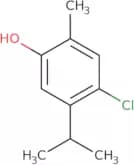
CAS:<p>4-Chloro-2-methyl-5-(propan-2-yl)phenol (4CMPP) is a synthetic compound that belongs to the group of fatty alcohols. It is used in clinical diagnostics for the detection of cancer cells. 4CMPP was detected in the human plasma and erythrocytes using solid phase microextraction (SPME). The homologues of 4CMPP were also identified. The chemical structure of 4CMPP consists of a chain with two methyl groups and a phenolic group at opposite ends. This compound has been shown to be cytotoxic, as well as an inhibitor of translation and protein synthesis.</p>Formula:C10H13ClOPurity:Min. 95%Color and Shape:PowderMolecular weight:184.66 g/mol4-Fluoro-3-nitrobenzaldehyde
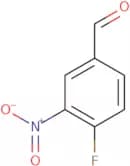
CAS:<p>4-Fluoro-3-nitrobenzaldehyde is a diphenyl ether that has been used as a starting material for the synthesis of dihydroisoquinolines and related compounds. The compound also inhibits IL-10 production in an experiment with human cells, which might be due to its ability to act as a pro-inflammatory cytokine. 4-Fluoro-3-nitrobenzaldehyde can be used as a control experiment for 4-fluoroaniline, which was found to inhibit IL-10 production in an experiment with human cells.<br>4-Fluoro-3-nitrobenzaldehyde is not active against P. aeruginosa, but does have antinociceptive effects and can be considered to have nucleophilic properties.</p>Formula:C7H4FNO3Purity:Min. 95%Color and Shape:PowderMolecular weight:169.11 g/mol