Building Blocks
This section contains fundamental products for the synthesis of organic and biological compounds. Building blocks are the essential starting materials used to construct complex molecules through various chemical reactions. They play a critical role in drug discovery, material science, and chemical research. At CymitQuimica, we offer a diverse range of high-quality building blocks to support your innovative research and industrial projects, ensuring you have the essential components for successful synthesis.
Subcategories of "Building Blocks"
- Boronic Acids & Boronic Acid Derivatives(5,756 products)
- Chiral Building Blocks(1,242 products)
- Hydrocarbon Building Blocks(6,095 products)
- Organic Building Blocks(61,038 products)
Found 196817 products of "Building Blocks"
Sort by
Purity (%)
0
100
|
0
|
50
|
90
|
95
|
100
9-Hydroxyxanthene
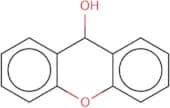
CAS:<p>9-Hydroxyxanthene is a natural drug that has been used in traditional Chinese medicine for treating a variety of diseases. It is extracted from Rhizoma Gastrodiae and Angelicae Dahuricae. 9-Hydroxyxanthene has shown to be effective against various metabolic disorders, including insulin resistance, hyperlipidemia, and diabetes. The mechanism of action of 9-hydroxyxanthene is not known but it is thought to be due to its ability to activate the immune system by transferring reactions and promoting the production of antibodies. 9-hydroxyxanthene also shows anti-inflammatory effects by inhibiting the production of prostaglandins and leukotrienes. 9-hydroxyxanthene can also inhibit angiotensin II, which may reduce high blood pressure and congestive heart failure.</p>Formula:C13H10O2Purity:Min. 98 Area-%Color and Shape:White PowderMolecular weight:198.22 g/mol2-Hydroxy-3-methoxybenzaldehyde
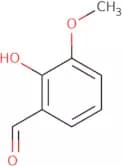
CAS:<p>2-Hydroxy-3-methoxybenzaldehyde is a model compound that is used to study the reaction mechanism of hydrogen bonding. It has been shown to have antioxidative properties and amoebicidal activity. The biological properties of 2-hydroxy-3-methoxybenzaldehyde are still being studied. There are also no reports on its toxicity or carcinogenicity in humans. This compound is a member of the group P2, which includes compounds with two aromatic rings connected by one carbon atom. The molecular geometry around this carbon atom is pyramidal and the molecule can exist in either an axial or equatorial orientation. Synchronous fluorescence experiments have shown that 2-hydroxymethoxybenzaldehyde reacts with Toll-like receptor 4 (TLR4).</p>Formula:C8H8O3Purity:Min. 95%Color and Shape:Yellow PowderMolecular weight:152.15 g/mol2-Hydroxy-4-methoxybenzaldehyde
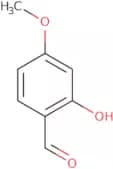
CAS:<p>2-Hydroxy-4-methoxybenzaldehyde is an antifungal agent that has been shown to have a broad spectrum of activity against filamentous fungi. It is able to inhibit the growth of fungi by inhibiting the enzyme shikimate dehydrogenase, which is involved in the synthesis of aromatic amino acids and other essential metabolites. 2-Hydroxy-4-methoxybenzaldehyde also inhibits xylose reductase and alpha-galactosidase, enzymes that are involved in cell wall biosynthesis. This compound is effective against Candida albicans, Aspergillus niger, and Trichophyton mentagrophytes. 2-Hydroxy-4-methoxybenzaldehyde has also been shown to have bacteriostatic effects on Escherichia coli.</p>Formula:C8H8O3Purity:Min. 95%Color and Shape:Off-White PowderMolecular weight:152.15 g/mol5-Hydroxymethylfurfural
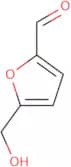
CAS:<p>5-Hydroxymethylfurfural (5-HMF) is a model system used to study the effects of 5-hmf on therapy groups. It can be used as a catalyst in the production of p-hydroxybenzoic acid, and it has been shown to have an antioxidant effect in bowel disease and oxidative injury. 5-HMF is also able to produce hydroxymethylfurfural (HMF) from glucose injection. HMF can be found in foods such as fructose, and is toxic to humans when consumed at high levels.</p>Formula:C6H6O3Purity:Min. 97%Color and Shape:Slightly Brown PowderMolecular weight:126.11 g/mol4-Hydroxy-3-methoxyphenylacetone
CAS:<p>4-Hydroxy-3-methoxyphenylacetone is a natural compound that is found in lignin and has been studied as a potential treatment for congestive heart failure. The compound has been shown to inhibit the activity of enzymes involved in the transfer reactions of bacterial cells. It also reduces the production of acetate, which is used by bacteria for growth. 4-Hydroxy-3-methoxyphenylacetone has been found to be nontoxic to mice at doses up to 10 g/kg. This study also showed that 4-hydroxy-3-methoxyphenylacetone had no effect on enzyme activities in rat liver mitochondria or rat brain synaptosomes.</p>Formula:C10H12O3Purity:Min. 98 Area-%Color and Shape:Clear LiquidMolecular weight:180.2 g/mol4-Hydroxy-2-thiophenecarboxylic acid
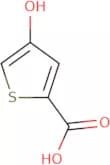
CAS:<p>4-Hydroxy-2-thiophenecarboxylic acid is a chemical intermediate that can be used in the production of various other chemicals. The compound is a versatile building block for complex compounds and fine chemicals. CAS No. 40748-90-1.</p>Formula:C5H4O3SPurity:Min. 95%Color and Shape:PowderMolecular weight:144.15 g/mol2-Hydroxy-6-methoxybenzaldehyde
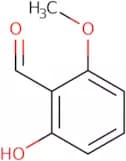
CAS:<p>2-Hydroxy-6-methoxybenzaldehyde is a molecule that can form hydrogen bonds with other molecules. FT-IR spectroscopy has shown that this compound has a copper complex and an acidic proton, which may be due to intramolecular hydrogen bonding interactions. The compound also has been shown to have potent inhibitory activity against cellular growth and cancer cells in vitro. 2-Hydroxy-6-methoxybenzaldehyde is a metal chelator and can therefore bind to metals such as iron and copper. It is genotoxic, which means it damages DNA by causing DNA strand breaks or crosslinks, leading to cell death. This chemical may also cause genetic mutations through the formation of tautomers that make DNA replication difficult. Gel chromatography shows that 2HMB has a low molecular weight (MW) and high solubility.</p>Formula:C8H8O3Purity:Min. 95%Color and Shape:PowderMolecular weight:152.15 g/mol5-Hydroxy-1-cyclooctene
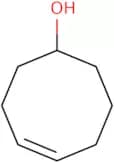
CAS:<p>5-Hydroxy-1-cyclooctene is a monomer of polymers that can be used to introduce new properties to polymers. It is also an effective surface modifier, which can be used to modify the surface properties of polymeric materials. 5-Hydroxy-1-cyclooctene has been shown to bind to calcium ions and may have potential for use in active targeting and as a neutral pH probe. The polymer concentration influences the x-ray structure, which has been studied using x-ray diffraction methods. The absorption spectrum of 5-hydroxy-1-cyclooctene has been examined in vitro and it has been found that this molecule absorbs light in the visible region at wavelengths between 400 nm and 700 nm. It also emits luminescence with a maximum peak at 690 nm. The second order rate constant for the reaction with ruthenium complex is 2.2×10^8 M^(-1)s^(-1). This</p>Formula:C8H14OPurity:Min. 95%Color and Shape:Clear LiquidMolecular weight:126.2 g/mol5-Hydroxy-L-tryptophan
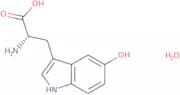
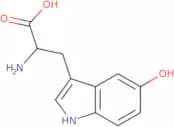
CAS:<p>5-hydroxy-L-tryptophan (5HTP) is a naturally occurring amino acid that is an intermediate in the synthesis of the neurotransmitter serotonin. 5HTP appears to be able to increase levels of serotonin in the brain and may be used to treat mood disorders, including depression and anxiety. In clinical trials, 5HTP was found to be as effective as some antidepressant drugs for treating depression. Studies have shown that 5HTP increases locomotor activity and dopamine concentrations. It also increases physiological functions such as temperature regulation, heart rate, blood pressure, and respiration rate. The mechanism by which 5HTP achieves these effects is not yet fully understood but may involve its ability to bind to specific receptors on cells in different regions of the brain.<br>5HTP has been shown to inhibit polymerase chain reactions (PCR) in vitro by binding to DNA gyrase and topoisomerase IV enzyme activities. It also inhibits fatty acid oxidation in vitro by binding</p>Formula:C11H12N2O3Purity:Min. 95%Color and Shape:PowderMolecular weight:220.22 g/molDL-5-Hydroxytryptophan
CAS:<p>DL-5-Hydroxytryptophan (5-HTP) is a naturally occurring amino acid that is converted to serotonin in the brain. It is used to treat depression and anxiety, as well as other psychological disorders. 5-HTP has been shown to stimulate the production of serotonin, which may be due to its ability to activate 5-HT2 receptors. 5-HTP has also been shown to increase the activity of various enzymes, such as esterase and aminopeptidase, in human serum. 5-HTP has been shown to have no effects on carcinoid syndrome or 5-ht concentrations in blood plasma. However, it does have biochemical properties that are different from those of other amino acids and can be used as a fluorescent probe for biological research.</p>Formula:C11H12N2O3Purity:Min. 95%Color and Shape:White PowderMolecular weight:220.22 g/mol2-Hydroxy-5-methylbenzaldehyde
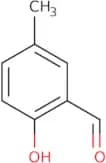
CAS:<p>2-Hydroxy-5-methylbenzaldehyde (2HMBA) is a biologically active molecule that has been shown to bind to human serum albumin. The binding constants for the two molecules are relatively low, with a Kd of approximately 2.6 x 10 M. The nitrogen atoms in the molecule form hydrogen bonds with the hydroxyl group on the ethylene diamine, which stabilizes it and prevents it from dissolving in water. This compound also has a cyclohexane ring and can be found in natural products such as erythronolide B, an antibiotic produced by Streptomyces erythreus. 2HMBA is stable when complexed with hydrochloric acid or potassium dichromate and can be used in structural analysis of other molecules.</p>Formula:C8H8O2Purity:Min. 95%Color and Shape:Off-White PowderMolecular weight:136.15 g/molHypoxanthine
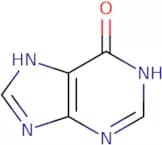
CAS:<p>Hypoxanthine is a nucleoside that is found in human cells. It is synthesized from guanine by the enzyme, xanthine oxidoreductase. Hypoxanthine is also produced from xanthine by adenosine deaminase and converted back to xanthine, which can then be reused for DNA synthesis. Hypoxanthine has been shown to inhibit the growth of photosynthetic bacteria, such as Rhodopseudomonas viridis and Rhodobacter sphaeroides. This inhibition may be due to an equilibrative nucleotide effect on the folate receptor. The x-ray diffraction data collected from the chrysanthemum flower (a source of hypoxanthine) showed that hypoxanthine has a calcium salt structure.</p>Formula:C5H4N4OPurity:Min. 95%Color and Shape:White PowderMolecular weight:136.11 g/mol4-Hydroxybenzaldehyde
CAS:<p>4-Hydroxybenzaldehyde is a phenolic compound that is produced in plants. 4-Hydoxybenzaldehyde is used as an extractant for sodium carbonate and hydroxyl group from acetate extract. The locomotor activity of animals was tested following administration of this substance, and it has been shown to have a high resistance against x-ray crystallography. The reaction mechanism for the formation of p-hydroxybenzoic acid from 4-hydroxybenzaldehyde has been proposed, which may be due to the oxidation of 4-hydroxybenzaldehyde by hydrogen peroxide. This reaction also induces apoptosis pathway in cells. Kinetic data for the reaction between 4-hydroxybenzaldehyde and hydrogen peroxide were obtained using UV spectroscopy.</p>Formula:C7H6O2Purity:Min. 95%Color and Shape:White PowderMolecular weight:122.12 g/molGuanine
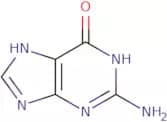
CAS:<p>Guanine is a purine base that is found in the DNA and RNA of all living cells. It plays an important role as a component of the nucleic acid molecule, where it is paired with cytosine. Guanine is involved in many chemical reactions and biological processes, including protein synthesis and cell division. The lack of guanine can lead to deficiency symptoms such as hemolytic anemia or erythrocyte cytoplasmic inclusion bodies. Guanine has been shown to have chemiluminescent properties, which can be used to detect its presence in samples containing DNA or RNA. This reaction occurs when guanine reacts with hydrogen peroxide (H2O2) to form guanidine (HN=C(NH2)NH2). The reaction produces excited states that emit light at a wavelength of 395 nm when they return to their ground state. Guanidine also has electrochemical impedance spectroscopy properties, which can be used for analytical purposes</p>Formula:C5H5N5OPurity:Min. 98 Area-%Color and Shape:PowderMolecular weight:151.13 g/molGlutamic acid
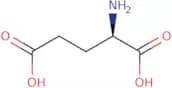
CAS:<p>Glutamic acid is a non-essential amino acid that is present in all cells. It is one of the most abundant amino acids and plays an important role in the biochemical properties and biological properties of living organisms. Glutamic acid has been found to be an important neurotransmitter and is involved in neuronal activity, which can lead to death. It also has been shown to be a potent inhibitor of DNA polymerase, which may explain the structural analysis of glutamic acid as a divalent cation coordination-activator molecule. Glutamate can be used as a model system for studying glutamate receptor function and its optimum concentration is determined using vitro assays. The dinucleotide phosphate (NADPH) oxidase pathway may be involved in the toxicity of glutamic acid as it produces reactive oxygen species.</p>Formula:C5H9NO4Purity:Min. 95%Color and Shape:White PowderMolecular weight:147.13 g/molMethyltetrazine-acid
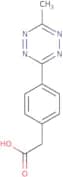
CAS:<p>Versatile small molecule scaffold</p>Formula:C11H10N4O2Purity:Min. 95%Color and Shape:PowderMolecular weight:230.22 g/mol5-Fluoroorotic acid potassium salt
CAS:<p>Please enquire for more information about 5-Fluoroorotic acid potassium salt including the price, delivery time and more detailed product information at the technical inquiry form on this page</p>Formula:C5H2FN2O4KPurity:(Free Base) Min. 98.0 Area-%Color and Shape:White PowderMolecular weight:212.18 g/molFmoc-Pro-Gly-Gly-OH
<p>Fmoc-Pro-Gly-Gly-OH is a synthetic peptide that is used in the manufacture of bivalirudin, an anticoagulant. It is a large molecule that can be dissolved in water or acetonitrile. The impurities may include ammonium and acetate ions. Fmoc-Pro-Gly-Gly-OH is insoluble in trifluoroacetic acid and trifluoroacetic acid/ammonium acetate mixture, but can be recrystallized from these solvents. The lyophilized product should be stored at 4°C to avoid hydrolysis. Polypeptides are not stable under acidic conditions, so care must be taken when handling this material.</p>Formula:C24H25N3O6Purity:Min. 95%Color and Shape:PowderMolecular weight:451.47 g/mol2-Fluoro-3-methylbenzoic acid
CAS:<p>2-Fluoro-3-methylbenzoic acid is a high quality, versatile building block that has been shown to be an effective reagent for the synthesis of complex compounds. It is also a useful intermediate in the synthesis of fine chemicals and speciality chemicals. This compound can be used as a reaction component for many chemical reactions, such as the formation of new bonds and the removal of protecting groups. As a versatile building block, 2-fluoro-3-methylbenzoic acid is an important starting material for synthesizing a number of natural products, pharmaceuticals, and other organic compounds.</p>Formula:C8H7FO2Purity:Min. 95%Color and Shape:White PowderMolecular weight:154.14 g/mol3-Fluoro-4-hydroxyphenylacetic acid
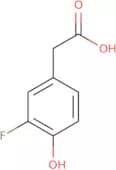
CAS:<p>3-Fluoro-4-hydroxyphenylacetic acid is a fluorinated aromatic compound that has been shown to have serotonergic, dopaminergic and noradrenergic actions. 3-Fluoro-4-hydroxyphenylacetic acid has been shown to interact with the serotonin receptor 5HT2A in cell culture and in vivo, as well as with the dopamine receptor DRD2. This compound also interacts with the eschscholtzia receptor. 3-Fluoro-4-hydroxyphenylacetic acid is biosynthesized from 5-hydroxyindoleacetic acid (5HIAA).</p>Formula:C8H7FO3Purity:Min. 95%Color and Shape:PowderMolecular weight:170.14 g/mol