Building Blocks
This section contains fundamental products for the synthesis of organic and biological compounds. Building blocks are the essential starting materials used to construct complex molecules through various chemical reactions. They play a critical role in drug discovery, material science, and chemical research. At CymitQuimica, we offer a diverse range of high-quality building blocks to support your innovative research and industrial projects, ensuring you have the essential components for successful synthesis.
Subcategories of "Building Blocks"
- Boronic Acids & Boronic Acid Derivatives(5,756 products)
- Chiral Building Blocks(1,242 products)
- Hydrocarbon Building Blocks(6,095 products)
- Organic Building Blocks(61,038 products)
Found 196817 products of "Building Blocks"
Sort by
Purity (%)
0
100
|
0
|
50
|
90
|
95
|
100
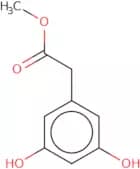
3,5-Dihydroxyphenylacetic acid methyl ester
CAS:<p>3,5-Dihydroxyphenylacetic acid methyl ester is a high quality, reagent, and complex compound with CAS No. 4724-10-1. It is used as an intermediate in the synthesis of other compounds or in research to produce new compounds. This chemical is also useful as a scaffold for building blocks or as a building block when it comes to synthesizing many different types of compounds. 3,5-Dihydroxyphenylacetic acid methyl ester has been used as a reactant in many reactions and is versatile when it comes to being able to be used in reactions involving many different types of chemicals.</p>Formula:C9H10O4Purity:Min. 95%Color and Shape:Brown Off-White PowderMolecular weight:182.17 g/molThymine
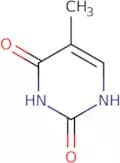
CAS:<p>Pyrimidine nucleobase; component of nucleic acids</p>Formula:C5H6N2O2Purity:Min. 99 Area-%Color and Shape:White PowderMolecular weight:126.11 g/mol4,6-Pyrimidinedicarboxylic acid
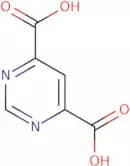
CAS:<p>4,6-pyrimidinedicarboxylic acid is a synthetic compound that is used as a pharmaceutical preparation. It has been shown to have minimal inhibitory concentrations against many bacterial species, including Enterobacteriaceae, Pseudomonas aeruginosa, and Staphylococcus aureus. 4,6-pyrimidinedicarboxylic acid has shown antibacterial activity in the presence of a halogeno or hydroxyl groups. This compound also has matrix metalloproteinase inhibiting activity and can be used to treat degenerative diseases such as cancer or Alzheimer's disease. 4,6-pyrimidinedicarboxylic acid has been studied for its light emitting properties and protein–protein interactions. The light emission properties are due to the intramolecular hydrogen transfer between two hydroxyl groups on the molecule.</p>Formula:C6H4N2O4Purity:Min. 95 Area-%Color and Shape:White Off-White PowderMolecular weight:168.11 g/mol2-Phenoxybenzoic acid
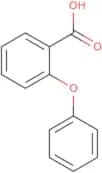
CAS:<p>2-Phenoxybenzoic acid is a hydrochloride salt that is used as a reagent in analytical chemistry. It reacts with the carboxylate group of amino acids, proteins, and peptides to form a stable, water-soluble complex. The reaction is typically monitored by measuring the change in optical density at 260 nm. 2-Phenoxybenzoic acid reacts with bcr-abl kinase and colloidal gold to form an insoluble precipitate that can be detected with electron microscopy. This compound also has biological properties such as inhibiting carbonic anhydrase activity and changing the pH of the solution. 2-Phenoxybenzoic acid was originally synthesized from diphenyl ether and phenol (C6H5OH).<br>2-Phenoxybenzoic acid can be converted into 2-(4-nitrophenoxy) benzoic acid by reacting it with sodium nitrite followed by hydrochloric acid</p>Formula:C13H10O3Purity:Min. 95%Color and Shape:PowderMolecular weight:214.22 g/mol1-Methyl-5-nitro-1H-imidazole-2-methanol 2-carbamate
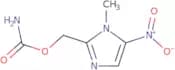
CAS:<p>1-Methyl-5-nitro-1H-imidazole-2-methanol 2-carbamate is an antimicrobial agent that has been shown to be active against a number of bacteria, including Gram negative and Gram positive bacteria. It was shown to have a matrix effect in vivo and its kinetic energy was found to be reactive. The 1NIMC has been shown to inhibit the growth of bacteria by interfering with DNA replication and RNA synthesis. This drug has also been shown to have an analytical method that is linear in calibrations curves, which makes it suitable for quantitative analysis. It also has chemical stability, as it decomposes slowly at room temperature.</p>Formula:C6H8N4O4Purity:Min. 98.5%Color and Shape:White PowderMolecular weight:200.15 g/mol(S)-1-(2-Amino-propan-1-yl)-4-methyl-piperazine
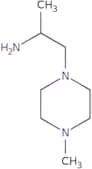
CAS:<p>(S)-1-(2-Amino-propan-1-yl)-4-methyl-piperazine is a reagent, reaction component and building block for speciality chemicals. It is a versatile intermediate that has been used in the synthesis of complex compounds. (S)-1-(2-Amino-propan-1-yl)-4-methyl-piperazine is an important building block for the synthesis of a variety of pharmaceuticals and other organic compounds. This compound can be used as an intermediate or reagent to produce high quality research chemicals.</p>Formula:C8H19N3Purity:Min. 95%Molecular weight:157.26 g/moltrans-Isoferulic acid
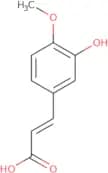
CAS:<p>Trans-iso-ferulic acid is a bioactive phenolic compound that has been shown to have antioxidant and anti-inflammatory properties. It is produced by the metabolism of ferulic acid in the body and can be found in plant cell walls. Trans-iso-ferulic acid has been shown to act as an antimicrobial agent against bacterial strains such as Escherichia coli, Bacillus cereus, Staphylococcus aureus, Klebsiella pneumoniae, Pseudomonas aeruginosa, and Candida albicans. It also has locomotor activity and has been shown to reduce the severity of cardiac disorders. Trans-iso-ferulic acid works by blocking the synthesis of fatty acids which are necessary for energy storage and making regulatory proteins that control metabolism. Trans-iso-ferulic acid also binds to anion radicals which may scavenge free radicals that are formed during oxidative stress. This process prevents lipid peroxidation from occurring which reduces inflammation caused</p>Formula:C10H10O4Purity:Min. 95%Molecular weight:194.18 g/mol3,5,6-Trichlorosalicylic acid
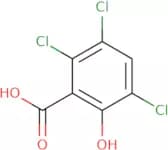
CAS:<p>3,5,6-Trichlorosalicylic acid binds to the active site of bacterial 5-nitrosalicylic acid reductase and inhibits its activity. It is an inhibitor of proton-translocating ATPases. 3,5,6-Trichlorosalicylic acid has been shown to be effective against a variety of bacteria at low concentrations. 3,5,6-Trichlorosalicylic acid has also been shown to inhibit some physiological activities such as the light emission and chemiluminescent reaction of luciferin in fireflies. This chemical reacts with chloride ions to produce light.</p>Formula:C7H3Cl3O3Purity:Min. 95%Color and Shape:PowderMolecular weight:241.46 g/mol6-Formyl-2-methyl-4H-thieno[3,2-b]pyrrole-5-carboxylic acid
CAS:<p>Versatile small molecule scaffold</p>Formula:C9H7NO3SPurity:Min. 95%Molecular weight:209.22 g/mol3,4,5-Trimethoxyphenylacetic acid
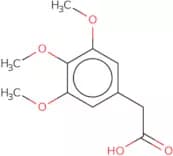
CAS:<p>3,4,5-Trimethoxyphenylacetic acid is a synthetic compound that is used as an anticancer drug. It has been shown to inhibit the growth of cancer cells in vitro and in vivo by binding to the DNA. 3,4,5-Trimethoxyphenylacetic acid has been shown to be stereoselective with respect to the anticancer activity of the two isomers. The hydroxyl group present on one side of the molecule may be responsible for this effect. 3,4,5-Trimethoxyphenylacetic acid also inhibits enzymes called oxidases that are involved in the production of prostaglandins from arachidonic acid (prostaglandins play a role in inflammation). This property may account for its anti-inflammatory effects.</p>Formula:C11H14O5Purity:Min. 95%Color and Shape:White PowderMolecular weight:226.23 g/molMethyl 5-formylfuran-2-carboxylate
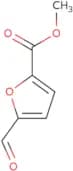
CAS:<p>Methyl 5-formylfuran-2-carboxylate (MFC) is a furan derivative that has been used for the synthesis of pharmaceuticals, agrochemicals, and other organic compounds. MFC is synthesized from methanol and formaldehyde in a low concentration to produce a mixture containing methyl 5-formylfuran-2-carboxylate. It can also be synthesized from methanol and formaldehyde in a high concentration to produce crystalline solid MFC. The use of MFC as a template for crystallization has been investigated with success. This compound can be used as a catalyst in the oxidative dehydrogenation of 5-hydroxymethylfurfural to produce 5-formylfuran. MFC is efficient and selective for this reaction, making it an attractive candidate for industrial production of furan derivatives.</p>Formula:C7H6O4Purity:Min. 95%Color and Shape:PowderMolecular weight:154.1 g/mol[2-Amino-1-(1-methyl-1H-pyrazol-4-yl)ethyl]dimethylamine
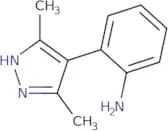
CAS:<p>Versatile small molecule scaffold</p>Formula:C8H16N4Purity:Min. 95%Color and Shape:PowderMolecular weight:168.24 g/mol2-(3,5-Dimethyl-1H-pyrazol-4-yl)aniline
CAS:<p>Versatile small molecule scaffold</p>Formula:C11H13N3Purity:Min. 95%Color and Shape:PowderMolecular weight:187.24 g/mol5,6-Dichlorovanillic acid
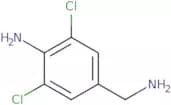
CAS:<p>5,6-Dichlorovanillic acid is a high quality, versatile molecule that can be used as a reagent in organic synthesis or as a building block for the synthesis of complex compounds. It has many useful properties, such as being a fine chemical and research chemicals. 5,6-Dichlorovanillic acid is also a speciality chemical with versatile uses in building blocks or reaction components.</p>Formula:C8H6Cl2O4Purity:Min. 95%Color and Shape:PowderMolecular weight:237.04 g/mol4-Amino-3,5-dichlorobenzylamine dihydrochloride
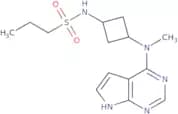
CAS:<p>4-Amino-3,5-dichlorobenzylamine dihydrochloride is a chemical intermediate that can be used as a reagent for the synthesis of other compounds. 4-Amino-3,5-dichlorobenzylamine dihydrochloride is considered to be a high quality chemical with versatile uses. It is listed in the Chemical Abstracts Service (CAS) registry under 164648-75-3, and can be obtained from various suppliers.</p>Formula:C7H8Cl2N2·2HClPurity:Min. 95%Color and Shape:PowderMolecular weight:263.98 g/molPF-04965842
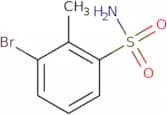
CAS:<p>PF-04965842 is an anti-inflammatory drug that belongs to the class of Jak1 inhibitors. It is used in the treatment of alopecia areata, dermatitis, and bowel disease. PF-04965842 is a selective inhibitor of JAK3 and blocks signaling through this pathway. PF-04965842 has been shown to have long-term efficacy in the treatment of inflammatory skin diseases such as atopic dermatitis and psoriasis. In addition, it has been demonstrated to be effective in reducing symptoms associated with inflammatory bowel disease (IBD) and ulcerative colitis. PF-04965842 also inhibits the production of proinflammatory cytokines by inhibiting the activation of inflammatory cells in the skin or gut.</p>Formula:C14H21N5O2SPurity:Min. 95%Color and Shape:PowderMolecular weight:323.41 g/mol3-Bromo-2-methylbenzene-1-sulfonamide
CAS:<p>3-Bromo-2-methylbenzene-1-sulfonamide is a chemical compound that is used as an intermediate in the production of other chemicals. 3-Bromo-2-methylbenzene-1-sulfonamide is a versatile building block, which can be used to make the reagent 3,3'-dimethoxybiphenyl by reacting with acetone and sodium methoxide. It can also be used to make a variety of useful compounds, such as 1,2,4,5 tetrahydroisoquinoline. This compound has CAS Number 1032507-35-9 and is a fine chemical that can be found on the list of speciality chemicals.</p>Formula:C7H8BrNO2SPurity:Min. 95%Color and Shape:PowderMolecular weight:250.12 g/mol4-Amino-1-adamantanecarboxylic acid
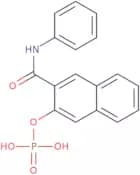
CAS:<p>4-Amino-1-adamantanecarboxylic acid is a useful building block for the synthesis of 4-aminopyridine and 4-aminopyrimidine derivatives. It is an important intermediate in the production of speciality chemicals and has been used as a reaction component in organic synthesis. This compound is also used as a reagent for chemical reactions.</p>Formula:C12H19NO2Purity:Min. 95%Color and Shape:White PowderMolecular weight:209.28 g/molNaphthol AS phosphate
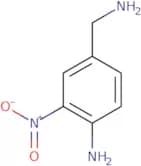
CAS:<p>Naphthol AS phosphate is a food additive that is used as an anti-aromatase agent. It inhibits the enzyme aromatase, which converts androgens to estrogens. This inhibition prevents the development of estrogen-dependent cancers such as breast cancer in women and prostate cancer in men. Naphthol AS phosphate also has inhibitory effects on inflammatory diseases and other diseases involving cell proliferation.</p>Formula:C17H14NO5PPurity:Min. 95%Color and Shape:PowderMolecular weight:343.27 g/mol4-Amino-3-nitrobenzylamine hydrochloride
CAS:<p>4-Amino-3-nitrobenzylamine hydrochloride is a potential vanilloid receptor antagonist with potent antagonistic activities. It has been shown to inhibit the activation of neuronal TRPV1 receptors, as well as the uptake of 4-aminobenzoic acid (4-BA) in rat brain synaptosomes. In addition, this compound can be used to optimize drug structure, acting as an amide and alkyl groups. 4-Amino-3-nitrobenzylamine hydrochloride binds to the vanilloid receptor TRPV1 and blocks its activation. This prevents the release of proinflammatory substances that are responsible for pain, inflammation, and tissue injury.</p>Formula:C7H9N3O2·HClPurity:Min. 95%Color and Shape:PowderMolecular weight:203.63 g/mol

![6-Formyl-2-methyl-4H-thieno[3,2-b]pyrrole-5-carboxylic acid](/_next/image/?url=https%3A%2Fstatic.cymitquimica.com%2Fproducts%2F3D%2Fthumb-webp%2FSIB11266.webp&w=3840&q=75)
![[2-Amino-1-(1-methyl-1H-pyrazol-4-yl)ethyl]dimethylamine](/_next/image/?url=https%3A%2Fstatic.cymitquimica.com%2Fproducts%2F3D%2Fthumb-webp%2FCWB66676.webp&w=3840&q=75)