Building Blocks
This section contains fundamental products for the synthesis of organic and biological compounds. Building blocks are the essential starting materials used to construct complex molecules through various chemical reactions. They play a critical role in drug discovery, material science, and chemical research. At CymitQuimica, we offer a diverse range of high-quality building blocks to support your innovative research and industrial projects, ensuring you have the essential components for successful synthesis.
Subcategories of "Building Blocks"
- Boronic Acids & Boronic Acid Derivatives(5,756 products)
- Chiral Building Blocks(1,242 products)
- Hydrocarbon Building Blocks(6,095 products)
- Organic Building Blocks(61,038 products)
Found 196817 products of "Building Blocks"
Sort by
Purity (%)
0
100
|
0
|
50
|
90
|
95
|
100
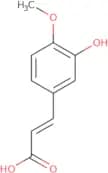
trans-Isoferulic acid
CAS:<p>Trans-iso-ferulic acid is a bioactive phenolic compound that has been shown to have antioxidant and anti-inflammatory properties. It is produced by the metabolism of ferulic acid in the body and can be found in plant cell walls. Trans-iso-ferulic acid has been shown to act as an antimicrobial agent against bacterial strains such as Escherichia coli, Bacillus cereus, Staphylococcus aureus, Klebsiella pneumoniae, Pseudomonas aeruginosa, and Candida albicans. It also has locomotor activity and has been shown to reduce the severity of cardiac disorders. Trans-iso-ferulic acid works by blocking the synthesis of fatty acids which are necessary for energy storage and making regulatory proteins that control metabolism. Trans-iso-ferulic acid also binds to anion radicals which may scavenge free radicals that are formed during oxidative stress. This process prevents lipid peroxidation from occurring which reduces inflammation caused</p>Formula:C10H10O4Purity:Min. 95%Molecular weight:194.18 g/molPF-04965842
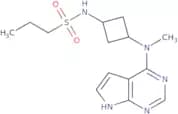
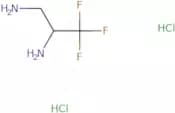
CAS:<p>PF-04965842 is an anti-inflammatory drug that belongs to the class of Jak1 inhibitors. It is used in the treatment of alopecia areata, dermatitis, and bowel disease. PF-04965842 is a selective inhibitor of JAK3 and blocks signaling through this pathway. PF-04965842 has been shown to have long-term efficacy in the treatment of inflammatory skin diseases such as atopic dermatitis and psoriasis. In addition, it has been demonstrated to be effective in reducing symptoms associated with inflammatory bowel disease (IBD) and ulcerative colitis. PF-04965842 also inhibits the production of proinflammatory cytokines by inhibiting the activation of inflammatory cells in the skin or gut.</p>Formula:C14H21N5O2SPurity:Min. 95%Color and Shape:PowderMolecular weight:323.41 g/mol3,3,3-Trifluoropropane-1,2-diamine dihydrochloride
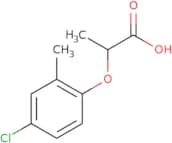
CAS:<p>3,3,3-Trifluoropropane-1,2-diamine dihydrochloride is a high quality chemical that belongs to the group of useful building blocks. It is a versatile and complex compound that can be used in research or as a reagent. 3,3,3-Trifluoropropane-1,2-diamine dihydrochloride is also a reaction component for the synthesis of other compounds. This compound has been used as an intermediate for the production of pharmaceuticals and pesticides. It has been studied for its ability to inhibit protein kinase C (PKC) and calcium ion channels.</p>Formula:C3H7F3N2•(HCl)2Purity:Min. 95%Molecular weight:201.02 g/mol(2S)-2-(4-Chloro-2-methylphenoxy)propanoic acid
CAS:<p>(2S)-2-(4-Chloro-2-methylphenoxy)propanoic acid (MCPP) is a phenoxy herbicide that is used in the control of annual and perennial broadleaf weeds. It is often found in wastewater treatment plants because it binds to iron ions and can be removed by coagulation, adsorption, or chemical precipitation. MCPP has been shown to produce genotoxic effects in model systems and high values for enzyme activities. The long-term efficacy of MCPP was studied using a bacterial strain with high levels of resistance to this compound. Structural analysis showed that MCPP contains a chlorophenoxy radical, which may contribute to its carcinogenic potential.</p>Formula:C10H11ClO3Purity:Min. 95%Color and Shape:PowderMolecular weight:214.64 g/mol3-Methylhexan-2-amine hydrochloride
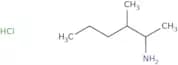
CAS:Controlled Product<p>Versatile small molecule scaffold</p>Formula:C7H18ClNPurity:Min. 95%Color and Shape:PowderMolecular weight:151.7 g/mol2-Chloro-2-fluoro-2-phenylacetic acid
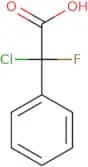
CAS:<p>Versatile small molecule scaffold</p>Formula:C8H6ClFO2Purity:90%MinColor and Shape:PowderMolecular weight:188.58 g/molTrimethylpyruvic acid
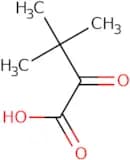
CAS:<p>Trimethylpyruvic acid is an organic compound that is a colorless liquid with a strong odor. It is produced by the oxidation of l-tert-leucine with hydrogen peroxide in the presence of sodium hydroxide. The molecule is chiral, which means it can exist as two different forms that have different physical and chemical properties. Trimethylpyruvic acid can be used for the synthesis of other molecules, including amides, carboxylic acids, and nucleotides. It also has photochemical properties and can be used in reactions that require heating or light.</p>Formula:C6H10O3Purity:Min. 95%Color and Shape:Clear LiquidMolecular weight:130.14 g/mol2-(Morpholin-4-yl)-1,3-benzothiazole
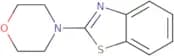
CAS:<p>2-(Morpholin-4-yl)-1,3-benzothiazole is a natural product that is found in the soil. It can be synthesized by reacting benzotriazole with morpholine and an acid catalyst. This compound has been used as a chromatographic stationary phase for the analysis of hydrocarbons and other organic compounds. The experimentally determined profile of this substance consists of peaks at m/z 265, 273, and 289. The technique used to detect these peaks was photometric.</p>Formula:C11H12N2OSPurity:Min. 95%Color and Shape:PowderMolecular weight:220.29 g/mol2-[(2-{2-[(Oxiran-2-yl)methoxy]ethoxy}ethoxy)methyl]oxirane
CAS:<p>2-[(2-{2-[(Oxiran-2-yl)methoxy]ethoxy}ethoxy)methyl]oxirane is an ether that is used as a polymerizable monomer in the form of diglycidyl ether. It is biocompatible and has been shown to have antibacterial efficacy against Gram-positive bacteria. 2-[(2-{2-[(Oxiran-2-yl)methoxy]ethoxy}ethoxy)methyl]oxirane is also used to produce polymers with high molecular weight and low water solubility, which are used for various biomedical applications such as human immunoglobulin production or polymerase chain reactions.</p>Formula:C10H18O5Molecular weight:218.25 g/mol2-Iodothiazole
CAS:<p>2-Iodothiazole is a molecule that contains two iodine atoms. It is an isomeric compound of thiourea and 2-thiazolidine. The nucleophilic attack by the amide group on the magnesium leads to the formation of a magnesium amide complex, which can be hydrolyzed to get valine. This reaction can also be catalyzed by palladium complexes or vitamin B1, which results in one molecule of 2-iodothiazole being produced for each molecule of magnesium amide complex. The halides and diazonium salt are used as oxidizing agents in this reaction. 2-Iodothiazole can be synthesized from primary amines and iodides or halides. 2-Iodothiazole has been shown to inhibit bacterial growth by inhibiting RNA synthesis (ribosome binding) in bacteria such as Mycobacterium tuberculosis and Mycobacterium avium complex, but not in</p>Formula:C3H2INSPurity:Min. 95%Color and Shape:Yellow PowderMolecular weight:211.03 g/molIsopropyl 4-hydroxybenzoate
CAS:<p>Isopropyl 4-hydroxybenzoate is a preservative that is used in cosmetics, pharmaceuticals, and other household products. It can be found in a wide range of products, including moisturizers, shampoos, conditioners, hair sprays, sunscreens, skin lotions and creams. Isopropyl 4-hydroxybenzoate has been shown to inhibit the growth of bacteria by binding to their cell walls. This compound also has been shown to have an antimicrobial effect against fungi and yeast in vitro assays. A number of toxicological studies have been conducted on this compound with no observed adverse effects on animals at doses up to 2,000 mg/kg body weight. The activity index for this compound is low; therefore it does not appear to be carcinogenic or mutagenic. Analytical methods for quantifying this preservative are available in the literature.</p>Formula:C10H12O3Purity:Min. 95%Color and Shape:PowderMolecular weight:180.2 g/molD-Isoserine
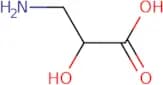
CAS:<p>D-Isoserine is a stereoselective synthetic amino acid that can be used as a structural analog of l-serine. D-Isoserine is synthesized from d-threonine and has been shown to inhibit the bacterial enzyme tyrosine kinase, which is important in cell signaling. D-Isoserine is also being investigated as a treatment for inflammatory diseases such as rheumatoid arthritis and Crohn's disease. The marine sponge Aerogenes sp. produces this compound, which is also produced by the microbial species Aerobacter aerogenes and Staphylococcus aureus.</p>Formula:C3H7NO3Purity:Min. 95%Molecular weight:105.09 g/molIndole-4-carboxaldehyde
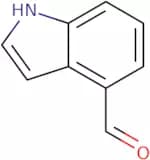
CAS:<p>Indole-4-carboxaldehyde is a natural compound that can be found in the acetate extract of the roots of Scopolia japonica. It has been shown to have an inhibitory effect on locomotor activity and may also have an inhibitory effect on protein synthesis. The mechanism of this inhibition is not yet known, but it may be due to an intramolecular hydrogen bond or other interactions with proteins. Indole-4-carboxaldehyde has also been shown to induce apoptotic cell death in 3T3-L1 preadipocytes by inducing mitochondrial dysfunction and oxidative stress.</p>Formula:C9H7NOColor and Shape:Off-White PowderMolecular weight:145.16 g/mol1-Iododecane - Stabilized with copper chip
CAS:<p>Precursor to prepare 9-nonadecanone</p>Formula:C10H21IPurity:Min. 98 Area-%Color and Shape:Colorless Clear LiquidMolecular weight:268.18 g/mol2-Iodoaniline
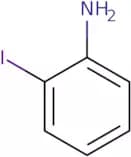
CAS:<p>2-Iodoaniline is a nucleophilic compound that reacts with electrophiles to form alkyl halides. It is used in the synthesis of β-aminoesters, which are used as γ-secretase inhibitors for the treatment of Alzheimer's disease. 2-Iodoaniline has been shown to be an effective inhibitor of protozoan parasites, such as Leishmania major and Trypanosoma cruzi, by blocking the conversion of pyruvate to oxaloacetate via enzymatic action. The chloride ion stabilizes the phenoxide anion intermediate and facilitates nucleophilic attack on the aromatic ring. 2-Iodoaniline has also been shown to be a competitive inhibitor of acylation reactions, due to its ability to bind covalently with acyl groups and inhibit their formation.</p>Formula:C6H6INPurity:Min. 95%Color and Shape:White PowderMolecular weight:219.02 g/mol4-Iodopyridine
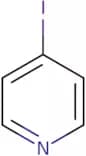
CAS:<p>4-Iodopyridine is a synthetic compound that can be used as an intermediate in organic synthesis. It can be used in cross-coupling reactions to form amides by converting the chloride to the corresponding sulfoxide, which can then undergo nucleophilic substitution with ethyl bromoacetate. 4-Iodopyridine is also used for analytical methods such as mass spectrometry and gas chromatography. The reaction solution of 4-iodopyridine has been shown to have a hydrogen bond with aryl boronic acids. This compound is also able to react with asymmetric reagents such as phenylboronic acid and 3,5-dimethylpyrazole.</p>Formula:C5H4INPurity:Min. 95%Color and Shape:PowderMolecular weight:205 g/mol4-Isobutylacetophenone
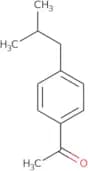
CAS:<p>4-Isobutylacetophenone is a nonsteroidal anti-inflammatory drug that can be used in the preparation of samples for membrane systems. It also has been shown to be an efficient contactor for the hydrogenation of methyl ketones. The reaction mechanism starts with the generation of intramolecular hydrogen, which is then transferred to the substrate and leads to the formation of the desired product. FTIR spectroscopy has been used to show that 4-isobutylacetophenone can be used as a solid catalyst for neutral pH reactions. Hydrochloric acid and hydrofluoric acid are both strong acids that can be used for this purpose.</p>Formula:C12H16OPurity:Min. 95%Color and Shape:Colorless Clear LiquidMolecular weight:176.25 g/molIodobenzene 1,1-diacetate
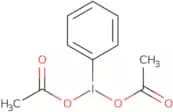
CAS:<p>Iodobenzene 1,1-diacetate (PIDA) is a compound containing a hypervalent iodine. This unusual valence of the iodine makes iodobenzene 1,1-diacetate an ideal oxidizing agent in organic synthesis. Furthermore, it is common practice to use iodobenzene 1,1-diacetate to prepare similar reagents by substituting the acetate groups for the desired functional group (Yusubov, 2019). Due to its low toxicity compared to other iodine derivatives, iodobenzene 1,1-diacetate (PIDA) is a common reagent used in total synthesis in the pharmaceutical and agrochemical industry, to produce sugars, alkaloids, antibiotics, etc (Tohma, 2002).</p>Formula:C10H11IO4Purity:Min. 98 Area-%Color and Shape:White PowderMolecular weight:322.1 g/mol8-Hydroxy-2-quinolinecarbonitrile
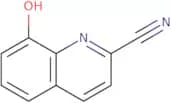
CAS:8-Hydroxy-2-quinolinecarbonitrile is an uncomplexed ligand that can be used for the synthesis of metal complexes. 8-Hydroxy-2-quinolinecarbonitrile is insoluble in most solvents, including water, and has a high melting point. This compound can be synthesized from acetonitrile and primary amines by condensing with formaldehyde. It is not possible to catalyze this reaction, as it does not undergo homolysis or heterolysis reactions. The uncomplexed ligand has been shown to bind to metal ions such as copper and silver. Its diffraction pattern was found to have a polynuclear nature with a number of diffraction peaks within the range of 5–9 Å.Formula:C10H6N2OPurity:Min. 95%Color and Shape:PowderMolecular weight:170.17 g/mol2-(3-Hydroxypropyl)benzimidazole
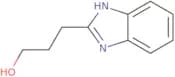
CAS:<p>2-(3-Hydroxypropyl)benzimidazole is a chloroform extract of the bark of the tree, Pongamia pinnata. It has been shown to have antibacterial and antitumor activity. 2-(3-Hydroxypropyl)benzimidazole has been found to be active against methicillin-resistant Staphylococcus aureus (MRSA), showing strong inhibitory effects on bacterial cell growth in vitro. The mechanism of action may be due to its ability to bind to DNA and RNA, preventing transcription and replication. 2-(3-Hydroxypropyl)benzimidazole also inhibits protein synthesis by binding to ribosomes and interfering with the function of enzymes that are involved in this process such as cytochrome c reductase, glutathione reductase, and 3-ketoacyl coenzyme A thiolase.</p>Formula:C10H12N2OPurity:Min. 95%Color and Shape:White PowderMolecular weight:176.22 g/mol

![2-[(2-{2-[(Oxiran-2-yl)methoxy]ethoxy}ethoxy)methyl]oxirane](/_next/image/?url=https%3A%2Fstatic.cymitquimica.com%2Fproducts%2F3D%2Fthumb-webp%2FEAA20661.webp&w=3840&q=75)