Building Blocks
This section contains fundamental products for the synthesis of organic and biological compounds. Building blocks are the essential starting materials used to construct complex molecules through various chemical reactions. They play a critical role in drug discovery, material science, and chemical research. At CymitQuimica, we offer a diverse range of high-quality building blocks to support your innovative research and industrial projects, ensuring you have the essential components for successful synthesis.
Subcategories of "Building Blocks"
- Boronic Acids & Boronic Acid Derivatives(5,756 products)
- Chiral Building Blocks(1,242 products)
- Hydrocarbon Building Blocks(6,095 products)
- Organic Building Blocks(61,038 products)
Found 196817 products of "Building Blocks"
Sort by
Purity (%)
0
100
|
0
|
50
|
90
|
95
|
100
2-Quinolinecarboxylic acid
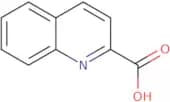
CAS:<p>2-Quinolinecarboxylic acid is an antibiotic that is used in the treatment of bacterial infections and has inhibitory properties. It has been shown to be a competitive inhibitor of the enzyme quinolinate phosphoribosyltransferase, which catalyzes the conversion of quinolinic acid to nicotinic acid. 2-Quinolinecarboxylic acid binds to the active site of the enzyme and prevents substrate binding, thereby blocking the production of nicotinic acid. This drug also inhibits bacterial growth by binding to DNA-dependent RNA polymerase, thereby preventing transcription and replication. The high frequency of human activity has been shown using a patch-clamp technique on human erythrocytes. This active form is metabolized through a number of metabolic transformations, including hydrolysis by esterases or glucuronidases, oxidation by cytochrome P450 enzymes, reduction by glutathione reductase, or conjugation with glucur</p>Formula:C10H7NO2Purity:Min. 98 Area-%Color and Shape:PowderMolecular weight:173.17 g/mol4,6-Pyrimidinedicarboxylic acid
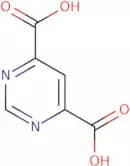
CAS:<p>4,6-pyrimidinedicarboxylic acid is a synthetic compound that is used as a pharmaceutical preparation. It has been shown to have minimal inhibitory concentrations against many bacterial species, including Enterobacteriaceae, Pseudomonas aeruginosa, and Staphylococcus aureus. 4,6-pyrimidinedicarboxylic acid has shown antibacterial activity in the presence of a halogeno or hydroxyl groups. This compound also has matrix metalloproteinase inhibiting activity and can be used to treat degenerative diseases such as cancer or Alzheimer's disease. 4,6-pyrimidinedicarboxylic acid has been studied for its light emitting properties and protein–protein interactions. The light emission properties are due to the intramolecular hydrogen transfer between two hydroxyl groups on the molecule.</p>Formula:C6H4N2O4Purity:Min. 95 Area-%Color and Shape:White Off-White PowderMolecular weight:168.11 g/mol2-Phenoxybenzoic acid
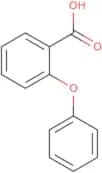
CAS:<p>2-Phenoxybenzoic acid is a hydrochloride salt that is used as a reagent in analytical chemistry. It reacts with the carboxylate group of amino acids, proteins, and peptides to form a stable, water-soluble complex. The reaction is typically monitored by measuring the change in optical density at 260 nm. 2-Phenoxybenzoic acid reacts with bcr-abl kinase and colloidal gold to form an insoluble precipitate that can be detected with electron microscopy. This compound also has biological properties such as inhibiting carbonic anhydrase activity and changing the pH of the solution. 2-Phenoxybenzoic acid was originally synthesized from diphenyl ether and phenol (C6H5OH).<br>2-Phenoxybenzoic acid can be converted into 2-(4-nitrophenoxy) benzoic acid by reacting it with sodium nitrite followed by hydrochloric acid</p>Formula:C13H10O3Purity:Min. 95%Color and Shape:PowderMolecular weight:214.22 g/molOctyl isocyanate
CAS:<p>Octyl isocyanate is a non-steroidal anti-inflammatory drug that belongs to the class of isocyanates. The biological activity of octyl isocyanate has been studied extensively, and it has been shown to inhibit the polymerase chain reaction (PCR). Octyl isocyanate also inhibits the growth of bacteria in vitro through metal chelation and polymyxin B., which are antibiotics that bind metal ions and disrupt bacterial cell membranes. Octyl isocyanate has been shown to be reactive in vivo, leading to autophagy and necrosis.</p>Formula:C9H17NOPurity:Min. 97 Area-%Color and Shape:Clear LiquidMolecular weight:155.24 g/mol1-[4-(Trifluoromethyl)pyridin-3-yl]ethan-1-one
CAS:<p>1-[4-(Trifluoromethyl)pyridin-3-yl]ethan-1-one is a high quality reagent that can be used as a useful intermediate or speciality chemical. It is a complex compound with CAS No. 955997-27-0 and is an excellent building block for the synthesis of fine chemicals, research chemicals, and other versatile compounds. 1-[4-(Trifluoromethyl)pyridin-3-yl]ethan-1-one has been shown to be useful in reactions involving nucleophilic substitution, electrophilic addition, nucleophilic aromatic substitution, and coupling reactions.</p>Formula:C8H6F3NOPurity:Min. 95%Color and Shape:PowderMolecular weight:189.13 g/mol1-(Ethenesulfonyl)-4-fluorobenzene
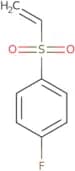
CAS:<p>1-(Ethenesulfonyl)-4-fluorobenzene is a versatile chemical that can be used as a building block for the synthesis of complex compounds. It is also a reagent and speciality chemical with many applications in research. 1-(Ethenesulfonyl)-4-fluorobenzene is an excellent starting material for the synthesis of useful scaffolds and it has shown to have high quality.</p>Formula:C8H7FO2SPurity:Min. 95%Molecular weight:186.21 g/molN,N-Diethylpyrrolidine-2-carboxamide
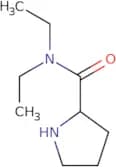
CAS:<p>Versatile small molecule scaffold</p>Formula:C9H18N2OPurity:Min. 90%Color and Shape:PowderMolecular weight:170.25 g/mol3-Nitrobenzamide
CAS:<p>3-Nitrobenzamide is a substance that inhibits the replication of some viruses. It has been shown to inhibit the polymerase chain reaction and to be active against hepatitis B virus. 3-Nitrobenzamide was also observed to have inhibitory properties against herpes simplex virus type 1 (HSV-1) and HSV-2. The solid form of this compound is stable at room temperature, but may undergo hydrolysis in solution. 3-Nitrobenzamide reacts with water to form nitrous acid, which may cause corrosion of metal surfaces.</p>Formula:C7H6N2O3Purity:Min. 95%Color and Shape:PowderMolecular weight:166.13 g/mol1-Nitro-2,4,6-trimethoxybenzene
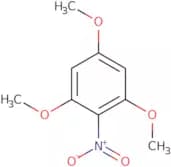
CAS:<p>1-Nitro-2,4,6-trimethoxybenzene is a chemical compound that belongs to the nitro group. It has been found to be an electron donor in bacterial cells, and has been shown to be effective against the growth of bacteria by catalytic reduction. This reaction is highly specific for nitro compounds and does not occur with other classes of compounds. Mass spectrometric analysis of the reaction solution revealed that significant amounts of hydrogen gas were generated during this process. The use of aminoguanidine as a reducing agent resulted in a decrease in the production of hydrogen gas. 1-Nitro-2,4,6-trimethoxybenzene also has been shown to inhibit cytochrome p450 enzymes in rats and humans.</p>Formula:C9H11NO5Purity:Min. 95%Color and Shape:PowderMolecular weight:213.19 g/mol4-Nitrobenzylamine hydrochloride
CAS:<p>4-Nitrobenzylamine hydrochloride is a bifunctional immobilizing agent that can be used for the immobilization of Zn2+. It reacts with nitrogen atoms, forming an amination reaction. The linker is covalently immobilized to the surface and the nature of this chemical is synthetic. 4-Nitrobenzylamine hydrochloride is synthesized by reacting nitric acid with benzaldehyde in ammonia solution at room temperature. This chemical has shown to be effective in reactions where a flow rate is needed or when diamidines are present in the reaction mixture.</p>Formula:C7H8N2O2·HClPurity:Min. 95%Color and Shape:PowderMolecular weight:188.61 g/mol1-Nitrobutane
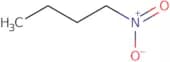
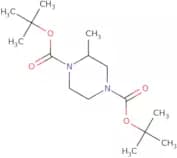
CAS:<p>1-Nitrobutane is an organic compound with the chemical formula CH3NO2. It is a colorless liquid that is soluble in water and insoluble in ether. 1-Nitrobutane can react with hydroxyl groups to form nitroalkanes and it has been used as a reaction product for kinetic measurements of hydroxyl group concentration. The reaction mechanism of 1-nitrobutane is not completely known, but it has been proposed that the hydroxyl group reacts with the nitro group by nucleophilic substitution. 1-Nitrobutane can be used as a reagent for chromatography because it absorbs ultraviolet radiation and emits photoelectrons, which can be detected by covid-19 detectors. 1-Nitrobutane also has been shown to have antiviral properties against pandemic influenza A virus (H1N1) in cultured cells and rat liver microsomes.</p>Formula:C4H9NO2Purity:Min. 95%Color and Shape:PowderMolecular weight:103.12 g/mol1,4-Di-tert-butyl 2-methylpiperazine-1,4-dicarboxylate
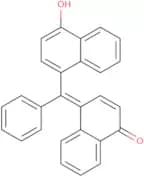
CAS:<p>Versatile small molecule scaffold</p>Formula:C15H28N2O4Purity:Min. 95%Color and Shape:PowderMolecular weight:300.39 g/molp-Naphtholbenzein
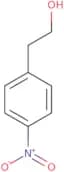
CAS:<p>p-Naphtholbenzein is a fluorescent dye that is used in the diagnosis of human pathogens. It can be used to detect the presence of fatty acids, which are found on the surface of bacteria and in the cell wall. p-Naphtholbenzein elutes from an agar plate at pH 6.0 and can be detected using a spectrophotometer. The fluorescence of p-naphtholbenzein is absorbed by fatty acids, which emit light when excited by ultraviolet light. This makes it useful for detecting fatty acid content in cells, organisms, and surfaces. It is also used as an excipient in subclinical mastitis treatments to help reduce inflammation and improve milk production. In biodiesel reactions, p-naphtholbenzein acts as an optimal reaction catalyst because it stabilizes hydroxybenzoic acid (HBA) with benzalkonium chloride (BZK).</p>Formula:C27H18O2Color and Shape:PowderMolecular weight:374.43 g/mol4-Nitrobenzeneethanol
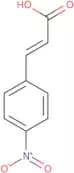
CAS:<p>4-Nitrobenzeneethanol is a primary amine that is synthesized from the amino acid L-glutamic acid and the alcohol 4-nitrobenzyl alcohol. It is activated by reaction with sodium hydroxide solution, which releases hydrogen ions. The conjugates of this compound are isomers. 4-Nitrobenzeneethanol can be used to synthesize compounds that have different functional groups, such as monoclonal antibodies for the treatment of parasitic diseases.</p>Formula:C8H9NO3Purity:Min. 95%Color and Shape:PowderMolecular weight:167.16 g/moltrans-4-Nitrocinnamic acid
CAS:<p>Trans-4-nitrocinnamic acid is an organic compound that is synthesized from 4-hydroxycinnamic acid by nitration with aqueous or alcoholic nitric acid. Trans-4-Nitrocinnamic acid has been shown to inhibit tyrosinase activity in the presence of metal hydroxides, such as copper, zinc, and iron. The reaction mechanism is unclear but may involve an initial protonation of the phenolic group followed by an electron transfer to the nitro group. This reaction results in an irreversible inhibition of tyrosinase activity. Trans-4-Nitrocinnamic acid also reacts with hydrochloric acid to produce a carboxylate salt that can be used for sample preparation.</p>Formula:C9H7NO4Purity:Min. 95%Color and Shape:PowderMolecular weight:193.16 g/mol4-Nitrobenzophenone
CAS:<p>4-Nitrobenzophenone is an aromatic organic compound that is synthesized by the nitration of benzophenone. The coordination complex formed with p. aeruginosa was found to be acidic and readily hydrolyzed in water. This compound has been used in the synthesis of cinnamic acid derivatives, which are intermediates for azo dyes and pharmaceuticals. 4-Nitrobenzophenone can also undergo acylation reactions to form esters or amides with alcohols or carboxylic acids. It is also a precursor to the drug metronidazole, which is used to treat bacterial infections. Acute toxicity studies have shown that this compound has low acute toxicities and causes no irritation on skin contact. 4-Nitrobenzophenone reacts with hydrogen fluoride to form hydrogen chloride and x-ray crystal structures have shown that it forms tetrahedral complexes with chlorine, fluorine, and bromine at low temperatures (0</p>Formula:C13H9NO3Purity:Min. 95%Color and Shape:PowderMolecular weight:227.22 g/mol5-Nitrothiophene-2-carboxylic acid
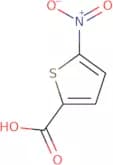
CAS:<p>Used for preparation of pentathiophene amide</p>Formula:C5H3NO4SPurity:Min. 95%Color and Shape:White PowderMolecular weight:173.15 g/mol2-Nitrobenzoic acid - Technical
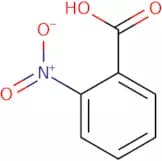
CAS:<p>2-Nitrobenzoic acid is an organic compound that is used as a reagent in the preparation of aldehydes, esters, and amides. It has been shown to be a potent inhibitor of the MCL-1 protein. This protein is an important regulator of mitochondrial permeability transition pore (MPTP) opening and apoptosis induction. The inhibition of the MPTP by 2-nitrobenzoic acid may be due to its ability to react with nitric oxide (NO) to form peroxynitrite, which reacts with MPTP proteins in the mitochondria. The use of 2-nitrobenzoic acid has been found to be effective in treating infectious diseases such as HIV, as well as autoimmune diseases such as psoriasis.</p>Formula:C7H5NO4Purity:Min. 95%Color and Shape:PowderMolecular weight:167.12 g/mol1-Nonanol
CAS:<p>1-Nonanol is a colorless liquid with a pleasant odor. It can be synthesized from methyl pentanoate by the asymmetric addition of an inorganic acid to the ester hydrochloride. This process results in a mixture of 1-nonanol and its isomer 2-nonanol, which can be separated using an analytical method such as gas chromatography. 1-Nonanol has been shown to have high transport properties, making it useful for detergent compositions. It has also been shown to exhibit strong hydrogen bonding abilities that may contribute to its adsorption mechanism.</p>Formula:C9H20OPurity:Min. 95%Color and Shape:Colorless Clear LiquidMolecular weight:144.25 g/mol2-Nitrobenzenesulfonyl chloride
CAS:<p>2-Nitrobenzenesulfonyl chloride is a cyclic peptide that has been shown to be effective in the synthesis of a variety of biologically active compounds. It is used in the preparation of hydrochloric acid, hydroxyl group, lysine residues, and methyl ketones. It also has been used in analytical methods for the determination of cancer. 2-Nitrobenzenesulfonyl chloride is an aziridine with a Michaelis-Menten kinetics. This chemical structure allows hydrogen bonding with proteins, which is important for conformational changes and biological activity. 2-Nitrobenzenesulfonyl chloride has also been shown to inhibit cancer cells as well as human serum through hydrogen bond interactions.</p>Formula:C6H4ClNO4SPurity:Min. 95%Color and Shape:Slightly Yellow PowderMolecular weight:221.62 g/mol


![1-[4-(Trifluoromethyl)pyridin-3-yl]ethan-1-one](/_next/image/?url=https%3A%2Fstatic.cymitquimica.com%2Fproducts%2F3D%2Fthumb-webp%2FFNB99727.webp&w=3840&q=75)