Building Blocks
This section contains fundamental products for the synthesis of organic and biological compounds. Building blocks are the essential starting materials used to construct complex molecules through various chemical reactions. They play a critical role in drug discovery, material science, and chemical research. At CymitQuimica, we offer a diverse range of high-quality building blocks to support your innovative research and industrial projects, ensuring you have the essential components for successful synthesis.
Subcategories of "Building Blocks"
- Boronic Acids & Boronic Acid Derivatives(5,756 products)
- Chiral Building Blocks(1,242 products)
- Hydrocarbon Building Blocks(6,095 products)
- Organic Building Blocks(61,038 products)
Found 196817 products of "Building Blocks"
Sort by
Purity (%)
0
100
|
0
|
50
|
90
|
95
|
100
2,5-Dimethoxybenzoic acid
CAS:<p>2,5-Dimethoxybenzoic acid (2,5-DMA) is a plant metabolite that belongs to the group of cinnamic acid derivatives. It can be found in plants and has been shown to have systemic effects. 2,5-DMA is involved in the cycloacylation of protocatechuic acid. This reaction is catalyzed by an enzyme called cyclooxygenase and requires molecular oxygen as a cofactor. 2,5-DMA also forms hydrogen bonds with methoxy groups and other molecules. The monoclonal antibodies against 2,5-DMA have been used for radiation therapy and are effective against cancer cells. Model studies show that 2,5-DMA can be converted into more potent metabolites by the action of cytochrome P450 enzymes or glutathione S-transferases.</p>Formula:C9H10O4Purity:Min. 95%Color and Shape:PowderMolecular weight:182.17 g/mol3',4'-Dimethylacetophenone
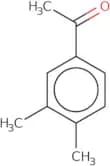
CAS:<p>3',4'-Dimethylacetophenone is a natural product that belongs to the class of salicylates. It is a yellow oily liquid with an odor reminiscent of ocimene, which has been shown to be an attractant for the cotton bollworm (Hirsutum). 3',4'-Dimethylacetophenone is also used in cyclization reactions, such as the conversion of a benzene ring into a cyclohexane ring. This compound can be found in many plants and flowers, including hirsutum, caryophyllene, gossypium, medicago, and chalcone. The molecule can be synthesized in several ways through combinations of different reactants.</p>Formula:C10H12OPurity:Min. 95%Color and Shape:PowderMolecular weight:148.2 g/molDisodium 2-naphthol-3,6-disulfonate
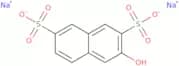
CAS:<p>Disodium 2-naphthol-3,6-disulfonate is a cationic surfactant that reacts with chloride ions to form a gel. It can be used as an inhibitor of corrosion and foaming in the oil industry. Disodium 2-naphthol-3,6-disulfonate has also been shown to have a linear response with fluorescence techniques when it interacts with metal ions. The kinetic data for this reaction is dependent on the concentration of chloride ions, which are generated by hydrochloric acid upon addition of water.</p>Formula:C10H6Na2O7S2Purity:Min. 97 Area-%Color and Shape:PowderMolecular weight:348.26 g/mol2,2'-Dithiobis(pyridine-N-oxide)
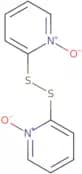
CAS:<p>2,2'-Dithiobis(pyridine-N-oxide) is a chemical compound that has been shown to have anti-inflammatory effects in vitro. It inhibits the production of inflammatory cytokines such as TNF-α and IL-1β in vitro, which are associated with many inflammatory skin diseases. This agent also has an apoptotic effect on cells, leading to cell death by triggering caspase activation. 2,2'-Dithiobis(pyridine-N-oxide) has also been shown to be effective against cancer cells in vitro. This agent may cause cancer by increasing the expression of proapoptotic proteins and decreasing the expression of anti-apoptotic proteins.</p>Formula:C10H8N2O2S2Purity:Min. 98 Area-%Color and Shape:White PowderMolecular weight:252.31 g/molZ-1,4-diaminobutane·HCl
CAS:<p>Z-1,4-diaminobutane·HCl is a fine chemical that is a useful building block in research and manufacture of pharmaceuticals. It is also used as a reagent and speciality chemical in the production of other chemicals, such as dyes, rubber products, and pesticides. This compound has been shown to be an effective intermediate for the synthesis of complex organic compounds with versatile structures. Z-1,4-diaminobutane·HCl can be used as a scaffold for the construction of various types of molecules.</p>Formula:C12H18N2O2·HClPurity:Min. 95%Color and Shape:White PowderMolecular weight:258.74 g/mol3,5-Dimethoxybenzaldehyde
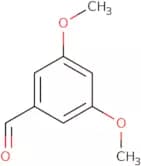
CAS:<p>3,5-Dimethoxybenzaldehyde is a fungicide that can kill fungal cells by inhibiting the synthesis of ergosterol, an important component of the fungal cell membrane. It has been shown to be effective against Cryptococcus neoformans and other fungi. 3,5-Dimethoxybenzaldehyde inhibits mitochondrial superoxide production and the growth of fungi in a model system. The optimum concentration for inhibition was determined in a kinetic and thermodynamic study. This compound has also been shown to have anti-inflammatory properties, which may be due to its ability to inhibit prostaglandin synthesis.</p>Formula:C9H10O3Purity:Min. 98%Color and Shape:PowderMolecular weight:166.17 g/mol1,3-Diacetylindole
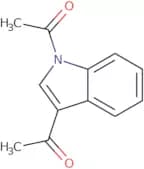
CAS:<p>1,3-Diacetylindole is an alkene that belongs to the class of organic compounds. It can be prepared by Friedel-Crafts acylation of cyclopentenone with formaldehyde and hydrogen chloride gas. The molecule has a molecular electrostatic potential of -0.8 eV and a molecular weight of 126.1 g/mol. 1,3-Diacetylindole has been shown to react with Grignard reagent in an electrochemical study. Additionally, it has been used as a starting material for the synthesis of other molecules such as 2-methylquinoline and 1,2-dihydroquinoline. The vibrational and spectral data for 1,3-diacetylindole have been obtained using both experimental and computational methods. These data are useful for understanding the structure and reactivity of this compound at the molecular level.br>br> br>br></p>Formula:C12H11NO2Purity:Min. 95%Molecular weight:201.22 g/mol5,6-Difluoroindole
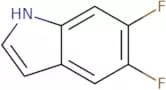
CAS:<p>5,6-Difluoroindole is a chemical compound that has been studied in biological and chemical research. It is an analog of the neurotransmitter serotonin, which binds to the 5-HT2C receptor and activates phospholipase C (PLC) to produce inositol triphosphate (IP3). This compound may be useful for the treatment of neurodegenerative diseases such as Alzheimer's disease. 5,6-Difluoroindole has been shown to block the activity of acetylcholinesterase (AChE), which is an enzyme that breaks down acetylcholine. This leads to an increase in acetylcholine levels and a decrease in AChE activity. The reaction mechanism for this process is not known.</p>Formula:C8H5NF2Color and Shape:PowderMolecular weight:153.13 g/mol4,6-Difluoroindole
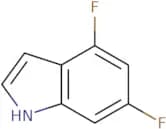
CAS:<p>4,6-Difluoroindole is a functional group that has been optimized for use as a pharmaceutical drug. It has been shown to be an efficient inhibitor of renal organic anion transporters and monophosphate-activated protein, which are involved in the absorption of drugs from the blood into the cells. 4,6-Difluoroindole also inhibits bacterial growth by binding to ribosomal RNA and interfering with protein synthesis. This drug exhibits antibacterial activity against Gram-positive bacteria such as Mycobacterium tuberculosis and Mycobacterium avium complex. This drug is able to cross the blood-brain barrier and thus may be used to treat tuberculosis infections in the brain.</p>Formula:C8H5F2NPurity:Min 90%Molecular weight:153.13 g/mol1,3-Dihydroxynaphthalene
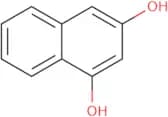
CAS:<p>1,3-Dihydroxynaphthalene is an organic compound that has been shown to inhibit HIV infection in vitro. The optimum concentration of 1,3-dihydroxynaphthalene for inhibition of HIV infection is 0.5% (w/v). This compound can be synthesized by the reaction of epoxy and a sulfonamide drug. In addition, 1,3-dihydroxynaphthalene has been shown to have anti-inflammatory properties and can be used as a potential treatment for metabolic disorders such as diabetes mellitus.</p>Formula:C10H8O2Purity:Min. 95%Color and Shape:PowderMolecular weight:160.17 g/mol4,4'-Dibenzoic acid
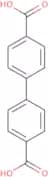
CAS:<p>4,4'-Dibenzoic acid is a chemical compound that has been used as a precursor to other compounds. It is also used in the production of polycarbonates and epoxy resins. 4,4'-Dibenzoic acid has low energy, which means it can be transported more easily than high energy molecules. This property makes it an excellent candidate for use as an enhancement agent for organometallic catalysts such as biphenyl. The structure of 4,4'-dibenzoic acid consists of two benzene rings connected by an ethylene chain. This molecule has one hydrogen bond on each side of the molecule. The 4-hydroxyl group on the left side of the molecule is susceptible to oxidation and can act as an oxidation catalyst when exposed to heat or radiation.</p>Formula:C14H10O4Purity:Min. 95%Color and Shape:PowderMolecular weight:242.23 g/mol3,4-Dihydroxybenzonitrile
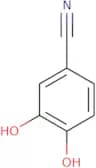
CAS:<p>3,4-Dihydroxybenzonitrile is a chemical compound that is found in soybean lipoxygenase. The molecule has been shown to be an excellent Michaelis-Menten substrate and hydrogen bonding partner. It also reacts with chlorine to form chlorinating agents such as 3,4-dichlorobenzonitrile and 3,4-dibromobenzonitrile. 3,4-Dihydroxybenzonitrile can act as a nucleophile and forms stable complexes when reacted with hydroxyl group compounds such as protocatechuic acid or reaction solution. This chemical is reactive and can be activated by redox cycling or light.<br>3,4-Dihydroxybenzonitrile has been used to treat protocatechuic acid levels in the blood of patients with chronic liver disease who are being treated for alcoholism.</p>Formula:C7H5NO2Purity:Min. 95%Color and Shape:PowderMolecular weight:135.12 g/mol3,5-Dimethoxyphenylacetic acid
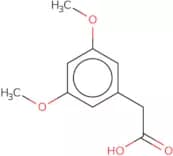
CAS:<p>3,5-Dimethoxyphenylacetic acid is a reagent that can be used in the synthesis of many organic compounds. It is also a high quality chemical with a CAS number of 4670-10-4. 3,5-Dimethoxyphenylacetic acid is useful as a research chemical and as an intermediate for the synthesis of more complex compounds. This compound has been shown to be a versatile building block and useful scaffold in the synthesis of highly complex chemicals.</p>Formula:C10H12O4Purity:Min. 95%Color and Shape:White PowderMolecular weight:196.2 g/mol3,5-Dimethoxyphenylacetic acid methyl ester
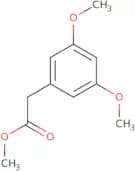
CAS:<p>3,5-Dimethoxyphenylacetic acid methyl ester is a synthetic compound that inhibits the growth of human pathogens by inhibiting protein synthesis. It has been shown to inhibit the biosynthesis of DNA and RNA in human cancer cells. 3,5-Dimethoxyphenylacetic acid methyl ester also binds to aluminium ions and prevents their absorption into the body. This agent is not active against bacteria or fungi because they do not have a cell membrane.</p>Formula:C11H14O4Purity:Min. 95%Color and Shape:Colorless Clear LiquidMolecular weight:210.23 g/mol3,5-Dichloro-2-methoxybenzoic acid
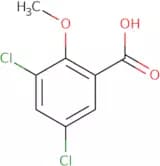
CAS:<p>3,5-Dichloro-2-methoxybenzoic acid (3,5-DMB) is a diphenyl ether with a pharmacokinetic half-life of about 3 hours. It has two isomers: the cis and trans forms. The cis isomer is more active than the trans form. The cis isomer has been shown to be effective in treatments for amine oxidase inhibitors and short-chain fatty acids. It also has growth regulator properties that are used in treatments for psoriasis and acne. 3,5-DMB inhibits bacterial growth by binding to the enzyme dioxygenase, which catalyzes the conversion of 4-hydroxybenzoic acid into 4-hydroxyphenylpyruvic acid; this prevents the production of catecholamines and subsequent cell proliferation. This drug binds to apical membranes in the intestine by attaching to sulfhydryl groups on proteins involved in transport processes, preventing uptake</p>Formula:C8H6Cl2O3Purity:Min. 95%Color and Shape:White PowderMolecular weight:221.04 g/mol2,3-Dibromopropene - stabilized with copper chip
CAS:<p>2,3-Dibromopropene - stabilized with copper chip (2,3-DBPC) is a novel bromination reagent that can be used for the synthesis of polypeptides. This compound has been shown to react with acyl halides in an asymmetric synthesis. The reaction mechanism is thought to be via the addition of 2,3-DBPC to the carbonyl group of an acyl halide and subsequent elimination of bromoethane. 2,3-DBPC also reacts with ethanolamine in the presence of carbon disulphide and x-ray diffraction data have shown that this reaction proceeds through a 1,4 addition mechanism.</p>Formula:C3H4Br2Purity:Min. 90 Area-%Color and Shape:Brown Colorless Yellow Clear LiquidMolecular weight:199.87 g/mol3',5'-Dimethoxyacetophenone
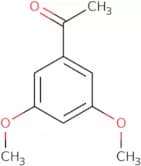
CAS:<p>3',5'-Dimethoxyacetophenone is a compound that is used as an analytical reagent, corrosion inhibitor, and a catalyst. It has been categorized as a hazardous substance by the U.S. Environmental Protection Agency (EPA) and is on the list of substances of very high concern in Europe. 3',5'-Dimethoxyacetophenone is used to prevent corrosion in metals because it reacts with chloride ions to form a protective layer of hydrochloric acid and fatty acid esters. This product has medicinal values because it can be used to synthesize flavonoids or fatty acids.</p>Formula:C10H12O3Purity:Min. 95%Color and Shape:PowderMolecular weight:180.2 g/mol(+)-Diacetyl-D-tartaric acid
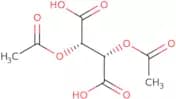
CAS:<p>(+)-Diacetyl-D-tartaric acid is a chiral organic compound that is soluble in organic solvents. It can be used as a catalyst for the asymmetric synthesis of organic compounds and has been shown to cleave bonds with high stereoselectivity. (+)-Diacetyl-D-tartaric acid also exhibits mesomorphic properties, meaning it changes from liquid to solid and vice versa at certain temperatures. The optical activity of this compound can be seen by its magnetic resonance spectrum, which displays two peaks at different wavelengths. This molecule has been shown to have potential uses in microscopy, as well as for the preparation of monomers for magnetic materials.</p>Formula:C8H10O8Purity:Min. 95%Color and Shape:White PowderMolecular weight:234.16 g/mol4-Diazobenzenesulfonic acid - moistened with water (H2O~50%)
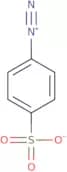
CAS:<p>4-Diazobenzenesulfonic acid is a reagent used for the determination of phenols, amines and, bilirubin. It also has extensive usage as a protein-modifying reagent. This is because it reacts with a wide variety of functional groups in proteins including: tyrosine, histidine, amino, and thiol residues. It is known to react with proteins located on the exterior of erythrocytes; additionally, it has been used to study chloroplast and mitochondrial membranes.</p>Formula:C6H4N2O3SPurity:Min. 95%Color and Shape:PowderMolecular weight:184.17 g/mol2,4-Dihydroxy-6-pentylbenzoic acid
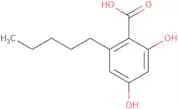
CAS:<p>An intermediate in the phytocannabinoid biosynthetic pathway.</p>Formula:C12H16O4Purity:Min. 98 Area-%Color and Shape:PowderMolecular weight:224.25 g/mol