Building Blocks
This section contains fundamental products for the synthesis of organic and biological compounds. Building blocks are the essential starting materials used to construct complex molecules through various chemical reactions. They play a critical role in drug discovery, material science, and chemical research. At CymitQuimica, we offer a diverse range of high-quality building blocks to support your innovative research and industrial projects, ensuring you have the essential components for successful synthesis.
Subcategories of "Building Blocks"
- Boronic Acids & Boronic Acid Derivatives(5,756 products)
- Chiral Building Blocks(1,242 products)
- Hydrocarbon Building Blocks(6,095 products)
- Organic Building Blocks(61,038 products)
Found 196817 products of "Building Blocks"
Sort by
Purity (%)
0
100
|
0
|
50
|
90
|
95
|
100
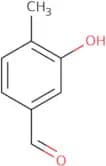
3-Hydroxy-4-methylbenzaldehyde
CAS:<p>3-Hydroxy-4-methylbenzaldehyde is a chemical that is synthesized from 3-hydroxy-4-methylphenol and dimethylformamide. It has been shown to interact with aluminium, which may be due to its ability to form a 1:1 complex with the metal. 3-Hydroxy-4-methylbenzaldehyde also exhibits electrochemical methods and isomers with other aldehydes. This chemical can be used in gas chromatography/mass spectrometry (GCMS) as an internal standard for fatty acid analysis.</p>Formula:C8H8O2Purity:Min. 95%Color and Shape:White PowderMolecular weight:136.15 g/mol3'-Bromo-4'-methylacetophenone
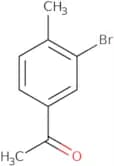
CAS:<p>3'-Bromo-4'-methylacetophenone is a reactive methyl ester that binds to the receptor in the central nervous system. It has been found to be an effective anti-cancer drug, and also inhibits serotonin release in the brain. 3'-Bromo-4'-methylacetophenone is chiral, meaning it can exist as two different forms, or enantiomers. These two forms have different pharmacological profiles, with one being more potent than the other. 3'-Bromo-4'-methylacetophenone is synthesized from methylamine and acetaldehyde using diethyl ether as a solvent. The reaction product is then hydrolyzed by acetonitrile to produce the final product. This drug is used for the treatment of Parkinson's disease and schizophrenia.</p>Formula:C9H9BrOPurity:Min. 95%Color and Shape:PowderMolecular weight:213.07 g/mol3-Bromo-5-hydroxybenzoic acid
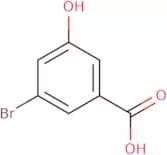
CAS:<p>3-Bromo-5-hydroxybenzoic acid is a metabolite of 3,5-dihydroxybenzoic acid (DHB) in the metabolism of benzoic acid. It has been shown to be an antibacterial agent and has been used to treat metabolic disorders in hamsters. Symptoms of 3-bromo-5-hydroxybenzoic acid include dyslipidemia, which can lead to metabolic disorders such as diabetes mellitus and atherosclerosis. The compound may also have a role in tuberculosis and cancer due to its ability to induce apoptosis.</p>Formula:C7H5O3BrPurity:Min. 95%Color and Shape:White PowderMolecular weight:217.02 g/molEthyl 3,4,5-trimethoxycinnamate
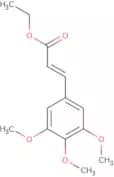
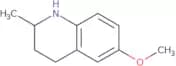
CAS:<p>Ethyl 3,4,5-trimethoxycinnamate is a cinnamic acid derivative that has significant cytotoxicity and anticancer activity. It inhibits the growth of Leishmania parasites by inhibiting the production of gamma-aminobutyric acid, which is essential for cell division and survival. Ethyl 3,4,5-trimethoxycinnamate has been shown to inhibit the growth of cancer cells in vitro by binding to DNA at dipole sites and disrupting the integrity of the molecule. This compound also has optical properties that may be due to its ability to absorb light in the blue region of the spectrum. The anti-cancer effects of ethyl 3,4,5-trimethoxycinnamate may be related to its ability to inhibit cell growth.</p>Formula:C14H18O5Purity:Min. 95%Color and Shape:SolidMolecular weight:266.29 g/mol6-Methoxy-2-methyl-1,2,3,4-tetrahydroquinoline
CAS:<p>Versatile small molecule scaffold</p>Formula:C11H15NOPurity:Min. 95%Color and Shape:PowderMolecular weight:177.24 g/mol4-Ethylbenzonitrile
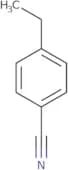
CAS:<p>4-Ethylbenzonitrile is a chemical that is found in human lung. It is a terminal alkene, which undergoes aerobic photooxidation to form reactive oxygen species such as superoxide radical anion and hydrogen peroxide. 4-Ethylbenzonitrile is also converted to triazine, which has been shown to have tumorigenic properties in the lungs of rats and mice. The functional groups on 4-ethylbenzonitrile are amines, hydroxyls, carbonyls, and nitriles. This compound has an inhibitory effect on lung fibroblasts due to its ability to interfere with the function of β-unsaturated ketones. 4-Ethylbenzonitrile's basic structure contains three carbon atoms, two double bonds, and one triple bond.</p>Formula:C9H9NPurity:Min. 95%Color and Shape:Clear LiquidMolecular weight:131.17 g/mol5-Bromo-3-methylisoxazole
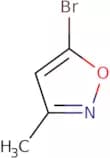
CAS:<p>5-Bromo-3-methylisoxazole is a brominated heterocycle with a pyridine ring. It is used in research as a reagent, speciality chemical, and intermediate for the preparation of complex compounds. 5-Bromo-3-methylisoxazole is also useful as a building block for the synthesis of more complex molecules. The compound is also used as an intermediate for organic synthesis, reaction component, and scaffold.</p>Formula:C4H4BrNOPurity:Min. 90%Color and Shape:Clear LiquidMolecular weight:161.98 g/molBis(p-sulfonatophenyl)phenylphosphine dihydrate dipotassium
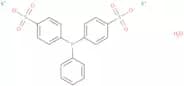
CAS:<p>A common water soluble substitute for triphenylphosphine in palladium coupling reactions</p>Formula:C18H15O6PS2•K2•(H2O)2Purity:Min. 95%Color and Shape:PowderMolecular weight:536.64 g/mol2-Bromophenylacetic acid
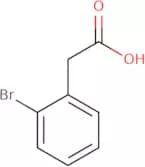
CAS:<p>2-Bromophenylacetic acid is a potent inhibitor of the human enzyme COX-2. It has been shown to have anticancer activity, which may be due to its ability to inhibit cellular proliferation and induce apoptosis in cancer cells. This compound has been tested in a variety of experimental models, including chromatographic assays and striatal membrane preparations, with promising results. 2-Bromophenylacetic acid also has potent inhibitory activity on the human enzyme COX-2 and can be used as a dietary supplement for anticancer therapy.<br>COX-2 inhibitors are usually administered as ethyl esters or solutes in order to prevent degradation by esterases or glucuronidases. The 2-bromophenyl group is electron donating and this may increase the reactivity of the carbon adjacent to it and lead to an acylation reaction with nucleophilic groups such as thiols or amines.</p>Formula:C8H7BrO2Purity:Min. 95%Color and Shape:White PowderMolecular weight:215.04 g/molEthyl 2-nitrobenzoate
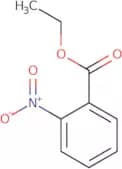
CAS:<p>Ethyl 2-nitrobenzoate is a cyclic organic compound that contains a nitro group, which is an organic radical with the formula -NO2. It belongs to the class of amides and has two carbonyl groups. The molecule consists of a bicyclic heterocycle consisting of one ring with five carbon atoms and one ring with six carbon atoms. Ethyl 2-nitrobenzoate can be used in the treatment of muscle diseases, metabolic disorders, growth factor deficiencies, autoimmune diseases, and neural system disorders due to its ability to act as an antihypertensive agent and as an inhibitor of angiotensin converting enzyme (ACE). This molecule's hydroxyl group can also react with epidermal growth factor (EGF) to form N-hydroxyethyl EGF (NHE). This product has been shown to have antiviral properties against HIV-1 protease inhibitors by interfering with viral protein synthesis.</p>Formula:C9H9NO4Purity:Min. 95%Color and Shape:White PowderMolecular weight:195.17 g/mol11-Bromoundecanoic acid
CAS:<p>11-Bromoundecanoic acid is a heterobifunctional reagent that is used in the synthesis of phospholipids. This chemical reacts with an amide group on a phosphatidylcholine to introduce a bromine atom, which can be used as a fluorophore. The reaction is done in an organic solvent, such as dichloromethane, which facilitates the reaction by dissolving the reactants. The reaction can be monitored using fluorescence assay techniques and 11-bromoundecanoic acid is characterized by its constant ring-opening constant and fatty acid chain length.</p>Formula:C11H21BrO2Purity:Min. 95%Color and Shape:PowderMolecular weight:265.19 g/molEthyl 3-hydroxybenzoate
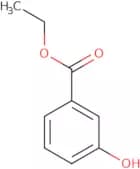
CAS:<p>Ethyl 3-hydroxybenzoate is a preservative that has been shown to be effective against a variety of microorganisms, including gram-positive and gram-negative bacteria. It has been shown to bind with iron, which prevents it from interacting with tyrosinase, an enzyme necessary for the production of melanin. Ethyl 3-hydroxybenzoate also inhibits the activity of benzodiazepine receptor, which reduces the effects of benzodiazepines in the brain. This compound is used in some cosmetics as an antimicrobial agent and cosmetic preservative. The molecular descriptors for this compound are: Molecular Weight=165.07; Log P=0.5; H-bond acceptor count=3; H-bond donor count=2; rotatable bond count=2; hydrogen bond acceptor count=1; hydrogen bond donor count=2; polar surface area=79.90 Å2</p>Formula:C9H10O3Purity:Min. 98.5 Area-%Color and Shape:White PowderMolecular weight:166.17 g/mol5-Bromoindole
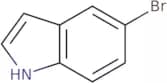
CAS:<p>The optimal reaction conditions for the acylation of 5-bromoindole with 2,2,2-trichloroethyl chloroformate are a mixture of methanol and sodium hydroxide solution. Reaction products include 2-chloro-5-(trichloromethyl)quinoline and the quinoline derivative 1-(2,2,2-trichloroethyl)-1H-imidazole. UV absorption spectra of these products have been recorded in the range of 200 to 400 nm. The reaction is successfully monitored by following changes in the NMR spectrum. The liquid chromatography method is based on a reverse phase column and detection at 220 nm.</p>Formula:C8H6BrNColor and Shape:Slightly Yellow PowderMolecular weight:196.04 g/mol2-Bromo-6-nitrotoluene
CAS:<p>2-Bromo-6-nitrotoluene is a chemical compound that has been shown to bind to the 5-HT7 receptor of the human protein. It has been shown to have affinity for this receptor and functional assays have found it to be selective for this receptor. The hydrogen bonding interactions between 2-bromo-6-nitrotoluene and the 5-HT7 receptor are stronger than those between 2-bromo-6-nitrotoluene and other receptors, such as the 5-HT1A and 5HT1D receptors. Additionally, molecular modeling studies have shown that 2-bromo-6-nitrotoluene has a higher binding affinity for the 5HT7 receptor than other serotonin receptors. This molecule has been synthesized by researchers in a scalable synthesis process with high yields. The intramolecular hydrogen bonds may also help stabilize this molecule in vivo, as they would not be expected to break down</p>Formula:C7H6BrNO2Purity:Min. 95%Color and Shape:PowderMolecular weight:216.03 g/mol5-Bromo-4-chloroindolyl 1,3-diacetate
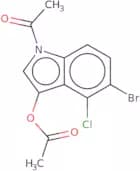
CAS:<p>5-Bromo-4-chloroindolyl 1,3-diacetate (5BCDA) is a clinical response predictor of postoperative radiotherapy. It is an acr20 response predictor for the diagnosis of chronic hepatitis C and the disease activity index in women with genital herpes. 5BCDA has been found to be effective in reducing levels of IL-17a and IL-17f, which are cytokines that are important for immune responses. 5BCDA has also been shown to be effective in treating infectious diseases such as malaria and tuberculosis.</p>Formula:C12H9BrClNO3Purity:Min. 95%Color and Shape:Off-White PowderMolecular weight:330.57 g/mol4-(1-Hydroxy-ethyl)-benzoic acid
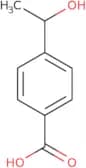
CAS:<p>4-(1-Hydroxy-ethyl)-benzoic acid (4-HBA) is a hydrophobic compound that is an inhibitor of cytochrome P450, which is an enzyme system in the liver and other organs. The inhibitory activity of 4-HBA is due to its binding to the active site of cytochrome P450. This molecule has been shown to be effective against ferredoxin and putidaredoxin, which are enzymes that play a role in electron transfer reactions. 4-(1-Hydroxy-ethyl)-benzoic acid binds to the residue on these enzymes without any effect on their function.</p>Formula:C9H10O3Purity:Min. 95%Molecular weight:166.17 g/mol4-Ethoxy-3-hydroxybenzaldehyde
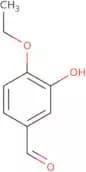
CAS:<p>4-Ethoxy-3-hydroxybenzaldehyde (4EHB) is a thioacetal that has been shown to be an effective precursor for the synthesis of many other molecules, such as combretastatin a-4. It is prepared by reaction of ethylmagnesium bromide and acetone. 4EHB has been shown to have antifungal properties in vitro, and can be used in the treatment of cancer cells. This compound is volatile and can be easily detected with headspace techniques. The functional group of this molecule is an alcohol group, which is found on the ring structure. Spectroscopic analysis shows that it has a carbonyl group with an OH group attached to it.</p>Formula:C9H10O3Purity:Min. 95%Color and Shape:Colorless PowderMolecular weight:166.17 g/mol2-Fluoro-4-(hydroxymethyl)phenol
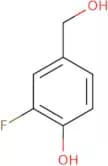
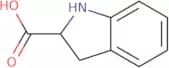
CAS:<p>2-Fluoro-4-(hydroxymethyl)phenol is a versatile building block, which can be used as a reagent to synthesize complex compounds. 2-Fluoro-4-(hydroxymethyl)phenol is also a useful building block for the synthesis of various pharmaceuticals, such as selective androgen receptor modulators (SARMs). It has been reported that 2-fluoro-4-(hydroxymethyl)phenol inhibits the activity of human liver cytochrome P450 enzymes. In addition, this compound has been used as an intermediate in the synthesis of some research chemicals. 2-Fluoro-4-(hydroxymethyl)phenol has CAS number 96740-93-1 and is a high quality chemical with many uses.</p>Formula:C7H7FO2Purity:Min. 95%Color and Shape:PowderMolecular weight:142.13 g/molIndoline-2-carboxylic acid
CAS:<p>Indoline-2-carboxylic acid is a photophysical molecule with an absorption maximum at 518 nm. It has been shown to inhibit the activity of enzymes such as cyclooxygenase, lipoxygenase, and monoamine oxidases. This compound has been found to be effective in the treatment of cancer cells. Indoline-2-carboxylic acid is also used in pharmaceutical preparations, where it binds to enantiomers of other molecules and inhibits their biological activity. Indoline-2-carboxylic acid reacts with hydrochloric acid to form allyl carbonate and amide.</p>Formula:C9H9NO2Purity:Min. 97 Area-%Color and Shape:PowderMolecular weight:163.17 g/mol1-Iododecane - Stabilized with copper chip
CAS:<p>Precursor to prepare 9-nonadecanone</p>Formula:C10H21IPurity:Min. 98 Area-%Color and Shape:Colorless Clear LiquidMolecular weight:268.18 g/mol