Building Blocks
This section contains fundamental products for the synthesis of organic and biological compounds. Building blocks are the essential starting materials used to construct complex molecules through various chemical reactions. They play a critical role in drug discovery, material science, and chemical research. At CymitQuimica, we offer a diverse range of high-quality building blocks to support your innovative research and industrial projects, ensuring you have the essential components for successful synthesis.
Subcategories of "Building Blocks"
- Boronic Acids & Boronic Acid Derivatives(5,756 products)
- Chiral Building Blocks(1,242 products)
- Hydrocarbon Building Blocks(6,095 products)
- Organic Building Blocks(61,038 products)
Found 196817 products of "Building Blocks"
Sort by
Purity (%)
0
100
|
0
|
50
|
90
|
95
|
100
Gemcitabine monophosphate disodium monohydrate
CAS:<p>Please enquire for more information about Gemcitabine monophosphate disodium monohydrate including the price, delivery time and more detailed product information at the technical inquiry form on this page</p>Formula:C9H12F2N3O7P•Na2•H2OPurity:90%Min By HplcColor and Shape:PowderMolecular weight:407.16 g/molGentisic acid sodium salt hydrate
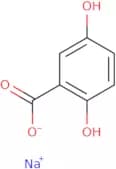
CAS:<p>Gentisic acid sodium salt hydrate is a benzoate that is used as a diagnostic agent in the study of inflammatory bowel disease. Gentisic acid sodium salt hydrate is a sodium salt of gentisic acid and has been shown to have anti-inflammatory properties. It is used as a stabilizer for solid dispersions, such as capsules, tablets, and granules. Gentisic acid sodium salt hydrate also has the ability to prevent degradation of certain drugs by hydrolysis or oxidation. Gentisic acid sodium salt hydrate can be synthesized from 2,6-dihydroxybenzoic acid (2,6-DHB) and hippuric acid.</p>Formula:C7H5NaO4·xH2OPurity:Min. 98 Area-%Color and Shape:White PowderMolecular weight:176.1 g/molGuaiazulene
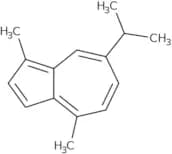
CAS:<p>愈创木菊烯或甘蓝酮是菊烯的衍生物,是用于药品和化妆品的活性成分。它是在愈创木精油中发现的一种天然化合物,由于其抗氧化特性,历史上一直用于药用。愈创木菊烯也是一种具有免疫抑制特性的抗炎药,已用于治疗慢性炎症和食管念珠菌病。已经证明,愈创木菊烯可以作为细胞毒性剂以及脂质过氧化和六氟磷酸盐诱导的 DNA 损伤的抑制剂。此外,它还能抑制肿瘤生长并对口腔病原体表现出抗菌活性。一些研究表明,愈创木菊烯可能用于治疗关节炎等慢性疾病和作为干细胞相关治疗,取得了有希望的结果。</p>Formula:C15H18Purity:(Gc) Min. 99.00%Color and Shape:PowderMolecular weight:198.3 g/molL-Glutamic acid monopotassium salt monohydrate
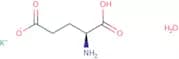
CAS:<p>Amino acid; neurotransmitter; flavor enhancer</p>Formula:C5H8KNO4·H2OColor and Shape:White PowderMolecular weight:203.23 g/molGallaldehyde hemihydrate
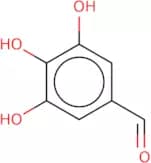
CAS:<p>Gallaldehyde hemihydrate is a bioactive phenolic compound that inhibits the tyrosine kinase domain of the epidermal growth factor receptor (EGFR). It has been shown to inhibit tumor cell growth and induce apoptosis in cancer tissues. Gallaldehyde hemihydrate has also been found in lentils, which might be used as a potential biomarker for this compound. The optimum pH for gallaldehyde hemihydrate is between 2.0-4.0, and it can bind to cation channels and act as a potential biomarker for skin cancer cells.</p>Formula:C7H6O4Purity:Min. 95%Color and Shape:PowderMolecular weight:154.12 g/molGlyceryl-4-aminobenzoate monomer
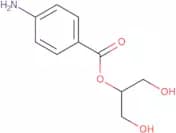
CAS:<p>Glyceryl-4-aminobenzoate monomer is a fine chemical that is an important building block in the synthesis of a variety of complex compounds. It has been used as a reagent and intermediate in research and development of pharmaceuticals and agrochemicals. Glyceryl-4-aminobenzoate monomer is a versatile building block, which can be used to form polymers, coatings, adhesives, elastomers, polyurethanes, and more. The compound also has been shown to have anticancer activity against human breast cancer cells.</p>Formula:C10H13NO4Purity:Min. 75 Area-%Color and Shape:Off-white to beige solid.Molecular weight:211.21 g/molGlycine
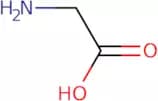
CAS:<p>Glycine is the simplest amino acid and is used as a reagent for the synthesis of proteins. It is also a component of buffer solutions to maintain a stable pH in lab applications like electrophoresis and enzyme assays.</p>Formula:NH2CH2COOHColor and Shape:White Off-White PowderMolecular weight:75.07 g/mol6-[(1E)-2-(3,4-Dihydroxyphenyl)ethenyl]-3,4-dihydroxy-2H-pyran-2-one
CAS:<p>Versatile small molecule scaffold</p>Formula:C13H10O6Purity:Min. 95%Color and Shape:PowderMolecular weight:262.2 g/mol2,3-Dihydro-1,4-benzodioxine-5-sulfonyl chloride
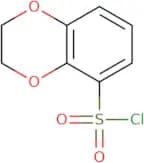
CAS:<p>Versatile small molecule scaffold</p>Formula:C8H7ClO4SPurity:Min. 95%Color and Shape:PowderMolecular weight:234.65 g/mol4-(Dimethylamino)-3-nitrobenzoic acid
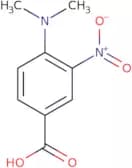
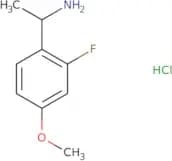
CAS:<p>4-(Dimethylamino)-3-nitrobenzoic acid is a chemical compound with CAS No. 28096-56-2. It is a high quality chemical reagent, useful as an intermediate for the synthesis of complex compounds and fine chemicals. It is also a useful building block for the synthesis of versatile building blocks, and can be used in reactions to form new chemical compounds. 4-(Dimethylamino)-3-nitrobenzoic acid is also a versatile building block that can be used in many reactions to form new chemical compounds, and can be used as a research chemical or speciality chemical.</p>Formula:C9H10N2O4Purity:Min. 95%Molecular weight:210.19 g/mol1-(2-Fluoro-4-methoxyphenyl)ethylamine hydrochloride
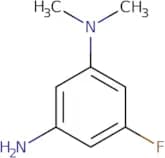
CAS:<p>1-(2-Fluoro-4-methoxyphenyl)ethylamine hydrochloride is a fine chemical that belongs to the group of versatile building blocks. It is a useful reagent, speciality chemical, and reaction component for the synthesis of complex compounds. 1-(2-Fluoro-4-methoxyphenyl)ethylamine hydrochloride is a high quality and useful intermediate for the production of other chemicals. Its CAS number is 1309602-79-6.</p>Formula:C9H13ClFNOPurity:Min. 95%Color and Shape:PowderMolecular weight:205.66 g/mol5-Fluoro-N1,N1-dimethylbenzene-1,3-diamine
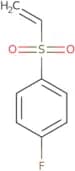
CAS:<p>5-Fluoro-N1,N1-dimethylbenzene-1,3-diamine is a reaction component that can be used in the synthesis of compounds with a wide range of applications. It can be used as a reagent and has been shown to exhibit high quality in research. 5-Fluoro-N1,N1-dimethylbenzene-1,3-diamine is also known to be useful for the synthesis of pharmaceuticals, agrochemicals and other chemicals. The compound can be used as an intermediate or building block in the synthesis of more complex compounds. 5-Fluoro-N1,N1-dimethylbenzene-1,3-diamine is also versatile due to its ability to react with various types of functional groups including amines and thiols. This product is a fine chemical that exhibits a high degree of purity when synthesized.</p>Formula:C8H11FN2Purity:Min. 95%Color and Shape:Clear LiquidMolecular weight:154.18 g/mol1-(Ethenesulfonyl)-4-fluorobenzene
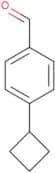
CAS:<p>1-(Ethenesulfonyl)-4-fluorobenzene is a versatile chemical that can be used as a building block for the synthesis of complex compounds. It is also a reagent and speciality chemical with many applications in research. 1-(Ethenesulfonyl)-4-fluorobenzene is an excellent starting material for the synthesis of useful scaffolds and it has shown to have high quality.</p>Formula:C8H7FO2SPurity:Min. 95%Molecular weight:186.21 g/mol4-Cyclobutylbenzaldehyde
CAS:<p>4-Cyclobutylbenzaldehyde is a versatile building block that is used in the synthesis of complex compounds. This chemical is a reagent and speciality chemical which can be used for research purposes. It also has potential use as an intermediate or scaffold in organic synthesis. 4-Cyclobutylbenzaldehyde is a high quality compound with a CAS number of 875306-94-8.</p>Formula:C11H12OPurity:Min. 95%Color and Shape:Clear LiquidMolecular weight:160.22 g/mol2-Amino-N-[(2-fluorophenyl)methyl]-N-methylbutanamide
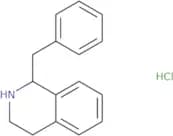
CAS:<p>Versatile small molecule scaffold</p>Formula:C12H17FN2OPurity:Min. 95%Color and Shape:PowderMolecular weight:224.27 g/mol1-Benzyl-1,2,3,4-tetrahydroisoquinoline hydrochloride
CAS:<p>1-Benzyl-1,2,3,4-tetrahydroisoquinoline hydrochloride is a drug that has been shown to have chronic toxicity in monkeys. It has been injected subcutaneously for the treatment of fascicularis and has induced parkinsonism as a symptom. The chronic effects of this drug on humans are not well known. Further investigations are required to determine whether 1-Benzyl-1,2,3,4-tetrahydroisoquinoline hydrochloride induces Parkinsonism in humans.</p>Formula:C16H17N•HClPurity:Min. 95%Color and Shape:PowderMolecular weight:259.77 g/mol4-Hydroxy-3-methoxyphenylacetone
CAS:<p>4-Hydroxy-3-methoxyphenylacetone is a natural compound that is found in lignin and has been studied as a potential treatment for congestive heart failure. The compound has been shown to inhibit the activity of enzymes involved in the transfer reactions of bacterial cells. It also reduces the production of acetate, which is used by bacteria for growth. 4-Hydroxy-3-methoxyphenylacetone has been found to be nontoxic to mice at doses up to 10 g/kg. This study also showed that 4-hydroxy-3-methoxyphenylacetone had no effect on enzyme activities in rat liver mitochondria or rat brain synaptosomes.</p>Formula:C10H12O3Purity:Min. 98 Area-%Color and Shape:Clear LiquidMolecular weight:180.2 g/mol5-Hydroxymethylfurfural
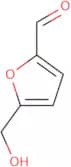
CAS:<p>5-Hydroxymethylfurfural (5-HMF) is a model system used to study the effects of 5-hmf on therapy groups. It can be used as a catalyst in the production of p-hydroxybenzoic acid, and it has been shown to have an antioxidant effect in bowel disease and oxidative injury. 5-HMF is also able to produce hydroxymethylfurfural (HMF) from glucose injection. HMF can be found in foods such as fructose, and is toxic to humans when consumed at high levels.</p>Formula:C6H6O3Purity:Min. 97%Color and Shape:Slightly Brown PowderMolecular weight:126.11 g/mol2-Hydroxy-4-methoxybenzaldehyde
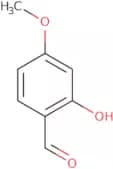
CAS:<p>2-Hydroxy-4-methoxybenzaldehyde is an antifungal agent that has been shown to have a broad spectrum of activity against filamentous fungi. It is able to inhibit the growth of fungi by inhibiting the enzyme shikimate dehydrogenase, which is involved in the synthesis of aromatic amino acids and other essential metabolites. 2-Hydroxy-4-methoxybenzaldehyde also inhibits xylose reductase and alpha-galactosidase, enzymes that are involved in cell wall biosynthesis. This compound is effective against Candida albicans, Aspergillus niger, and Trichophyton mentagrophytes. 2-Hydroxy-4-methoxybenzaldehyde has also been shown to have bacteriostatic effects on Escherichia coli.</p>Formula:C8H8O3Purity:Min. 95%Color and Shape:Off-White PowderMolecular weight:152.15 g/mol2-Hydroxy-3-methoxybenzaldehyde
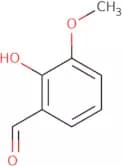
CAS:<p>2-Hydroxy-3-methoxybenzaldehyde is a model compound that is used to study the reaction mechanism of hydrogen bonding. It has been shown to have antioxidative properties and amoebicidal activity. The biological properties of 2-hydroxy-3-methoxybenzaldehyde are still being studied. There are also no reports on its toxicity or carcinogenicity in humans. This compound is a member of the group P2, which includes compounds with two aromatic rings connected by one carbon atom. The molecular geometry around this carbon atom is pyramidal and the molecule can exist in either an axial or equatorial orientation. Synchronous fluorescence experiments have shown that 2-hydroxymethoxybenzaldehyde reacts with Toll-like receptor 4 (TLR4).</p>Formula:C8H8O3Purity:Min. 95%Color and Shape:Yellow PowderMolecular weight:152.15 g/mol


![6-[(1E)-2-(3,4-Dihydroxyphenyl)ethenyl]-3,4-dihydroxy-2H-pyran-2-one](/_next/image/?url=https%3A%2Fstatic.cymitquimica.com%2Fproducts%2F3D%2Fthumb-webp%2FZWC96466.webp&w=3840&q=75)
![2-Amino-N-[(2-fluorophenyl)methyl]-N-methylbutanamide](/_next/image/?url=https%3A%2Fstatic.cymitquimica.com%2Fproducts%2F3D%2Fthumb-webp%2FTYB06730.webp&w=3840&q=75)