


Building Blocks
This section contains fundamental products for the synthesis of organic and biological compounds. Building blocks are the essential starting materials used to construct complex molecules through various chemical reactions. They play a critical role in drug discovery, material science, and chemical research. At CymitQuimica, we offer a diverse range of high-quality building blocks to support your innovative research and industrial projects, ensuring you have the essential components for successful synthesis.
Subcategories of "Building Blocks"
- Boronic Acids & Boronic Acid Derivatives(5,756 products)
- Chiral Building Blocks(1,242 products)
- Hydrocarbon Building Blocks(6,095 products)
- Organic Building Blocks(61,038 products)
Found 196817 products of "Building Blocks"
Sort by
Purity (%)
0
100
|
0
|
50
|
90
|
95
|
100
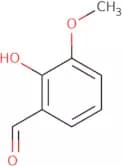
2-Hydroxy-3-methoxybenzaldehyde
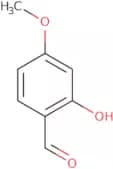
CAS:<p>2-Hydroxy-3-methoxybenzaldehyde is a model compound that is used to study the reaction mechanism of hydrogen bonding. It has been shown to have antioxidative properties and amoebicidal activity. The biological properties of 2-hydroxy-3-methoxybenzaldehyde are still being studied. There are also no reports on its toxicity or carcinogenicity in humans. This compound is a member of the group P2, which includes compounds with two aromatic rings connected by one carbon atom. The molecular geometry around this carbon atom is pyramidal and the molecule can exist in either an axial or equatorial orientation. Synchronous fluorescence experiments have shown that 2-hydroxymethoxybenzaldehyde reacts with Toll-like receptor 4 (TLR4).</p>Formula:C8H8O3Purity:Min. 95%Color and Shape:Yellow PowderMolecular weight:152.15 g/mol2-Hydroxy-4-methoxybenzaldehyde
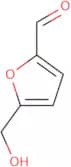
CAS:<p>2-Hydroxy-4-methoxybenzaldehyde is an antifungal agent that has been shown to have a broad spectrum of activity against filamentous fungi. It is able to inhibit the growth of fungi by inhibiting the enzyme shikimate dehydrogenase, which is involved in the synthesis of aromatic amino acids and other essential metabolites. 2-Hydroxy-4-methoxybenzaldehyde also inhibits xylose reductase and alpha-galactosidase, enzymes that are involved in cell wall biosynthesis. This compound is effective against Candida albicans, Aspergillus niger, and Trichophyton mentagrophytes. 2-Hydroxy-4-methoxybenzaldehyde has also been shown to have bacteriostatic effects on Escherichia coli.</p>Formula:C8H8O3Purity:Min. 95%Color and Shape:Off-White PowderMolecular weight:152.15 g/mol5-Hydroxymethylfurfural
CAS:<p>5-Hydroxymethylfurfural (5-HMF) is a model system used to study the effects of 5-hmf on therapy groups. It can be used as a catalyst in the production of p-hydroxybenzoic acid, and it has been shown to have an antioxidant effect in bowel disease and oxidative injury. 5-HMF is also able to produce hydroxymethylfurfural (HMF) from glucose injection. HMF can be found in foods such as fructose, and is toxic to humans when consumed at high levels.</p>Formula:C6H6O3Purity:Min. 97%Color and Shape:Slightly Brown PowderMolecular weight:126.11 g/mol4-Hydroxy-3-methoxyphenylacetone
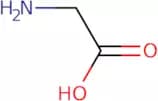
CAS:<p>4-Hydroxy-3-methoxyphenylacetone is a natural compound that is found in lignin and has been studied as a potential treatment for congestive heart failure. The compound has been shown to inhibit the activity of enzymes involved in the transfer reactions of bacterial cells. It also reduces the production of acetate, which is used by bacteria for growth. 4-Hydroxy-3-methoxyphenylacetone has been found to be nontoxic to mice at doses up to 10 g/kg. This study also showed that 4-hydroxy-3-methoxyphenylacetone had no effect on enzyme activities in rat liver mitochondria or rat brain synaptosomes.</p>Formula:C10H12O3Purity:Min. 98 Area-%Color and Shape:Clear LiquidMolecular weight:180.2 g/molGlycine
CAS:<p>Glycine is the simplest amino acid and is used as a reagent for the synthesis of proteins. It is also a component of buffer solutions to maintain a stable pH in lab applications like electrophoresis and enzyme assays.</p>Formula:NH2CH2COOHColor and Shape:White Off-White PowderMolecular weight:75.07 g/molGlyceryl-4-aminobenzoate monomer
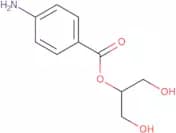
CAS:<p>Glyceryl-4-aminobenzoate monomer is a fine chemical that is an important building block in the synthesis of a variety of complex compounds. It has been used as a reagent and intermediate in research and development of pharmaceuticals and agrochemicals. Glyceryl-4-aminobenzoate monomer is a versatile building block, which can be used to form polymers, coatings, adhesives, elastomers, polyurethanes, and more. The compound also has been shown to have anticancer activity against human breast cancer cells.</p>Formula:C10H13NO4Purity:Min. 75 Area-%Color and Shape:Off-white to beige solid.Molecular weight:211.21 g/molGallaldehyde hemihydrate
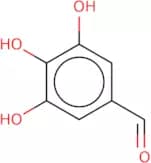
CAS:<p>Gallaldehyde hemihydrate is a bioactive phenolic compound that inhibits the tyrosine kinase domain of the epidermal growth factor receptor (EGFR). It has been shown to inhibit tumor cell growth and induce apoptosis in cancer tissues. Gallaldehyde hemihydrate has also been found in lentils, which might be used as a potential biomarker for this compound. The optimum pH for gallaldehyde hemihydrate is between 2.0-4.0, and it can bind to cation channels and act as a potential biomarker for skin cancer cells.</p>Formula:C7H6O4Purity:Min. 95%Color and Shape:PowderMolecular weight:154.12 g/molGuaiazulene
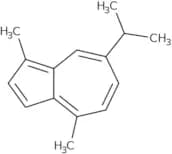
CAS:<p>愈创木菊烯或甘蓝酮是菊烯的衍生物,是用于药品和化妆品的活性成分。它是在愈创木精油中发现的一种天然化合物,由于其抗氧化特性,历史上一直用于药用。愈创木菊烯也是一种具有免疫抑制特性的抗炎药,已用于治疗慢性炎症和食管念珠菌病。已经证明,愈创木菊烯可以作为细胞毒性剂以及脂质过氧化和六氟磷酸盐诱导的 DNA 损伤的抑制剂。此外,它还能抑制肿瘤生长并对口腔病原体表现出抗菌活性。一些研究表明,愈创木菊烯可能用于治疗关节炎等慢性疾病和作为干细胞相关治疗,取得了有希望的结果。</p>Formula:C15H18Purity:(Gc) Min. 99.00%Color and Shape:PowderMolecular weight:198.3 g/molH-Glu(pNA)-OH
CAS:<p>Gamma-GPNA is a highly specific and sensitive substrate commonly employed for assessing gamma-glutamyl transferase activity in both serum and tissues, particularly through automated colorimetric methods. In this context, the dipeptide Gly-Gly serves as the glutamyl acceptor, facilitating the enzymatic reaction and subsequent detection of gamma-glutamyl transferase activity. This substrate has been widely utilized in enzymatic assays due to its specificity and sensitivity, allowing for accurate determination of gamma-glutamyl transferase levels in various biological samples.</p>Formula:C11H13N3O5Purity:Min. 95%Color and Shape:PowderMolecular weight:267.24 g/mol1-Naphthol dihydrogen phosphate monosodium monohydrate
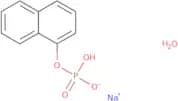
CAS:<p>1-Naphthol dihydrogen phosphate monosodium salt monohydrate is an organic compound that is a useful scaffold for the synthesis of other organic compounds. It is also used as a reagent and building block in organic synthesis. 1-Naphthol dihydrogen phosphate monosodium salt monohydrate has CAS No. 81012-89-7 and can be used as a reaction component, intermediate, or building block in the synthesis of complex compounds. This compound is soluble in water, ethanol, ethers, benzene, chloroform, and acetone. The purity level of 1-naphthol dihydrogen phosphate monosodium salt monohydrate ranges from 99% to 100%.</p>Formula:C10H9O4P•Na•H2OPurity:Min. 98%Color and Shape:PowderMolecular weight:265.16 g/mol2'-Nitroacetophenone
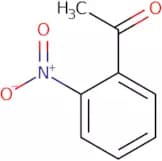
CAS:<p>2'-Nitroacetophenone is a chemical compound that is synthesized by the reaction of acetophenone with nitric acid and sulfuric acid in an acidic environment. The optimum conditions for this reaction are at 50°C and pH=1.5-2.0, which leads to the formation of ester hydrochloride. When 2'-nitroacetophenone comes into contact with choline, it binds to form the nitro group on the aromatic ring, which can be photochemically activated to form the nitro group on the benzene ring. This chemical has inhibitory properties against mammalian cells and may be used in cancer therapy. 2'-Nitroacetophenone also reacts with hydrogen gas in a water vapor environment to form hydrogen bonds, which are necessary for asymmetric synthesis reactions involving carbonyl groups.br>br> 2'-Nitroacetophenone is used as an intermediate for pharmaceuticals such as nitrosoureas and other antic</p>Formula:C8H7NO3Purity:Min. 95%Color and Shape:Yellow PowderMolecular weight:165.15 g/mol1-Naphthalenesulfonic acid
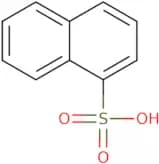
CAS:<p>1-Naphthalenesulfonic acid (1NS) is a sulfonated organic compound. It is an inhibitor of human serum albumin, with a high affinity for the hydroxyl group on the protein's surface. 1NS has been shown to have anti-cancer activity against malignant brain tumors in mice, and also inhibits HIV replication by inhibiting the function of the enzyme reverse transcriptase. 1NS has been shown to inhibit toll-like receptor 4 (TLR4), which may be related to its immunomodulatory effects.</p>Formula:C10H8O3SPurity:Min. 50.0 Area-%Color and Shape:White Beige Slightly Brown PowderMolecular weight:208.23 g/mol4-Aminopyridine-2-carboximidamide dihydrochloride
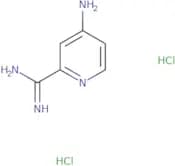
CAS:<p>Versatile small molecule scaffold</p>Formula:C6H10Cl2N4Purity:Min. 95%Color and Shape:PowderMolecular weight:209.07 g/mol1-(Furan-2-yl)-2-methoxyethan-1-one
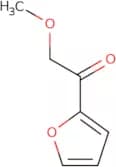
CAS:<p>Versatile small molecule scaffold</p>Formula:C7H8O3Purity:Min. 95%Color and Shape:Clear LiquidMolecular weight:140.14 g/mol2-{[(9H-Fluoren-9-yl)methoxy]carbonyl}-1,2,3,4-tetrahydroisoquinoline-6-carboxylic acid
CAS:<p>2-{[(9H-Fluoren-9-yl)methoxy]carbonyl}-1,2,3,4-tetrahydroisoquinoline-6-carboxylic acid is a high quality reagent. It is a useful intermediate for the synthesis of various complex compounds. This compound is also a useful scaffold and building block for research chemicals. 2-{[(9H-Fluoren-9-yl)methoxy]carbonyl}-1,2,3,4-tetrahydroisoquinoline-6-carboxylic acid is versatile in that it can be used as a reaction component in different reactions.</p>Formula:C25H21NO4Purity:Min. 95%Color and Shape:PowderMolecular weight:399.4 g/mol4-dibenzocyclooctynol
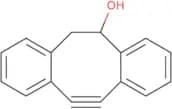
CAS:<p>4-Dibenzocyclooctynol (4DC) is a synthetic compound that has been shown to be an efficient crosslinker for proteins. It is a ring-opening polymerization agent that reacts with amines and thiols, which are chemical groups found on the side chains of amino acids in proteins. 4DC has been used for the histological analysis of cells, and it has also been used as a pharmacological treatment for Parkinson's disease. 4DC can bind to dopamine receptors, stabilizing them and preventing the degeneration of neurons in the brain. This drug also has potential applications in medical research as a tool for studying glycoconjugates and molecular modeling.</p>Formula:C16H12OPurity:Min. 95%Color and Shape:PowderMolecular weight:220.27 g/mol2-(1-Phenylcyclopropyl)propan-2-amine
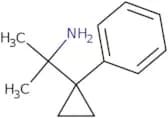
CAS:<p>2-(1-Phenylcyclopropyl)propan-2-amine is a versatile building block with a wide range of applications. It can be used as an intermediate for the synthesis of various chemical compounds, as well as a research chemical in laboratories. 2-(1-Phenylcyclopropyl)propan-2-amine is also known to possess high purity and quality, and is an excellent reagent for use in many reactions.</p>Formula:C12H17NPurity:Min. 95%Color and Shape:Clear LiquidMolecular weight:175.27 g/mol5-(Phenoxymethyl)-2H-1,2,3,4-tetrazole
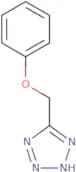
CAS:<p>5-(Phenoxymethyl)-2H-1,2,3,4-tetrazole is a versatile compound with various applications. It acts as a hydroxyl radical scavenger and is commonly used as an inhibitor in chemical reactions. Additionally, it has antiviral properties and has been studied for its potential in treating viral infections. This compound is also used in the production of cellulose-based materials, where it enhances the properties of the final product. It has been found to improve the mechanical strength and thermal stability of cellulose materials. In the field of medicine, 5-(Phenoxymethyl)-2H-1,2,3,4-tetrazole is known as a CYP3A4 substrate. This means that it can interact with enzymes involved in drug metabolism, affecting how certain medications are processed by the body. Researchers have studied its interactions with drugs like carbamazepine and ezetimibe. Furthermore, this compound has shown</p>Formula:C8H8N4OPurity:Min. 95%Color and Shape:PowderMolecular weight:176.18 g/mol1-(2,3-Difluorophenyl)ethan-1-amine hydrochloride
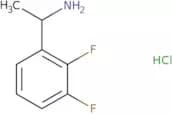
CAS:<p>1-(2,3-Difluorophenyl)ethan-1-amine hydrochloride is a high quality chemical. It is a reagent that can be used as an intermediate in the synthesis of complex compounds and fine chemicals. This compound is also a useful scaffold for the development of new drugs and novel materials. 1-(2,3-Difluorophenyl)ethan-1-amine hydrochloride is also a versatile building block for reactions in organic chemistry. It is a speciality chemical that can be used as a research chemical or reaction component for synthetic organic chemistry.</p>Formula:C8H10ClF2NPurity:Min. 95%Color and Shape:PowderMolecular weight:193.62 g/mol4-[(Pyridine-3-carbonyl)amino]butyric acid
CAS:<p>4-[(Pyridine-3-carbonyl)amino]butyric acid (4-PBA) is a non-proteinogenic amino acid that has been found in food and has been shown to have therapeutic effects on a number of diseases. 4-PBA is converted to gamma-aminobutyric acid (GABA) by the enzyme GABA transaminase. It also has a synergistic effect with sodium succinate, which is another precursor in the production of GABA. This synergistic effect increases the amount of GABA produced from 4-PBA and sodium succinate when they are consumed together. 4-PBA also binds to receptors for dopamine, which may be why it is effective for treating diabetic neuropathy and Parkinson's disease.</p>Formula:C10H12N2O3Purity:Min. 95%Color and Shape:White PowderMolecular weight:208.21 g/mol



![2-{[(9H-Fluoren-9-yl)methoxy]carbonyl}-1,2,3,4-tetrahydroisoquinoline-6-carboxylic acid](/_next/image/?url=https%3A%2Fstatic.cymitquimica.com%2Fproducts%2F3D%2Fthumb-webp%2FNKD22621.webp&w=3840&q=75)
![4-[(Pyridine-3-carbonyl)amino]butyric acid](/_next/image/?url=https%3A%2Fstatic.cymitquimica.com%2Fproducts%2F3D%2Fthumb-webp%2FFP15522.webp&w=3840&q=75)