Building Blocks
This section contains fundamental products for the synthesis of organic and biological compounds. Building blocks are the essential starting materials used to construct complex molecules through various chemical reactions. They play a critical role in drug discovery, material science, and chemical research. At CymitQuimica, we offer a diverse range of high-quality building blocks to support your innovative research and industrial projects, ensuring you have the essential components for successful synthesis.
Subcategories of "Building Blocks"
- Boronic Acids & Boronic Acid Derivatives(5,756 products)
- Chiral Building Blocks(1,242 products)
- Hydrocarbon Building Blocks(6,095 products)
- Organic Building Blocks(61,038 products)
Found 196817 products of "Building Blocks"
Sort by
Purity (%)
0
100
|
0
|
50
|
90
|
95
|
100
3,4-Dihydroxy-5-methoxybenzaldehyde
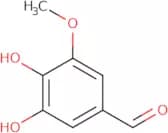
CAS:<p>3,4-Dihydroxy-5-methoxybenzaldehyde is a synthetic compound that has shown to have inhibitory effects on the replication of DNA and RNA. It also inhibits the growth of bacteria in culture by binding to the nucleic acid. The chemical structure of 3,4-Dihydroxy-5-methoxybenzaldehyde is similar to that of bisbenzylisoquinoline alkaloids, which are found in plants such as opium poppy. This similarity may explain its ability to inhibit bacterial growth. 3,4-Dihydroxy-5-methoxybenzaldehyde may be used as a drug candidate for treating bacterial infections.</p>Formula:C8H8O4Purity:Min. 95%Color and Shape:PowderMolecular weight:168.15 g/mol3,5-Dinitrosalicylaldehyde
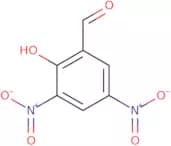
CAS:<p>3,5-Dinitrosalicylaldehyde is an oxidizing agent that is used in organic chemistry to produce aldehydes or carboxylic acids. It reacts with the amino groups of lysine residues and converts them to nitro groups. 3,5-Dinitrosalicylaldehyde is also used as a reagent in the determination of the number of lysine residues in proteins by titration with hydrochloric acid. The reaction mechanism of 3,5-dinitrosalicylaldehyde involves formation of an electron deficient intermediate that oxidizes chloride ions to form water molecules and chloride radicals. These intermediates react with nitro groups on lysine residues, resulting in nitro compounds. Crystallography studies have shown that the molecular structure of 3,5-dinitrosalicylaldehyde has two nitro groups and one hydroxyl group.</p>Formula:C7H4N2O6Purity:Min. 95%Color and Shape:Yellow PowderMolecular weight:212.12 g/mol2,4-di-tert-Butylaniline hydrochloride
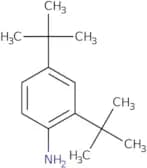
CAS:<p>The reaction mechanism of 2,4-di-tert-butylaniline hydrochloride is the alkylation of anilines with protonated tert-butyl chloride. This reaction proceeds by a substitution process in which one or more hydrogen atoms are replaced by the substituent. The selectivity of this reaction depends on the parameters and conditions used to carry it out. The reaction can be carried out under autogenous conditions or with the addition of a catalyst such as nickel (Ni), palladium (Pd) or platinum (Pt). The product obtained can be modified by changing the catalyst, solvent, temperature, pressure and other parameters. Reaction kinetics is affected by additives such as water, alcohols and acids that may be added during the reaction process. The size and shape of nanoparticles can also affect kinetic properties.<br>2,4-di-tert-Butylaniline hydrochloride has been shown to have high activity for organic synthesis in hom</p>Formula:C14H24ClNPurity:Min. 95%Color and Shape:White PowderMolecular weight:241.8 g/mol2,3,4-Trihydroxybenzaldehyde
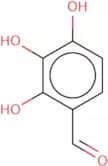
CAS:<p>2,3,4-Trihydroxybenzaldehyde is a chemical compound that has been shown to have anti-cancer properties. It is used in the detection of cancer cells and as an indicator for the presence of palladium complexes. 2,3,4-Trihydroxybenzaldehyde is also a skin allergen and can cause allergic reactions. This chemical reacts with potassium ions in solution to form a precipitate or sludge. 2,3,4-Trihydroxybenzaldehyde has been shown to be effective against colorectal carcinoma cells and Group P2 bacteria.</p>Formula:C7H6O4Purity:Min. 95%Color and Shape:PowderMolecular weight:154.12 g/mol5-Fluoro-dUMP sodium
CAS:<p>Please enquire for more information about 5-Fluoro-dUMP sodium including the price, delivery time and more detailed product information at the technical inquiry form on this page</p>Formula:C9H12FN2O8P•NaxPurity:Min. 95%1-(1,2,3,4-Tetrahydronaphthalen-1-yl)cyclopropan-1-amine
CAS:<p>1-(1,2,3,4-Tetrahydronaphthalen-1-yl)cyclopropan-1-amine is a high quality reagent that can be used as a useful intermediate in the synthesis of complex compounds. It has been shown to be a useful scaffold for the synthesis of various fine chemicals and speciality chemicals. 1-(1,2,3,4-Tetrahydronaphthalen-1-yl)cyclopropan-1-amine is also versatile building block that can be used as a reaction component in many different chemical reactions.</p>Formula:C13H17NPurity:Min. 95%Color and Shape:PowderMolecular weight:187.28 g/mol(2,5-Dichlorophenyl)acetone
CAS:<p>(2,5-Dichlorophenyl)acetone is a chemical compound that is used as a reaction component in the synthesis of other compounds. It can be used as a reagent in the preparation of high quality research chemicals, speciality chemicals and fine chemicals. It is also used as an intermediate in the synthesis of complex compounds. (2,5-Dichlorophenyl)acetone has CAS number 102052-40-4.</p>Formula:C9H8Cl2OPurity:Min. 95%Color and Shape:PowderMolecular weight:203.06 g/mol2,4-Difluoro-3-hydroxybenzoic acid methyl ester
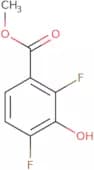
CAS:<p>2,4-Difluoro-3-hydroxybenzoic acid methyl ester is a fine chemical that is used as a versatile building block for research chemicals and other complex compounds. It can be used as a reaction component in the synthesis of new chemical entities or as a reagent for organic chemistry reactions. 2,4-Difluoro-3-hydroxybenzoic acid methyl ester has CAS No. 194804-80-3 and is available in high quality.</p>Formula:C8H6F2O3Purity:Min. 95%Color and Shape:PowderMolecular weight:188.13 g/mol2-(1H-1,2,4-Triazol-1-yl)pyridine-4-carboximidamide hydrochloride
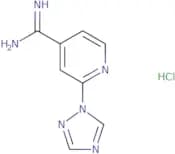
CAS:<p>2-(1H-1,2,4-Triazol-1-yl)pyridine-4-carboximidamide hydrochloride is a versatile building block that can be used in the synthesis of many compounds. This compound is a fine chemical and may be useful as a research chemical or as a speciality chemical. CAS No. 1421606-01-0.</p>Formula:C8H9ClN6Purity:Min. 95%Color and Shape:PowderMolecular weight:224.65 g/mol2-(Trifluoromethoxy)aniline
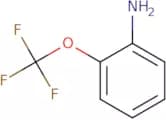
CAS:<p>2-(Trifluoromethoxy)aniline is a heterocyclic aromatic compound that can act as an electrophilic catalyst. It is a strong nucleophile and reacts with various types of nucleophiles. 2-(Trifluoromethoxy)aniline has been used for the synthesis of aliphatic sulfoxides under acidic conditions, including alcohols, phenols, and thiols. The reaction mechanism is often a 1,2-addition of the nucleophile to the carbonyl group of 2-(trifluoromethoxy)aniline. This reaction is catalytic and produces a stable dimerized product. 2-(Trifluoromethoxy)aniline also has mesoporous properties, which allow it to be used in reactions involving alcohols or other polar molecules because they are soluble in the pores.</p>Formula:C7H6F3NOPurity:Min. 95%Color and Shape:Clear LiquidMolecular weight:177.12 g/molD-Valinol
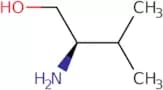
CAS:<p>D-Valinol is a synthetic compound that contains a chiral alcohol group. It is an ester hydrochloride salt of D-valinol and has been shown to be clinically effective in treating chronic lymphocytic leukemia (CLL). This drug is a potent inhibitor of the bcr-abl kinase, which is involved in the regulation of protein synthesis. D-Valinol binds to the kinase domain of this enzyme and inhibits its activity by preventing it from transferring phosphate groups from ATP to tyrosine residues on proteins. D-Valinol also inhibits chloride channels, which are required for cell survival.</p>Formula:C5H13NOPurity:Min. 95%Color and Shape:PowderMolecular weight:103.16 g/mol3,4-Dihydroxybenzylamine hydrobromide
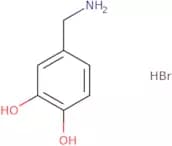
CAS:<p>3,4-Dihydroxybenzylamine hydrobromide is a chemical that reacts with hydrogen peroxide to produce light. It is used as a nutrient for the chemiluminescent reaction in a nutrient solution to detect dopamine, chlorogenic acids, and trifluoroacetic acid. 3,4-Dihydroxybenzylamine hydrobromide can also be used as an analytical method for the measurement of cortisol concentration in plasma and saliva samples. This chemical analogically reacts with monoamine neurotransmitters such as dopamine and gamma-aminobutyric acid (GABA) to form fluorescent probes. 3,4-Dihydroxybenzylamine hydrobromide is not toxic or mutagenic and has been shown to be safe for use in humans.</p>Formula:C7H10BrNO2Purity:Min. 95%Color and Shape:PowderMolecular weight:220.06 g/molChloro-7-deazapurine
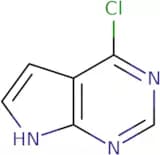
CAS:<p>Intermediate in the synthesis of baricitinib</p>Formula:C6H4ClN3Purity:Min. 95%Color and Shape:Off-White PowderMolecular weight:153.57 g/molThieno[3,2,-b]thiophene-2-carbaldehyde
CAS:<p>Thieno[3,2,-b]thiophene-2-carbaldehyde is a molecule that can be used in supramolecular chemistry. It has processability and pharmacokinetic properties as well as a good morphology. This molecule has been shown to be an excellent chemosensor. Thieno[3,2,-b]thiophene-2-carbaldehyde has also been shown to enhance the optical properties of semiconducting nanocrystals. The supramolecular chemistry of this molecule will allow for it to be analyzed with simulations and the optical properties will provide for its enhancement.</p>Formula:C7H4OS2Purity:Min. 95%Color and Shape:PowderMolecular weight:168.24 g/mol6-Chloro-3-methyluracil
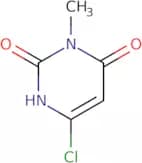
CAS:<p>Intermediate in the synthesis of alogliptin</p>Formula:C5H5ClN2O2Purity:Min. 98 Area-%Color and Shape:Off-White PowderMolecular weight:160.56 g/molFmoc-L-cysteine
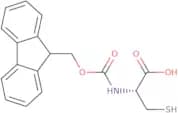
CAS:<p>Fmoc-L-cysteine is a reactive thiol that can be used for the synthesis of peptides and proteins. Fmoc-L-cysteine is synthesized by hydrothiolation of L-cysteine with 3-mercaptopropionic acid, which leads to the formation of a disulfide bond. The reaction product is purified by column chromatography and analyzed by NMR spectroscopy. Fmoc-L-cysteine has been shown to have efficient prenylation activity in vitro and in cell culture experiments. It has also been shown to be an important amino acid for the formation of amyloid protein aggregates, as well as being involved with other helical peptides in plants. X-ray crystal structures have been determined for Fmoc-L-cysteine bound to monoclonal antibodies.</p>Formula:C18H17NO4SPurity:Min. 98 Area-%Color and Shape:PowderMolecular weight:343.4 g/mol(S)-1-(2-Amino-propan-1-yl)-4-methyl-piperazine
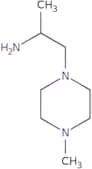
CAS:<p>(S)-1-(2-Amino-propan-1-yl)-4-methyl-piperazine is a reagent, reaction component and building block for speciality chemicals. It is a versatile intermediate that has been used in the synthesis of complex compounds. (S)-1-(2-Amino-propan-1-yl)-4-methyl-piperazine is an important building block for the synthesis of a variety of pharmaceuticals and other organic compounds. This compound can be used as an intermediate or reagent to produce high quality research chemicals.</p>Formula:C8H19N3Purity:Min. 95%Molecular weight:157.26 g/mol3-Cyclopropyl-3-methylbutanamide
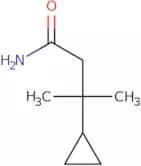
CAS:<p>Versatile small molecule scaffold</p>Formula:C8H15NOPurity:Min. 95%Color and Shape:PowderMolecular weight:141.21 g/molDL-Tyrosine
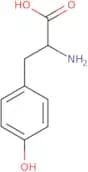
CAS:<p>DL-Tyrosine is a non-essential amino acid that can be synthesized in the body from phenylalanine or obtained from food. DL-Tyrosine is a precursor of the neurotransmitter dopamine, which is involved in regulating mood, movement, and cognitive functions. DL-Tyrosine has been shown to inhibit the conversion of tyrosine to 3,4-dihydroxyphenylacetic acid (DOPAC) by dopamine β-hydroxylase. Tyrosine also prevents the formation of reactive oxygen species due to its chemical stability and ability to scavenge free radicals. DL-Tyrosine may have implications for treating Parkinson's disease, ADHD, depression, and chronic fatigue syndrome.</p>Formula:C9H11NO3Purity:Min. 95%Color and Shape:PowderMolecular weight:181.19 g/mol2,3,4,6-Tetra-O-benzyl-D-galactopyranose
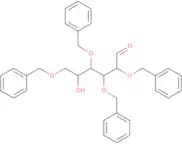
CAS:<p>2,3,4,6-Tetra-O-benzyl-D-galactopyranose is an isomeric sugar that is found in a variety of natural and synthetic carbohydrates. It has been shown to inhibit glycosidase enzymes such as aminoglycoside N-acetyltransferases and α-glycosidases. The stereoselective properties of 2,3,4,6-Tetra-O-benzyl-D-galactopyranose make it a good candidate for the treatment of drug resistant bacteria. This compound has been shown to have inhibitory activity against the hydrolase family of enzymes that includes proteases, lipases, and phospholipases.</p>Formula:C34H36O6Purity:Min. 95%Color and Shape:PowderMolecular weight:540.6 g/mol



![Thieno[3,2,-b]thiophene-2-carbaldehyde](/_next/image/?url=https%3A%2Fstatic.cymitquimica.com%2Fproducts%2F3D%2Fthumb-webp%2FFT33133.webp&w=3840&q=75)