Building Blocks
This section contains fundamental products for the synthesis of organic and biological compounds. Building blocks are the essential starting materials used to construct complex molecules through various chemical reactions. They play a critical role in drug discovery, material science, and chemical research. At CymitQuimica, we offer a diverse range of high-quality building blocks to support your innovative research and industrial projects, ensuring you have the essential components for successful synthesis.
Subcategories of "Building Blocks"
- Boronic Acids & Boronic Acid Derivatives(5,756 products)
- Chiral Building Blocks(1,242 products)
- Hydrocarbon Building Blocks(6,095 products)
- Organic Building Blocks(61,038 products)
Found 196817 products of "Building Blocks"
Sort by
Purity (%)
0
100
|
0
|
50
|
90
|
95
|
100
1-(1H-Indol-3-yl)-2-methylpropan-2-amine
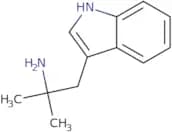
CAS:Controlled Product<p>1-(1H-Indol-3-yl)-2-methylpropan-2-amine is a receptor antagonist that belongs to the class of indolealkylamines. It has been shown to produce a dose-dependent inhibition of 5-hydroxytryptamine (5HT) induced contractions in guinea pig trachea preparations. This drug has also been shown to be an effective receptor antagonist at the level of the human trachea, where it was highly selective for 5HT receptors and had no effect on muscarinic receptors. 1-(1H-Indol-3-yl)-2-methylpropan-2-amine is well absorbed after oral administration and is metabolized by liver enzymes into inactive metabolites.</p>Formula:C12H16N2Purity:Min. 95%Color and Shape:PowderMolecular weight:188.27 g/mol2-(Dimethylphosphoryl)-2-hydroxyacetic acid
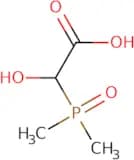
CAS:<p>2-(Dimethylphosphoryl)-2-hydroxyacetic acid (DMPPA) is a herbicide that inhibits acetaldehyde dehydrogenase, an enzyme in the biochemical pathway of acetaldehyde biosynthesis. DMPPA does not have any effect on glutamate and l-threonine metabolism or on the formation of diketones. The target enzyme is activated by the addition of glyphosate to the leaves. DMPPA is used for diagnosis of velvetleaf (Abutilon theophrasti), which is a weed found in corn fields in North America. The chemical can be applied as a foliar spray or as a soil application, with many different formulations available. The chemical has been shown to be effective against graminaceous weeds such as barnyardgrass (Echinochloa crusgalli) and crabgrass (Digitaria spp.).</p>Formula:C4H9O4PPurity:Min. 95%Molecular weight:152.09 g/mol4-Aminobutylphosphonic acid
CAS:<p>4-Aminobutylphosphonic acid is a potent antagonist of the ganglion cell nicotinic acetylcholine receptors. It has been shown to produce irreversible oxidation of the ganglion cell membrane by inhibiting the enzyme catalase, which is responsible for the removal of hydrogen peroxide produced by cells. 4-Aminobutylphosphonic acid also inhibits gamma-aminobutyric acid (GABA) synthesis and increases locomotor activity in frogs. This drug also binds to functional groups on the frog’s muscle cells and stimulates a nerve impulse that causes muscle contraction. The molecule has been shown to be an effective inhibitor of x-ray diffraction data from calf thymus DNA, vinyl alcohol, and glass slides.</p>Formula:C4H12NO3PPurity:Min. 95%Color and Shape:PowderMolecular weight:153.12 g/molN-(2-Chlorophenyl)glycine
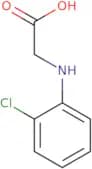
CAS:<p>N-(2-Chlorophenyl)glycine is an optical isomer of glycine that was synthesized by the photocyclization of 2-chlorobenzaldehyde using KI as a catalyst. It has been shown to be an active inhibitor of platelet aggregation and activation, with a potency comparable to clopidogrel. N-(2-Chlorophenyl)glycine may be used in pharmaceuticals for the prevention of thrombosis and stroke, particularly in patients who are at high risk for these complications. The synthesis of this compound requires the use of an organic solvent and chiral reagents.</p>Formula:C8H8ClNO2Purity:Min. 95%Color and Shape:PowderMolecular weight:185.61 g/mol3-Methyl-4-(trifluoromethyl)benzaldehyde
CAS:<p>3-Methyl-4-(trifluoromethyl)benzaldehyde is a high quality research chemical. It is a versatile building block that can be used in the synthesis of complex compounds, such as pharmaceuticals and pesticides. 3-Methyl-4-(trifluoromethyl)benzaldehyde can be used as a reagent to synthesize other chemicals and as a reaction component to produce new organic compounds. 3-Methyl-4-(trifluoromethyl)benzaldehyde has CAS No. 951232-01-2.</p>Formula:C9H7F3OPurity:Min. 95%Color and Shape:PowderMolecular weight:188.15 g/mol(3S,6S)-3-[(2S)-Butan-2-yl]-6-methylpiperazine-2,5-dione
CAS:<p>(3S,6S)-3-[(2S)-Butan-2-yl]-6-methylpiperazine-2,5-dione is a chemical compound that acts as an anticoagulant. It inhibits the coagulation of blood by preventing platelets from clumping together and forming clots. This chemical also blocks the activation of platelets by increasing levels of cyclic adenosine monophosphate (cAMP) and cyclic guanosine monophosphate (cGMP). Studies have shown that this chemical inhibits viral replication in vitro. It blocks the PI3K/AKT pathways and reduces the expression of influenza virus proteins. The extract of Portulaca oleracea has been shown to contain flavonoids that have anti-inflammatory properties.</p>Formula:C9H16N2O2Purity:Min. 98 Area-%Color and Shape:PowderMolecular weight:184.24 g/mol[3-(Morpholinomethyl)phenyl]methylamine
CAS:<p>3-(Morpholinomethyl)phenyl]methylamine (3-MP) is a modified form of the drug 3-morpholinoaniline. It is an organic compound that has been used as a stabilizer in polyolefins, such as polyethylene, to prevent degradation by heat and light. 3-MP is also used to modify copolymers of polypropylene and polyethylene. This modification prevents the copolymer from being degraded by heat, light, or oxygen. The polymerization reaction creates a cross-linked structure that protects the copolymer from degradation.</p>Formula:C12H18N2OPurity:Min. 95%Color and Shape:Clear LiquidMolecular weight:206.29 g/mol4-[(5-Ethyl-1,2,4-oxadiazol-3-yl)methoxy]piperidine
CAS:<p>Versatile small molecule scaffold</p>Formula:C10H17N3O2Purity:Min. 90%Color and Shape:Clear LiquidMolecular weight:211.26 g/molFurosine hydrochloride
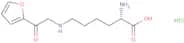
CAS:<p>Furosine hydrochloride is a white crystalline chemical with a molecular formula of C6H7N3O4S. It is soluble in water and has a melting point of about 140 degrees Celsius. Furosine hydrochloride is a useful building block for the synthesis of polymers, pharmaceuticals, organic semiconductors and other organic compounds. Furosine hydrochloride is used as an intermediate to produce fine chemicals such as polyurethanes, polyamides and amino acids. It can also be used as a reaction component in the synthesis of complex compounds such as 2-amino-5-nitrothiophene or 2,2'-dithiobis(benzothiazole). Furosine hydrochloride can be used as a scaffold for the production of various drugs such as antihypertensives or antidepressants.</p>Formula:C12H18N2O4·xHClPurity:Min. 98 Area-%Color and Shape:PowderMolecular weight:254.28 g/mol2,5-Dihydroxybenzoic acid
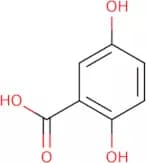
CAS:<p>2,5-Dihydroxybenzoic acid is a natural compound that has been shown to inhibit the matrix metalloproteinase enzyme activity of α1-acid glycoprotein. The 2,5-dihydroxybenzoic acid structure is similar to p-hydroxybenzoic acid and gentisic acid. It is also an inhibitor of xanthine oxidase and caffeic acid oxidase. 2,5-Dihydroxybenzoic acid has a number of potential uses in analytical chemistry as it can be used to measure the concentrations of caffeic acids and other related compounds in biological samples.</p>Formula:C7H6O4Purity:(%) Min. 98%Color and Shape:White PowderMolecular weight:154.12 g/mol4,4'-Dinitro-2,2'-bipyridine
CAS:<p>4,4'-Dinitro-2,2'-bipyridine is a dihedral molecule that is used in biosensors to detect nitro compounds. It is synthesized by the reaction of osmium tetroxide with pyridine. The transfer of electrons from the pyridine ring to the osmium atom results in an oriented molecule with a positive charge on one end and a negative charge on the other end. This orientation can be reversed by oxidation. 4,4'-Dinitro-2,2'-bipyridine has been shown to react with monoalcohols and nucleophiles such as water to form covalent bonds. It also reacts with radiation, which may account for its use in dosimeters for measuring radiation exposure.</p>Formula:C10H6N4O4Purity:Min. 95%Color and Shape:Yellow PowderMolecular weight:246.18 g/mol4,5-Dichloro-1,2-phenylenediamine
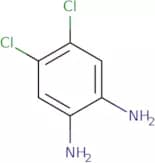
CAS:<p>4,5-Dichloro-1,2-phenylenediamine is a cytotoxic agent that can inhibit the enzymes urea amidolyase and fatty acid synthase in tissue culture. This compound also inhibits the production of urea nitrogen and fatty acids in human serum. 4,5-Dichloro-1,2-phenylenediamine may be useful as a cancer treatment because it has been shown to cause leukemia cell death as well as inhibition of t-cell proliferation. The drug may also induce apoptosis by inhibiting DNA synthesis through its reaction with benzimidazole compounds. The basic structure of 4,5-Dichloro-1,2-phenylenediamine is similar to protocatechuic acid and malignant brain tumor cells.</p>Formula:C6H6Cl2N2Purity:Min. 95%Color and Shape:PowderMolecular weight:177.03 g/mol2,3-Dichloropyridine
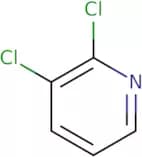
CAS:<p>2,3-Dichloropyridine is an organic compound with the formula P(Cl)Cl. It is a white crystalline solid that reacts violently with water and alcohols. 2,3-Dichloropyridine can be used for the preparation of dichloroacetic acid by reaction with phosphorus pentachloride in the presence of sodium carbonate and water vapor. This compound can also be used to prepare copper chloride by reaction with diazonium salt in hydrochloric acid and chlorine atom in the presence of sodium carbonate at low energy.</p>Formula:C5H3Cl2NPurity:Min. 95%Color and Shape:PowderMolecular weight:147.99 g/mol3,4-Diaminobenzoic acid
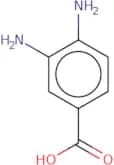
CAS:<p>3,4-Diaminobenzoic acid is a compound that is produced by the condensation of two molecules of hydrochloric acid. 3,4-Diaminobenzoic acid has been used as a reagent in the synthesis of coumarin derivatives. This chemical has been shown to be an effective proton scavenger in an optimum concentration. Benzimidazole compounds are also synthesized from 3,4-diaminobenzoic acid and have been shown to be effective against autoimmune diseases. 3,4-Diaminobenzoic acid can be used for the production of diazonium salts, which are used in the synthesis of anti-inflammatory drugs and other pharmaceuticals. The hydroxyl group on this molecule makes it chemically stable and kinetic data shows that it has high diphenolase activity.</p>Formula:C7H8N2O2Purity:Min. 96 Area-%Color and Shape:PowderMolecular weight:152.15 g/molBenzofuran-4-carbaldehyde
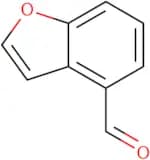
CAS:<p>Benzofuran-4-carbaldehyde is a reactive, low molecular weight compound. It is an oxidative and thermally labile compound that can be used for the preparation of other compounds. Benzofuran-4-carbaldehyde is a colorless liquid with a boiling point of 124°C and a melting point of -27°C. It has a molecular weight of 92.07 g/mol and has a density of 0.91 g/mL at 20°C, which means it will have an octanol:water partition coefficient of 1.2. The molecule has two chiral centers, meaning there are four possible stereoisomers that can be made from it. This compound is primarily broken down into furan, formic acid, and methanol by oxidation mechanisms or by thermal decomposition pathways such as pyrolysis or condensation reactions to produce additional compounds.br>br>Benzofuran-4-carbaldehyde can be oxidized to produce reactive oxygen species</p>Formula:C9H6O2Purity:Min. 95%Molecular weight:146.14 g/molFinerenone
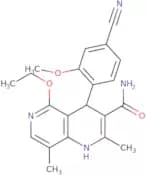
CAS:<p>Please enquire for more information about Finerenone including the price, delivery time and more detailed product information at the technical inquiry form on this page</p>Formula:C21H22N4O3Purity:Min. 95%Color and Shape:PowderMolecular weight:378.4 g/mol2,6-Dichloropyridine
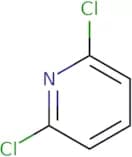
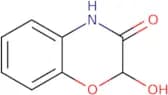
CAS:<p>2,6-Dichloropyridine is an organohalide used as a reagent for asymmetric catalysis. It is use as a precursor for the synthesis of antibacterial agents, for example the synthesis of the antibiotic enoxacin.</p>Formula:C5H3Cl2NPurity:Min. 98%Color and Shape:White To Yellowish To Pink To Grey To Light Brown SolidMolecular weight:147.99 g/mol2-Hydroxy-3,4-dihydro-2H-1,4-benzoxazin-3-one
CAS:<p>2-Hydroxy-3,4-dihydro-2H-1,4-benzoxazin-3-one is a versatile compound with various applications. It is commonly used in the production of coatings and as a fatty acid leaching agent. Additionally, it is utilized in the synthesis of research chemicals such as imatinib and sildenafil citrate.</p>Formula:C8H7NO3Purity:Min. 95%Molecular weight:165.15 g/mol2,5-Dibromopyrazine
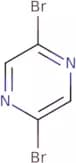
CAS:<p>2,5-Dibromopyrazine is a heterocyclic compound that can be synthesized by the Suzuki coupling reaction of 2-bromo-1,3-dibromopropane with an acceptor. It has been shown to have glycemic parameters and a high rate enhancement for the water molecule photophysical isomerization reaction. Structural isomers of 2,5-dibromopyrazine exist as well and are thought to have different rates of photocatalytic activity. The rate enhancement may be due to the increase in electron density on the heteroatoms in the ring.</p>Formula:C4H2Br2N2Purity:Min. 98%Color and Shape:Brown White Off-White Yellow Clear LiquidMolecular weight:237.88 g/mol2-(Pyrrolidin-2-yl)cyclohexan-1-one hydrochloride
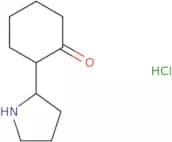
CAS:<p>Versatile small molecule scaffold</p>Formula:C10H18ClNOPurity:Min. 95%Color and Shape:PowderMolecular weight:203.71 g/mol



![(3S,6S)-3-[(2S)-Butan-2-yl]-6-methylpiperazine-2,5-dione](/_next/image/?url=https%3A%2Fstatic.cymitquimica.com%2Fproducts%2F3D%2Fthumb-webp%2FKBA59069.webp&w=3840&q=75)
![[3-(Morpholinomethyl)phenyl]methylamine](/_next/image/?url=https%3A%2Fstatic.cymitquimica.com%2Fproducts%2F3D%2Fthumb-webp%2FRDA27183.webp&w=3840&q=75)
![4-[(5-Ethyl-1,2,4-oxadiazol-3-yl)methoxy]piperidine](/_next/image/?url=https%3A%2Fstatic.cymitquimica.com%2Fproducts%2F3D%2Fthumb-webp%2FBAC08222.webp&w=3840&q=75)