Building Blocks
This section contains fundamental products for the synthesis of organic and biological compounds. Building blocks are the essential starting materials used to construct complex molecules through various chemical reactions. They play a critical role in drug discovery, material science, and chemical research. At CymitQuimica, we offer a diverse range of high-quality building blocks to support your innovative research and industrial projects, ensuring you have the essential components for successful synthesis.
Subcategories of "Building Blocks"
- Boronic Acids & Boronic Acid Derivatives(5,756 products)
- Chiral Building Blocks(1,242 products)
- Hydrocarbon Building Blocks(6,095 products)
- Organic Building Blocks(61,038 products)
Found 196817 products of "Building Blocks"
Sort by
Purity (%)
0
100
|
0
|
50
|
90
|
95
|
100
2-Hydroxy-3-methoxybenzaldehyde
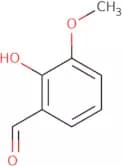
CAS:<p>2-Hydroxy-3-methoxybenzaldehyde is a model compound that is used to study the reaction mechanism of hydrogen bonding. It has been shown to have antioxidative properties and amoebicidal activity. The biological properties of 2-hydroxy-3-methoxybenzaldehyde are still being studied. There are also no reports on its toxicity or carcinogenicity in humans. This compound is a member of the group P2, which includes compounds with two aromatic rings connected by one carbon atom. The molecular geometry around this carbon atom is pyramidal and the molecule can exist in either an axial or equatorial orientation. Synchronous fluorescence experiments have shown that 2-hydroxymethoxybenzaldehyde reacts with Toll-like receptor 4 (TLR4).</p>Formula:C8H8O3Purity:Min. 95%Color and Shape:Yellow PowderMolecular weight:152.15 g/mol9-Hydroxyxanthene
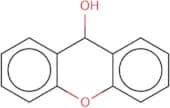
CAS:<p>9-Hydroxyxanthene is a natural drug that has been used in traditional Chinese medicine for treating a variety of diseases. It is extracted from Rhizoma Gastrodiae and Angelicae Dahuricae. 9-Hydroxyxanthene has shown to be effective against various metabolic disorders, including insulin resistance, hyperlipidemia, and diabetes. The mechanism of action of 9-hydroxyxanthene is not known but it is thought to be due to its ability to activate the immune system by transferring reactions and promoting the production of antibodies. 9-hydroxyxanthene also shows anti-inflammatory effects by inhibiting the production of prostaglandins and leukotrienes. 9-hydroxyxanthene can also inhibit angiotensin II, which may reduce high blood pressure and congestive heart failure.</p>Formula:C13H10O2Purity:Min. 98 Area-%Color and Shape:White PowderMolecular weight:198.22 g/mol4-Hydroxy-3,5-dimethylbenzoic acid
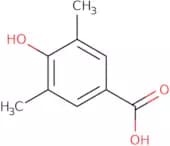
CAS:<p>4-Hydroxy-3,5-dimethylbenzoic acid (4HDMBA) is an antimicrobial agent that inhibits bacterial cell growth by binding to the GyrA subunit of DNA gyrase. It is a potent inhibitor of the GyrA subunit, with activity against both mutant and wild type strains. 4HDMBA also has anticancer activity in vitro and in vivo studies have shown that it can inhibit the growth of cells from human cancer cell lines. 4HDMBA is synthesized by reacting amide with chloroacetyl chloride. The carboxylate group on 4HDMBA can be transformed into a hydroxyl group by reaction with sodium hydroxide. The chemical structure of 4HDMBA includes a hydroxy group, a chlorine atom, and a hydroxyl group.</p>Formula:C9H10O3Purity:Min. 95%Color and Shape:PowderMolecular weight:166.17 g/mol2-Hydroxy-4-bromopyridine
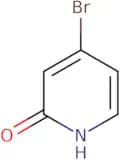
CAS:<p>2-Hydroxy-4-bromopyridine (2HBP) is a product with genotoxic activity that can be used for research. 2HBP has been shown to inhibit the synthesis of DNA by inhibiting the enzymatic reaction or binding to DNA. 2HBP is also an inhibitor of virus replication and causes monolayer cell death through radiation or chemical structures. It can be used as an anti-tumor agent and has been shown to have inhibitory properties on dna replication.</p>Formula:C5H4BrNOPurity:Min. 98 Area-%Color and Shape:White PowderMolecular weight:174 g/molL-Histidine
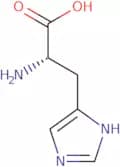
CAS:<p>L-histidine is a molecule that chelates metal ions and inhibits their function. L-Histidine is used as an analytical reagent for the determination of metal ions in water, a polymerase chain reaction (PCR) inhibitor, and an immunosuppressant. L-histidine is also used to treat bowel disease and cancer by inhibiting the production of certain molecules. L-histidine has been shown to bind to toll-like receptor 4 (TLR4) in intestinal cells, which activates the immune system to produce cytokines such as IL-8. In addition, L-histidine can act as a cofactor for enzymes involved in protein synthesis by protecting them from oxidation. L histidine can also be found in the protein that binds with gold particles, forming colloidal gold</p>Formula:C6H9N3O2Color and Shape:White PowderMolecular weight:155.15 g/molHomogentisic acid
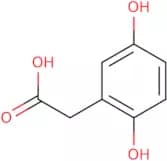
CAS:<p>Precursor of melanine synthesis in bacteria</p>Formula:C8H8O4Purity:Min 96%Color and Shape:White PowderMolecular weight:168.15 g/molD,L-Homotryptophan
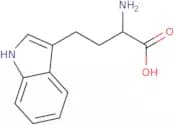
CAS:<p>D,L-Homotryptophan is a fine chemical that is used as a building block in the synthesis of complex compounds. It has been used as a reagent, speciality chemical, and intermediate. D,L-Homotryptophan is also versatile in its use as a building block for the synthesis of various chemicals. This compound has been shown to react with other chemicals to form useful scaffolds.</p>Formula:C12H14N2O2Purity:Min. 95%Color and Shape:PowderMolecular weight:218.25 g/molHomovanillic acid
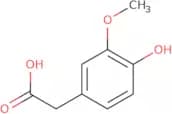
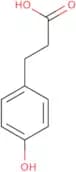
CAS:<p>Homovanillic acid is widely used as a fluorogenic substrate of peroxidase. The reaction is however not specific and has been shown to react also with soybean lipoxygenase in the presence of hydrogen peroxide. Excitation and emission wavelengths for homovanillic acid are 312 and 420 nm, respectively.</p>Formula:C9H10O4Purity:Min. 97.5 Area-%Color and Shape:Red PowderMolecular weight:182.17 g/mol3-(4-Hydroxyphenyl)propionic acid
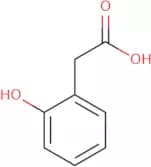
CAS:<p>Potential antioxidant; pharmaceutical intermediate</p>Formula:C9H10O3Purity:Min. 99 Area-%Color and Shape:PowderMolecular weight:166.17 g/mol2-Hydroxyphenylacetic acid
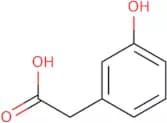
CAS:<p>2-Hydroxyphenylacetic acid is a hydroxylated phenolic acid that is structurally similar to other phenolic acids. It is present in many plants, including tea leaves and coffee beans, where it acts as an antioxidant. 2-Hydroxyphenylacetic acid has been found in the urine of humans and animals following ingestion of excessive amounts of these plants. It is also found in urine samples from patients with certain types of kidney disease. The synthesis of 2-hydroxyphenylacetic acid can be achieved by reacting ethylene diamine with sodium hydroxide solution or hydrochloric acid.</p>Formula:C8H8O3Purity:Min. 95%Color and Shape:Off-White Slightly Brown PowderMolecular weight:152.15 g/mol3-Hydroxyphenylacetic acid
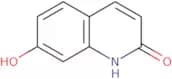
CAS:<p>3-Hydroxyphenylacetic acid is an organic compound with the formula CH(OH)(CH)COOH. It is a quinoid, meaning that it contains a benzene ring with one of the hydrogens replaced by a hydroxyl group. 3-Hydroxybenzoic acid is an important intermediate in the synthesis of several pharmaceuticals, including antipyrine and salicylic acid. It can be synthesized from phenol or benzoic acid. 3-Hydroxybenzoic acid has been shown to have antimicrobial properties against various bacteria and fungi, as well as hypoglycemic effects in rats. This compound was also shown to inhibit 4-hydroxyphenylacetate (4-HPAA) reductase activity and dopamine oxidation, two key enzymes involved in energy metabolism.</p>Formula:C8H8O3Purity:Min. 95%Color and Shape:PowderMolecular weight:152.15 g/mol7-Hydroxyquinoline-(1H)-2-one
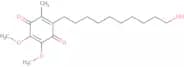
CAS:<p>7-Hydroxyquinoline-(1H)-2-one is a quinoline derivative that binds to epidermal growth factor (EGF) receptors. It has been shown to inhibit the chloride current in neurons, which may be due to its ability to bind to the dopamine receptors in these cells. 7-Hydroxyquinoline-(1H)-2-one also inhibits DNA and protein synthesis by binding to nucleophilic nitrogen atoms and protonated nitrogen atoms, respectively. It has been shown to have an inhibitory effect on cancer cell growth in control experiments. This drug is not active against normal cells because it does not bind well to them. 7-Hydroxyquinoline-(1H)-2-one binds with high affinity to piperazine and this interaction can be used as a fluorescent probe for the presence of quinoline derivatives.</p>Formula:C9H7NO2Purity:Min. 95%Color and Shape:PowderMolecular weight:161.16 g/molIdebenone
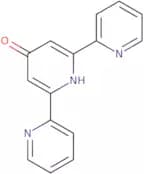
CAS:<p>Used for treatment of Alzheimer's disease and Friedreich's ataxia</p>Formula:C19H30O5Purity:Min. 98 Area-%Color and Shape:PowderMolecular weight:338.44 g/mol4'-Hydroxy-2,2':6',2''-terpyridine
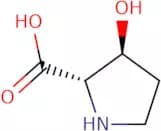
CAS:<p>4'-Hydroxy-2,2':6',2''-terpyridine is a molecule with the molecular formula C24H22N4O8. It is an organic compound that belongs to the group of heterocycles. It has been found to be a ligand for metal ions and has been shown to interact with particles at temperatures below 20°C. 4'-Hydroxy-2,2':6',2''-terpyridine crystallizes in two polymorphs: tetragonally (alpha) at room temperature and trigonally (beta) at temperatures below 20°C. The alpha form has been observed to undergo a photophysical reaction as it absorbs light and emits light in the ultraviolet region of the spectrum.</p>Formula:C15H11N3OPurity:Min. 95%Color and Shape:PowderMolecular weight:249.27 g/moltrans-3-Hydroxy-L-proline
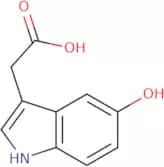
CAS:<p>Please enquire for more information about trans-3-Hydroxy-L-proline including the price, delivery time and more detailed product information at the technical inquiry form on this page</p>Formula:C5H9NO3Purity:Min. 95%Color and Shape:White PowderMolecular weight:131.13 g/mol5-Hydroxyindole-3-acetic acid
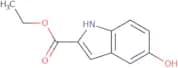
CAS:<p>Reduces brain amyloid plaques; induces neprilysin expression</p>Formula:C10H9NO3Purity:Min. 95%Color and Shape:Off-White PowderMolecular weight:191.18 g/mol5-Hydroxyindole-2-carboxylic acid ethyl ester
CAS:<p>5-Hydroxyindole-2-carboxylic acid ethyl ester is a fluorescent probe that is used in the detection of hepatitis C virus by micropet assay. The compound reacts with amines and undergoes fluorescence quenching, and can be used to quantitate their concentration. 5-Hydroxyindole-2-carboxylic acid ethyl ester is also used for the determination of the kinetics of amines and other compounds that are involved in the metabolism of drugs and biogenic amines. It can be applied to chromatographic analysis or sample preparation prior to analysis by analytical chemistry methods such as gas chromatography or liquid chromatography.</p>Formula:C11H11NO3Purity:Min. 95%Color and Shape:PowderMolecular weight:205.21 g/molL-Histidine monohydrochloride monohydrate
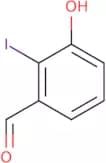
CAS:<p>L-Histidine monohydrochloride monohydrate is a histidine derivative that is used in the treatment of chronic oral and bowel diseases. L-histidine has been shown to activate phospholipase A2, which releases arachidonic acid from phospholipids. Arachidonic acid then reacts with other molecules to form prostaglandins and leukotrienes. L-histidine also inhibits the release of tumor necrosis factor (TNF) by blocking the activity of lipoxygenase, or it can stimulate the production of prostaglandins and leukotrienes that suppress inflammation in animal models. L-histidine monohydrochloride monohydrate has been shown to have an anti-inflammatory effect in animals with inflammatory bowel disease due to its ability to inhibit the production of prostaglandin E2 (PGE2). This drug has also been shown to be capable of neutralizing acidic ph by forming a salt with</p>Formula:C6H9N3O2·HCl·H2OColor and Shape:White PowderMolecular weight:209.63 g/mol3-Hydroxy-2-iodobenzaldehyde
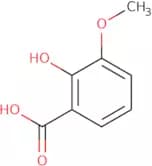
CAS:<p>3-Hydroxy-2-iodobenzaldehyde is a heterocyclic compound that is synthesized from an acetoacetic ester. It is a photochemical precursor to many organic compounds, such as phenanthrene. The synthesis of 3-hydroxy-2-iodobenzaldehyde can be achieved by reacting acetoacetic acid with iodine and sodium nitrite in the presence of a base. This reaction yields 2-iodobenzoic acid in addition to the desired product. 3-Hydroxy-2-iodobenzaldehyde has been studied for its use in the preparation of natural products and research advances.</p>Formula:C7H5IO2Purity:Min. 95%Color and Shape:PowderMolecular weight:248.02 g/mol2-Hydroxy-3-methoxybenzoic acid
CAS:<p>2-Hydroxy-3-methoxybenzoic acid is a chemical compound that has been studied for its potential use in the treatment of prostate cancer. It is a coordination complex that binds to DNA and inhibits the process of transcription. This compound also possesses anti-inflammatory properties, which are related to its ability to inhibit prostaglandin synthesis. 2-Hydroxy-3-methoxybenzoic acid has been shown to have an effect on human HL60 cells, which may be due to its ability to induce apoptosis. This compound has also been shown to have a high degree of metabolic stability and is not toxic to normal cells at doses up to 100 μM.</p>Formula:C8H8O4Purity:Min. 95%Color and Shape:PowderMolecular weight:168.15 g/mol