Building Blocks
This section contains fundamental products for the synthesis of organic and biological compounds. Building blocks are the essential starting materials used to construct complex molecules through various chemical reactions. They play a critical role in drug discovery, material science, and chemical research. At CymitQuimica, we offer a diverse range of high-quality building blocks to support your innovative research and industrial projects, ensuring you have the essential components for successful synthesis.
Subcategories of "Building Blocks"
- Boronic Acids & Boronic Acid Derivatives(5,756 products)
- Chiral Building Blocks(1,242 products)
- Hydrocarbon Building Blocks(6,095 products)
- Organic Building Blocks(61,038 products)
Found 196817 products of "Building Blocks"
Sort by
Purity (%)
0
100
|
0
|
50
|
90
|
95
|
100
1-[(Methylcarbamoyl)amino]-1-oxopropan-2-yl 4-{[(4-methyl-2-oxo-2H-chromen-7-yl)oxy]methyl}benzoate
CAS:<p>1-[(Methylcarbamoyl)amino]-1-oxopropan-2-yl 4-{[(4-methyl-2-oxo-2H-chromen-7-yl)oxy]methyl}benzoate is a versatile, high quality building block that can be used to make a range of compounds with different activities. This compound is an excellent reagent, useful as a research chemical and speciality chemical. It can be used in the synthesis of pharmaceuticals, agricultural chemicals, and other organic compounds. 1-[(Methylcarbamoyl)amino]-1-oxopropan-2-yl 4-[(4 methyl 2 oxo 2H chromen 7 yl)oxy]methyl benzoate is also known by CAS number 937891 - 74 - 2.</p>Formula:C23H22N2O7Purity:Min. 95%Color and Shape:PowderMolecular weight:438.4 g/mol1-(Carbamoylamino)-1-oxopropan-2-yl 4-{[(4-methyl-2-oxo-2H-chromen-7-yl)oxy]methyl}benzoate
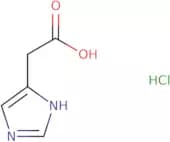
CAS:<p>1-(Carbamoylamino)-1-oxopropan-2-yl 4-[(4-methyl-2-oxo-2H-chromen-7-yl)oxy]methylbenzoate is a fine chemical that can be used as a building block, a research chemical and reagent, or in the synthesis of other complex compounds. It has been shown to be useful in the synthesis of a number of complicated compounds. 1-(Carbamoylamino)-1-oxopropan-2-yl 4-[(4-methyl-2-oxo-2Hchromen 7yl)oxy]methylbenzoate is also versatile as it can be used as an intermediate for other reactions, or as scaffold for the synthesis of new compounds. CAS No. 937874 - 01 - 6</p>Formula:C22H20N2O7Purity:Min. 95%Color and Shape:PowderMolecular weight:424.4 g/mol4-Imidazoleacetic acid HCl
CAS:<p>4-Imidazoleacetic acid HCl is a fluorescent probe that binds to the α1 subunit of the dinucleotide phosphate (NADH) oxidoreductase. It has been shown to inhibit mitochondrial functions, which may be due to its ability to inhibit the pentose phosphate pathway and reduce reactive oxygen species levels. 4-Imidazoleacetic acid HCl has also shown inhibitory properties against congestive heart failure by acting on the mitochondria and inhibiting energy metabolism. It can also be used as a chemical biology tool for studying protein interactions with NADH dehydrogenase. The x-ray crystal structures have revealed that 4-imidazoleacetic acid HCl binds to the active site of NADH oxidoreductase with an orientation that mimics a substrate molecule. This allows it to bind tightly and disrupt enzyme activity.</p>Formula:C5H6N2O2·HClPurity:Min. 95%Color and Shape:PowderMolecular weight:162.57 g/molIndole
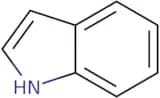
CAS:<p>Indole is a nitrogen-containing heterocyclic aromatic organic compound. Copper chloride in the presence of trifluoroacetic acid and indole gives rise to an indolenine derivative, which reacts with nitrogen atoms to form a copper nitride. This reaction is used as a model system for biological properties of indole. Indolenine has been shown to have bone cancer prevention and treatment effects in mice, and may also be beneficial in autoimmune diseases and metabolic disorders, due to its ability to inhibit toll-like receptor signaling pathways. The wild-type strain has shown resistance to antibiotics, which can be overcome by using mutant strains that are resistant to antibiotic treatments.</p>Formula:C8H7NPurity:Min. 95 Area-%Color and Shape:Off-White PowderMolecular weight:117.15 g/mol5-Iodoindole
CAS:<p>5-Iodoindole is an organic compound that is used as a nematicide. It has been shown to have cytostatic effects on the growth of human pathogens, juveniles, and model systems. 5-Iodoindole inhibits the production of reactive amines and pyridine in vivo. It also inhibits glutamine metabolism by competitive inhibition at the glutamate dehydrogenase enzyme. 5-Iodoindole also has hemolytic activity and is able to induce transcriptomic changes in P. aeruginosa cells.</p>Formula:C8H6NIPurity:Min. 95%Color and Shape:PowderMolecular weight:243.04 g/mol3-Bromoadamantane-1-carboxylic acid
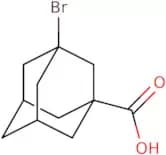
CAS:<p>3-Bromoadamantane-1-carboxylic acid is a potent inhibitor of sphingosine kinase. It is a synthetic compound that was developed to inhibit the activity of sphingosine kinase and thus reduce the levels of sphingosines in cells. 3-Bromoadamantane-1-carboxylic acid has been shown to be effective against multikinases, including caspases and protein kinases. The drug is also able to inhibit tumor growth in animals. The mechanism by which 3-bromoadamantane-1-carboxylic acid inhibits tumor growth is unknown but may involve its ability to bind to the ATP binding site on the enzyme complex or its ability to form a noncompetitive inhibitor with ATP.</p>Formula:C11H15BrO2Purity:Min. 95%Color and Shape:White Off-White PowderMolecular weight:259.14 g/molBenzophenone imine
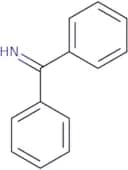
CAS:<p>Benzophenone imine is a metabolite that is produced during the metabolism of benzophenones. It was first synthesized in 1887 by the reaction of copper chloride and benzene-1,2-diamine. The reaction solution was purified by fractional crystallization to give crystals of benzophenone imine hydrochloride (benzophenamine) as a white solid. The x-ray crystal structures were determined for two different forms, one with the 5-hydroxy group in the para position relative to the imine and one with it in the meta position. Benzophenone imine is an amide that has been shown to bind to 5-HT2 receptors, which are found primarily on neurons in the central nervous system. This binding leads to an increase in serotonin levels and an inhibition of glutamate release from nerve terminals. This inhibition can lead to infectious diseases such as herpes zoster.</p>Formula:C13H11NPurity:Min. 96.0 Area-%Color and Shape:Clear LiquidMolecular weight:181.23 g/mol2,2'-Bipyridine-5,5'-dicarboxylic acid
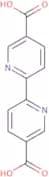
CAS:<p>2,2'-Bipyridine-5,5'-dicarboxylic acid is an algal metabolite that has been shown to have a glucose sensor function. It is synthesized by Chlorella and other green algae in response to light and high concentrations of glucose. This compound can be used as a linker for the immobilization of fluorescent probes or luminescent probes. It also has a catalytic subunit that can be used in oxidation reactions at low temperatures with chloride as the oxidant. 2,2'-Bipyridine-5,5'-dicarboxylic acid is chemically stable and does not react with chloride or ligands. It can also be used as an oxidation catalyst for reactions at high temperatures.</p>Formula:C12H8N2O4Color and Shape:White PowderMolecular weight:244.2 g/mol5-Bromo-2,4-dichloropyrimidine
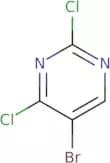
CAS:<p>5-Bromo-2,4-dichloropyrimidine is an aryl halide compound that is synthesized from 2,4-dichloropyrimidine and bromine. It has been shown to have inhibitory activities against cancer cells in vitro. 5-Bromo-2,4-dichloropyrimidine is used in the synthesis of the drug palbociclib (also known as PLX4720), which prevents mitotic progression by binding to the mitotic checkpoint protein (e.g., cyclin B). The reaction yield for this compound is low and its absorption enhancer properties are not well understood. 5-Bromo-2,4-dichloropyrimidine has also been used in conjunction with crotonic acid as a potential anticancer agent.</p>Formula:C4HBrCl2N2Purity:Min. 95%Color and Shape:Off-White Clear LiquidMolecular weight:227.87 g/molMethyl 3-bromo-2-fluorobenzoate
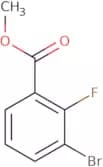
CAS:<p>Methyl 3-bromo-2-fluorobenzoate (MBFB) is a versatile building block in chemical synthesis. MBFB can be used as a reagent or speciality chemical. It has been used as an intermediate for the synthesis of other compounds, such as methyl 5-bromo-2-fluorobenzoate and ethyl 5-bromo-2-fluorobenzoate. MBFB is also a useful scaffold for the synthesis of complex compounds with interesting functions, such as research chemicals.</p>Formula:C8H6BrF2Purity:Min. 95%Color and Shape:White PowderMolecular weight:233 g/molMethyl 2-nitrobenzoate
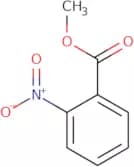
CAS:<p>Methyl 2-nitrobenzoate is a nitro compound that has been used to synthesize benzyl esters. It has been shown to react with protonation and acidic conditions. Methyl 2-nitrobenzoate is also used as an intermediate in the synthesis of methyl anthranilate, which is a component of artificial grape flavoring. The mechanism of the reaction is not fully understood, but it has been proposed that methyl 2-nitrobenzoate undergoes an intramolecular hydrogen bond with the benzoate group to form an intermediate compound called N-methyl-2-(phenylmethyl)benzamide. This intermediate then reacts with methylamine to form methyl anthranilate.<br> <br>The molecule can be detected by gas chromatography or liquid chromatography in organic solvents such as methanol or acetone.</p>Formula:C8H7NO4Purity:Min. 95%Color and Shape:Yellow Clear LiquidMolecular weight:181.15 g/molBenzyl methyl ether
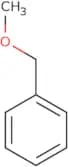
CAS:<p>Benzyl methyl ether is a colorless liquid with a sweet odor. It is used as an organic solvent in chemical reactions and as a solvent in the synthesis of pharmaceuticals, dyes, pesticides, and other organic compounds. Benzyl methyl ether has been shown to react with oxygen and light to produce benzoic acid. The reaction between benzyl methyl ether and glycol ether can be used for sample preparation prior to analysis using gas chromatography-mass spectrometry (GC-MS). GC-MS is often used for the identification of unknown substances in environmental samples. Benzyl methyl ether can also be used for chemical ionization (CI) in mass spectrometry.</p>Formula:C8H10OPurity:Min. 95%Molecular weight:122.17 g/mol4-Methoxy-6-methyl-2H,5H,6H,7H,8H-[1,3]dioxolo[4,5-G]isoquinoline
CAS:<p>4-Methoxy-6-methyl-2H,5H,6H,7H,8H-[1,3]dioxolo[4,5-G]isoquinoline is an electron donor that has been shown to have an excitatory effect on cells. It has been used for the treatment of cancer and other diseases. 4-Methoxy-6-methyl-2H,5H,6H,7H,8H-[1,3]dioxolo[4,5-G]isoquinoline has been shown to have a cavity inhibiting effect in mice and also inhibits the growth of tumor cells in rats. This drug has been evaluated for clinical use in humans and is available as a granule formulation. The particle size of 4-Methoxy-6-methyl-2H,5H,6H,7H,8H-[1,3]dioxolo[4,5-G]</p>Formula:C12H15NO3Purity:Min. 95%Color and Shape:PowderMolecular weight:221.25 g/mol[(2-Bromophenyl)sulfamoyl]dimethylamine
CAS:<p>Versatile small molecule scaffold</p>Formula:C8H11BrN2O2SPurity:Min. 95%Color and Shape:PowderMolecular weight:279.16 g/mol2-Oxoadipic acid
CAS:<p>2-Oxoadipic acid is an intermediate in the metabolism of lysine, which is an essential amino acid that cannot be synthesized by humans and must be obtained from diet. It can be converted to picolinic acid by oxidation of the methyl group on the 2-position. The enzyme activities of 2-oxoadipic acid are similar to those of picolinic acid, but it has a longer half-life and does not cause toxicity in cells. 2-Oxoadipic acid has been used as a fluorescent derivative for biological samples and as a model system for studying cell signaling pathways and physiological functions. Chemical biology studies have shown that 2-oxoadipic acid is involved in energy metabolism and may serve as a precursor for synthesis of other compounds such as riboflavin.</p>Formula:C6H8O5Purity:Min. 95%Color and Shape:PowderMolecular weight:160.12 g/mol4-{5H,6H,7H,8H-Pyrido[4,3-c]pyridazin-3-yl}-1,4-oxazepane
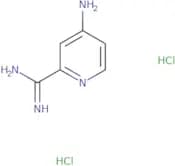
CAS:<p>Versatile small molecule scaffold</p>Formula:C12H18N4OPurity:Min. 95%Color and Shape:PowderMolecular weight:234.3 g/mol4-Aminopyridine-2-carboximidamide dihydrochloride
CAS:<p>Versatile small molecule scaffold</p>Formula:C6H10Cl2N4Purity:Min. 95%Color and Shape:PowderMolecular weight:209.07 g/mol5-Chloropentan-2-ol
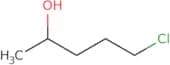
CAS:<p>5-Chloropentan-2-ol is a chemical compound that is found in the leaves of the tobacco plant, Nicotiana tabacum. It is an organic compound that belongs to the group of furans and has been classified as a dye sensitizer. 5-Chloropentan-2-ol is found in small quantities in the leaves of Nicotiana tabacum and has been shown to be responsible for some of the flavour and organoleptic properties of tobacco. The chemical structure of 5-chloropentan-2-ol consists of a 5 carbon chain with two hydroxyl groups on carbons 1 and 2. It has been shown to have high levels of mutagenicity when tested on bacteria, but does not affect animal cells.</p>Formula:C5H11ClOPurity:Min. 85%Molecular weight:122.59 g/molButane-1,3-diamine dihydrochloride
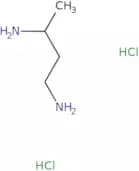
CAS:<p>Butane-1,3-diamine dihydrochloride is a potent cytotoxic agent that inhibits the synthesis of fatty acids and histidine. This compound inhibits squamous cell carcinoma cells by decreasing the cytosolic Ca2+ concentration, mitochondrial membrane potential, and cellular ATP levels. It also inhibits the growth of cancer cells by binding to lysine residues on cell membranes. Butane-1,3-diamine dihydrochloride has been synthesized in an asymmetric synthesis to produce a molecule with nitrogen atoms at opposite ends of the molecule. The decarboxylation of this molecule produces butane-1,3-diaminium ion.</p>Formula:C4H14Cl2N2Purity:Min. 95%Color and Shape:PowderMolecular weight:161.07 g/mol2,3-Dimethoxybenzeneethanamine
CAS:Controlled Product<p>2,3-Dimethoxybenzeneethanamine is a drug substance that belongs to the class of amines. It has been shown to have proarrhythmic effects in animal studies, and has also shown hypotensive properties. 2,3-Dimethoxybenzeneethanamine inhibits the binding of phenylephrine to adrenoceptors in rat heart tissue. This compound can be used as a chromatographic standard for dimethoxyphenethylamines and isomers due to its spectrometric properties.</p>Formula:C10H15NO2Purity:Min. 98%Color and Shape:Clear LiquidMolecular weight:181.23 g/mol
![1-[(Methylcarbamoyl)amino]-1-oxopropan-2-yl 4-{[(4-methyl-2-oxo-2H-chromen-7-yl)oxy]methyl}benzoate](/_next/image/?url=https%3A%2Fstatic.cymitquimica.com%2Fproducts%2F3D%2Fthumb-webp%2FMMB89174.webp&w=3840&q=75)

![1-(Carbamoylamino)-1-oxopropan-2-yl 4-{[(4-methyl-2-oxo-2H-chromen-7-yl)oxy]methyl}benzoate](/_next/image/?url=https%3A%2Fstatic.cymitquimica.com%2Fproducts%2F3D%2Fthumb-webp%2FMMB87401.webp&w=3840&q=75)

![4-Methoxy-6-methyl-2H,5H,6H,7H,8H-[1,3]dioxolo[4,5-G]isoquinoline](/_next/image/?url=https%3A%2Fstatic.cymitquimica.com%2Fproducts%2F3D%2Fthumb-webp%2FAAA55010.webp&w=3840&q=75)
![[(2-Bromophenyl)sulfamoyl]dimethylamine](/_next/image/?url=https%3A%2Fstatic.cymitquimica.com%2Fproducts%2F3D%2Fthumb-webp%2FZNA54050.webp&w=3840&q=75)
![4-{5H,6H,7H,8H-Pyrido[4,3-c]pyridazin-3-yl}-1,4-oxazepane](/_next/image/?url=https%3A%2Fstatic.cymitquimica.com%2Fproducts%2F3D%2Fthumb-webp%2FJHD95611.webp&w=3840&q=75)