


Building Blocks
This section contains fundamental products for the synthesis of organic and biological compounds. Building blocks are the essential starting materials used to construct complex molecules through various chemical reactions. They play a critical role in drug discovery, material science, and chemical research. At CymitQuimica, we offer a diverse range of high-quality building blocks to support your innovative research and industrial projects, ensuring you have the essential components for successful synthesis.
Subcategories of "Building Blocks"
- Boronic Acids & Boronic Acid Derivatives(5,756 products)
- Chiral Building Blocks(1,242 products)
- Hydrocarbon Building Blocks(6,095 products)
- Organic Building Blocks(61,038 products)
Found 196817 products of "Building Blocks"
Sort by
Purity (%)
0
100
|
0
|
50
|
90
|
95
|
100
1,2-Dioleoyl-sn-glycerol
CAS:<p>1,2-Dioleoyl-sn-glycerol is a lipid molecule that contains an acyl chain of carbon atoms with two double bonds. It is formed through the union of glycerol and oleic acid. 1,2-Dioleoyl-sn-glycerol has been shown to activate diacylglycerol and fatty acid, which are important for cell signaling. The enzyme activity of 1,2-dioleoyl-sn-glycerol is dependent on its concentration in the body. This molecule also interacts with membranes by hydrogen bonding and can form a hydrophobic region that may be used to stabilize membrane structures.</p>Formula:C39H72O5Purity:Min. 95%Color and Shape:LiquidMolecular weight:620.99 g/mol4,4',4'',4'''-(21H,23H-Porphine-5,10,15,20-tetrayl)tetrakis[benzaldehyde]
CAS:<p>Please enquire for more information about 4,4',4'',4'''-(21H,23H-Porphine-5,10,15,20-tetrayl)tetrakis[benzaldehyde] including the price, delivery time and more detailed product information at the technical inquiry form on this page</p>Formula:C48H30N4O4Purity:Min. 95%Color and Shape:PowderMolecular weight:726.8 g/mol2,6-Dihydroxybenzaldehyde
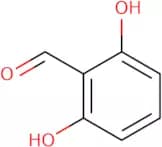
CAS:<p>2,6-Dihydroxybenzaldehyde is a chemical compound that has been used as an intermediate in the synthesis of other chemicals. It is also used as a precursor for benzaldehyde and benzoic acid. 2,6-Dihydroxybenzaldehyde can be synthesized by reacting sodium carbonate with pluronic F127 in the presence of cationic surfactant. The surface methodology used in this process involves the use of hydrophobic molecules to form micelles and liposomes on the surface of the electrode. The interaction between these micelles and liposomes is pH dependent. This reaction causes an increase in hydrogen ions, which leads to an increase in conductivity at acidic pH values. Electrochemical impedance spectroscopy (EIS) results show that 2,6-dihydroxybenzaldehyde reacts with high concentrations of salt and water vapor. FTIR spectroscopy shows that it has two hydroxyl groups and one double</p>Formula:C7H6O3Purity:Min. 95%Color and Shape:PowderMolecular weight:138.12 g/molHexachlorocyclopentadiene
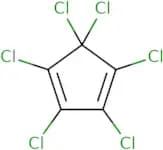
CAS:<p>Only available for delivery in the Europe. Prohibited for transport by air. The substantial reactivity and versatility of Hexachlorocyclopentadiene in facilitating multiple synthetic pathways make it indispensable in both agrochemical and industrial sectors.</p>Formula:C5Cl6Purity:Min. 97 Area-%Color and Shape:Clear LiquidMolecular weight:272.77 g/mol2'-Hydroxyacetophenone - 95%
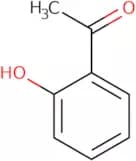
CAS:<p>Purity min. 95%</p>Formula:C8H8O2Purity:Min. 95%Color and Shape:Clear LiquidMolecular weight:136.15 g/mol4D-Hydroxysphinganine
CAS:<p>Sphingolipid; cell membrane component; anti-inflammatory agent</p>Formula:C18H39NO3Purity:Min. 97 Area-%Color and Shape:White PowderMolecular weight:317.51 g/molL-Histidine
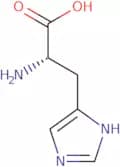
CAS:<p>L-histidine is a molecule that chelates metal ions and inhibits their function. L-Histidine is used as an analytical reagent for the determination of metal ions in water, a polymerase chain reaction (PCR) inhibitor, and an immunosuppressant. L-histidine is also used to treat bowel disease and cancer by inhibiting the production of certain molecules. L-histidine has been shown to bind to toll-like receptor 4 (TLR4) in intestinal cells, which activates the immune system to produce cytokines such as IL-8. In addition, L-histidine can act as a cofactor for enzymes involved in protein synthesis by protecting them from oxidation. L histidine can also be found in the protein that binds with gold particles, forming colloidal gold</p>Formula:C6H9N3O2Color and Shape:White PowderMolecular weight:155.15 g/mol2-Hydroxy-4-bromopyridine
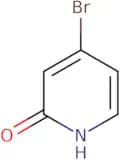
CAS:<p>2-Hydroxy-4-bromopyridine (2HBP) is a product with genotoxic activity that can be used for research. 2HBP has been shown to inhibit the synthesis of DNA by inhibiting the enzymatic reaction or binding to DNA. 2HBP is also an inhibitor of virus replication and causes monolayer cell death through radiation or chemical structures. It can be used as an anti-tumor agent and has been shown to have inhibitory properties on dna replication.</p>Formula:C5H4BrNOPurity:Min. 98 Area-%Color and Shape:White PowderMolecular weight:174 g/mol5-Hydroxy-3-methylindole
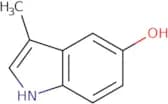
CAS:<p>5-Hydroxy-3-methylindole (5HMI) is a metabolite of the drug tamoxifen, which is used for the treatment of breast cancer. It is also found in urine samples and has been shown to be reactive with cytochrome P450 2E1 (CYP2E1). 5HMI has been shown to inhibit the activity of CYP2E1 in humans, rats, and mice. 5HMI has also been shown to have anti-epileptic properties in epileptics. This active form is metabolized by adipose tissue or liver cells through oxidation and conjugation with glucuronic acid. The human liver cells show constitutive androstane receptor (CAR) activation, which may be due to its ability to act as an agonist or partial agonist.</p>Formula:C9H9NOPurity:Min. 96%Color and Shape:PowderMolecular weight:147.17 g/mol2-Ethylpyridine
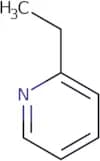
CAS:<p>2-Ethylpyridine is a chemical compound that can be derived from sodium succinate, 2-ethylpyridine, and trifluoroacetic acid. It has been shown to have biological properties such as the inhibition of mitochondrial membrane potential, which is the driving force for ATP synthesis in mitochondria. This drug also inhibits the production of hydrogen peroxide and nitric oxide by reacting with hydrochloric acid or nitrogen atoms. 2-Ethylpyridine can be used as a solid catalyst for reactions involving hydrogen bond formation or intermolecular hydrogen bond formation. 2-Ethylpyridine reacts with protocatechuic acid to form an intramolecular hydrogen bond and a group p2 type of reaction mechanism.</p>Formula:C7H9NPurity:Min. 95%Color and Shape:Colorless Clear LiquidMolecular weight:107.15 g/mol2,6-Dichloro-3-deazapurine
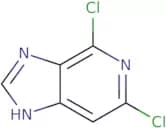
CAS:<p>2,6-Dichloro-3-deazapurine is an isomer of the nucleoside guanosine. It has been shown to inhibit the synthesis of viruses in cell cultures and may be useful in the treatment of leukemia. The synthesis of 2,6-dichloro-3-deazapurine can be achieved through a solid-phase synthesis that uses synthons as starting materials. The molecular modelling studies have shown that this molecule has a potential to bind to adenosine receptor subtypes A2a, A2b, and A3.</p>Formula:C6H3Cl2N3Purity:Min. 95%Color and Shape:Off-White PowderMolecular weight:188.02 g/mol8-Hydroxyquinoline
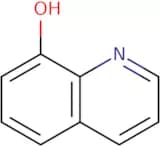
CAS:<p>8-HQ, liberated by enzymatic activity, is a strong metal chelator and forms insoluble, grey precipitates with several metal cations such as Fe3+</p>Formula:C9H7NOColor and Shape:PowderMolecular weight:145.16 g/mol4-Hydroxy-2-thiophenecarboxylic acid
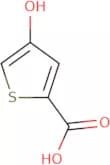
CAS:<p>4-Hydroxy-2-thiophenecarboxylic acid is a chemical intermediate that can be used in the production of various other chemicals. The compound is a versatile building block for complex compounds and fine chemicals. CAS No. 40748-90-1.</p>Formula:C5H4O3SPurity:Min. 95%Color and Shape:PowderMolecular weight:144.15 g/mol2-Hydroxy-6-methoxybenzaldehyde
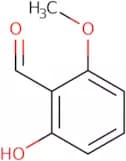
CAS:<p>2-Hydroxy-6-methoxybenzaldehyde is a molecule that can form hydrogen bonds with other molecules. FT-IR spectroscopy has shown that this compound has a copper complex and an acidic proton, which may be due to intramolecular hydrogen bonding interactions. The compound also has been shown to have potent inhibitory activity against cellular growth and cancer cells in vitro. 2-Hydroxy-6-methoxybenzaldehyde is a metal chelator and can therefore bind to metals such as iron and copper. It is genotoxic, which means it damages DNA by causing DNA strand breaks or crosslinks, leading to cell death. This chemical may also cause genetic mutations through the formation of tautomers that make DNA replication difficult. Gel chromatography shows that 2HMB has a low molecular weight (MW) and high solubility.</p>Formula:C8H8O3Purity:Min. 95%Color and Shape:PowderMolecular weight:152.15 g/mol5-Hydroxy-1-cyclooctene
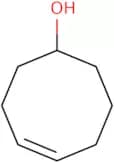
CAS:<p>5-Hydroxy-1-cyclooctene is a monomer of polymers that can be used to introduce new properties to polymers. It is also an effective surface modifier, which can be used to modify the surface properties of polymeric materials. 5-Hydroxy-1-cyclooctene has been shown to bind to calcium ions and may have potential for use in active targeting and as a neutral pH probe. The polymer concentration influences the x-ray structure, which has been studied using x-ray diffraction methods. The absorption spectrum of 5-hydroxy-1-cyclooctene has been examined in vitro and it has been found that this molecule absorbs light in the visible region at wavelengths between 400 nm and 700 nm. It also emits luminescence with a maximum peak at 690 nm. The second order rate constant for the reaction with ruthenium complex is 2.2×10^8 M^(-1)s^(-1). This</p>Formula:C8H14OPurity:Min. 95%Color and Shape:Clear LiquidMolecular weight:126.2 g/molN,N-Diisobutyl-2-(octylphenylphosphoryl)acetamide
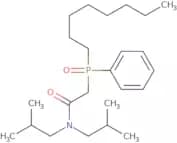
CAS:<p>N,N-Diisobutyl-2-(octylphenylphosphoryl)acetamide is a redox active extractant that is used for the extraction of metals from acidic solutions. It has been shown to have an adsorption mechanism that includes hydrogen bonding and intramolecular hydrogen bonding. N,N-Diisobutyl-2-(octylphenylphosphoryl)acetamide also has a high redox potential and fluorescence properties. This extractant can be used as a metal chelate to extract copper from hydroxide or carbonate solutions. It can also be used in titration calorimetry experiments.</p>Formula:C24H42NO2PPurity:Min. 98 Area-%Color and Shape:White To Off-White SolidMolecular weight:407.57 g/mol5-Hydroxy-L-tryptophan
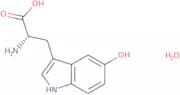
CAS:<p>5-hydroxy-L-tryptophan (5HTP) is a naturally occurring amino acid that is an intermediate in the synthesis of the neurotransmitter serotonin. 5HTP appears to be able to increase levels of serotonin in the brain and may be used to treat mood disorders, including depression and anxiety. In clinical trials, 5HTP was found to be as effective as some antidepressant drugs for treating depression. Studies have shown that 5HTP increases locomotor activity and dopamine concentrations. It also increases physiological functions such as temperature regulation, heart rate, blood pressure, and respiration rate. The mechanism by which 5HTP achieves these effects is not yet fully understood but may involve its ability to bind to specific receptors on cells in different regions of the brain.<br>5HTP has been shown to inhibit polymerase chain reactions (PCR) in vitro by binding to DNA gyrase and topoisomerase IV enzyme activities. It also inhibits fatty acid oxidation in vitro by binding</p>Formula:C11H12N2O3Purity:Min. 95%Color and Shape:PowderMolecular weight:220.22 g/molDL-5-Hydroxytryptophan
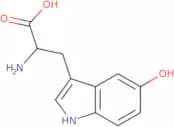
CAS:<p>DL-5-Hydroxytryptophan (5-HTP) is a naturally occurring amino acid that is converted to serotonin in the brain. It is used to treat depression and anxiety, as well as other psychological disorders. 5-HTP has been shown to stimulate the production of serotonin, which may be due to its ability to activate 5-HT2 receptors. 5-HTP has also been shown to increase the activity of various enzymes, such as esterase and aminopeptidase, in human serum. 5-HTP has been shown to have no effects on carcinoid syndrome or 5-ht concentrations in blood plasma. However, it does have biochemical properties that are different from those of other amino acids and can be used as a fluorescent probe for biological research.</p>Formula:C11H12N2O3Purity:Min. 95%Color and Shape:White PowderMolecular weight:220.22 g/mol2-Hydroxy-5-methylbenzaldehyde
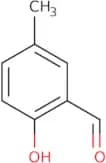
CAS:<p>2-Hydroxy-5-methylbenzaldehyde (2HMBA) is a biologically active molecule that has been shown to bind to human serum albumin. The binding constants for the two molecules are relatively low, with a Kd of approximately 2.6 x 10 M. The nitrogen atoms in the molecule form hydrogen bonds with the hydroxyl group on the ethylene diamine, which stabilizes it and prevents it from dissolving in water. This compound also has a cyclohexane ring and can be found in natural products such as erythronolide B, an antibiotic produced by Streptomyces erythreus. 2HMBA is stable when complexed with hydrochloric acid or potassium dichromate and can be used in structural analysis of other molecules.</p>Formula:C8H8O2Purity:Min. 95%Color and Shape:Off-White PowderMolecular weight:136.15 g/mol(3S,6S)-3-[(2S)-Butan-2-yl]-6-methylpiperazine-2,5-dione
CAS:<p>(3S,6S)-3-[(2S)-Butan-2-yl]-6-methylpiperazine-2,5-dione is a chemical compound that acts as an anticoagulant. It inhibits the coagulation of blood by preventing platelets from clumping together and forming clots. This chemical also blocks the activation of platelets by increasing levels of cyclic adenosine monophosphate (cAMP) and cyclic guanosine monophosphate (cGMP). Studies have shown that this chemical inhibits viral replication in vitro. It blocks the PI3K/AKT pathways and reduces the expression of influenza virus proteins. The extract of Portulaca oleracea has been shown to contain flavonoids that have anti-inflammatory properties.</p>Formula:C9H16N2O2Purity:Min. 98 Area-%Color and Shape:PowderMolecular weight:184.24 g/mol


![4,4',4'',4'''-(21H,23H-Porphine-5,10,15,20-tetrayl)tetrakis[benzaldehyde]](/_next/image/?url=https%3A%2Fstatic.cymitquimica.com%2Fproducts%2F3D%2Fthumb-webp%2FFH180948.webp&w=3840&q=75)

![(3S,6S)-3-[(2S)-Butan-2-yl]-6-methylpiperazine-2,5-dione](/_next/image/?url=https%3A%2Fstatic.cymitquimica.com%2Fproducts%2F3D%2Fthumb-webp%2FKBA59069.webp&w=3840&q=75)