Building Blocks
This section contains fundamental products for the synthesis of organic and biological compounds. Building blocks are the essential starting materials used to construct complex molecules through various chemical reactions. They play a critical role in drug discovery, material science, and chemical research. At CymitQuimica, we offer a diverse range of high-quality building blocks to support your innovative research and industrial projects, ensuring you have the essential components for successful synthesis.
Subcategories of "Building Blocks"
- Boronic Acids & Boronic Acid Derivatives(5,756 products)
- Chiral Building Blocks(1,242 products)
- Hydrocarbon Building Blocks(6,095 products)
- Organic Building Blocks(61,038 products)
Found 196817 products of "Building Blocks"
Sort by
Purity (%)
0
100
|
0
|
50
|
90
|
95
|
100
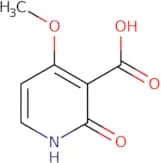
4-Methoxy-2-oxo-1,2-dihydropyridine-3-carboxylic acid
CAS:<p>4-Methoxy-2-oxo-1,2-dihydropyridine-3-carboxylic acid is a versatile building block and useful intermediate in organic synthesis. This compound can be used as a reagent or speciality chemical for research purposes. It has been shown to be an effective reactant in the preparation of diverse complex compounds. 4-Methoxy-2-oxo-1,2-dihydropyridine 3 carboxylic acid has also been shown to be a high quality material with applications in specialty chemicals and pharmaceuticals.</p>Formula:C7H7NO4Purity:Min. 95 Area-%Color and Shape:PowderMolecular weight:169.14 g/mol1-[4-(2-Methoxyethyl)phenoxy]propan-2-one
CAS:<p>1-[4-(2-Methoxyethyl)phenoxy]propan-2-one is a useful scaffold for organic synthesis. It is a versatile building block that can be used as an intermediate in the synthesis of complex compounds with pharmaceutical, agrochemical and other applications.1-[4-(2-Methoxyethyl)phenoxy]propan-2-one is also a reagent in chemical reactions, and has been used to synthesize other compounds such as 1-[4-(2-Methoxyethyl)phenoxy]propan-2-ol (CAS No. 1155083-54-7). This compound has been shown to have good reactivity and high quality, making it an excellent research chemical.</p>Formula:C12H16O3Purity:Min. 95%Molecular weight:208.25 g/mol4-Mercaptophenylacetic acid
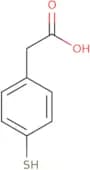
CAS:<p>4-Mercaptophenylacetic acid is a palladium complex that inhibits the synthesis of proteins by binding to the ribosome and blocking peptide bond formation. The molecule has a polymeric matrix with a high degree of crystallinity and an isolated yield of greater than 95%. 4-Mercaptophenylacetic acid is immobilized on a carboxylate surface and has been shown to have pharmacokinetic properties. It can be used in the treatment of cancer cells and inhibits protein synthesis, leading to cell death. 4-Mercaptophenylacetic acid also has anti-inflammatory activities due to its inhibition of prostaglandin synthesis.</p>Formula:C8H8O2SPurity:Min. 95%Color and Shape:Yellow PowderMolecular weight:168.21 g/mol3-Mercaptophenylacetic acid
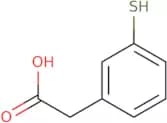
CAS:<p>3-Mercaptophenylacetic acid is an active form of 3-mercaptophenylacetic acid. It is a protein that is used to produce ribonuclease, which is a type of enzyme that breaks down RNA. The hydrolytic reaction of 3-mercaptophenylacetic acid can be facilitated by buffers such as guanidine hydrochloride and thiols such as glutathione. Diazotization with sodium nitrite or diazotization with potassium nitrite followed by treatment with sodium sulfite or potassium bisulfite will convert 3-mercaptophenylacetic acid to 3-mercaptophenol. Denaturant such as urea, guanidine hydrochloride, or triethanolamine can be used to convert the molecule into an aliphatic form. This will expand the molecule and create a more reactive molecule.</p>Formula:C8H8O2SPurity:Min. 95%Color and Shape:PowderMolecular weight:168.21 g/mol3,5-Diiodophenol
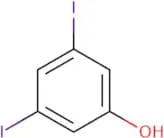
CAS:<p>Versatile small molecule scaffold</p>Formula:C6H4I2OPurity:Min. 95%Molecular weight:345.9 g/molMesitaldehyde - 97%
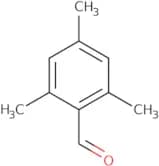
CAS:<p>Mesitaldehyde is a diazonium salt that is synthesized by the reaction of nitrosyl chloride and sodium carbonate in an acidic solution. This chemical has been studied for its potential use as a therapeutic drug due to its ability to inhibit the enzyme dpp-iv, which is involved in the development of diabetic neuropathy. Mesitaldehyde has also been shown to be an inhibitor of malonic acid, ethylmalonic acid and other organic acids. The analytical method for mesitaldehyde involves hydrolyzing the product with hydrochloric acid in order to produce ethylmalonic acid, which can then be quantified using spectrophotometry.</p>Formula:C10H12OPurity:Min. 95%Color and Shape:PowderMolecular weight:148.2 g/mol[Hydroxy(propan-2-yl)carbamoyl]formic acid
CAS:<p>Hydroxy(propan-2-yl)carbamoyl formic acid is a metabolite of formaldehyde. It is used to measure formaldehyde in biological samples such as blood, serum, and urine. It also acts as a precursor for the production of other metabolites which are related to bowel disease and cardiac function. Hydroxy(propan-2-yl)carbamoyl formic acid has been shown to be a good indicator of iron homeostasis in vivo and in vitro models. This compound can be detected by chemiluminescence methods and can be used with zirconium oxide to study the effects on axonal growth.</p>Formula:C5H9NO4Purity:Min. 95%Molecular weight:147.13 g/mol10-Undecen-1-ol
CAS:<p>10-Undecen-1-ol is a fatty acid with a hydroxyl group at the 10th position. It has strong intermolecular hydrogen bonding and reacts to form esters and ethers. 10-Undecen-1-ol is used as a multi-walled carbon for wastewater treatment, which removes organic contaminants. This compound also has a high degree of chemical stability, which makes it suitable for use in anhydrous sodium synthesis methods.</p>Formula:C11H22OPurity:Min. 98%Color and Shape:Colorless Clear LiquidMolecular weight:170.29 g/molUDP-3-O[R-3-hydroxymyristoyl]-N-acetylglucosamine tris, 90%
CAS:<p>Please enquire for more information about UDP-3-O[R-3-hydroxymyristoyl]-N-acetylglucosamine tris, 90% including the price, delivery time and more detailed product information at the technical inquiry form on this page</p>Formula:C31H53N3O19P2•C4H11NO3Purity:Min. 95%Color and Shape:PowderMolecular weight:954.85 g/mol2,4,6-Trimethoxybenzaldehyde
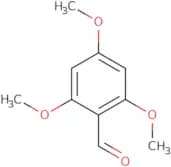
CAS:<p>2,4,6-Trimethoxybenzaldehyde is a chemical compound that is used as an intermediate in organic chemistry. It has been shown to have antiviral effects on influenza A virus by inhibiting the enzyme neuraminidase. This inhibition prevents the release of viruses from infected cells and thus prevents viral replication. 2,4,6-Trimethoxybenzaldehyde also inhibits the growth of cancer cells in vitro and has minimal toxicity to normal cells. This chemical has been shown to inhibit the reaction mechanism of proton pumps in mammalian cells, which may be due to its ability to inhibit p2y receptors or nitrogen atoms. 2,4,6-Trimethoxybenzaldehyde can also be used as a solvent for pharmaceutical preparations and as a reagent in x-ray diffraction data analysis.</p>Formula:C10H12O4Purity:Min. 95%Color and Shape:PowderMolecular weight:196.2 g/mol3,5,6-Trichlorosalicylic acid
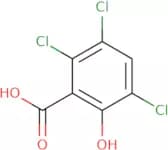
CAS:<p>3,5,6-Trichlorosalicylic acid binds to the active site of bacterial 5-nitrosalicylic acid reductase and inhibits its activity. It is an inhibitor of proton-translocating ATPases. 3,5,6-Trichlorosalicylic acid has been shown to be effective against a variety of bacteria at low concentrations. 3,5,6-Trichlorosalicylic acid has also been shown to inhibit some physiological activities such as the light emission and chemiluminescent reaction of luciferin in fireflies. This chemical reacts with chloride ions to produce light.</p>Formula:C7H3Cl3O3Purity:Min. 95%Color and Shape:PowderMolecular weight:241.46 g/mol2,4,6-Trihydroxybenzaldehyde
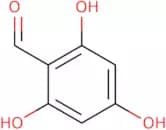
CAS:<p>2,4,6-Trihydroxybenzaldehyde is a polymerase chain inhibitor that blocks the synthesis of DNA and RNA. It has been shown to have significant cytotoxicity in vitro and has been used as an antimicrobial agent to inhibit the growth of bacteria. 2,4,6-Trihydroxybenzaldehyde also inhibits tetracycline resistance in Mycobacterium tuberculosis (Mtb) by inhibiting the production of proteins vital for bacterial cell division. This compound is structurally related to naturally occurring compounds such as anthocyanins and it has been shown to have inhibitory properties on mitochondrial membrane potential, which may be due to its ability to inhibit protein synthesis and induce apoptosis. The analytical methods used for this compound are thin layer chromatography and high performance liquid chromatography.</p>Formula:C7H6O4Purity:Min. 98 Area-%Color and Shape:PowderMolecular weight:154.12 g/mol2-Methyl-5-nitroimidazole
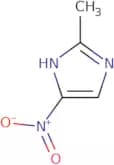
CAS:<p>2-Methyl-5-nitroimidazole, also known as menidazole, is an impurity of metronidazole, which is used as an antibacterial and antiprotozoal medication in the treatment of infections, including rosacea. 2-Methyl-5-nitroimidazole is a derivative of nitroimidazole and has potential antimicrobial and antitrichomonal activities. Its synthesis can be achieved using various methods, including nucleophilic reaction, ester derivatives, reaction with metronidazole, and substitution reactions. Several derivatives of 2-Methyl-5-nitroimidazole have been synthesized and tested for their antibacterial, antifungal, and antitrichomonal activities. Both 2-Methyl-5-nitroimidazole and its derivatives have potential applications as antimicrobial and antitrichomonal agents.</p>Formula:C4H5N3O2Purity:Min. 95%Color and Shape:PowderMolecular weight:127.1 g/mol3-Methyl-8-quinolinesulfonyl chloride
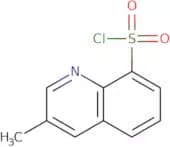
CAS:<p>3-Methyl-8-quinolinesulfonyl chloride (3MQSC) is a reaction product of 1,2,4-trioxane and thionyl chloride. 3MQSC is used as an intermediate in the production of l-citrulline from chloroacetic acid. It reacts with paraformaldehyde to form a solid phase synthesis catalyst. 3MQSC catalyzes the reaction between phosphorus pentachloride and chlorine to produce ethyl formate and hydrogen chloride gas. This process is industrialized for the production of ethyl formate, which is used for the manufacture of acetic acid, chlorinated solvents, polymers, and plastics. The high yield of this process makes it one of the most popular routes for producing ethyl formate. Catalysis by 3MQSC can be achieved at low temperature and pressure due to its resistance to heat and low boiling point.</p>Formula:C10H8ClNO2SPurity:Min. 97 Area-%Color and Shape:White Yellow PowderMolecular weight:241.69 g/mol2-Methylamino-2-phenylbutanol hydrochloride
CAS:<p>2-Methylamino-2-phenylbutanol hydrochloride is a fine chemical that can be used in the production of research chemicals, pharmaceuticals, and other specialty chemicals. It is a versatile building block with many applications in organic synthesis. 2-Methylamino-2-phenylbutanol hydrochloride is an intermediate for the production of other useful compounds and has many reactions that are applicable to complex compounds. 2-Methylamino-2-phenylbutanol hydrochloride can also be used as a reagent and has high quality standards.</p>Formula:C11H17NO•HClPurity:(%) Min. 95%Color and Shape:PowderMolecular weight:215.72 g/mol4-Methylbenzophenone
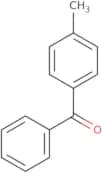
CAS:<p>4-Methylbenzophenone is a molecule that belongs to the group of p2 molecules. It is used as an additive in animal health products, as well as for the synthesis of other organic compounds. The analytical method for 4-methylbenzophenone is thermal expansion, which can be determined using a test sample. The reaction mechanism of this compound is not well understood, but it may involve multi-walled carbon and matrix effect. 4-Methylbenzophenone has been shown to form metastable forms when heated to high temperatures or when exposed to sunlight. This compound also has potential skin cancer risk and should be handled with care.</p>Formula:C14H12OPurity:Min. 95%Color and Shape:White PowderMolecular weight:196.24 g/mol2-Chloro-4-methoxybenzoic acid methyl ester
CAS:<p>2-Chloro-4-methoxybenzoic acid methyl ester is a reagent that can be used in the preparation of various compounds. It is also a versatile building block for the synthesis of complex compounds, such as pharmaceuticals and agrochemicals. This chemical is often used as an intermediate or building block in the preparation of pharmaceuticals and agrochemicals. 2-Chloro-4-methoxybenzoic acid methyl ester has been shown to be a useful scaffold for the synthesis of drugs with high quality and low cost.</p>Formula:C9H9ClO3Purity:Min. 95%Color and Shape:PowderMolecular weight:200.62 g/mol4-Chloro-3,5-dimethylbenzoic acid
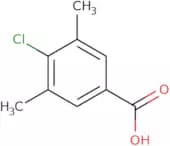
CAS:<p>4-Chloro-3,5-dimethylbenzoic acid (4CMB) is a building block in organic chemistry. It can be used as a reagent, speciality chemical, and research chemical. 4CMB is used to make an intermediate for the synthesis of other chemicals and it can also be used as a reaction component in more complex reactions. CAS No. 90649-78-8</p>Formula:C9H9ClO2Purity:Min. 95%Color and Shape:PowderMolecular weight:184.62 g/mol(R)-2-Methylbutyric acid
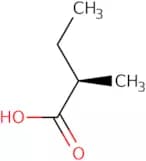
CAS:<p>(R)-2-Methylbutyric acid is a synthetic compound that has the same stereoisomeric configuration as 2-methylbutyric acid. The difference in the two molecules is that the (R) form has a hydroxyl group on the alpha carbon, while 2-methylbutyric acid does not. This compound is stable under acidic conditions, but hydrolyzes to form butyric acid when exposed to basic conditions. It is used in industrial applications such as food production and as an intermediate in synthesizing other compounds such as tiglic acid or amido groups.</p>Formula:C5H10O2Purity:Min. 95%Color and Shape:Yellow PowderMolecular weight:102.13 g/mol2-Methylcinnamic acid, predominantly trans
CAS:<p>The 2-methylcinnamic acid is a derivative of cinnamic acid. It is an organic compound that is a colorless liquid at room temperature. The 2-methylcinnamic acid can be synthesized via the Suzuki coupling reaction between 2-chlorocinnamic acid and 4-hydroxycinnamic acid in the presence of a ruthenium complex, a diphosphine ligand, and an acidic co-solvent. This organic compound has been shown to inhibit prostaglandin synthesis by interacting with the prostanoid receptor, a protein located on the surface of cells that binds to inflammatory agents or hormones. These interactions may also lead to the inhibition of cyclooxygenase (COX) enzymes, which are responsible for prostaglandin synthesis. The 2-methylcinnamic acid can also be converted into flavonoids such as quercetin and apigenin through oxidation reactions.</p>Formula:C10H10O2Purity:Min. 95%Color and Shape:PowderMolecular weight:162.19 g/mol

![1-[4-(2-Methoxyethyl)phenoxy]propan-2-one](/_next/image/?url=https%3A%2Fstatic.cymitquimica.com%2Fproducts%2F3D%2Fthumb-webp%2FFWB08353.webp&w=3840&q=75)
![[Hydroxy(propan-2-yl)carbamoyl]formic acid](/_next/image/?url=https%3A%2Fstatic.cymitquimica.com%2Fproducts%2F3D%2Fthumb-webp%2FHFA41803.webp&w=3840&q=75)

![UDP-3-O[R-3-hydroxymyristoyl]-N-acetylglucosamine tris, 90%](/_next/image/?url=https%3A%2Fstatic.cymitquimica.com%2Fproducts%2F3D%2Fthumb-webp%2FFU183491.webp&w=3840&q=75)