Building Blocks
This section contains fundamental products for the synthesis of organic and biological compounds. Building blocks are the essential starting materials used to construct complex molecules through various chemical reactions. They play a critical role in drug discovery, material science, and chemical research. At CymitQuimica, we offer a diverse range of high-quality building blocks to support your innovative research and industrial projects, ensuring you have the essential components for successful synthesis.
Subcategories of "Building Blocks"
- Boronic Acids & Boronic Acid Derivatives(5,778 products)
- Chiral Building Blocks(1,242 products)
- Hydrocarbon Building Blocks(6,098 products)
- Organic Building Blocks(61,084 products)
Found 198714 products of "Building Blocks"
Sort by
Purity (%)
0
100
|
0
|
50
|
90
|
95
|
100
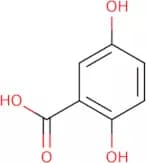
2,5-Dihydroxybenzoic acid
CAS:<p>2,5-Dihydroxybenzoic acid is a natural compound that has been shown to inhibit the matrix metalloproteinase enzyme activity of α1-acid glycoprotein. The 2,5-dihydroxybenzoic acid structure is similar to p-hydroxybenzoic acid and gentisic acid. It is also an inhibitor of xanthine oxidase and caffeic acid oxidase. 2,5-Dihydroxybenzoic acid has a number of potential uses in analytical chemistry as it can be used to measure the concentrations of caffeic acids and other related compounds in biological samples.</p>Formula:C7H6O4Purity:(%) Min. 98%Color and Shape:White PowderMolecular weight:154.12 g/mol2-Chloro-N-(3,4-dihydro-2H-1-benzopyran-4-yl)acetamide
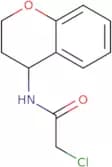
CAS:Versatile small molecule scaffoldFormula:C11H12ClNO2Purity:Min. 95%Color and Shape:PowderMolecular weight:225.67 g/mol5-Chloro-indan-2-ylamine hydrochloride
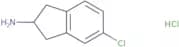
CAS:Controlled Product5-Chloro-indan-2-ylamine hydrochloride is a chemical that can be used as a building block in the synthesis of other chemicals. It is a reagent and useful scaffold in organic synthesis reactions, such as Friedel-Crafts reactions, and can be used to produce indenes. 5-Chloro-indan-2-ylamine hydrochloride is also an intermediate for the production of complex compounds, fine chemicals, and pharmaceuticals. The CAS number for this chemical is 73536-86-4.Formula:C9H10NCl·HClPurity:Min. 95%Color and Shape:PowderMolecular weight:204.09 g/mol4H,5H,6H,7H,8H-[1,2,3]Triazolo[1,5-a][1,4]diazepine hydrochloride
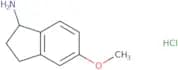
CAS:<p>Versatile small molecule scaffold</p>Formula:C6H10N4•HClPurity:Min. 95%Color and Shape:PowderMolecular weight:174.63 g/mol(R)-5-Methoxy-2,3-dihydro-1H-inden-1-amine hydrochloride
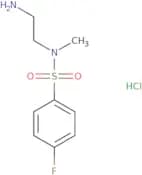
CAS:Controlled Product<p>Versatile small molecule scaffold</p>Formula:C10H14ClNOPurity:Min. 95%Color and Shape:PowderMolecular weight:199.68 g/molN-(2-Aminoethyl)-4-fluoro-N-methylbenzene-1-sulfonamide hydrochloride
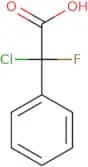
CAS:<p>Versatile small molecule scaffold</p>Formula:C9H14ClFN2O2SPurity:Min. 95%Molecular weight:268.74 g/mol2-Chloro-2-fluoro-2-phenylacetic acid
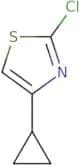
CAS:<p>Versatile small molecule scaffold</p>Formula:C8H6ClFO2Purity:90%MinColor and Shape:PowderMolecular weight:188.58 g/mol2-Chloro-4-cyclopropyl-1,3-thiazole
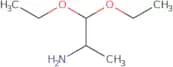
CAS:<p>Versatile small molecule scaffold</p>Formula:C6H6ClNSPurity:Min. 90%Color and Shape:Clear LiquidMolecular weight:159.64 g/mol1,1-Diethoxy-2-propanamine
CAS:<p>1,1-Diethoxy-2-propanamine is a primary amine that serves as a versatile building block in various chemical reactions. It is commonly used in research laboratories for the synthesis of new compounds and the development of innovative chemical processes. This high-quality research chemical offers excellent purity and reliability, making it a preferred choice among chemists and scientists. Whether you are conducting experiments or exploring new avenues in chemistry, 1,1-Diethoxy-2-propanamine is an essential component to consider for your research needs.</p>Formula:C7H17NO2Purity:Min. 95%Color and Shape:Clear LiquidMolecular weight:147.22 g/mol2-Amino-N-[(2-fluorophenyl)methyl]-N-methylbutanamide
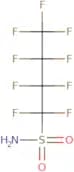
CAS:Versatile small molecule scaffoldFormula:C12H17FN2OPurity:Min. 95%Color and Shape:PowderMolecular weight:224.27 g/molPerfluorobutylsulphonamide
CAS:<p>Perfluorobutylsulphonamide is an atrial reactive agent that has been shown to be effective in the treatment of autoimmune diseases. It is a monoclonal antibody that binds to a specific site on the Na+ channel, which is located in the heart and brain cells. This drug has been shown to have no adverse effects on cardiac function or weight gain, which makes it preferable to other drugs in this class. Perfluorobutylsulphonamide also inhibits the production of reactive oxygen species and nitric oxide, which are important in the development of autoimmune diseases. The following product details are for 3-desacetylcefotaxime potassium:</p>Formula:C4H2F9NO2SPurity:Min. 95%Color and Shape:PowderMolecular weight:299.12 g/molCilostazol Related Compound C
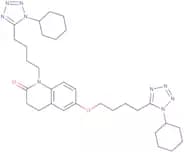
CAS:<p>Cilostazol is a drug that is used to treat the symptoms of intermittent claudication. It is a quinone-type inorganic base, obtained by the hydration of cilostazol. Cilostazol is an inhibitor of phosphodiesterase type 3 (PDE3) and has been shown to inhibit platelet aggregation, which may be due to its ability to inhibit PDE3 and prevent the breakdown of cyclic guanosine monophosphate (cGMP).</p>Formula:C31H45N9O2Purity:Min. 95%Color and Shape:PowderMolecular weight:575.75 g/mol1-(2-Fluoro-4-methoxyphenyl)ethylamine hydrochloride
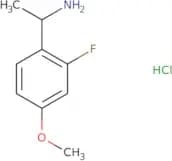
CAS:<p>1-(2-Fluoro-4-methoxyphenyl)ethylamine hydrochloride is a fine chemical that belongs to the group of versatile building blocks. It is a useful reagent, speciality chemical, and reaction component for the synthesis of complex compounds. 1-(2-Fluoro-4-methoxyphenyl)ethylamine hydrochloride is a high quality and useful intermediate for the production of other chemicals. Its CAS number is 1309602-79-6.</p>Formula:C9H13ClFNOPurity:Min. 95%Color and Shape:PowderMolecular weight:205.66 g/mol1-Bromopentane
CAS:<p>1-Bromopentane is a colorless liquid that has an unpleasant odor. It is soluble in water and reacts with acids to form bromides. 1-Bromopentane has been used as an oxidation catalyst in the preparation of organic compounds under conditions of constant pressure and light exposure. It has also been used in the synthesis of polymers, such as poly(1-bromopentene). Its biological properties are not well known, but it has been shown to have CB2 receptor agonist activity and inhibitory effects on oxidative stress. The chemical kinetic data for 1-bromopentane are available at various temperatures and pressures. Chloride ions can act as catalysts for its decomposition reaction, which is a stepwise process involving the conversion of hydroxyl groups into chloride atoms. The reaction mechanism starts with the conversion of one bromine atom into a radical by abstraction of a hydrogen atom from the molecule followed by addition of another brom</p>Formula:C5H11BrPurity:Min. 98 Area-%Color and Shape:Colorless Clear LiquidMolecular weight:151.04 g/mol3-tert-Butyl-4-hydroxybenzoic acid
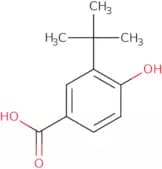
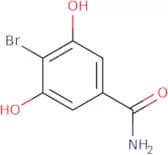
CAS:3-tert-Butyl-4-hydroxybenzoic acid is a phenolic compound that is found in the plant species of "Solanum xanthocarpum". It has antioxidant properties and has been shown to have anticancer activity in vitro. 3-tert-Butyl-4-hydroxybenzoic acid also inhibits the growth of human colon carcinoma cells. It is soluble in organic solvents and homopolymers at high temperatures, but insoluble at lower temperatures.Formula:C11H14O3Purity:Min. 95%Color and Shape:PowderMolecular weight:194.23 g/mol4-Bromo-3,5-dihydroxybenzamide
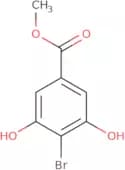
CAS:<p>4-Bromo-3,5-dihydroxybenzamide is a versatile building block that can be used as a reagent or as an intermediate in the synthesis of other compounds. It can also be used as a research chemical. 4-Bromo-3,5-dihydroxybenzamide has shown to be useful for the synthesis of complex organic compounds and is an excellent starting point for the preparation of novel scaffolds. This compound is also useful for making high quality products.</p>Formula:C7H6BrNO3Purity:90%Color and Shape:PowderMolecular weight:232.03 g/mol4-Bromo-3,5-dihydroxybenzoic acid methyl ester
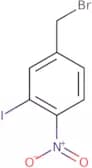
CAS:The compound 4-Bromo-3,5-dihydroxybenzoic acid methyl ester is an ether that is a natural product. It has been shown to have diastereoselective coupling with phenolic groups and unsymmetrically with lactones. This compound also undergoes epoxidation and farnesylation reactions. The intramolecular chain of the ether is methylated by formylation and reductive elimination.Formula:C8H7BrO4Purity:Min. 95%Color and Shape:PowderMolecular weight:247.04 g/mol4-(Bromomethyl)-2-iodo-1-nitrobenzene
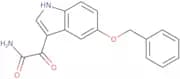
CAS:<p>4-(Bromomethyl)-2-iodo-1-nitrobenzene is a fine chemical that can be used as an intermediate for the synthesis of target molecules. It is a versatile building block with many different reactions and applications, such as research chemicals, reaction components, and speciality chemicals. This compound is also a useful building block for the synthesis of complex molecules. It has high quality and can be used as a reagent in lab experiments.</p>Formula:C7H5BrINO2Purity:Min. 95%Color and Shape:PowderMolecular weight:341.93 g/mol5-Benzyloxyindole-3-glyoxylamide
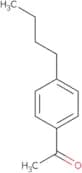
CAS:<p>5-Benzyloxyindole-3-glyoxylamide is a versatile building block that can be used in the synthesis of complex compounds. It has been shown to have a high quality and is useful as a reagent for research purposes. 5-Benzyloxyindole-3-glyoxylamide can be used as a reaction component and is useful as an intermediate in organic synthesis. 5BIGA has CAS number 22424-62-0 and is also known as 3-(benzyloxy)-5-(2,2,2-trifluoroethoxy)indole glyoxamide.</p>Formula:C17H14N2O3Purity:Min. 95%Molecular weight:294.3 g/mol4'-Butylacetophenone
CAS:<p>4'-Butylacetophenone (BA) is a phenolic compound that has been shown to reduce the need for an acceptor in wastewater treatment. It can be used as a substitute for hexane, which is commonly used to extract hydrophobic compounds from water. 4'-Butylacetophenone has also been shown to have anti-inflammatory properties and has been used in the synthesis of nonsteroidal anti-inflammatory drugs such as diclofenac amide.</p>Formula:C12H16OPurity:Min. 95%Color and Shape:PowderMolecular weight:176.25 g/mol

![4H,5H,6H,7H,8H-[1,2,3]Triazolo[1,5-a][1,4]diazepine hydrochloride](/_next/image/?url=https%3A%2Fstatic.cymitquimica.com%2Fproducts%2F3D%2Fthumb-webp%2FGWC61084.webp&w=3840&q=75)
![2-Amino-N-[(2-fluorophenyl)methyl]-N-methylbutanamide](/_next/image/?url=https%3A%2Fstatic.cymitquimica.com%2Fproducts%2F3D%2Fthumb-webp%2FTYB06730.webp&w=3840&q=75)