Building Blocks
This section contains fundamental products for the synthesis of organic and biological compounds. Building blocks are the essential starting materials used to construct complex molecules through various chemical reactions. They play a critical role in drug discovery, material science, and chemical research. At CymitQuimica, we offer a diverse range of high-quality building blocks to support your innovative research and industrial projects, ensuring you have the essential components for successful synthesis.
Subcategories of "Building Blocks"
- Boronic Acids & Boronic Acid Derivatives(5,778 products)
- Chiral Building Blocks(1,243 products)
- Hydrocarbon Building Blocks(6,098 products)
- Organic Building Blocks(61,057 products)
Found 200716 products of "Building Blocks"
Sort by
Purity (%)
0
100
|
0
|
50
|
90
|
95
|
100
n-Pentacosane-d52
CAS:Controlled Product<p>Applications n-Pentacosane-d52 (CAS# 121578-13-0) is a useful isotopically labeled research compound.<br></p>Formula:C25D52Color and Shape:White To Off-WhiteMolecular weight:405.017-Methoxy-4-methylcoumarin
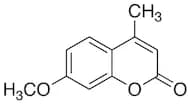
CAS:<p>Applications 7-Methoxy-4-methylcoumarin (cas# 2555-28-4) is a compound useful in organic synthesis.<br></p>Formula:C11H10O3Color and Shape:NeatMolecular weight:190.20Iodoacetic Acid
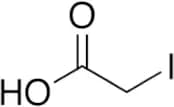
CAS:Controlled Product<p>Applications Used as a general reagent in acylation reactions. A byproduct formed in treated waters, and found in marine life.<br> E0<br>References Zuckermann, R.N. et al.; J. Am. Chem. Soc., 115, 10646 (1992); Bull, R., et al.: Toxicol. Appl. Pharmacol., 182, 55 (2002), Mitch, W., et al.: Water Sci. Technol., 2, 191 (2002),<br></p>Formula:C2H3IO2Color and Shape:AmberMolecular weight:185.952,4,6-Trihydroxybenzaldehyde
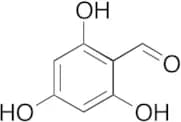
CAS:Controlled ProductFormula:C7H6O4Color and Shape:NeatMolecular weight:154.12Cyanoacetic Acid
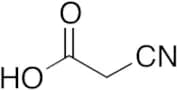
CAS:Controlled Product<p>Applications Cyanoacetic acid is a dangerous compound that is commonly used as a synthetic intermediate. Cyanoacetic acid has also been found to have teratogenic effects on rat embryos.<br> Not a dangerous good if item is equal to or less than 1g/ml and there is less than 100g/ml in the package<br>References Simpson, M., et al.: Food Chem. Toxicol., 24, 634 (1986)<br></p>Formula:C3H3NO2Color and Shape:NeatMolecular weight:85.06Levomefolate Calcium
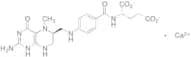
CAS:<p>Applications The calcium salt of L-5-methyltetrahydrofolic acid which belongs to the group of folate vitamins (Vitamin B9, Folacin). It is a coenzymated form of folic acid.<br>References Prinz-Langhebohi, R.: et al., Br. J. Pharmac., 158, 2014 (2009); Wright, A. et al.: Brit, J. Nutrit., 103, 724 (2010);<br></p>Formula:C20H23N7O6·CaColor and Shape:Off-WhiteMolecular weight:497.52Dansylhydrazine
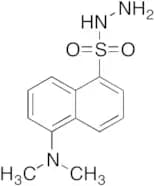
CAS:<p>Applications Dansylhydrazine is a fluorescent marker for carbonyl compounds.<br></p>Formula:C12H15N3O2SColor and Shape:NeatMolecular weight:265.332-[(1-Hydroxy-2-oxo-2-phenylethyl)sulfanyl]acetic Acid
CAS:Controlled ProductFormula:C10H10O4SPurity:>90%Color and Shape:NeatMolecular weight:226.255-Hydroxyindole
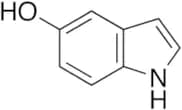
CAS:Controlled Product<p>Applications 5-Hydroxyindole is a hydroxylated indole used as a building block in the preparation of various pharmaceutical compounds such as indole based neurochemicals. 5-Hydroxyindole is a metabolite of Tryptophan (T894800). 5-Hydroxyindole displayed weak inhibitory activity on human melanoma tyrosinase. 5-Hydroxyindole also showed inhibition of serotonin transport by blood platelets.<br>References Yamazaki, Y. et al.: Zeitsch. Naturforsch. C: J. Biosci., 65, 49 (2010); Kay, W.W. et al.: Gen. Pharmacol., 8, 201 (1977); Ghebregzabher, M. et al.: J. Chrom. Biomed. Appl., 222, 191 (1981);<br></p>Formula:C8H7NOColor and Shape:NeatMolecular weight:133.153-Pyridylacetic Acid Hydrochloride
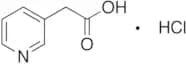
CAS:Controlled Product<p>Applications 3-Pyridylacetic Acid is a metabolite of Nicotine (N412420). 3-Pyridylacetic Acid is an antilipemic.<br>References Baer, T.A., et al.: J. Med. Chem., 16, 85 (1973); Kyerematen, G. A., et al.: Drug Metab. Dispos., 16, 125 (1988);<br></p>Formula:C7H7NO2·ClHColor and Shape:White To Off-WhiteMolecular weight:173.60Dichlorodinitromethane
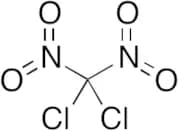
CAS:Controlled Product<p>Stability Light Sensitive<br>Applications Dichlorodinitromethane is a derivative of nitromethane which is used in the preparation of Thermobaric explosives (TBX's).<br> Not a dangerous good if item is equal to or less than 1g/ml and there is less than 100g/ml in the package<br>References Mohamed, A.K., Mostafa, H.E.: Int. Ann. Conf. ICT, 44th, 14 (2013)<br></p>Formula:CCl2N2O4Color and Shape:NeatMolecular weight:174.93Levoglucosenone
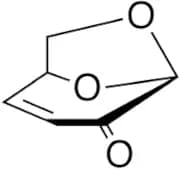
CAS:Controlled Product<p>Applications (-)-Form is a pyrolysis product of cellulose and cellulose-containing materials including pulp and paper waste products.Known as a pyrolytic product of cellulose, its very useful as a chiral source for synthesizing natural products because of its highly functionalized structure, which contains one chiral center. Used as chiral building block in organic synthesis.<br>References Essig, M.G., et al.: Carbohydr. Res., 156, 225 (1986), Taniguchi, T., et al.: Synlett, 971 (1996),<br></p>Formula:C6H6O3Color and Shape:NeatMolecular weight:126.112’-Pyridylacetic Acid Hydrochloride
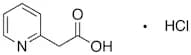
CAS:<p>Stability Hygroscopic<br>Applications Used in nucleophilic substitution.<br>References Genicot, C., et al.: Bioorg. Med. Chem. Lett., 13, 437 (2003),<br></p>Formula:C7H7NO2·ClHColor and Shape:NeatMolecular weight:173.60(+)-Citronellal
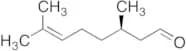
CAS:Controlled Product<p>Applications (+)-Citronellal is a monoterpene compound that is formed by the metabolism of plants. (+)-Citronellal is a natural insect repellant, and is the main component of citronellal oil. (+)-Citronellal is also used as a starting material in the one pot synthesis of (-)-Menthol (M218875).<br>References Kwon, Y., et al.: Curr. Biol., 20, 1672 (2010); Lenardão, E., et al.: Tetrahedron, 63, 6671 (2007); Milone, C., et al.: Appl. Catal. A-Gen., 199, 239 (2000)<br></p>Formula:C10H18OPurity:>90%Color and Shape:NeatMolecular weight:154.251-Octyne
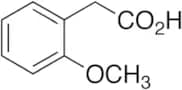
CAS:Controlled Product<p>Applications 1-Octyne was used as a mechanism-based inhibitor of AlkB (nonheme di-iron alkane monooxygenase).<br> Not a dangerous good if item is equal to or less than 1g/ml and there is less than 100g/ml in the package<br>References Alonso, H., et al.: Appl. Environ. Microbio., 78, 7946 (2012)<br></p>Formula:C8H14Color and Shape:NeatMolecular weight:110.22-Methoxybenzeneacetic Acid
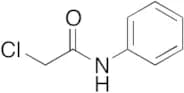
CAS:Controlled ProductFormula:C9H10O3Color and Shape:NeatMolecular weight:166.172-Chloro-N-phenylacetamide
CAS:Controlled Product<p>Applications 2-Chloro-N-phenylacetamide is used as a reagent in the synthesis of indolylmethylene benzo[h]thiazolo[2,3-b]quinazolinones which exhibit anticancer and antimicrobial activities in vitro.<br>References Gali, R., et al.: Bioorg. Med. Chem. Lett., 24, 4239 (2014)<br></p>Formula:C8H8ClNOColor and Shape:NeatMolecular weight:169.03



![2-[(1-Hydroxy-2-oxo-2-phenylethyl)sulfanyl]acetic Acid](/_next/image/?url=https%3A%2Fstatic.cymitquimica.com%2Fproducts%2FTR%2Fthumb-webp%2FH956065.webp&w=3840&q=75)