Building Blocks
This section contains fundamental products for the synthesis of organic and biological compounds. Building blocks are the essential starting materials used to construct complex molecules through various chemical reactions. They play a critical role in drug discovery, material science, and chemical research. At CymitQuimica, we offer a diverse range of high-quality building blocks to support your innovative research and industrial projects, ensuring you have the essential components for successful synthesis.
Subcategories of "Building Blocks"
- Boronic Acids & Boronic Acid Derivatives(5,778 products)
- Chiral Building Blocks(1,242 products)
- Hydrocarbon Building Blocks(6,098 products)
- Organic Building Blocks(61,084 products)
Found 198714 products of "Building Blocks"
Sort by
Purity (%)
0
100
|
0
|
50
|
90
|
95
|
100
2-Chloro-1,1,1-trimethoxyethane
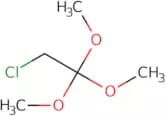
CAS:<p>2-Chloro-1,1,1-trimethoxyethane is a reagent that is used in the synthesis of recombinant proteins. It is also used to produce monoclonal antibodies. Fatty acids can be analyzed by using these reagents as they are soluble in this solvent. The structural analysis of fatty acids has been shown to have anticancer activity. 2-Chloro-1,1,1-trimethoxyethane reacts with glycosyl residues on lysine residues in proteins and produces an acid that causes the protein to unfold and denature. This reaction has been shown to have anticancer activity against cervical cancer cells in human liver cells.</p>Formula:C5H11ClO3Purity:Min. 97.5%Color and Shape:Colorless Clear LiquidMolecular weight:154.59 g/molFmoc-Trp(5-OH)-OH
CAS:Fmoc-Trp(5-OH)-OH is a molecule that has been shown to have anticancer activity. It inhibits the proliferation of cancer cells and inhibits the production of fatty acids. It also has antiinflammatory properties and inhibits the growth of bacteria by inhibiting chloride channels. Fmoc-Trp(5-OH)-OH has been shown to inhibit the binding of 4-methylumbelliferone (4MU) to human erythrocytes, which is an indicator of its capability as a coumarin derivative. Fmoc-Trp(5-OH)-OH has also been found to be effective against tuberculosis through hydrogen bond interactions with the enzyme mycobacterium tuberculosis DNA polymerase.Formula:C26H22N2O5Purity:Min. 95%Color and Shape:PowderMolecular weight:442.5 g/mol1,3-Di-(2-pyrenyl)propane
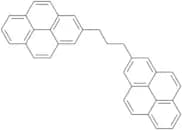
CAS:<p>1,3-Di-(2-pyrenyl)propane is a synthetic molecule that has been used as a model for the phosphatidylethanolamine (PE) component of bacterial membranes. 1,3-Di-(2-pyrenyl)propane has been shown to have a phase transition temperature of -7 degrees Celsius. It is hydrophobic and highly soluble in organic solvents like chloroform, ethanol, ether, and benzene. This molecule is kinetically inert and thermodynamically stable. The monomeric form of 1,3-Di-(2-pyrenyl)propane is not sensitive to ionizing radiation. However, in the bilayer form it is highly sensitive to radiation and can lead to the formation of double bonds that can break down into radicals.</p>Formula:C35H24Purity:Min. 95%Color and Shape:White PowderMolecular weight:444.57 g/molcis-4-Hydroxy-L-proline
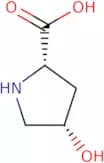
CAS:<p>Cis-4-Hydroxy-L-proline is a bound form of proline that is formed by the condensation of two molecules of glyoxylate. It is a basic structure and an intermediate in the synthesis of collagen, which is a protein found in connective tissue. Cis-4-Hydoxy-L-proline has been shown to be an active form of proline for the treatment of primary sclerosing cholangitis, as it can decrease bile acid levels. This compound has also been used as an analytical method for determining collagen content in biological samples. The polymerase chain reaction technique uses cis-4-Hydroxy-L-proline as a matrix effect to amplify DNA sequences. Cis-4-Hydroxy-L-proline has also been shown to have optimum concentrations at 3mM and 0.5mM in model systems.br></p>Formula:C5H9NO3Purity:Min. 95%Color and Shape:White PowderMolecular weight:131.13 g/mol5-Amino-2-nitrobenzoic acid
CAS:<p>5-Amino-2-nitrobenzoic acid is a versatile compound that can be used as a reagent, a reaction component, or as a useful scaffold in research. It reacts with alcohols to produce esters and amides. The high quality of this chemical makes it suitable for use in many different reactions. CAS No. 13280-60-9</p>Formula:C7H6N2O4Molecular weight:182.14 g/molRef: 3D-A-6803
1kgTo inquire100gTo inquire250gTo inquire500gTo inquire2500gTo inquire-Unit-ggTo inquire5-Bromoindole-2-carboxylic acid ethyl ester
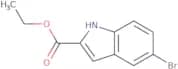
CAS:<p>5-Bromoindole-2-carboxylic acid ethyl ester (5-BIEC) is a carboxamide antibiotic that inhibits the growth of gram-negative bacteria, including pneumoniae. 5-BIEC has been shown to have an inhibitory concentration (IC50) of 0.9 μM against Escherichia coli and other gram negative bacteria. It also has anti-proliferative effects on cancer cells, which may be due to its ability to inhibit DNA replication by binding to the beta subunit of DNA gyrase. 5-BIEC is currently being studied as a potential anticancer drug for the treatment of breast cancer, colon cancer, and leukemia.</p>Formula:C11H10BrNO2Purity:Min. 98 Area-%Color and Shape:PowderMolecular weight:268.11 g/mol5-Amino-2-nitrobenzoic acid
CAS:<p>5-Amino-2-nitrobenzoic acid is an organic compound that belongs to the class of versatile building block. It is a white solid that has been used as a research chemical, reagent, and specialty chemical for the synthesis of complex compounds and pharmaceuticals. 5-Amino-2-nitrobenzoic acid is also known as 2-amino-5-chlorobenzoic acid (ACBA). It is soluble in water, but insoluble in ethanol. The CAS number for this chemical is 13280-60-9.</p>Formula:C7H6N2O4Molecular weight:182.14 g/molRef: 3D-A-6802
1kgTo inquire100gTo inquire250gTo inquire500gTo inquire2500gTo inquire-Unit-ggTo inquire3-Methoxythiophene-2-boronic acid pinacol ester
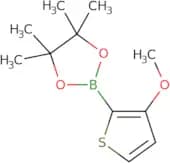
CAS:3-Methoxythiophene-2-boronic acid pinacol ester is a ligand that can be used in the synthesis of organic molecules. It undergoes nucleophilic substitution reactions and has been shown to be an excellent substrate for Suzuki coupling reactions. This reactant can also be used as a backbone in the synthesis of optical materials, such as semiconductors. 3-Methoxythiophene-2-boronic acid pinacol ester is capable of forming a variety of substitutions and transfers with benzothiadiazole derivatives, which have been shown to have an acceptor effect on organic molecules.Formula:C11H17BO3SPurity:Min. 95%Color and Shape:PowderMolecular weight:240.13 g/mol1-[5-Bromo-2-(difluoromethoxy)phenyl]ethan-1-one
CAS:<p>1-[5-Bromo-2-(difluoromethoxy)phenyl]ethan-1-one is an organic chemical compound. It is a reaction component and a reagent. 1-[5-Bromo-2-(difluoromethoxy)phenyl]ethan-1-one has been used in research for the synthesis of complex compounds, fine chemicals, and speciality chemicals. This chemical may be used as a versatile building block, useful intermediate, or useful building block. 1-[5-Bromo-2-(difluoromethoxy)phenyl]ethan-1-one has also been shown to be a high quality product with high purity.</p>Formula:C9H7BrF2O2Purity:Min. 95%Color and Shape:PowderMolecular weight:265.05 g/mol6-FAM azide
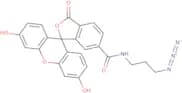
CAS:<p>6-Fluorescein Azide or 6-FAM azide finds application in biomolecules labelling. 6-FAM azide reacts with a terminal alkyne or cyclooctene derivative with a fast click reaction, forming a stable adduct.</p>Formula:C24H18N4O6Purity:Min. 95%Color and Shape:PowderMolecular weight:458.43 g/mol2,3-Dichloro-N,N-dimethylquinoxaline-6-sulfonamide
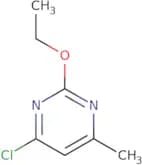
CAS:2,3-Dichloro-N,N-dimethylquinoxaline-6-sulfonamide is a fine chemical that is used as a building block in the synthesis of various organic compounds. It has been shown to be an effective reagent for the synthesis of various complex compounds. This compound can be used as a reaction component in many chemical reactions and also as a versatile scaffold for synthesizing other molecules.Formula:C10H9Cl2N3O2SPurity:Min. 95%Color and Shape:PowderMolecular weight:306.17 g/mol4-Chloro-2-ethoxy-6-methyl-pyrimidine
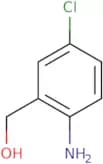
CAS:<p>Versatile small molecule scaffold</p>Formula:C7H9ClN2OPurity:Min. 95%Color and Shape:PowderMolecular weight:172.61 g/mol2-Amino-5-chlorobenzyl alcohol
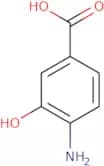
CAS:2-Amino-5-chlorobenzyl alcohol is a sustainable chemical that can be synthesized from acetylacetonate, an organic compound. It undergoes uv radiation in the presence of oxygen and water to form a variety of products. This reaction takes place in less than 10 minutes at room temperature and is operational under a variety of conditions. 2-Amino-5-chlorobenzyl alcohol has been used as an active compound for the synthesis of carbenes, methyl ketones, and aryl chlorides. The product's luminescent properties can be used for biomolecular applications such as DNA sequencing or identification.Formula:C7H8ClNOPurity:Min. 95%Color and Shape:PowderMolecular weight:157.6 g/mol4-Amino-3-hydroxybenzoic acid
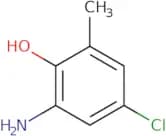
CAS:<p>4-Amino-3-hydroxybenzoic acid is a small molecule that has been shown to inhibit the activity of epidermal growth factor receptor (EGFR) and human epidermal growth factor (HER2). It is also an inhibitor of cytochrome P450 enzymes, which are involved in the metabolism of drugs. 4-Amino-3-hydroxybenzoic acid is used in vitro as an antifungal agent for Candida albicans and other pathogenic fungi. This drug inhibits the growth of cancer cells by binding to specific cell surface receptors, causing them to detach from their surroundings and die. 4-Amino-3-hydroxybenzoic acid may have potential as a drug for treating metastatic colorectal cancer. The mechanism of action is not yet fully understood but it may be related to the inhibition of intermolecular hydrogen bonding and water permeability.</p>Formula:C7H7NO3Purity:Min. 97.5 Area-%Color and Shape:Off-White PowderMolecular weight:153.14 g/mol2-Amino-4-chloro-6-methylphenol
CAS:<p>2-Amino-4-chloro-6-methylphenol is a radioactive tracer that is used in biomedical imaging and has high binding affinity to the 5-HT3 receptor. 2-Amino-4-chloro-6-methylphenol can be used to study the mechanisms of cancer and other diseases. The specific activity of this tracer is around 1000 Ci/mmol at 37°C. This compound is a ligand for the 5HT3 receptor, which has been shown to be associated with nausea and vomiting, anxiety, depression, epilepsy, and Alzheimer's disease. It also binds with high affinity to serotonin receptors in the brain.</p>Formula:C7H8ClNOPurity:Min. 95 Area-%Color and Shape:PowderMolecular weight:157.6 g/mol1,1'-Dichloroferrocene
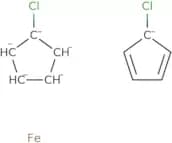
CAS:<p>1,1'-Dichloroferrocene is a molecule that belongs to the group of benzenes and has a gaseous form. It has potential energy and is an optical active compound. 1,1'-Dichloroferrin can be found in synchrotron radiation and it's optical absorption is dipole. The ligand for 1,1'-dichloroferrocene is ferrocene. This molecule transfers energy through radiation and optical excitation. The parameters for bromoferrocene are similar to those of 1,1'-dichloroferrin except that it does not have the same steric properties.</p>Formula:C10H8Cl2FePurity:Min. 95%Color and Shape:Off-White To Dark Yellow SolidMolecular weight:254.92 g/mol1-Bromo-2,4-dinitrobenzene
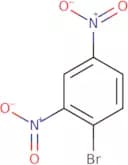
CAS:1-Bromo-2,4-dinitrobenzene, also known as DNB, is a molecule that belongs to the group p2. It has been shown to be a substrate for catalysis in vitro assays. 1-Bromo-2,4-dinitrobenzene is used in cancer research and can inhibit the growth of skin cells. 1-Bromo-2,4-dinitrobenzene does not show any cytotoxic effects on untreated control cells and it has been shown to have limited solubility in water (less than 0.1 g/L). This molecule also shows low reactivity with nucleophilic compounds and has been found to be less reactive than nitro compounds.Formula:C6H3BrN2O4Purity:Min. 95%Color and Shape:Off-White PowderMolecular weight:247 g/molN-Methyl-N-[1H-indol-3-yl)methyl]amine
CAS:<p>N-Methyl-N-[1H-indol-3-yl)methyl]amine is a plant alkaloid that is found in many plants. It has been shown to have a high constant and to be able to be extracted from the gramine. N-Methyl-N-[1H-indol-3-yl)methyl]amine has been shown to inhibit nitrification and may have potential use as an herbicide. The reaction products of this compound are unknown, but it has been shown to inhibit biosynthesis in vitro assays. This compound also has properties that make it useful for the study of gender and dry weight expression in plants, as well as its ability to be produced by polyclonal antibodies.</p>Formula:C10H12N2Purity:Min. 95%Color and Shape:PowderMolecular weight:160.22 g/mol2-(7-Chloro-1H-indol-3-yl)ethanamine hydrochloride
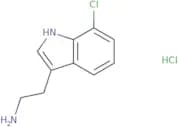
CAS:Controlled Product<p>2-(7-Chloro-1H-indol-3-yl)ethanamine hydrochloride is a versatile building block that can be used in the synthesis of complex compounds. It is a high quality, useful intermediate and reaction component in the synthesis of speciality chemicals and research chemicals. 2-(7-Chloro-1H-indol-3-yl)ethanamine hydrochloride has been shown to be a useful scaffold for the synthesis of pharmaceuticals and agrochemicals.</p>Formula:C10H12Cl2N2Purity:Min. 95%Color and Shape:PowderMolecular weight:231.12 g/mol1-(3-Azetidinyl)-pyrrolidine dihydrochloride
CAS:1-(3-Azetidinyl)-pyrrolidine dihydrochloride is a high quality, versatile building block that can be used as a reagent in the synthesis of complex compounds and as an intermediate in the synthesis of fine chemicals. 1-(3-Azetidinyl)-pyrrolidine dihydrochloride is an excellent starting material for the synthesis of a wide range of compounds. It can also act as a speciality chemical or research chemical. 1-(3-Azetidinyl)-pyrrolidine dihydrochloride has CAS No. 1024589-68-1 and can be found on our website at www.chemistryworldstore.comFormula:C7H14N2•(HCl)2Purity:Min. 95%Color and Shape:PowderMolecular weight:199.12 g/mol




![1-[5-Bromo-2-(difluoromethoxy)phenyl]ethan-1-one](/_next/image/?url=https%3A%2Fstatic.cymitquimica.com%2Fproducts%2F3D%2Fthumb-webp%2FQYB99475.webp&w=3840&q=75)

![N-Methyl-N-[1H-indol-3-yl)methyl]amine](/_next/image/?url=https%3A%2Fstatic.cymitquimica.com%2Fproducts%2F3D%2Fthumb-webp%2FLBA28495.webp&w=3840&q=75)