


Building Blocks
This section contains fundamental products for the synthesis of organic and biological compounds. Building blocks are the essential starting materials used to construct complex molecules through various chemical reactions. They play a critical role in drug discovery, material science, and chemical research. At CymitQuimica, we offer a diverse range of high-quality building blocks to support your innovative research and industrial projects, ensuring you have the essential components for successful synthesis.
Subcategories of "Building Blocks"
- Boronic Acids & Boronic Acid Derivatives(5,778 products)
- Chiral Building Blocks(1,242 products)
- Hydrocarbon Building Blocks(6,098 products)
- Organic Building Blocks(61,098 products)
Found 199594 products of "Building Blocks"
Sort by
Purity (%)
0
100
|
0
|
50
|
90
|
95
|
100
3-Nitrobenzamide
CAS:<p>3-Nitrobenzamide is a substance that inhibits the replication of some viruses. It has been shown to inhibit the polymerase chain reaction and to be active against hepatitis B virus. 3-Nitrobenzamide was also observed to have inhibitory properties against herpes simplex virus type 1 (HSV-1) and HSV-2. The solid form of this compound is stable at room temperature, but may undergo hydrolysis in solution. 3-Nitrobenzamide reacts with water to form nitrous acid, which may cause corrosion of metal surfaces.</p>Formula:C7H6N2O3Purity:Min. 95%Color and Shape:PowderMolecular weight:166.13 g/mol1-Octanesulfonic acid sodium salt
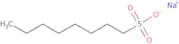
CAS:<p>1-Octanesulfonic acid sodium salt is a chemical compound that can be used to prepare surfactants. It has been shown to have a high optimum concentration for the formation of stable foam and is compatible with blood sampling, hydrophobic effect, and ester hydrochloride. 1-Octanesulfonic acid sodium salt has also been used as an analytical method for detecting sulfate ion in the presence of other ions on the basis of its reactivity with potassium permanganate. The detection limit is 0.1 ppm with a reaction solution containing 1% octanesulfonic acid sodium salt and 3% potassium permanganate. The chemical stability at pH 2 is higher than that at pH 7 because the sulfonate group acts as a buffer at low pH. 1-Octanesulfonic acid sodium salt can be quantified by means of fluorescence detector or electrochemical detector after it reacts with phenolphthalein in an acidic solution.</p>Formula:C8H18O3S•NaPurity:Min. 98%Color and Shape:White PowderMolecular weight:217.28 g/mol7-Octyn-1-amine hydrochloride
CAS:<p>7-Octyn-1-amine hydrochloride is a chemical that can be used as an intermediate in the synthesis of other compounds. It has a high quality and is a versatile building block for numerous chemical reactions. 7-Octyn-1-amine hydrochloride can be used as an intermediate in the synthesis of complex compounds. It is also useful as a reagent and reaction component, as well as being a useful scaffold for research chemicals.</p>Formula:C8H15N•HClPurity:Min. 90%Molecular weight:161.67 g/mol2-[1-(Oxan-2-yl)-1H-pyrazol-5-yl]benzaldehyde
CAS:<p>Please enquire for more information about 2-[1-(Oxan-2-yl)-1H-pyrazol-5-yl]benzaldehyde including the price, delivery time and more detailed product information at the technical inquiry form on this page</p>Formula:C15H16N2O2Purity:Min. 95%Color and Shape:PowderMolecular weight:256.3 g/molDL-Phosphinothricin ammonium salt
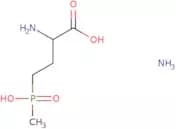
CAS:<p>Non-proteinogenic amino acid; Inhibitor of glutamine synthetase</p>Formula:C5H15N2O4PPurity:Min. 95 Area-%Color and Shape:White PowderMolecular weight:198.16 g/molPoly epsilon L-lysine HCl approx MW 4500Da
CAS:<p>Poly epsilon L-lysine HCl is a water soluble, biodegradable, cationic peptide that can be produced via fermentation by Streptomyces albulus. It shows a wide range of antimicrobial activity against microorganisms such as bacteria, yeasts and molds and is stable at high temperatures and under both acidic and alkaline conditions. This non-toxic poly-L-lysine is commonly used as a supplement or preservative in various food, beverage and cosmetics products. It can also be used for microscopy glass slides coating.</p>Formula:(C6H12N2O•HCl)nPurity:Min. 95.0 Area-%Color and Shape:Off-White Yellow PowderPyridine 4-acetic acid HCl
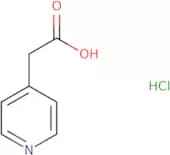
CAS:<p>Pyridine 4-acetic acid HCl is a synthetic, fluorescent probe with reactive and luminescence properties. It is used for the detection of hydrogen bond formation in organic compounds. It is also used as a probe to study the molecular interactions between metal ions and β-unsaturated aldehydes. Pyridine 4-acetic acid HCl has been shown to be useful for transduction of light energy into chemical energy. The pyridine ring makes this compound an excellent candidate for molecular modeling studies due to its rigid structure.</p>Formula:C7H8ClNO2Purity:Min. 95%Color and Shape:PowderMolecular weight:173.6 g/molPyrazolo[1,5-a]pyrimidine-3-carboxylic acid
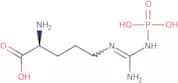
CAS:<p>Pyrazolo[1,5-a]pyrimidine-3-carboxylic acid is a pyrimidine analog and an electron transfer agent. It is a potent inhibitor of the enzyme dehydrogenase, which catalyzes the conversion of nicotinamide adenine dinucleotide (NAD) to nicotinamide adenine dinucleotide phosphate (NADP). Pyrazolo[1,5-a]pyrimidine-3-carboxylic acid has been shown to have anti-inflammatory properties and also inhibits the production of b-raf protein. This drug has also been shown to be a potent inhibitor of mitochondrial electron transport in cancer cells. Pyrazolo[1,5-a]pyrimidine-3-carboxylic acid binds to the metal centers in mitochondria, thereby inhibiting oxidative phosphorylation and reducing ATP synthesis. This ultimately leads to cell death by apoptosis.</p>Formula:C7H5N3O2Purity:Min. 95%Color and Shape:White PowderMolecular weight:163.13 g/molN-Phospho-L-arginine lithium salt hydrate
CAS:<p>N-Phospho-L-arginine lithium salt hydrate is an arginine derivative that has a complex life cycle. It is used as a substrate for ATP synthesis, and also participates in the formation of disulfide bonds during protein folding. N-Phospho-L-arginine lithium salt hydrate is an important component of many enzymes, which are vital to the body's metabolic processes. This compound can be used to study biochemical properties of enzymes in biological samples and infectious diseases, which could lead to new treatments for these diseases.</p>Formula:C6H15N4O5P·xLi·yH2OPurity:Min. 95%Color and Shape:PowderMolecular weight:254.18 g/molPivaldehyde
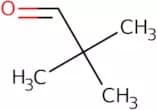
CAS:<p>Intermediate in organic syntheses; stereoselective synthesis</p>Formula:C5H10OPurity:Min. 95%Color and Shape:Colorless Clear LiquidMolecular weight:86.13 g/molDL-Penicillamine
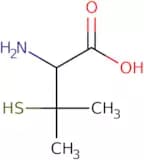
CAS:<p>DL-Penicillamine is a penicillamine that is used in the treatment of various diseases such as rheumatoid arthritis and primary sclerosing cholangitis. It has been shown to inhibit the production of inflammatory prostaglandins, which are responsible for pain and swelling. DL-Penicillamine has been used as a fluorescence probe for the detection of nonsteroidal anti-inflammatory drugs in water samples. DL-Penicillamine is also used to study coordination geometry and rate constants in solid tumours using fluorescence spectroscopy. This drug can be analyzed using chromatographic techniques or by X-ray diffraction data obtained with an electrochemical impedance spectroscopy system. The analytical method was published in 1981 by J.D. Hamer, et al., in "Analytical Chemistry".</p>Formula:C5H11NO2SPurity:Min. 95%Color and Shape:White PowderMolecular weight:149.21 g/molN-4-Boc-2-piperazine carboxylic acid
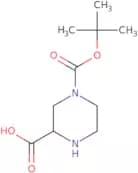
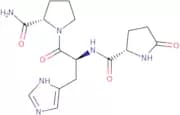
CAS:<p>N-4-Boc-2-piperazine carboxylic acid is an organic acid that functions in the metabolism of purine and bile acids. It is also involved in the metabolic pathway of the kidney, which is important for the elimination of waste products from the body. N-4-Boc-2-piperazine carboxylic acid has been shown to be useful as a marker for distinguishing between different types of kidney disease. It is a metabolite found in urine and can be used as an analytical tool for detecting renal function. This compound has also been shown to have long term effects on bile acid metabolism.</p>Formula:C10H18N2O4Purity:Min. 95%Color and Shape:White PowderMolecular weight:230.26 g/molL-Pyroglutamyl-L-histidyl-L-prolinamide
CAS:<p>L-Pyroglutamyl-L-histidyl-L-prolinamide (PGC) is a pyrrolidine that is used for the treatment of neurologic disorders. It has been shown to be effective in treating depression and a number of other neurologic disorders, including Parkinson's disease, Alzheimer's disease, and epilepsy. PGC has also been shown to have an antidepressant effect in women with depression who are pregnant or have recently given birth. In addition, it has been found to be clinically effective in the treatment of symptoms associated with Parkinson’s Disease. PGC is not absorbed into the bloodstream and must be injected directly into muscle tissue or fat cells in order to produce its therapeutic effects.</p>Formula:C16H22N6O4Purity:Min. 95%Color and Shape:White PowderMolecular weight:362.38 g/molPotassium nonafluoro-1-butanesulfonate
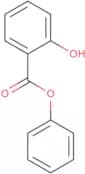
CAS:<p>Potassium nonafluoro-1-butanesulfonate (NBS) is a chemical compound that is used to remove trifluoroacetic acid from wastewater. It can also be used as an analytical reagent to measure cytosolic calcium concentrations in cells. In addition, NBS has been shown to have a high degree of chemical stability, but it may react with hydrogen fluoride and cause toxicity in humans. The pharmacokinetic properties of this drug are not well-known, but it has been shown to accumulate in the liver and fat tissues and pass into the maternal blood stream during pregnancy. NBS also inhibits the synthesis of p-hydroxybenzoic acid, which leads to hepatic steatosis in mice with diet-induced obesity. This drug also affects 3t3-l1 preadipocytes and human serum.</p>Formula:C4F9KO3SColor and Shape:PowderMolecular weight:338.19 g/molPhenyl salicylate
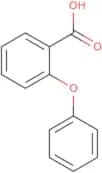
CAS:<p>Phenyl salicylate is a phenolic compound that is used as an antipyretic and analgesic. It has the ability to inhibit prostaglandin synthesis, which can lead to reduced inflammation in the body. Phenyl salicylate has been shown to bind to specific receptors on cells, which leads to inhibition of prostaglandin synthesis. This receptor binding may also be responsible for its anti-inflammatory properties. Phenyl salicylate is metabolized in the liver and excreted through the kidneys.</p>Formula:C13H10O3Purity:Min. 98%Color and Shape:White PowderMolecular weight:214.22 g/mol2-Phenoxybenzoic acid
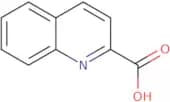
CAS:<p>2-Phenoxybenzoic acid is a hydrochloride salt that is used as a reagent in analytical chemistry. It reacts with the carboxylate group of amino acids, proteins, and peptides to form a stable, water-soluble complex. The reaction is typically monitored by measuring the change in optical density at 260 nm. 2-Phenoxybenzoic acid reacts with bcr-abl kinase and colloidal gold to form an insoluble precipitate that can be detected with electron microscopy. This compound also has biological properties such as inhibiting carbonic anhydrase activity and changing the pH of the solution. 2-Phenoxybenzoic acid was originally synthesized from diphenyl ether and phenol (C6H5OH).<br>2-Phenoxybenzoic acid can be converted into 2-(4-nitrophenoxy) benzoic acid by reacting it with sodium nitrite followed by hydrochloric acid</p>Formula:C13H10O3Purity:Min. 95%Color and Shape:PowderMolecular weight:214.22 g/mol2-Quinolinecarboxylic acid
CAS:<p>2-Quinolinecarboxylic acid is an antibiotic that is used in the treatment of bacterial infections and has inhibitory properties. It has been shown to be a competitive inhibitor of the enzyme quinolinate phosphoribosyltransferase, which catalyzes the conversion of quinolinic acid to nicotinic acid. 2-Quinolinecarboxylic acid binds to the active site of the enzyme and prevents substrate binding, thereby blocking the production of nicotinic acid. This drug also inhibits bacterial growth by binding to DNA-dependent RNA polymerase, thereby preventing transcription and replication. The high frequency of human activity has been shown using a patch-clamp technique on human erythrocytes. This active form is metabolized through a number of metabolic transformations, including hydrolysis by esterases or glucuronidases, oxidation by cytochrome P450 enzymes, reduction by glutathione reductase, or conjugation with glucur</p>Formula:C10H7NO2Purity:Min. 98 Area-%Color and Shape:PowderMolecular weight:173.17 g/mol4-[(3-Aminopropyl)amino]butanoic acid dihydrochloride
CAS:<p>Versatile small molecule scaffold</p>Formula:C7H16N2O2•2HClPurity:Min. 95%Color and Shape:PowderMolecular weight:233.13 g/mol1-Phenyl-3-(propan-2-yl)urea
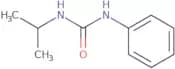
CAS:<p>1-Phenyl-3-(propan-2-yl)urea is a chemical compound that is used in the synthesis of organic compounds. It has been shown to be useful as a building block and also has applications in the preparation of complex compounds. 1-Phenyl-3-(propan-2-yl)urea can be used as a reagent for reactions involving esterification, hydrolysis, cyclization, and nitration. The compound is also useful for research purposes and can be used as an intermediate for other chemicals.</p>Formula:C10H14N2OPurity:Min. 95%Color and Shape:PowderMolecular weight:178.23 g/mol(Propan-2-yl)[1-(thiophen-3-yl)ethyl]amine
CAS:<p>Versatile small molecule scaffold</p>Formula:C9H15NSPurity:Min. 95%Color and Shape:Clear LiquidMolecular weight:169.29 g/mol



![2-[1-(Oxan-2-yl)-1H-pyrazol-5-yl]benzaldehyde](/_next/image/?url=https%3A%2Fstatic.cymitquimica.com%2Fproducts%2F3D%2Fthumb-webp%2FFO184187.webp&w=3840&q=75)
![Pyrazolo[1,5-a]pyrimidine-3-carboxylic acid](/_next/image/?url=https%3A%2Fstatic.cymitquimica.com%2Fproducts%2F3D%2Fthumb-webp%2FFP16388.webp&w=3840&q=75)

![4-[(3-Aminopropyl)amino]butanoic acid dihydrochloride](/_next/image/?url=https%3A%2Fstatic.cymitquimica.com%2Fproducts%2F3D%2Fthumb-webp%2FDCA18544.webp&w=3840&q=75)
![(Propan-2-yl)[1-(thiophen-3-yl)ethyl]amine](/_next/image/?url=https%3A%2Fstatic.cymitquimica.com%2Fproducts%2F3D%2Fthumb-webp%2FAAC59964.webp&w=3840&q=75)