Building Blocks
This section contains fundamental products for the synthesis of organic and biological compounds. Building blocks are the essential starting materials used to construct complex molecules through various chemical reactions. They play a critical role in drug discovery, material science, and chemical research. At CymitQuimica, we offer a diverse range of high-quality building blocks to support your innovative research and industrial projects, ensuring you have the essential components for successful synthesis.
Subcategories of "Building Blocks"
- Boronic Acids & Boronic Acid Derivatives(5,778 products)
- Chiral Building Blocks(1,242 products)
- Hydrocarbon Building Blocks(6,098 products)
- Organic Building Blocks(61,034 products)
Found 199601 products of "Building Blocks"
Sort by
Purity (%)
0
100
|
0
|
50
|
90
|
95
|
100
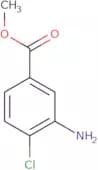
Methyl 3-amino-4-chlorobenzoate
CAS:<p>Methyl 3-amino-4-chlorobenzoate is an analog of 3-amino-4-chlorobenzoic acid. It is a multidrug that can cross the blood brain barrier and has been shown to have cytotoxic activity in vitro. Methyl 3-amino-4-chlorobenzoate has been postulated as a possible organometallic compound and may be synthesized through a chemical diversity approach. The chloride ion, which is present in methyl 3-amino-4-chlorobenzoate, has been shown to decrease the toxicity of nitrobenzoic acid, making this compound resistant to nitrosation reactions.</p>Formula:C8H8ClNO2Purity:Min. 95%Color and Shape:PowderMolecular weight:185.61 g/molMethyl 4-amino-3-hydroxybenzoate
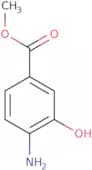
CAS:Methyl 4-amino-3-hydroxybenzoate is a synthetic compound that has been shown to inhibit the neuraminidase enzyme in the influenza virus. It is a ligand for the influenza virus and inhibits the release of progeny virions from infected cells. Methyl 4-amino-3-hydroxybenzoate has been shown to have antiviral effects against influenza A and B viruses in vivo and in vitro. The mechanism of action is thought to be due to its interaction with metal ion, which can reduce the availability of free water needed for viral replication.Formula:C8H9NO3Purity:Min. 95%Color and Shape:Off-White PowderMolecular weight:167.16 g/mol3-Methoxy-4-methylbenzoic acid methyl ester
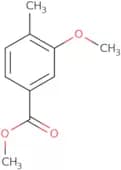
CAS:<p>3-Methoxy-4-methylbenzoic acid methyl ester is a potent inhibitor of the neurotoxic effects of β-amyloid peptide (Aβ) on cultured human neurons. 3-Methoxy-4-methylbenzoic acid methyl ester inhibits fibrillation in vitro and fluorescence assay, suggesting that it may be a promising therapeutic agent for Alzheimer's disease. The fluorescence assay is based on the inhibition of fluorescence by 3-methoxy-4-methylbenzoic acid methyl ester, which competes with Aβ for binding to an acceptor molecule. This inhibition can be used as a marker to measure the amount of Aβ present in vivo.</p>Formula:C10H12O3Purity:Min. 95%Color and Shape:White PowderMolecular weight:180.2 g/mol2-(1H-1,2,4-Triazol-1-yl)pyridine-4-carboximidamide hydrochloride
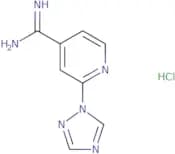
CAS:<p>2-(1H-1,2,4-Triazol-1-yl)pyridine-4-carboximidamide hydrochloride is a versatile building block that can be used in the synthesis of many compounds. This compound is a fine chemical and may be useful as a research chemical or as a speciality chemical. CAS No. 1421606-01-0.</p>Formula:C8H9ClN6Purity:Min. 95%Color and Shape:PowderMolecular weight:224.65 g/molHypoxanthine
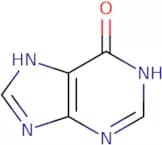
CAS:<p>Hypoxanthine is a nucleoside that is found in human cells. It is synthesized from guanine by the enzyme, xanthine oxidoreductase. Hypoxanthine is also produced from xanthine by adenosine deaminase and converted back to xanthine, which can then be reused for DNA synthesis. Hypoxanthine has been shown to inhibit the growth of photosynthetic bacteria, such as Rhodopseudomonas viridis and Rhodobacter sphaeroides. This inhibition may be due to an equilibrative nucleotide effect on the folate receptor. The x-ray diffraction data collected from the chrysanthemum flower (a source of hypoxanthine) showed that hypoxanthine has a calcium salt structure.</p>Formula:C5H4N4OPurity:Min. 95%Color and Shape:White PowderMolecular weight:136.11 g/molMethyl 3,4,5-trimethoxycinnamate
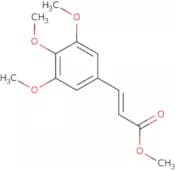
CAS:<p>Methyl 3,4,5-trimethoxycinnamate (MTMC) is a compound that has been used as the active ingredient in traditional Chinese medicine for the treatment of cardiac disease. It has been shown to have an inhibitory effect on ventricular myocytes and to induce apoptosis in rat heart cells. MTMC also inhibits neutrophil recruitment and reduces the expression of pro-apoptotic proteins. It has also been shown to be effective in treating congestive heart failure by blocking cardiac hypertrophy and myocardial apoptosis. Methyl 3,4,5-trimethoxycinnamate has not been tested on humans or animals for safety or efficacy in treating depression.</p>Formula:C13H16O5Purity:Min. 95%Color and Shape:White PowderMolecular weight:252.26 g/molN-Boc-4-piperidinemethanol
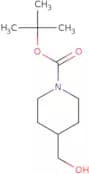
CAS:<p>N-Boc-4-piperidinemethanol is a curcumin analogue that binds to the epidermal growth factor receptor (EGFR) and prevents the binding of ligands. In vitro studies have shown that N-Boc-4-piperidinemethanol can inhibit tumor growth and induce apoptosis in cancer cells. The drug is also capable of inhibiting the proliferation of normal cells, which may be due to its ability to recruit EGFR from outside the cell membrane. This process triggers signaling events that lead to cell death.</p>Formula:C11H21NO3Purity:Min. 98 Area-%Color and Shape:PowderMolecular weight:215.29 g/molL-Alaninamide hydrochloride
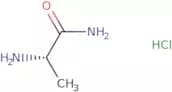
CAS:<p>L-Alaninamide hydrochloride is a hydrogen bond donor that has been shown to have anti-inflammatory properties. L-Alaninamide hydrochloride is able to crosslink hyaluronic acid, which can act as an immunosuppressant and inhibit the production of proinflammatory cytokines. In addition, L-alaninamide hydrochloride has been found to be effective in the treatment of amyloid protein aggregation diseases such as Alzheimer's disease. The drug binds to amyloid proteins by binding to their receptor site and inhibits the formation of amyloid fibrils by preventing cross-linking reactions between polypeptides. L-alaninamide hydrochloride also inhibits the formation of benzimidazole compounds, which are used in the treatment of rheumatoid arthritis.br>br><br>The structure of L-alaninamide hydrochloride is an intramolecular hydrogen bond donor with a carbonyl group. It</p>Formula:C3H8N2O•HClPurity:(Titration) Min 98%Color and Shape:PowderMolecular weight:124.57 g/mol8-Bromoguanine
CAS:<p>8-Bromoguanine is a nucleoside analog drug that is used as an antileukemic agent. It is a synthetic derivative of guanine and has been shown to inhibit the growth of leukemic cells by interfering with the synthesis of DNA. 8-Bromoguanine has also been shown to be reactive with eosinophil peroxidase and other electron-rich substances, which may be due to its hydroxyl group. The analytical method for 8-bromoguanine includes fluorescence spectroscopy, high pressure liquid chromatography (HPLC), and thin layer chromatography (TLC). Chemical diversity studies have shown that 8-bromoguanine can react with glycosylase or hydroxy groups, forming reaction products.</p>Formula:C5H4BrN5OPurity:Min. 97 Area-%Color and Shape:PowderMolecular weight:230.02 g/mol3-Methoxy-2-nitrobenzaldehyde
CAS:<p>3-Methoxy-2-nitrobenzaldehyde is a synthetic compound that has been used in the industrial process of synthesizing other compounds. It is a nucleophilic compound, which means it can react with electrophiles to form new bonds. 3-Methoxy-2-nitrobenzaldehyde is also an oriented molecule, meaning that when it reacts with an electrophile, the resulting product can be determined by the orientation of the molecules. The rate of this reaction depends on how many functional groups are present and the presence of catalysts. 3-Methoxy-2-nitrobenzaldehyde is fluorescent, so it will emit light in a spectroscopic experiment. It has six functional groups which are all nucleophilic and capable of participating in reactions with other molecules. Catalytic rates for this reaction depend on concentration and temperature, as well as the number of chlorine atoms and polydentate ligands present in solution.</p>Formula:C8H7NO4Purity:Min. 95%Color and Shape:Slightly Yellow PowderMolecular weight:181.15 g/mol2-Chloroethyl isocyanate
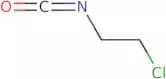
CAS:<p>Inhibitor of DNA repair mechanisms</p>Formula:C3H4ClNOPurity:Min. 98%Color and Shape:Colorless Clear LiquidMolecular weight:105.52 g/mol3-Methylphenylacetone
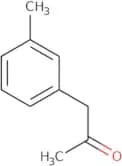
CAS:<p>3-Methylphenylacetone is a dioxane with functional groups, which can be synthesized by coupling of acetoacetate and nitrobenzene. 3-Methylphenylacetone is a versatile precursor for the synthesis of various esters, such as phenylethyl acetate. This compound can also be deacylated to form 3-methylphenol, which is used in the synthesis of nitrophenols. In addition, 3-methylphenylacetone can be used in the production of acetophenones, ketones, and other aromatic compounds by using catalysts such as iodine or phosphoric acid. Nitro groups on 3-methylphenylacetone react with chloro-, bromo-, or methoxy-substituted substrates to form nitrosated derivatives. The tert-butyl group is eliminated spontaneously to form an amine.</p>Formula:C10H12OPurity:Min. 95%Color and Shape:Clear LiquidMolecular weight:148.2 g/mol2-(3-Methyl-3H-diazirin-3-yl)ethan-1-amine hydrochloride
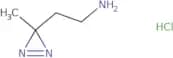
CAS:<p>2-(3-Methyl-3H-diazirin-3-yl)ethan-1-amine hydrochloride is an organic compound with a molecular formula of C8H11N2 and a molecular weight of 181.19 g/mol. It is soluble in water, and insoluble in most organic solvents. 2-(3-Methyl-3H-diazirin-3-yl)ethan-1-amine hydrochloride is a versatile building block that can be used to synthesize many complex compounds. This chemical has been shown to be useful as a reagent, intermediate, or scaffold for research into new drugs and materials. 2-(3Methyl 3H diazirin 3yl)ethan 1amine hydrochloride is also used as a speciality chemical or building block for high quality synthesis of other compounds.</p>Formula:C4H10ClN3Purity:Min. 95%Color and Shape:PowderMolecular weight:135.59 g/mol1,8-Diazaspiro[4.5]decan-2-one dihydrochloride
CAS:<p>Versatile small molecule scaffold</p>Formula:C8H14N2O•(HCl)2Purity:Min. 95%Color and Shape:PowderMolecular weight:227.13 g/mol5-Bromoindole-2-carboxylic acid ethyl ester
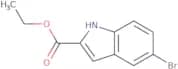
CAS:<p>5-Bromoindole-2-carboxylic acid ethyl ester (5-BIEC) is a carboxamide antibiotic that inhibits the growth of gram-negative bacteria, including pneumoniae. 5-BIEC has been shown to have an inhibitory concentration (IC50) of 0.9 μM against Escherichia coli and other gram negative bacteria. It also has anti-proliferative effects on cancer cells, which may be due to its ability to inhibit DNA replication by binding to the beta subunit of DNA gyrase. 5-BIEC is currently being studied as a potential anticancer drug for the treatment of breast cancer, colon cancer, and leukemia.</p>Formula:C11H10BrNO2Purity:Min. 98 Area-%Color and Shape:PowderMolecular weight:268.11 g/mol4-Hydroxybenzaldehyde
CAS:<p>4-Hydroxybenzaldehyde is a phenolic compound that is produced in plants. 4-Hydoxybenzaldehyde is used as an extractant for sodium carbonate and hydroxyl group from acetate extract. The locomotor activity of animals was tested following administration of this substance, and it has been shown to have a high resistance against x-ray crystallography. The reaction mechanism for the formation of p-hydroxybenzoic acid from 4-hydroxybenzaldehyde has been proposed, which may be due to the oxidation of 4-hydroxybenzaldehyde by hydrogen peroxide. This reaction also induces apoptosis pathway in cells. Kinetic data for the reaction between 4-hydroxybenzaldehyde and hydrogen peroxide were obtained using UV spectroscopy.</p>Formula:C7H6O2Purity:Min. 95%Color and Shape:White PowderMolecular weight:122.12 g/mol2-Methoxy-3-methylbenzoic acid
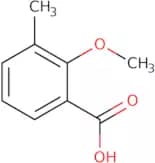
CAS:<p>2-Methoxy-3-methylbenzoic acid is a methoxy methyl, benzyl, methyl ether that can be used as a reagent in organic chemistry. It is an intermediate in the synthesis of phthalic anhydride and in the production of esters and quinones. 2-Methoxy-3-methylbenzoic acid is also used to produce potassium t-butoxide, which can be used for the synthesis of new types of reagents for organic synthesis. The chemical reacts with potassium hydroxide or potassium t-butoxide to form potassium 2-methoxy 3-methyl benzoate, which is soluble in water. This compound can also be produced from methoxy methyl benzyl chloride by reacting it with either potassium or sodium hydroxide.</p>Formula:C9H10O3Purity:Min. 95%Color and Shape:White PowderMolecular weight:166.17 g/mol(2E)-Dimethylbut-2-enedioic acid
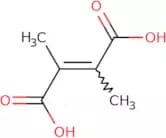
CAS:<p>Dimethylbutanedioic acid is a fatty acid that is found in the human body. Dimethylbutanedioic acid has been shown to have immunomodulatory effects, which are mediated by its ability to inhibit the synthesis of proinflammatory cytokines, such as tumor necrosis factor-α and interleukin-6. Dimethylbutanedioic acid is a potent inhibitor of the proliferation of various types of cells, including hyperproliferative cells. It has been shown to inhibit the diameter of these cells and reduce their number. This agent also inhibits allergic reactions and inorganic particles from reaching the lungs.</p>Formula:C6H8O4Purity:Min. 95%Molecular weight:144.12 g/mol4-Morpholinoaniline
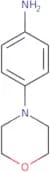
CAS:<p>4-Morpholinoaniline is a synthetic substrate that reacts with hydrochloric acid and sodium nitrite to form the reactive intermediate 4-morpholinonitrosobenzene. The reaction mechanism is proposed to proceed through an initial electron transfer from the substrate to the nitrosobenzene intermediate, followed by protonation of the nitrosobenzene nitrogen atom. The resulting 4-nitrophenyl radical abstracts hydrogen from the substrate to give 4-hydroxyphenyl radical. This radical undergoes a nucleophilic attack on the aromatic ring of the substrate molecule, and cleavage of the disulfide bond in the aromatic ring leads to formation of a cyanohydrin product. Studies have been conducted on rat liver microsomes and hepatitis C virus (HCV) to investigate this reaction mechanism.</p>Formula:C10H14N2OPurity:Min. 98.5 Area-%Color and Shape:Red PowderMolecular weight:178.23 g/molCetirizine propanediol ester dihydrochloride, mixture of regioisomers
Please enquire for more information about Cetirizine propanediol ester dihydrochloride, mixture of regioisomers including the price, delivery time and more detailed product information at the technical inquiry form on this pageFormula:C24H31ClN2O4•(HCl)2Purity:Min. 95%Color and Shape:PowderMolecular weight:519.89 g/mol



![1,8-Diazaspiro[4.5]decan-2-one dihydrochloride](/_next/image/?url=https%3A%2Fstatic.cymitquimica.com%2Fproducts%2F3D%2Fthumb-webp%2FGDD38984.webp&w=3840&q=75)