Building Blocks
This section contains fundamental products for the synthesis of organic and biological compounds. Building blocks are the essential starting materials used to construct complex molecules through various chemical reactions. They play a critical role in drug discovery, material science, and chemical research. At CymitQuimica, we offer a diverse range of high-quality building blocks to support your innovative research and industrial projects, ensuring you have the essential components for successful synthesis.
Subcategories of "Building Blocks"
- Boronic Acids & Boronic Acid Derivatives(5,778 products)
- Chiral Building Blocks(1,242 products)
- Hydrocarbon Building Blocks(6,098 products)
- Organic Building Blocks(61,034 products)
Found 199601 products of "Building Blocks"
Sort by
Purity (%)
0
100
|
0
|
50
|
90
|
95
|
100
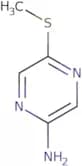
5-(Methylsulfanyl)pyrazin-2-amine
CAS:<p>5-(Methylsulfanyl)pyrazin-2-amine is an organic chemical compound that is a useful building block, reagent, and research chemical. It has many uses in the synthesis of other compounds. 5-(Methylsulfanyl)pyrazin-2-amine is a versatile building block for complex compounds. This compound can be used as a reaction component or scaffold to produce desired products. 5-(Methylsulfanyl)pyrazin-2-amine can also be used as a speciality chemical or high quality fine chemical.</p>Formula:C5H7N3SPurity:Min. 95%Color and Shape:PowderMolecular weight:141.2 g/mol2-Chloro-4-nitroimidazole
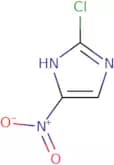
CAS:<p>Radiosensitiser in hypoxic tumours</p>Formula:C3H2ClN3O2Purity:Min. 95%Color and Shape:PowderMolecular weight:147.52 g/mol3-Chloro-1,2-benzisothiazole
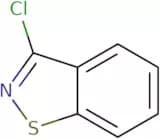
CAS:<p>3-Chloro-1,2-benzisothiazole is a nucleophilic agent with a hydrogen bond donor. It has been shown to inhibit the replication of RNA in the presence of adenosine triphosphate (ATP) and to bind to amines. 3-Chloro-1,2-benzisothiazole is used as an inhibitor for non-nucleoside reverse transcriptase inhibitors. It has been shown to have high potency and strong inhibitory activity against HIV and other retroviruses. 3-Chloro-1,2-benzisothiazole also inhibits vibrational modes associated with enzymatic reactions.</p>Formula:C7H4ClNSPurity:Min. 95%Color and Shape:PowderMolecular weight:169.63 g/mol2-Chloro-6-fluorobenzaldehyde
CAS:<p>2-Chloro-6-fluorobenzaldehyde is an impurity that can be found in wastewater. It has been shown to be a reactive intermediate for the synthesis of streptochlorin, which is a natural product with potential antibiotic activity. 2-Chloro-6-fluorobenzaldehyde is produced by the reaction of chlorine and anhydrous sodium, with acid as catalyst. The molecule has two fluorine atoms and one chloride atom. This compound can also be used in the treatment of waste water due to its ability to react with hydroxyl ions and chloride ions in the presence of hydrogen chloride or hydrochloric acid. The pain model was evaluated using nmr spectra and optical properties.</p>Formula:C7H4ClFOPurity:Min. 95%Color and Shape:White PowderMolecular weight:158.56 g/mol2-Chloro-3-pyridinecarboxyaldehyde
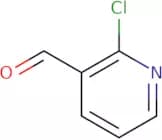
CAS:<p>2-Chloro-3-pyridinecarboxyaldehyde is a synthetic molecule that contains two chlorines and three pyridines. It is a potential drug for the treatment of cancer or tuberculosis. The synthesis of this compound starts from 2,4-dichlorobenzaldehyde and 3-amino-5-(chloromethyl)pyridine. The reaction with acetic acid yields 2-chloro-3-pyridinecarboxyaldehyde. This product has been shown to inhibit cancer cells in vitro, but it does not have any effect on healthy cells. In addition, this product can be used as an anticancer agent against cervical cancer cells in vitro.</p>Formula:C6H4ClNOPurity:Min. 98 Area-%Color and Shape:PowderMolecular weight:141.55 g/mol4-Cyanopiperidine
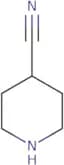
CAS:<p>4-Cyanopiperidine is an organic compound that belongs to the class of medicines and has a cyclohexane ring with two functional groups. It is a part of the compound class of dehydrating agents. 4-Cyanopiperidine is most commonly used as an intermediate in the synthesis of other compounds, but can also be used as a medicine. 4-Cyanopiperidine has been shown to be effective against pain, cancer, and seizures. The inhibitory effect of 4-cyanopiperidine on cyclic AMP causes it to have potent inhibitory activity against cb1 receptor, which is responsible for the psychoactive effects caused by tetrahydrocannabinol (THC). This drug also has potent antagonistic effects on pethidine and related drugs such as fentanyl, morphine, and oxycodone.</p>Formula:C6H10N2Purity:Min. 95%Color and Shape:Colorless Clear LiquidMolecular weight:110.16 g/molChloro-7-deazapurine
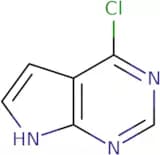
CAS:<p>Intermediate in the synthesis of baricitinib</p>Formula:C6H4ClN3Purity:Min. 95%Color and Shape:Off-White PowderMolecular weight:153.57 g/mol6-Chloro-3-methyluracil
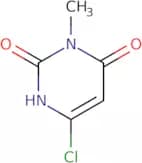
CAS:<p>Intermediate in the synthesis of alogliptin</p>Formula:C5H5ClN2O2Purity:Min. 98 Area-%Color and Shape:Off-White PowderMolecular weight:160.56 g/mol6-Cyanoindole
CAS:<p>6-Cyanoindole is a synthetic compound that has been shown to have functional properties. It binds to the receptor of the chemokine, which is a type of protein that regulates inflammatory responses. It also inhibits the activity of coagulation factors, which are proteins involved in blood clotting. 6-Cyanoindole has been shown to inhibit cancer cell growth and induce apoptosis (cell death) in a number of cancer cell lines. The fluorescence properties and lifetimes of 6-cyanoindole have been studied extensively. It has also been used as a monomer in copolymerization reactions and is used as an intermediate in the synthesis of 6-bromoindole.</p>Formula:C9H6N2Purity:Min. 95%Color and Shape:White PowderMolecular weight:142.16 g/mol4-Cyanoindole
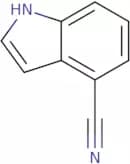
CAS:<p>The 4-cyanoindole is a fluorescent molecule that binds to proteins and affects protein homeostasis. It has been shown to bind to the sodium salt form of proteins, which are typically found in human liver cells. The binding of 4-cyanoindole to these proteins leads to its reduction by borohydride and fluorescence resonance energy transfer (FRET) between the molecule and the protein. This binding can be detected using a fluorescence lifetime spectroscopy technique, which detects changes in the fluorescence's lifetime as well as intensity. The binding of 4-cyanoindole to proteins has been shown to have anti-cancer properties. It has also been used for detection of monoclonal antibodies against cancer cells or for fluorescent labeling of cancer cells for immunofluorescent microscopy.</p>Formula:C9H6N2Color and Shape:White PowderMolecular weight:142.16 g/mol4-Chloroindole
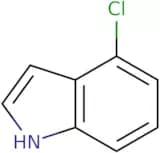
CAS:<p>4-Chloroindole is an indole compound that is a derivative of salicylic acid. It is used in the production of ethylene and casein, as well as being a major metabolite of anthranilic acid. 4-Chloroindole is also found in environmental pollutants and has been shown to be active against plant pathogens such as Pseudomonas syringae. It has been shown to inhibit the growth of Bacillus cereus by binding to its ribosomal RNA and inhibiting protein synthesis. In addition, it inhibits the biosynthesis of methylindole, which may be due to its ability to inhibit the enzyme tryptophan synthase.</p>Formula:C8H6ClNPurity:Min. 98 Area-%Color and Shape:Clear LiquidMolecular weight:151.59 g/mola-Cyano-4-hydroxycinnamic acid
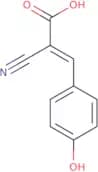
CAS:<p>a-Cyano-4-hydroxycinnamic acid is a cyclic peptide that has been shown to have cytotoxic and antimicrobial properties. It has been shown to be effective in reducing the viability of cells in vitro by interfering with DNA synthesis and cell signaling pathways, as well as causing oxidative stress. This compound also induces apoptosis in squamous carcinoma cells and hypoxic tumor cells; this effect may be due to its ability to induce the release of cytochrome c from mitochondria. a-Cyano-4-hydroxycinnamic acid has been shown to produce antibacterial activity against Gram-positive bacteria, such as Streptococcus pneumoniae and Staphylococcus aureus, but not against Gram-negative bacteria, such as Escherichia coli or Pseudomonas aeruginosa.</p>Formula:C10H7NO3Color and Shape:Slightly Yellow PowderMolecular weight:189.17 g/mol5-Chlorooxindole
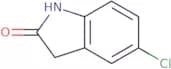
CAS:<p>5-Chlorooxindole is a synthetic, chemotherapeutic drug that has been shown to have anti-tumor activity in animal models. It is an oxindole derivative with the chemical formula CHNClO. The compound is synthesized by the reaction of 3,5-dichloroaniline and indole in chloroform and purified by column chromatography. 5-Chlorooxindole has shown potential as an antitumor agent because it inhibits cancer cell growth through mechanisms such as induction of apoptosis and suppression of tumor angiogenesis.</p>Formula:C8H6ClNOPurity:Min. 95%Molecular weight:167.59 g/mol5-Chloroindole
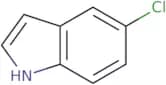
CAS:<p>5-Chloroindole is a molecule that can bind to the CB2 cannabinoid receptor. It has been shown in experiments to be an allosteric modulator of this receptor. 5-Chloroindole has been found to have an inhibitory effect on degenerative diseases, such as Huntington's disease and Alzheimer's disease, and may have therapeutic potential for these disorders. 5-Chloroindole binds to a metal surface by forming hydrogen bonds with the oxygen atom of its carboxyl group and the metal surface. The nucleophilic nature of 5-chloroindole allows it to react with chloride ions present in solution. 5-Chloroindole reacts with the carbon source in tissue culture, which leads to receptor activity and inhibition of cell proliferation.</p>Formula:C8H6ClNColor and Shape:White PowderMolecular weight:151.59 g/mol2-Chloro-5-aminomethylpyridine
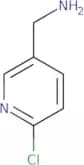
CAS:<p>2-Chloro-5-aminomethylpyridine is an active substance that is used in medicine. It is a chlorinated compound, which has been shown to be effective against resistant mutants of bacteria. The mechanism of action is not yet clear, but it may be due to the formation of hydrogen chloride, which inhibits the growth of bacteria by binding to DNA and RNA. 2-Chloro-5-aminomethylpyridine has also been shown to act as an inhibitor for enzymes such as succinic dehydrogenase and glucose 6 phosphate dehydrogenase. This drug can also be detected in urine samples with a high sensitivity analytical method.</p>Formula:C6H7ClN2Purity:Min. 95%Color and Shape:Off-White PowderMolecular weight:142.59 g/mol4-(Bromomethyl)-2-iodo-1-nitrobenzene
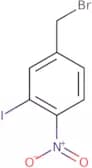
CAS:<p>4-(Bromomethyl)-2-iodo-1-nitrobenzene is a fine chemical that can be used as an intermediate for the synthesis of target molecules. It is a versatile building block with many different reactions and applications, such as research chemicals, reaction components, and speciality chemicals. This compound is also a useful building block for the synthesis of complex molecules. It has high quality and can be used as a reagent in lab experiments.</p>Formula:C7H5BrINO2Purity:Min. 95%Color and Shape:PowderMolecular weight:341.93 g/mol5-Benzyloxyindole-3-glyoxylamide
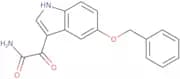
CAS:<p>5-Benzyloxyindole-3-glyoxylamide is a versatile building block that can be used in the synthesis of complex compounds. It has been shown to have a high quality and is useful as a reagent for research purposes. 5-Benzyloxyindole-3-glyoxylamide can be used as a reaction component and is useful as an intermediate in organic synthesis. 5BIGA has CAS number 22424-62-0 and is also known as 3-(benzyloxy)-5-(2,2,2-trifluoroethoxy)indole glyoxamide.</p>Formula:C17H14N2O3Purity:Min. 95%Molecular weight:294.3 g/mol3-Bromo-4-methoxybenzoic acid
CAS:3-Bromo-4-methoxybenzoic acid is a methyl ester of 3-bromo-4-methoxybenzoic acid. It is used as a reagent in organic synthesis, including the hydrolysis of esters and nitriles to acids and amines respectively. The compound is also used in the synthesis of 3-bromo-4-methoxybenzamide and other bromomethyl benzoates. The trifluoroacetic acid reacts with cuprous cyanide to form ethyl formate and methoxybenzoate, which reacts with thionyl chloride to form the chloride 3-bromo-4-methoxybenzoic acid. This compound can be demethylated by acetaldehyde or alkali metal hydroxides to give methyl formate and methanol. It can also react with acetonitrile to produce 3,3′,3″Formula:C8H7BrO3Purity:Min. 95%Color and Shape:PowderMolecular weight:231.04 g/mol5-Bromo-2-methoxybenzaldehyde
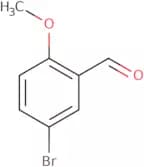
CAS:<p>5-Bromo-2-methoxybenzaldehyde is a benzodiazepine receptor ligand that has been shown to have antiviral, antibacterial and anticancer properties. 5-Bromo-2-methoxybenzaldehyde is an inhibitor of the enzyme benzyl alcohol dehydrogenase (BAHD). BAHD plays an important role in the production of reactive oxygen species (ROS) by converting benzoic acid to benzoate, which is then converted to ROS. The inhibitory concentration values for 5-bromo-2-methoxybenzaldehyde are not yet known.</p>Formula:C8H7BrO2Purity:Min. 95%Color and Shape:PowderMolecular weight:215.04 g/mol6-Bromoveratraldehyde
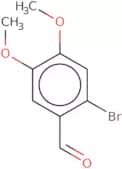
CAS:<p>6-Bromoveratraldehyde (6BrA) is a synthetic compound that has been shown to be an effective agent for inducing apoptosis in leukemia cells. It is an efficient method for synthesizing the compound and has been used as a model study for biphenyl and naphthalene. 6BrA induces cell death by topoisomerase-mediated DNA cleavage, which results in chromosomal fragmentation and high levels of reactive oxygen species in the cell.</p>Formula:C9H9BrO3Purity:Min. 95%Color and Shape:White PowderMolecular weight:245.07 g/mol