


Building Blocks
This section contains fundamental products for the synthesis of organic and biological compounds. Building blocks are the essential starting materials used to construct complex molecules through various chemical reactions. They play a critical role in drug discovery, material science, and chemical research. At CymitQuimica, we offer a diverse range of high-quality building blocks to support your innovative research and industrial projects, ensuring you have the essential components for successful synthesis.
Subcategories of "Building Blocks"
- Boronic Acids & Boronic Acid Derivatives(5,756 products)
- Chiral Building Blocks(1,242 products)
- Hydrocarbon Building Blocks(6,095 products)
- Organic Building Blocks(61,055 products)
Found 199650 products of "Building Blocks"
Sort by
Purity (%)
0
100
|
0
|
50
|
90
|
95
|
100
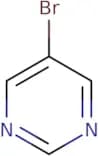
5-Bromopyrimidine
CAS:<p>5-Bromopyrimidine is a reactive intermediate that is used in the synthesis of 4-methoxyphenylboronic acid. It is a crystalline solid with a molecular weight of 164.5 g/mol and an empirical formula of C6H4BrN3O. 5-Bromopyrimidine has been shown to be nucleophilic, reacting with β-amino acids under basic conditions to form the corresponding 2-bromo amide. It also undergoes cross-coupling reactions with halides and can be used as a building block for other organic compounds. 5-Bromopyrimidine has optical properties that are characteristic of aromatic molecules, including strong absorption bands in the ultraviolet region and visible light region.</p>Formula:C4H3BrN2Purity:Min. 95%Color and Shape:PowderMolecular weight:158.98 g/mol4-[(Pyridine-3-carbonyl)amino]butyric acid
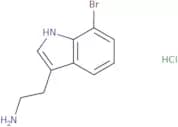
CAS:<p>4-[(Pyridine-3-carbonyl)amino]butyric acid (4-PBA) is a non-proteinogenic amino acid that has been found in food and has been shown to have therapeutic effects on a number of diseases. 4-PBA is converted to gamma-aminobutyric acid (GABA) by the enzyme GABA transaminase. It also has a synergistic effect with sodium succinate, which is another precursor in the production of GABA. This synergistic effect increases the amount of GABA produced from 4-PBA and sodium succinate when they are consumed together. 4-PBA also binds to receptors for dopamine, which may be why it is effective for treating diabetic neuropathy and Parkinson's disease.</p>Formula:C10H12N2O3Purity:Min. 95%Color and Shape:White PowderMolecular weight:208.21 g/mol2-(7-Bromo-1H-indol-3-yl)ethanamine hydrochloride
CAS:Controlled Product<p>2-(7-Bromo-1H-indol-3-yl)ethanamine hydrochloride is an organic chemical compound that belongs to the group of versatile building blocks. It is a colorless solid and has a melting point of 160°C. 2-(7-Bromo-1H-indol-3-yl)ethanamine hydrochloride can be used as a research chemical, reagent, or specialty chemical. This compound is a useful building block for the synthesis of complex compounds and can be used as a reaction component in the synthesis of useful scaffolds.</p>Formula:C10H12BrClN2Purity:Min. 95%Color and Shape:PowderMolecular weight:275.57 g/mol2-Naphthaldehyde
CAS:<p>2-Naphthaldehyde is an antimicrobial agent that has been shown to inhibit the growth of bacteria in vitro. It has been shown to inhibit the synthesis of DNA, RNA and protein. 2-Naphthaldehyde is an intramolecular hydrogen acceptor and a substrate for coumarin derivatives. The reaction mechanism of 2-napthalaldehyde is not yet fully understood, but it has been proposed that 2-napthalaldehyde reacts with sodium carbonate to form sodium phenolate and acetone. 2-Naphthaldehyde also shows genotoxic activity, as it has been shown to induce structural aberrations in bacterial DNA. This chemical compound also forms coordination geometry complexes with metal ions such as copper and zinc.</p>Formula:C11H8OPurity:Min. 98%Color and Shape:Beige PowderMolecular weight:156.18 g/molEthyl 2-[(benzenesulfonyl)methyl]prop-2-enoate
CAS:<p>Ethyl 2-[(benzenesulfonyl)methyl]prop-2-enoate is a chemical compound that is commonly used as a building block in the synthesis of other compounds. It has shown to be effective in research, as it can be used as an intermediate or a reaction component. CAS No. 89295-32-9 is the Chemical Abstracts Service registry number for this chemical. This compound is also known by its synonym of ethyl propanoate benzenesulfonate, and it has been found to have useful properties such as being a versatile building block and being a fine chemical. This product is high quality and is a reagent that has been found to be useful in many chemical reactions.</p>Formula:C12H14O4SPurity:Min. 95%Color and Shape:Clear LiquidMolecular weight:254.3 g/mol(R)-(-)-1,3-Butanediol
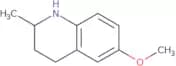
CAS:<p>(R)-(-)-1,3-Butanediol is a chiral compound that belongs to the group of organic compounds called diols. It is used in the fermentation of Candida parapsilosis and other yeast species to produce enantiomerically pure (S)-(-)-1,3-butanediol. The racemate can be converted into the two enantiomers by chemical means or by enzymatic resolution. The process for large-scale production is similar to that for ethanol fermentation, but with 2-propanol as substrate instead of glucose. The fermentor has been shown to be effective at producing large quantities of 1,3-butanediol in a short time period.</p>Formula:C4H10O2Purity:Min. 98%Color and Shape:Colorless Clear LiquidMolecular weight:90.12 g/mol6-Methoxy-2-methyl-1,2,3,4-tetrahydroquinoline
CAS:<p>Versatile small molecule scaffold</p>Formula:C11H15NOPurity:Min. 95%Color and Shape:PowderMolecular weight:177.24 g/moltert-Butylisocyanate
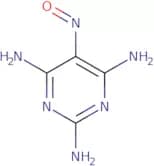
CAS:<p>Tert-butylisocyanate is a reactive chemical that contains a carboxylate group. It is an ester hydrochloride that can be synthesized by reacting trifluoroacetic acid with molybdenum trioxide. This compound has been studied using X-ray crystal structures and the intramolecular hydrogen transfer reaction between two nitrogen atoms in the molecule. Tert-butylisocyanate is stable in solution because it does not react with water or alkalis, but does react with sodium carbonate, forming sodium cyanate and tetrabutylammonium hydroxide. Tert-butylisocyanate reacts with inorganic acids such as sulfuric acid to form its corresponding salts. The chelate ligand of tert-butylisocyanate prevents it from reacting with transition metals such as copper and iron, but will react with zinc metal.</p>Formula:C5H9NOPurity:Min. 98 Area-%Color and Shape:Colorless Clear LiquidMolecular weight:99.13 g/mol5-Nitroso-2,4,6-triaminopyrimidine
CAS:<p>5-Nitroso-2,4,6-triaminopyrimidine is a chemical compound that has been shown to have anticancer activity. It reacts with nucleophilic compounds such as hydroxides of metals and amides to form an amide bond. 5-Nitroso-2,4,6-triaminopyrimidine inhibits the enzyme glycosylase by reacting with it in a nucleophilic attack. This reaction leads to the formation of a stable nitrosamine intermediate that can be hydrolyzed by an acid or base. The inhibitory effect of 5-Nitroso-2,4,6-triaminopyrimidine on malonic acid decarboxylase (MAD) and anthranilic acid synthase (AAS) in animals is due to its ability to react with these enzymes in a similar way as for MAD and AAS in humans. Inhibition of MAD and AAS leads to reduced levels of malonic</p>Formula:C4H6N6OPurity:Min. 95%Color and Shape:Yellow PowderMolecular weight:154.13 g/mol2-[(Dimethylcarbamothioyl)sulfanyl]acetonitrile
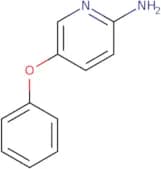
CAS:Versatile small molecule scaffoldFormula:C5H8N2S2Purity:Min. 95%Color and Shape:PowderMolecular weight:160.30 g/mol5-Phenoxypyridin-2-amine
CAS:<p>5-Phenoxypyridin-2-amine is a useful scaffold that can be used as a reaction component, reagent, or intermediate. It is an aromatic compound with a benzene ring and pyridine group and has the CAS number 64064-68-2. 5-Phenoxypyridin-2-amine can be used as a building block for organic synthesis and as an intermediate for other compounds. This product can also be used to create complex compounds that are difficult to synthesize in other ways.</p>Formula:C11H10N2OPurity:Min. 95%Color and Shape:PowderMolecular weight:186.21 g/mol1,4-Benzoquinone
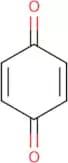
CAS:<p>Intermediate in organic syntheses; pharmaceutical secondary standard</p>Formula:C6H4O2Purity:Min. 95%Color and Shape:Yellow PowderMolecular weight:108.09 g/mol4-Iodo-3-nitrotoluene
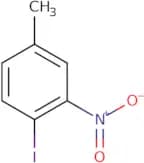
CAS:<p>Versatile small molecule scaffold</p>Formula:C7H6INO2Purity:Min. 95%Color and Shape:PowderMolecular weight:263.03 g/mol2,2-Diphenylpropionic acid
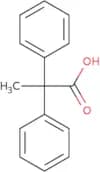
CAS:<p>2,2-Diphenylpropionic acid is an ester of 2,2-diphenylpropanoyl chloride and a carboxylic acid. It is used as a local anesthetic. The electron distribution in the molecule includes one unpaired electron on the carbon atom adjacent to the carboxylic acid group. The thermodynamic stability of this molecule is due to intramolecular hydrogen bonding between the carboxylic acid and ester moieties. This compound has anticholinergic, antimuscarinic, and spermatozoa effects that are due to its ability to inhibit acetylcholine release from neurons. 2,2-Diphenylpropionic acid has been shown to have acidic properties with an approximate pKa of 3.5.</p>Formula:C15H14O2Purity:Min. 95%Color and Shape:PowderMolecular weight:226.27 g/mol6-Benzyloxyindole
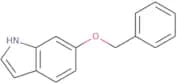
CAS:<p>6-Benzyloxyindole is a high quality chemical compound that can be used as a research chemical, speciality chemical, or versatile building block.</p>Formula:C15H13NOPurity:Min. 98.0 Area-%Molecular weight:223.28 g/molRef: 3D-B-1640
1kgTo inquire50gTo inquire100gTo inquire250gTo inquire500gTo inquire-Unit-ggTo inquire6-Benzyladenine
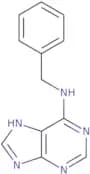
CAS:<p>Plant growth regulator. Member of the cytokinin family. Stimulates cell division.</p>Formula:C12H11N5Purity:Min. 98.0 Area-%Molecular weight:225.25 g/mol(S)-3-N-Boc-Aminopiperidine
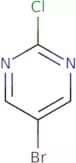
CAS:<p>Intermediate in the synthesis of linagliptin</p>Formula:C10H20N2O2Purity:Min. 95%Color and Shape:White PowderMolecular weight:200.28 g/mol5-Bromo-2-chloropyrimidine
CAS:<p>Intermediate in the synthesis of macitentan; building block</p>Formula:C4H2BrClN2Purity:Min. 95%Color and Shape:White PowderMolecular weight:193.43 g/mol3-azido-4,5-dihydro-1H-benzo[b]azepin-2(3H)-one
CAS:<p>Versatile small molecule scaffold</p>Formula:C10H10N4OPurity:Min. 95%Color and Shape:PowderMolecular weight:202.21 g/mol4-Bromo-1-(2,2,2-trifluoroethyl)-1H-imidazole
CAS:<p>Versatile small molecule scaffold</p>Formula:C5H4BrF3N2Purity:Min. 95%Color and Shape:Clear LiquidMolecular weight:229 g/mol

![4-[(Pyridine-3-carbonyl)amino]butyric acid](/_next/image/?url=https%3A%2Fstatic.cymitquimica.com%2Fproducts%2F3D%2Fthumb-webp%2FFP15522.webp&w=3840&q=75)

![Ethyl 2-[(benzenesulfonyl)methyl]prop-2-enoate](/_next/image/?url=https%3A%2Fstatic.cymitquimica.com%2Fproducts%2F3D%2Fthumb-webp%2FPDA29532.webp&w=3840&q=75)


![2-[(Dimethylcarbamothioyl)sulfanyl]acetonitrile](/_next/image/?url=https%3A%2Fstatic.cymitquimica.com%2Fproducts%2F3D%2Fthumb-webp%2FLCA54035.webp&w=3840&q=75)

![3-azido-4,5-dihydro-1H-benzo[b]azepin-2(3H)-one](/_next/image/?url=https%3A%2Fstatic.cymitquimica.com%2Fproducts%2F3D%2Fthumb-webp%2FLDA49924.webp&w=3840&q=75)
