Building Blocks
This section contains fundamental products for the synthesis of organic and biological compounds. Building blocks are the essential starting materials used to construct complex molecules through various chemical reactions. They play a critical role in drug discovery, material science, and chemical research. At CymitQuimica, we offer a diverse range of high-quality building blocks to support your innovative research and industrial projects, ensuring you have the essential components for successful synthesis.
Subcategories of "Building Blocks"
- Boronic Acids & Boronic Acid Derivatives(5,756 products)
- Chiral Building Blocks(1,242 products)
- Hydrocarbon Building Blocks(6,095 products)
- Organic Building Blocks(61,051 products)
Found 199813 products of "Building Blocks"
Sort by
Purity (%)
0
100
|
0
|
50
|
90
|
95
|
100
1,6-Anhydro-β-D-glucopyranose
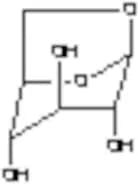
CAS:<p>Stability Hygroscopic<br>Applications 1,6-Anhydrohexopyranoses have proven to be valuable synthons for the preparation of biologically important and structurally diverse products (e.g. rifamycin S, indanomycin, thromboxane B2, (+)-biotin, tetrodotoxin, quinone, and macrolide antibiotics) as well as for modified sugars.The chemical/physical/toxicological properties have not been thoroughly investigated. Since it is known to be a minor component of certain food materials it may be regarded as of relatively low toxicity.<br>References Fraser-Reid, B., et al. J. Am. Chem. Soc. 106, 731 (1984); Edwards, M.P., et al. J. Org. Chem. 49, 3503 (1984); Kelly, A.G., and Roberts, J.S. J. Chem. Soc., Chem. Commun. 228, (1980); Ogawa, T., et al. Carbohydr. Res. 57, C31 (1977); Isobe, M., et al. Tetrahedron Lett. 28, 6485 (1987); Fresnos, J.N. and Swenton, J.S. , J. Chem. Soc., Chem. Commun. 658, (1985); Kochetkov, N.K. et al., Tetrahedron Lett. 22, 4315, 4319 (1981); Georges, M. et al., Carbohydr. Res. 130, 115 (1984); Paulsen, et al., Chem. Ber. 114, 322 (1981).<br></p>Formula:C6H10O5Color and Shape:NeatMolecular weight:162.145-Aminomethyl-2-chloropyridine
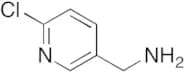
CAS:Controlled Product<p>Applications 5-Aminomethyl-2-chloropyridine is a reagent that is used in the synthesis of macamides and analogs that have FAAH (fatty acid amide hydrolase) inhibitory activity.<br> Not a dangerous good if item is equal to or less than 1g/ml and there is less than 100g/ml in the package<br>References Wu, H., et al.: Bioorg. Med. Chem., 21, 5188 (2013);<br></p>Formula:C6H7ClN2Color and Shape:NeatMolecular weight:142.586Trimethyl Citrate
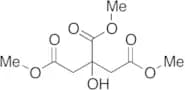
CAS:<p>Applications Trimethyl Citrate is a reagent used in the preparation of citrate-ciprofloxacin conjugates which has antibacterial activity.<br>References MD-Saleh, S.R., et al.: Bioorg. Med. Chem. Lett., 19, 1496 (2009); Schmitz, F., et al.: Int. J. Antimicrob. Agents 12, 311 (1999)<br></p>Formula:C9H14O7Color and Shape:White To Off-WhiteMolecular weight:234.2Solerole
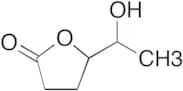
CAS:Controlled Product<p>Applications Solerole is derived from 2-Iodoacetamide (I685505), which is an alkylating agent commonly used in the alkylation of proteins.<br>References Woods, A.G.,et. al.: Biochem. Bioph. Res. Co., 419, 305 (2012); Samgina, T.Y., et. al.: J. Am. Soc. Mass Spec., 22, 2246 (2011)<br></p>Formula:C6H10O3Color and Shape:NeatMolecular weight:130.14Ethyl 4-Bromobutanoate
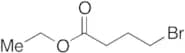
CAS:Controlled Product<p>Applications Ethyl 4-Bromobutanoate is a building block which has been used as a reactant for the preparation of firefly luciferase inhibitor-conjugated peptide derivatives.<br>References Poutiainen, P.K., et. al.: Bioconjugate Chem., 25, 4 (2014)<br></p>Formula:C6H11BrO2Color and Shape:NeatMolecular weight:195.053,3',5,5'-Tetramethylbenzidine
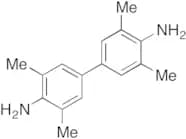
CAS:Controlled Product<p>Applications 3,3',5,5'-Tetramethylbenzidine is a chromogenic substrate used in staining procedures in immunohistochemistry as well as being a visualising reagent used in enzyme-linked immunosorbent assays (ELISA). Dyes and metabolites, Environmental Testing.<br>References Josephy, P. David., et al.: J. Biol. Chem., 257, 3669 (1982);<br></p>Formula:C16H20N2Color and Shape:NeatMolecular weight:240.34Cinacalcet-d4 Hydrochloride
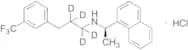
CAS:Controlled Product<p>Applications Cinacalcet-d4 Hydrochloride is a labeled analogue of Cinacalcet Hydrochloride (C441800), the (R) enantiomer of Cinacalcet which is used in clinical trial in secondary hyperparathyroidism.<br>References Franceschini N., et al.: Expert Opin. Invest. Drugs, 12, 1413 (2003); Block, G.A., et al.: N. Engl. J. Med. 350, 1516 (2004);<br></p>Formula:C22H19D4ClF3NColor and Shape:NeatMolecular weight:397.9Cinchophen
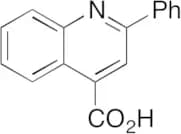
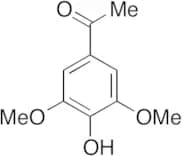
CAS:Controlled Product<p>Applications Cinchophen and its derivatives can show antipyretic, analgesic, anti-oxidative, and anti-inflammatory properties.<br>References Xu, Bo., et al.: Beijing Yike Daxue Xuebao, 29(5), 438-439 (1997); Ibrahim, S. E., et al.: Mansoura J. Pharm. Sci., 6(2), 19-24 (1990); Mishra, Pradeep., et al.: Indian J. Pharm. Sci., 50(5), 269-271 (1988); Kononenko, L. I., et al.: Zhurnal Analiticheskoi Khimii, 30(9), 1716-19 (1975)<br></p>Formula:C16H11NO2Color and Shape:Off-WhiteMolecular weight:249.264’-Hydroxy-3’,5’-dimethoxyacetophenone
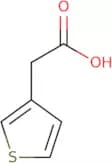
CAS:Formula:C10H12O4Color and Shape:NeatMolecular weight:196.19993-Thiopheneacetic acid
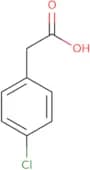
CAS:<p>3-Thiopheneacetic acid (3-TAA) is an insoluble polymer that can be used in analytical chemistry to measure the concentration of sodium carbonate. This polymer is prepared by reacting 3-thiophenecarboxylic acid with sodium carbonate. 3-TAA is a white powder and soluble in water, but insoluble in organic solvents. The transfer reactions of 3-TAA have been studied using electrochemical impedance spectroscopy and thermal expansion measurements. Due to its redox potential, it has been shown to be a potent inhibitor of human serum albumin transport and also inhibits the activity of enzymes such as glyceraldehyde phosphate dehydrogenase, phosphofructokinase, and pyruvate kinase.</p>Formula:C6H6O2SPurity:Min. 97.5 Area-%Color and Shape:White PowderMolecular weight:142.18 g/mol4-Chlorophenylacetic acid
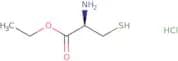
CAS:<p>4-Chlorophenylacetic acid is a fatty acid that reacts with hydroxyl groups to form reaction intermediates. It has been used in antiestrogen therapy as it is able to inhibit the activity of estrogen. It has also been used in polymeric matrices to control the release of silver ions for the treatment of cancer. 4-Chlorophenylacetic acid is synthesized by acylation of phenylacetic acid with chloroacetyl chloride in the presence of hydrochloric acid and sephadex g-100. 4-Chlorophenylacetic acid has been shown to inhibit tumor growth in animal models, which may be due to its ability to induce apoptosis.</p>Formula:C8H7ClO2Purity:Min. 97.5 Area-%Color and Shape:White PowderMolecular weight:170.59 g/molL-Cysteine ethyl ester hydrochloride
CAS:<p>L-Cysteine ethyl ester HCl is a disulfide bond that is used in the synthesis of proteins. It is also used to prevent hair loss and to treat baldness. L-Cysteine ethyl ester HCl has potent antitumor activity, which may be due to its ability to react with nucleophilic substitutions. In addition, L-Cysteine ethyl ester HCl can induce apoptosis by binding to the apoptosis protein. The reaction mechanism is not well understood but it may involve hydroxide ion and organometallic complexes. L-Cysteine ethyl ester HCl is soluble in water at neutral pH and poorly soluble in ethanol. It hydrolyzes in the presence of acid or base, forming trifluoroacetic acid or sodium hydroxide solution respectively.</p>Formula:C5H11NO2S•HClPurity:Min. 95%Color and Shape:PowderMolecular weight:185.67 g/mol2-Chloro-6-fluorobenzoic acid
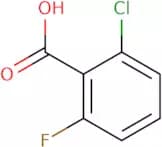
CAS:<p>2-Chloro-6-fluorobenzoic acid is an aromatic compound that is used as a solvent in the production of pharmaceuticals, plastics, and dyes. The 2-chloro-6-fluorobenzoic acid molecule has an electron rich ring structure that can undergo nucleophilic attack by a nucleophile such as hydrogen chloride or hydrochloric acid. It also has a high affinity for water molecules, which may be attributed to its aromatic hydrocarbon structure. This allows 2-chloro-6-fluorobenzoic acid to act as a good solvent for many organic compounds. This chemical is classified as a possible human carcinogen and is toxic to the liver cells.</p>Formula:C7H4ClFO2Purity:Min. 95%Color and Shape:PowderMolecular weight:174.56 g/mol4-Cyanophenol
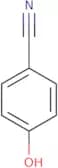
CAS:<p>4-Cyclohexyphenol is a natural compound that belongs to the class of compounds known as phenols. It has a hydroxyl group and an intramolecular hydrogen bond. The thermal expansion of 4-cyanophenol is approximately 6.6 × 10⁻⁶/°C, which is greater than the thermal expansion of p-hydroxybenzoic acid (approximately 1.8 × 10⁻⁶/°C). The reaction mechanism for 4-cyanophenol involves intramolecular hydrogen bonding, which leads to its rapid degradation. 4-Cyanophenol reacts with trifluoroacetic acid in the presence of sodium carbonate to form p-hydroxybenzoic acid, which can be determined by measuring its absorbance at 290 nm. Hydrogen bonding interactions with the surface are responsible for the high sensitivity and selectivity of this analytical method.<br>4-Cyanophenol may also be detected using plasma mass spect</p>Formula:C7H5NOPurity:Min. 95%Color and Shape:PowderMolecular weight:119.12 g/mol2-Chloro-5-nitropyridine
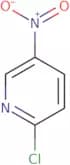
CAS:<p>2-Chloro-5-nitropyridine is a chemical compound with the molecular formula CHClNO. It is a white solid that is soluble in water and has a melting point of 132.2 °C. The molecule consists of two chlorine atoms bonded to an oxygen atom, with two nitro groups bonded to carbon atoms. 2-Chloro-5-nitropyridine was synthesized by reacting sodium carbonate with hydrochloric acid and then adding trifluoroacetic acid to the solution. This reaction produces 2-chloro-5-nitropyridine, hydrogen chloride gas, and sodium chloride crystals as byproducts. The product can be purified using column chromatography or recrystallization methods.</p>Formula:C5H3ClN2O2Purity:Min. 95%Color and Shape:White PowderMolecular weight:158.54 g/mol2-Bromo-5-iodotoluene
CAS:<p>2-Bromo-5-iodotoluene (2BIOT) is a synthetic compound that has been used as an immunosorbent in immunoassays. It is also a fluorescing radical and can be used to detect other radicals, making it useful for many different types of assays. The compound was first synthesized by the reaction of sodium periodate with 2-bromotoluene; the reaction was catalyzed by radical mechanism. This synthesis is an advance in organic chemistry because it provides a new method for synthesizing brominated compounds.</p>Formula:C7H6BrIPurity:Min. 95%Color and Shape:Slightly Yellow PowderMolecular weight:296.93 g/mol3-Bromo-2,6-dimethoxybenzoic acid
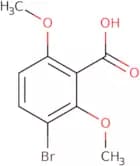
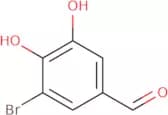
CAS:3-Bromo-2,6-dimethoxybenzoic acid is a synthetic chemical used to introduce insulators into the DNA molecule. It is also used as a treatment method for introducing branched-chain scripts into the DNA molecule. 3-Bromo-2,6-dimethoxybenzoic acid has been shown to counteract synthetic techniques, such as transistors, and can be used in plant physiology research.Formula:C9H9BrO4Purity:Min. 95%Color and Shape:PowderMolecular weight:261.07 g/mol5-Bromo-3,4-dihydroxybenzaldehyde
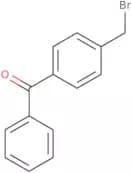
CAS:<p>5-Bromo-3,4-dihydroxybenzaldehyde (5BDBA) is a chemical compound that can be used as a reactive dye and photochemical crosslinker in the preparation of polymers. 5BDBA has been shown to have chemoattractant properties for immune cells, such as activated T lymphocytes and neutrophils. It also has been shown to have an effect on β-cells in the pancreas and skin cells. This compound has been found to activate the nuclear factor kappa-light-chain enhancer (NFκB), which leads to increased expression of chemoattractant protein (MCP). In 3T3-L1 preadipocytes, 5BDBA has been shown to induce accumulation of fatty acids by activating peroxisome proliferator activator receptor gamma.</p>Formula:C7H5BrO3Purity:Min. 95%Color and Shape:Yellow PowderMolecular weight:217.02 g/mol4-(Bromomethyl)benzophenone
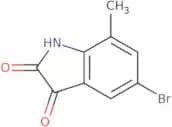
CAS:<p>4-(Bromomethyl)benzophenone is a monomer that is used in the production of polymers, plastics, and resins. It is a fluorescent material with an efficient method for interacting with peroxides. 4-(Bromomethyl)benzophenone has been shown to interact with membrane phospholipids and proton transfer. The structural formula of 4-(bromomethyl)benzophenone is shown below:</p>Formula:C14H11BrOPurity:Min. 95%Color and Shape:PowderMolecular weight:275.14 g/mol5-Bromo-7-methyl-1H-indole-2,3-dione
CAS:5-Bromo-7-methyl-1H-indole-2,3-dione is a lead compound that inhibits the inosine monophosphate (IMP) deaminase enzyme. This compound is an inhibitor of the IMP deaminase enzyme and has been shown to reduce viral load in HIV patients. 5-Bromo-7-methyl-1H-indole-2,3-dione has been studied as a potential treatment for other diseases such as mycophenolic acid renal toxicity and inflammatory bowel disease. This molecule is a regiospecific inhibitor of the IMPDE4 protein with IC50 values of 0.5 μM and 2 μM for the wild type and mutant forms respectively.Formula:C9H6BrNO2Purity:Min. 95%Color and Shape:Orange PowderMolecular weight:240.05 g/mol