


Building Blocks
This section contains fundamental products for the synthesis of organic and biological compounds. Building blocks are the essential starting materials used to construct complex molecules through various chemical reactions. They play a critical role in drug discovery, material science, and chemical research. At CymitQuimica, we offer a diverse range of high-quality building blocks to support your innovative research and industrial projects, ensuring you have the essential components for successful synthesis.
Subcategories of "Building Blocks"
- Boronic Acids & Boronic Acid Derivatives(5,778 products)
- Chiral Building Blocks(1,242 products)
- Hydrocarbon Building Blocks(6,098 products)
- Organic Building Blocks(61,034 products)
Found 199601 products of "Building Blocks"
Sort by
Purity (%)
0
100
|
0
|
50
|
90
|
95
|
100
3-Chloro-5-hydroxybenzoic acid ethyl ester
<p>Please enquire for more information about 3-Chloro-5-hydroxybenzoic acid ethyl ester including the price, delivery time and more detailed product information at the technical inquiry form on this page</p>Formula:C9H9ClO3Purity:Min. 98 Area-%Color and Shape:PowderMolecular weight:200.62 g/mol3-Chloro-5-hydroxybenzoic acid methyl ester
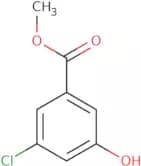
CAS:<p>3-Chloro-5-hydroxybenzoic acid methyl ester is a fine chemical that can be used as a versatile building block and reaction component in the synthesis of complex compounds. It is soluble in organic solvents such as dichloromethane, chloroform, and acetone. 3-Chloro-5-hydroxybenzoic acid methyl ester has CAS No. 98406-04-3 and a molecular weight of 149. 2.</p>Formula:C8H7ClO3Purity:Min. 98 Area-%Color and Shape:White Off-White PowderMolecular weight:186.59 g/mol2-Methyl-3-nitrobenzoic acid
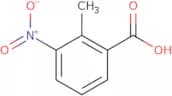
CAS:<p>2-Methyl-3-nitrobenzoic acid is a diketone that is used as a synthetic building block for the synthesis of fatty acid esters. This compound is also used to normalize butyric acid levels in blood, and has been shown to inhibit the formation of coumarin derivatives from nitrosalicylic acid. 2-Methyl-3-nitrobenzoic acid is an organic molecule with a molecular weight of 128.17 g/mol, and has four functional groups: two methyl groups, one carboxyl group, and one phenyl group. The compound reacts with a solution containing nitrite ions in an acidic environment to form nitrous acid (HONO) and 2-methylene-3-nitrobenzaldehyde (2MNB). 2MNB is soluble in water and has a solubility data of 0.0012 g/100 mL at 25 degrees Celsius.</p>Formula:C8H7NO4Purity:Min. 98 Area-%Color and Shape:PowderMolecular weight:181.15 g/molMethyl 5-nitrosalicylate
CAS:<p>Methyl 5-nitrosalicylate is a chemical compound that belongs to the group of 4-hydroxycoumarin derivatives. It is an inhibitor of the reaction between salicylic acid and nitrous acid, inhibiting the formation of 5-nitrosalicylic acid. Methyl 5-nitrosalicylate has shown inhibitory activity against various nitro compounds, including benzofurans. The inhibitory effect on oxidation reactions may be due to its ability to act as a ligand and form coordination complexes with metal ions such as copper, zinc, and iron. Methyl 5-nitrosalicylate also has anti-inflammatory properties that are due to its ability to inhibit prostaglandin synthesis by blocking cyclooxygenase enzyme activity.<br>Methyl 5-nitrosalicylate can be synthesized in a few ways. One method includes reacting methyl salicylate with nitrous acid in the presence of light</p>Formula:C8H7NO5Purity:Min. 95%Color and Shape:PowderMolecular weight:197.14 g/molMethyl-3-Formylindole-5-carboxylate
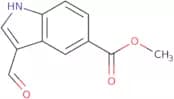
CAS:<p>Please enquire for more information about Methyl-3-Formylindole-5-carboxylate including the price, delivery time and more detailed product information at the technical inquiry form on this page</p>Formula:C11H9NO3Purity:Min. 95%Molecular weight:203.19 g/molDL-Tartaric acid
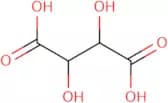
CAS:<p>DL-Tartaric acid is a calcium salt of tartaric acid. It is used as a standard in the analysis of total calcium and tartaric acid content in beverages, wines, foodstuffs, and pharmaceuticals. DL-Tartaric acid can be used to prepare standard solutions for the determination of benzalkonium chloride and other natural compounds by chromatographic methods. The rate constants for the reaction between DL-tartaric acid and calcium pantothenate have been determined by electrochemical impedance spectroscopy. The fluorescence intensity of chemiluminescent reactions with DL-tartaric acid has been found to be proportional to the concentration of tartrate ions in solution. X-ray diffraction data confirm that DL-tartaric acid is an orthorhombic crystal system with space group P2/c.</p>Formula:C4H6O6Color and Shape:White PowderMolecular weight:150.09 g/mol1,3-Diphenylisobenzofuran
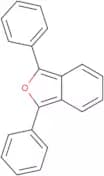
CAS:1,3-Diphenylisobenzofuran is a reactive compound that has been shown to have anti-infectious and anticancer properties. It has been shown to cause cell lysis in a variety of infectious diseases, such as Chlamydia pneumoniae, Borrelia burgdorferi, and Salmonella typhimurium. It also has anticancer activity against human tumor cells lines and is ancillary to photodynamic therapy (PDT). 1,3-Diphenylisobenzofuran is able to induce apoptosis in rat liver microsomes by binding to the thiol group of cysteine residues on proteins. The activity index for this compound was found to be 10.0 μM.Formula:C20H14OPurity:Min. 95%Color and Shape:Yellow SolidMolecular weight:270.32 g/molMethyl 3,4-diaminobenzoate
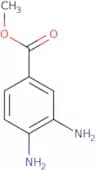
CAS:<p>Methyl 3,4-diaminobenzoate is a molecule that has been shown to inhibit nitrite reductase. It also binds to the receptor binding domain of the growth factor and to quinoxalines, which are antimicrobial peptides. In vitro assays have revealed that methyl 3,4-diaminobenzoate has antimicrobial properties against bacteria such as Enterococcus faecalis, Pseudomonas aeruginosa, Staphylococcus aureus, and Bacillus cereus. The mechanism of action for these activities is not well understood. Methyl 3,4-diaminobenzoate has been shown to be an inhibitor of tryptophan fluorescence in vitro and may act as a competitive inhibitor of the enzyme tryptophan fluorescence decarboxylase.</p>Formula:C8H10N2O2Purity:Min. 95%Color and Shape:White PowderMolecular weight:166.18 g/molCyclohexane-1,2-dione
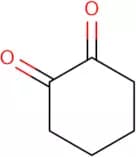
CAS:<p>Cyclohexane-1,2-dione is a natural compound that can be found in kidney beans and other plants. It has been shown to inhibit the growth of tumor cells in vitro. Cyclohexane-1,2-dione binds to DNA polymerase, preventing replication and transcription. This reaction mechanism is similar to that of the rifamycins. Cyclohexane-1,2-dione has also been shown to bind enzymes such as nitrite ion reductase with high affinity and inhibit their activity. Cyclohexane-1,2-dione is chemically stable and does not react with metal ions or form stable complexes with biological molecules. The redox potentials for this molecule are -0.42 V (5/6) under aerobic conditions and -0.52 V (5/6) under anaerobic conditions.</p>Formula:C6H8O2Purity:Min. 96.5%Color and Shape:PowderMolecular weight:112.13 g/molCyclopentanecarbaldehyde
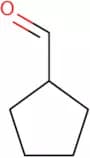
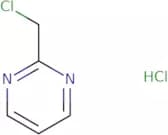
CAS:<p>Cyclopentanecarbaldehyde is a reactive molecule that is used as a ligand in coordination chemistry. It has been shown to bind to the toll-like receptor and may be useful for treating autoimmune diseases. Cyclopentanecarbaldehyde binds with nitrogen atoms in the active site of chelate ligands, which can cause changes in coordination geometry. This reaction mechanism is similar to that of other heterocycles such as 2-picolylhydrazine and 4-picolylhydrazine, which have been shown to be effective in treating Parkinson's disease.</p>Formula:C6H10OPurity:Min. 95%Color and Shape:Colorless Yellow Clear LiquidMolecular weight:98.14 g/mol2-(Chloromethyl)pyrimidine HCl
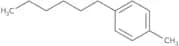
CAS:<p>2-(Chloromethyl)pyrimidine HCl is a chlorinated aromatic compound that is used in the manufacturing of nylon and other synthetic fibers. It is an intermediate for the production of polychloroparaffins, which are used as solvents and raw materials in the chemical industry. 2-(Chloromethyl)pyrimidine HCl has been shown to undergo a chlorination reaction with alcohols to produce 4-chloro-2-methyl-1,3-dioxolane. This reaction can be catalyzed by calcium hydroxide or magnesium chloride, which are both common chemicals found in household cleaners.</p>Formula:C5H5ClN2·HClPurity:Min. 95%Color and Shape:Yellow PowderMolecular weight:165.02 g/mol1-Hexyl-4-methylbenzene
CAS:<p>1-Hexyl-4-methylbenzene is a hydrocarbon with the chemical formula C8H18. It has an octane rating of 100 and a boiling point of 156°C. This compound is used in the preparation of pharmaceuticals, dyes, and cleaning agents. It has been shown to react with palladium catalysts to form homopolymers in the presence of oxygen or water. These polymers are used for optical purposes due to their emission properties. They also have high photophysical properties that make them suitable for use in lasers and photonic devices. The intramolecular interactions between the benzene rings give this compound its conformational stability.</p>Formula:C13H20Purity:Min. 95%Color and Shape:Clear LiquidMolecular weight:176.3 g/mol5-Chloro-2-mercaptobenzothiazole
CAS:<p>5-Chloro-2-mercaptobenzothiazole (5CMB) is a thione that binds to hydrogen fluoride (HF) and sodium salts. 5CMB has been used in the synthesis of fluorinated drugs, such as 5-chloro-2-(4'-fluorophenylsulfonyl)benzothiazole, which is used for the treatment of cancer. 5CMB has also been shown to be a potential drug candidate for the treatment of Alzheimer's disease. The structure of 5CMB can be determined using crystallography techniques. Its binding constants with HF and sodium salts can be determined using matrix-assisted laser desorption ionization mass spectrometry (MALDI MS). The toxicity studies of 5CMB have been conducted on animals including mice and rats. These studies show that the LD50 value for 5CMB is 3200 mg/kg bodyweight.</p>Formula:C7H4ClNS2Purity:Min. 98 Area-%Color and Shape:PowderMolecular weight:201.7 g/mol3-N-Maleimidobenzoic acid
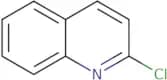
CAS:<p>3-N-Maleimidobenzoic acid is a chemical crosslinking agent that reacts with proteins through the formation of an amide bond. It has been shown to react with both actin subunits and human immunoglobulin. This molecule also reacts with spermatozoa, which are composed primarily of actin filaments, and is used in the preparation of polyclonal antibodies. 3-N-Maleimidobenzoic acid can be used to fix antigen onto a solid support for immunological purposes. It is also a cross-linking agent that can be used in cytochalasin B experiments to inhibit plastid activity in chloroplasts. 3-N-Maleimidobenzoic acid reacts with monoclonal antibodies by forming an amide bond, which can be used as a reaction product.</p>Formula:C11H7NO4Purity:Min. 95%Color and Shape:PowderMolecular weight:217.18 g/mol2-Chloroquinoline
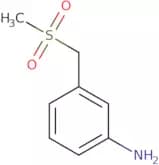
CAS:2-Chloroquinoline is a compound that has antimicrobial properties. It acts by inhibiting bacterial RNA synthesis and protein synthesis. 2-Chloroquinoline has been shown to have toxicological effects in animal studies, including cancer. It also inhibits the activity of the cb2 receptor and the CCR5 receptor, which are involved in tumor growth. The molecular docking analysis for this compound is available, which can be found on PubChem.Formula:C9H6ClNPurity:Min. 98%Color and Shape:PowderMolecular weight:163.6 g/mol3-(Methanesulfonylmethyl)aniline
CAS:<p>3-(Methanesulfonylmethyl)aniline is a growth factor inhibitor that binds to the receptor-2, which is a protein tyrosine kinase. This binding inhibits the activation of endothelial cells and angiogenesis, as well as tumor growth. 3-(Methanesulfonylmethyl)aniline has been shown to inhibit the proliferation of human cancer cells in vitro by interfering with their ability to secrete vascular endothelial growth factor (VEGF). The drug also inhibits VEGFR-2 signaling pathways in endothelial cells, leading to a decrease in cell proliferation and angiogenesis. The mechanism of action is not yet fully understood.</p>Formula:C8H11NO2SPurity:Min. 95%Molecular weight:185.24 g/mol4,5-Dichloro-3-hydroxypyridazine
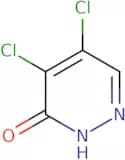
CAS:<p>4,5-Dichloro-3-hydroxypyridazine is an organic compound that is used as a precursor to other compounds. It has been shown to be genotoxic and mutagenic in a number of assays with mammalian cells. 4,5-Dichloro-3-hydroxypyridazine reacts with phenols in the presence of Friedel-Crafts catalysts to form pyridine derivatives. It has also been shown to regulate transcriptional activity by binding to the prostacyclin receptor and α2-adrenergic receptor. This compound has been studied for its potential diagnostic value in the diagnosis of triticum aestivum (wheat) sensitivity.</p>Formula:C4H2Cl2N2OPurity:Min. 95%Color and Shape:PowderMolecular weight:164.98 g/mol4H-Cyclopenta[2,1-b:3,4-b']dithiophene
CAS:<p>4H-Cyclopenta[2,1-b:3,4-b']dithiophene is a molecule that has been shown to be photovoltaic. It has an optical absorption spectrum that peaks in the UV region and is able to absorb light from 300 to 400 nm. 4H-Cyclopenta[2,1-b:3,4-b']dithiophene can be fabricated into devices by means of cyclic voltammetry or other techniques. As a result of its high electron mobility and its ability to absorb visible light, this molecule may lead to high efficiency solar cells. Photovoltaic devices made with 4H-Cyclopenta[2,1-b:3,4-b']dithiophene have been shown to have efficiencies as high as 2%.</p>Formula:C9H6S2Purity:Min. 95%Color and Shape:PowderMolecular weight:178.28 g/mol6-[(1E)-2-(3,4-Dihydroxyphenyl)ethenyl]-3,4-dihydroxy-2H-pyran-2-one
CAS:<p>Versatile small molecule scaffold</p>Formula:C13H10O6Purity:Min. 95%Color and Shape:PowderMolecular weight:262.2 g/mol4-Chloro-7-azaindole
CAS:<p>4-Chloro-7-azaindole (4CA) is a molecule that has been shown to have significant cytotoxicity against cancer cells in vitro. 4CA inhibits the growth of cancer cells by binding to their DNA, preventing the synthesis of new DNA strands and leading to cell death. The inhibitory effect of 4CA on cancer cells can be attributed to its ability to bind to nitrogen atoms in the molecule's skeleton. This binding prevents the formation of hydrogen bonds between the molecule and other molecules or proteins, which are necessary for the synthesis of new DNA strands. 4CA has been shown to be active against human ovarian carcinoma and carcinoma cell lines in vitro.</p>Formula:C7H5N2ClPurity:Min. 95 Area-%Color and Shape:PowderMolecular weight:152.58 g/mol





![4H-Cyclopenta[2,1-b:3,4-b']dithiophene](/_next/image/?url=https%3A%2Fstatic.cymitquimica.com%2Fproducts%2F3D%2Fthumb-webp%2FFC13994.webp&w=3840&q=75)
![6-[(1E)-2-(3,4-Dihydroxyphenyl)ethenyl]-3,4-dihydroxy-2H-pyran-2-one](/_next/image/?url=https%3A%2Fstatic.cymitquimica.com%2Fproducts%2F3D%2Fthumb-webp%2FZWC96466.webp&w=3840&q=75)
