Building Blocks
This section contains fundamental products for the synthesis of organic and biological compounds. Building blocks are the essential starting materials used to construct complex molecules through various chemical reactions. They play a critical role in drug discovery, material science, and chemical research. At CymitQuimica, we offer a diverse range of high-quality building blocks to support your innovative research and industrial projects, ensuring you have the essential components for successful synthesis.
Subcategories of "Building Blocks"
- Boronic Acids & Boronic Acid Derivatives(5,756 products)
- Chiral Building Blocks(1,242 products)
- Hydrocarbon Building Blocks(6,095 products)
- Organic Building Blocks(61,051 products)
Found 199813 products of "Building Blocks"
Sort by
Purity (%)
0
100
|
0
|
50
|
90
|
95
|
100
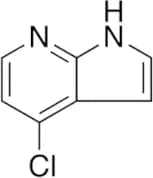
4-Chloro-7-azaindole
CAS:Controlled Product<p>Applications A useful intermediate for drug discovery research.<br> Not a dangerous good if item is equal to or less than 1g/ml and there is less than 100g/ml in the package<br>References Caldwell, J., et al.: Tet. Lett., 48, 1527 (2007)<br></p>Formula:C7H5ClN2Color and Shape:NeatMolecular weight:152.58Methyl 9-Octadecenoate
CAS:Controlled Product<p>Applications Methyl 9-octadecenoate can be found in biodiesel synthesized from rocket seed oil. Rocket seed oil commonly used as a lubricant in soap. Methyl 9-octadecenoate is an environmental and food contaminant.Environmental contaminants; food contaminants.<br>References Muhammad, T., et al.: Fuel Sci. Technol. 92, 336 (2011); Ugur, A., et al.: Pharmacogn Mag. 6, 305 (2010)<br></p>Formula:C19H36O2Color and Shape:NeatMolecular weight:296.49Trimethyl Orthovalerate
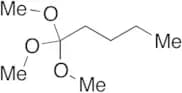
CAS:Controlled Product<p>Stability Unstable in acidic solution<br>Applications Trimethyl Orthovalerate is used in the synthesis of dihydropyran-4-ones, via the Maitland-Japp reaction, which can be converted stereoselectively into tetrahydropyran-4-ones. This conversion is useful in the study of the functionalized tetrahydropyran units that are found in the anticancer polyketide lasonolide A and the Civet fragrance which is used in perfumery.<br> Not a dangerous good if item is equal to or less than 1g/ml and there is less than 100g/ml in the package<br>References Clarke, P., et al.: Org. Biomol. Chem., 13, 4743 (2015)<br></p>Formula:C8H18O3Color and Shape:NeatMolecular weight:162.231-Chlorododecane
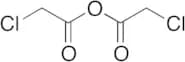
CAS:Controlled Product<p>Applications 1-Chlorododecane is used as a reagent in the chemical modification of zein to reduce the brittleness of zein films.<br> Not a dangerous good if item is equal to or less than 1g/ml and there is less than 100g/ml in the package<br>References Shi, K., et al.: J. Agr. Food Chem., 59, 56 (2011)<br></p>Formula:C12H25ClColor and Shape:NeatMolecular weight:204.78Chloroacetyl Anhydride
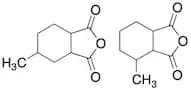
CAS:Controlled ProductFormula:C4H4Cl2O3Color and Shape:NeatMolecular weight:170.98Methylhexahydroisobenzofuran-1,3-Dione
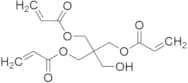
CAS:Controlled Product<p>Stability Moisture Sensitive<br>Applications 3A-METHYLHEXAHYDROISOBENZOFURAN-1,3-DIONE (cas# 25550-51-0) is a useful research chemical.<br></p>Formula:C9H12O3Color and Shape:NeatMolecular weight:168.18Pentaerythritol Triacrylate (Technical Grade)
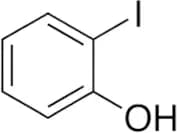
CAS:Controlled ProductFormula:C14H18O7Color and Shape:ColourlessMolecular weight:298.292-Iodophenol
CAS:Controlled Product<p>Applications 2-Iodophenol is a halophenol with antifungal activity. 2-Iodophenol is used as a catalyst in the synthesis of 1,3,5-substituted benzenes. 2-Iodophenol is also used as additive tracers for resist plasma etching.<br>References Gershon, H. et al.: Monatsch. CHem., 126, 1161 (1995); Cheaib, M. et al.: J. Vac. Sci. Technol B Microelec. Nano. Stuc., 9, 273 (1991); Xu, Y.-L. et al.: J. Org. Chem., 76, 8472 (2011);<br></p>Formula:C6H5IOColor and Shape:NeatMolecular weight:220.01Methyl 2-Bromo-2-methylpropanoate
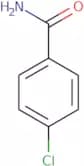
CAS:Controlled Product<p>Applications Methyl 2-bromo-2-methylpropanoate (cas# 23426-63-3) is a useful research chemical.<br></p>Formula:C5H9O2BrColor and Shape:ColourlessMolecular weight:181.024-Chlorobenzamide
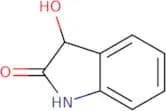
CAS:<p>4-Chlorobenzamide is a quaternary ammonium compound that is used in the synthesis of other organic compounds. 4-Chlorobenzamide reacts with malonic acid to form a compound called 4-chlorobenzoic acid. The reaction mechanism involves formation of hydrogen bonds and an electrophilic substitution. 4-Chlorobenzamide is also found in environmental pollution, where it can be degraded by hydroxyl radicals and chlorine. It can be found as a chloride salt or amide depending on the pH. The functional groups are carbonyl group, which has a carbon atom double bonded to an oxygen atom, and hydroxyl group, which has a hydroxyl radical attached to a carbon atom.</p>Formula:C7H6ClNOPurity:Min. 95%Color and Shape:PowderMolecular weight:155.58 g/mol3-Hydroxy-2,3-dihydro-1H-indol-2-one
CAS:<p>3-Hydroxy-2,3-dihydro-1H-indol-2-one (3HID) is a heterocyclic compound that contains a trifluoroacetate group. It is an intermediate in the synthesis of histamine, serotonin, and melatonin. 3HID is an inhibitor of the growth factor receptor, which inhibits the proliferation of human liver cells. 3HID also has a strong affinity for basic proteins such as albumin and hemoglobin. These interactions are thought to be important for its cytotoxic activity in cancer cells. 3HID can be synthesized by reacting acetyl chloride with 2-aminobutyric acid in the presence of potassium hydroxide or sodium hydroxide at room temperature, followed by hydrolysis with water. The reaction produces 3HID and acetic acid, which can be removed by distillation. The product can then be purified by recrystallization from methanol or</p>Formula:C8H7NO2Purity:Min. 95%Color and Shape:PowderMolecular weight:149.15 g/molβ-Ionone
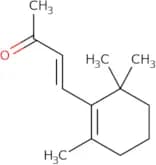
CAS:<p>2-Ionone is a carotenoid that is an intermediate in the biosynthesis of vitamin A. It is also used as a flavoring and fragrance additive and has been shown to have cancer-preventing properties. 2-Ionone inhibits the NADP-cytochrome P450 reductase, which prevents formation of NADPH, an essential cofactor in cellular respiration and biosynthesis of fatty acids. 2-Ionone also inhibits cell growth in vitro by interacting with the polymerase chain reaction (PCR) process. The physiological function of 2-Ionone is not well understood, but it has been shown to inhibit steric interactions between DNA molecules. 2-Ionone can be prepared industrially by photolysis or by thermal decomposition of acetophenone.</p>Formula:C13H20OPurity:Min. 95%Color and Shape:Clear LiquidMolecular weight:192.3 g/molPenicillin V
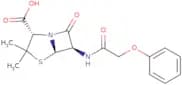
CAS:<p>Penicillin V is an antibiotic that belongs to the class of penicillins. It is used in the treatment of bacterial infections, such as streptococcal pharyngitis and infectious diseases. Penicillin V binds to the penicillin-binding proteins, which are located on the outer surface of the bacterial membrane and prevent cell wall synthesis. This binding inhibits cell wall biosynthesis by preventing transpeptidation and transglycosylation reactions and leads to cell death. Penicillin V also inhibits the production of certain cytokines, including interleukin-1β (IL-1β) and tumor necrosis factor α (TNFα), which may be a result of its ability to inhibit Toll-like receptor 4 (TLR4). The solubility data for penicillin V was obtained from experiments conducted with experimental animals. The oral cephalosporins were shown to have a greater affinity for penicillin-binding proteins than pen</p>Formula:C16H18N2O5SPurity:Min. 95%Molecular weight:350.39 g/molVioluric acid
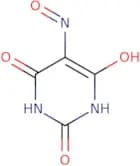
CAS:<p>Violuric acid is a chemical compound that is used in biological treatment. It has a hydroxyl group and UV absorption, which makes it reactive. Violuric acid undergoes protonation and deprotonation to form an acid complex with water. The nitrogen atoms in violuric acid can react with the oxygen atoms of water molecules to form nitrous acid, which then reacts with hydrogen peroxide to form an oxidizing agent. Violuric acid is synthesized by chain reactions between organic acids and inorganic acids. Violuric acid has a redox potential of −0.35 volts, making it an excellent reducing agent for organic compounds. In organic chemistry, violuric acid is used as a reducing agent for esters or amides.</p>Formula:C4H3N3O4Purity:Min. 95%Color and Shape:PowderMolecular weight:157.08 g/molPiperitone
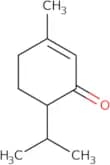
CAS:<p>Piperitone is a natural product that is isolated from the roots of Piper aduncum L. It has shown antimicrobial activity against Gram-positive and Gram-negative bacteria, fungi, and protozoa. The compound has been used as a broad-spectrum antimicrobial agent to treat infectious diseases such as malaria, leishmaniasis, and trypanosomiasis. Piperitone's mechanism of action is not well understood but it may be due to its ability to inhibit fatty acid synthesis or by inhibiting the biosynthesis of hepg2 in human erythrocytes.</p>Formula:C10H16OPurity:Min. 95%Color and Shape:Clear LiquidMolecular weight:152.23 g/mol2,2-Dichloro-N-(4-hydroxyphenyl)-N-methylacetamide
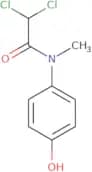
CAS:<p>2,2-Dichloro-N-(4-hydroxyphenyl)-N-methylacetamide (FUROATE) is a synthetic antimicrobial agent that is structurally related to the furoate class of antibiotics. FUROATE has been shown to be effective against urothelial carcinoma cells and minimal toxic in animals. It binds to the fatty acid component of bacterial cell membranes and causes rapid lysis. FUROATE is used as an analytical reagent for the determination of hydroxyl groups in organic solutes. The detection limit of this test is 0.1 ppm. Monoclonal antibodies can be generated against FUROATE for use as diagnostic or therapeutic agents for infectious diseases, such as HIV infection.</p>Formula:C9H9Cl2NO2Purity:Min. 95%Color and Shape:PowderMolecular weight:234.08 g/mol2-Hydroxyisophthalic acid
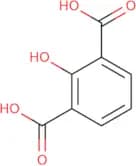
CAS:<p>2-Hydroxyisophthalic acid is a hydroxylated derivative of p-hydroxybenzoic acid. It is used in the manufacture of esters such as 2-ethoxyethanol and 2-ethoxyethyl acetate. It has also been shown to have a number of enzyme activities, including esterases, glycosidases, and lipases. The macrocyclic structure of 2-hydroxyisophthalic acid is responsible for its ability to interact with other molecules through hydrogen bonding and coordination chemistry. The carboxylate group on 2-hydroxyisophthalic acid interacts with the hydroxy group on the fatty acids found in soap, which leads to its use as an emulsifying agent. The carbonyl oxygens on 2-hydroxyisophthalic acid are responsible for its anti-inflammatory properties as they inhibit prostaglandin synthesis when they bind to the cyclooxygenase enzymes that catalyze</p>Formula:C8H6O5Purity:Min. 95 Area-%Color and Shape:PowderMolecular weight:182.13 g/mol6-Bromonaphthalene-2-sulfonyl chloride
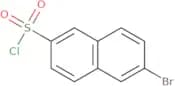
CAS:Versatile small molecule scaffoldFormula:C10H6BrClO2SPurity:Min. 95%Color and Shape:PowderMolecular weight:305.58 g/mol3-Methyl-1,2,4-thiadiazole-5-carbohydrazide
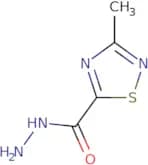
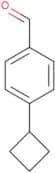
CAS:3-Methyl-1,2,4-thiadiazole-5-carbohydrazide is an intermediate in the synthesis of fezolinetant. It can be used as a pharmaceutical intermediate.Formula:C4H6N4OSPurity:Min. 95%Molecular weight:158.18 g/mol4-Cyclobutylbenzaldehyde
CAS:<p>4-Cyclobutylbenzaldehyde is a versatile building block that is used in the synthesis of complex compounds. This chemical is a reagent and speciality chemical which can be used for research purposes. It also has potential use as an intermediate or scaffold in organic synthesis. 4-Cyclobutylbenzaldehyde is a high quality compound with a CAS number of 875306-94-8.</p>Formula:C11H12OPurity:Min. 95%Color and Shape:Clear LiquidMolecular weight:160.22 g/mol