Building Blocks
This section contains fundamental products for the synthesis of organic and biological compounds. Building blocks are the essential starting materials used to construct complex molecules through various chemical reactions. They play a critical role in drug discovery, material science, and chemical research. At CymitQuimica, we offer a diverse range of high-quality building blocks to support your innovative research and industrial projects, ensuring you have the essential components for successful synthesis.
Subcategories of "Building Blocks"
- Boronic Acids & Boronic Acid Derivatives(5,778 products)
- Chiral Building Blocks(1,242 products)
- Hydrocarbon Building Blocks(6,098 products)
- Organic Building Blocks(61,034 products)
Found 199601 products of "Building Blocks"
Sort by
Purity (%)
0
100
|
0
|
50
|
90
|
95
|
100
(R)-(-)-1,3-Butanediol
CAS:<p>(R)-(-)-1,3-Butanediol is a chiral compound that belongs to the group of organic compounds called diols. It is used in the fermentation of Candida parapsilosis and other yeast species to produce enantiomerically pure (S)-(-)-1,3-butanediol. The racemate can be converted into the two enantiomers by chemical means or by enzymatic resolution. The process for large-scale production is similar to that for ethanol fermentation, but with 2-propanol as substrate instead of glucose. The fermentor has been shown to be effective at producing large quantities of 1,3-butanediol in a short time period.</p>Formula:C4H10O2Purity:Min. 98%Color and Shape:Colorless Clear LiquidMolecular weight:90.12 g/moltert-Butylisocyanate
CAS:<p>Tert-butylisocyanate is a reactive chemical that contains a carboxylate group. It is an ester hydrochloride that can be synthesized by reacting trifluoroacetic acid with molybdenum trioxide. This compound has been studied using X-ray crystal structures and the intramolecular hydrogen transfer reaction between two nitrogen atoms in the molecule. Tert-butylisocyanate is stable in solution because it does not react with water or alkalis, but does react with sodium carbonate, forming sodium cyanate and tetrabutylammonium hydroxide. Tert-butylisocyanate reacts with inorganic acids such as sulfuric acid to form its corresponding salts. The chelate ligand of tert-butylisocyanate prevents it from reacting with transition metals such as copper and iron, but will react with zinc metal.</p>Formula:C5H9NOPurity:Min. 98 Area-%Color and Shape:Colorless Clear LiquidMolecular weight:99.13 g/mol(2,4-Di-tert-butylphenoxy)phosphonic acid
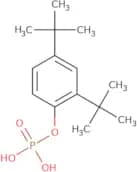
CAS:<p>(2,4-Di-tert-butylphenoxy)phosphonic acid is a fine chemical with CAS No. 18351-37-6. It is an intermediate for the production of other chemicals and can also be used as a reagent or speciality chemical. The compound is a versatile building block that can be used in the production of complex compounds with high quality and versatility. The compound has been shown to react with many functional groups, which makes it useful in research and development. (2,4-Di-tert-butylphenoxy)phosphonic acid is also a useful scaffold for the synthesis of pharmaceuticals.</p>Formula:C14H23O4PPurity:Min. 95%Color and Shape:PowderMolecular weight:286.3 g/mol1,4-Benzoquinone
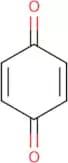
CAS:<p>Intermediate in organic syntheses; pharmaceutical secondary standard</p>Formula:C6H4O2Purity:Min. 95%Color and Shape:Yellow PowderMolecular weight:108.09 g/mol11-Bromoundecanoic acid
CAS:<p>11-Bromoundecanoic acid is a heterobifunctional reagent that is used in the synthesis of phospholipids. This chemical reacts with an amide group on a phosphatidylcholine to introduce a bromine atom, which can be used as a fluorophore. The reaction is done in an organic solvent, such as dichloromethane, which facilitates the reaction by dissolving the reactants. The reaction can be monitored using fluorescence assay techniques and 11-bromoundecanoic acid is characterized by its constant ring-opening constant and fatty acid chain length.</p>Formula:C11H21BrO2Purity:Min. 95%Color and Shape:PowderMolecular weight:265.19 g/mol5-Bromoindole
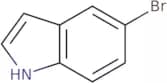
CAS:<p>The optimal reaction conditions for the acylation of 5-bromoindole with 2,2,2-trichloroethyl chloroformate are a mixture of methanol and sodium hydroxide solution. Reaction products include 2-chloro-5-(trichloromethyl)quinoline and the quinoline derivative 1-(2,2,2-trichloroethyl)-1H-imidazole. UV absorption spectra of these products have been recorded in the range of 200 to 400 nm. The reaction is successfully monitored by following changes in the NMR spectrum. The liquid chromatography method is based on a reverse phase column and detection at 220 nm.</p>Formula:C8H6BrNColor and Shape:Slightly Yellow PowderMolecular weight:196.04 g/mol2-Bromo-6-nitrotoluene
CAS:<p>2-Bromo-6-nitrotoluene is a chemical compound that has been shown to bind to the 5-HT7 receptor of the human protein. It has been shown to have affinity for this receptor and functional assays have found it to be selective for this receptor. The hydrogen bonding interactions between 2-bromo-6-nitrotoluene and the 5-HT7 receptor are stronger than those between 2-bromo-6-nitrotoluene and other receptors, such as the 5-HT1A and 5HT1D receptors. Additionally, molecular modeling studies have shown that 2-bromo-6-nitrotoluene has a higher binding affinity for the 5HT7 receptor than other serotonin receptors. This molecule has been synthesized by researchers in a scalable synthesis process with high yields. The intramolecular hydrogen bonds may also help stabilize this molecule in vivo, as they would not be expected to break down</p>Formula:C7H6BrNO2Purity:Min. 95%Color and Shape:PowderMolecular weight:216.03 g/mol5-Bromo-4-chloroindolyl 1,3-diacetate
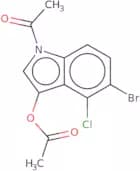
CAS:<p>5-Bromo-4-chloroindolyl 1,3-diacetate (5BCDA) is a clinical response predictor of postoperative radiotherapy. It is an acr20 response predictor for the diagnosis of chronic hepatitis C and the disease activity index in women with genital herpes. 5BCDA has been found to be effective in reducing levels of IL-17a and IL-17f, which are cytokines that are important for immune responses. 5BCDA has also been shown to be effective in treating infectious diseases such as malaria and tuberculosis.</p>Formula:C12H9BrClNO3Purity:Min. 95%Color and Shape:Off-White PowderMolecular weight:330.57 g/mol4-(3-Pyridyl)aniline
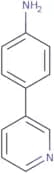
CAS:4-(3-Pyridyl)aniline is a chemical compound that belongs to the group of inhibitors. It is structurally related to the pyridine and aniline rings. 4-(3-Pyridyl)aniline has been shown to inhibit protein kinases, such as casein kinase II and glycogen synthase kinase 3β, in the presence of ATP. The crystallography studies have shown that 4-(3-pyridyl)aniline binds tightly to the ATP binding site of these enzymes by occupying the same position as ATP and forming hydrogen bonds with residues at this site. Structural analysis has also demonstrated that 4-(3-pyridyl)aniline binds to other sites on these enzymes, including the ATP phosphate binding site, which may account for its inhibitory activity against both type 1 and type 2 protein kinases.Formula:C11H10N2Purity:Min. 95%Molecular weight:170.22 g/mol4-Chloro-2-ethoxy-6-methyl-pyrimidine
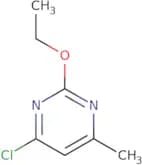
CAS:<p>Versatile small molecule scaffold</p>Formula:C7H9ClN2OPurity:Min. 95%Color and Shape:PowderMolecular weight:172.61 g/mol4-(Difluoromethyl)benzyl alcohol
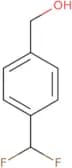
CAS:<p>4-(Difluoromethyl)benzyl alcohol is a chemical intermediate with CAS No. 444915-77-9. It is a versatile building block that can be used to synthesize a wide variety of compounds, including useful scaffolds and speciality chemicals. 4-(Difluoromethyl)benzyl alcohol has been shown to be an effective reactant in the synthesis of complex compounds. It is also used as a reagent in high quality research and development laboratories.</p>Formula:C8H8F2OPurity:Min. 95%Molecular weight:158.15 g/mol(R)-3-Amino-2-methylpropanoic acid hydrochloride
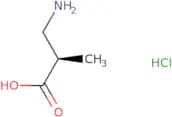
CAS:<p>(R)-3-Amino-2-methylpropanoic acid hydrochloride is a versatile building block that can be used in the synthesis of complex compounds and research chemicals. This chemical is used to produce a wide range of products, including pharmaceuticals, agrochemicals, flavors, fragrances, dyes and pigments. (R)-3-Amino-2-methylpropanoic acid hydrochloride is also an important reagent for research in organic chemistry. It has been used as a building block in the synthesis of new chemical entities with interesting biological properties. The compound is also useful as a scaffold for the development of new drugs or other chemical compounds.</p>Formula:C4H9NO2·HClPurity:Min. 95%Color and Shape:PowderMolecular weight:139.58 g/mol3-{2,8,9-Trioxa-5-aza-1-silabicyclo[3.3.3]undecan-1-yl}propan-1-amine
CAS:<p>3-{2,8,9-Trioxa-5-aza-1-silabicyclo[3.3.3]undecan-1-yl}propan-1-amine (TPAP) is a reactive molecule. It has been immobilized on silicon and titanium surfaces and has shown photocatalytic activity in the presence of oxygen. TPAP is highly resistant to acidic environments and can be used as an immobilization agent for other molecules. TPAP is also labile to hydrolysis and will react with water, releasing ammonia gas, which can be a problem in some applications. TPAP is not active against bacteria or fungi but does have growth rate inhibiting effects on yeast cells.</p>Formula:C9H20N2O3SiPurity:Min. 95%Color and Shape:PowderMolecular weight:232.35 g/mol1,1-Difluoro-3-phenylpropan-2-ol
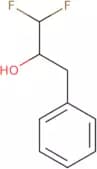
CAS:<p>1,1-Difluoro-3-phenylpropan-2-ol is a versatile building block that can be used to produce a range of complex compounds. It is also useful as a reagent and speciality chemical in research. This chemical has been shown to be an excellent building block for the synthesis of novel compounds with high quality and utility as scaffolds for organic chemistry.</p>Formula:C9H10F2OPurity:Min. 90%Color and Shape:PowderMolecular weight:172.17 g/mol3-Bromo-2-methylbenzene-1-sulfonamide
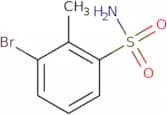
CAS:<p>3-Bromo-2-methylbenzene-1-sulfonamide is a chemical compound that is used as an intermediate in the production of other chemicals. 3-Bromo-2-methylbenzene-1-sulfonamide is a versatile building block, which can be used to make the reagent 3,3'-dimethoxybiphenyl by reacting with acetone and sodium methoxide. It can also be used to make a variety of useful compounds, such as 1,2,4,5 tetrahydroisoquinoline. This compound has CAS Number 1032507-35-9 and is a fine chemical that can be found on the list of speciality chemicals.</p>Formula:C7H8BrNO2SPurity:Min. 95%Color and Shape:PowderMolecular weight:250.12 g/mol4-[(2-Hydroxyethyl)amino]-3-nitrobenzamide
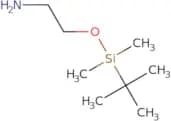
CAS:<p>4-[(2-Hydroxyethyl)amino]-3-nitrobenzamide is a cationic surfactant that can be used as a glossing agent in hair care products. It is an isopropyl alcohol-soluble and silicone-free compound that has been shown to reduce the viscosity of aqueous systems, such as shampoo preparations. This product has been shown to improve the wet combability and dry detangling properties of hair. 4-[(2-Hydroxyethyl)amino]-3-nitrobenzamide is also useful for the production of polyvinyl chloride particles, which are commonly used in cosmetics.</p>Formula:C9H11N3O4Purity:Min. 95%Color and Shape:PowderMolecular weight:225.2 g/mol2-(tert-Butyldimethylsilyloxy)ethanamine
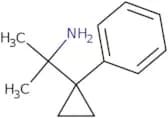
CAS:Versatile small molecule scaffoldFormula:C8H21NOSiPurity:Min. 95%Molecular weight:175.35 g/mol2-(1-Phenylcyclopropyl)propan-2-amine
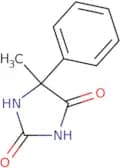
CAS:2-(1-Phenylcyclopropyl)propan-2-amine is a versatile building block with a wide range of applications. It can be used as an intermediate for the synthesis of various chemical compounds, as well as a research chemical in laboratories. 2-(1-Phenylcyclopropyl)propan-2-amine is also known to possess high purity and quality, and is an excellent reagent for use in many reactions.Formula:C12H17NPurity:Min. 95%Color and Shape:Clear LiquidMolecular weight:175.27 g/mol(5R)-5-Methyl-5-phenylimidazolidine-2,4-dione
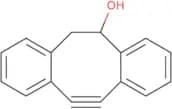
CAS:<p>Versatile small molecule scaffold</p>Formula:C10H10N2O2Purity:Min. 95%Color and Shape:PowderMolecular weight:190.2 g/mol4-dibenzocyclooctynol
CAS:<p>4-Dibenzocyclooctynol (4DC) is a synthetic compound that has been shown to be an efficient crosslinker for proteins. It is a ring-opening polymerization agent that reacts with amines and thiols, which are chemical groups found on the side chains of amino acids in proteins. 4DC has been used for the histological analysis of cells, and it has also been used as a pharmacological treatment for Parkinson's disease. 4DC can bind to dopamine receptors, stabilizing them and preventing the degeneration of neurons in the brain. This drug also has potential applications in medical research as a tool for studying glycoconjugates and molecular modeling.</p>Formula:C16H12OPurity:Min. 95%Color and Shape:PowderMolecular weight:220.27 g/mol




![3-{2,8,9-Trioxa-5-aza-1-silabicyclo[3.3.3]undecan-1-yl}propan-1-amine](/_next/image/?url=https%3A%2Fstatic.cymitquimica.com%2Fproducts%2F3D%2Fthumb-webp%2FSAA86927.webp&w=3840&q=75)
![4-[(2-Hydroxyethyl)amino]-3-nitrobenzamide](/_next/image/?url=https%3A%2Fstatic.cymitquimica.com%2Fproducts%2F3D%2Fthumb-webp%2FNFA37766.webp&w=3840&q=75)