Building Blocks
This section contains fundamental products for the synthesis of organic and biological compounds. Building blocks are the essential starting materials used to construct complex molecules through various chemical reactions. They play a critical role in drug discovery, material science, and chemical research. At CymitQuimica, we offer a diverse range of high-quality building blocks to support your innovative research and industrial projects, ensuring you have the essential components for successful synthesis.
Subcategories of "Building Blocks"
- Boronic Acids & Boronic Acid Derivatives(5,778 products)
- Chiral Building Blocks(1,242 products)
- Hydrocarbon Building Blocks(6,098 products)
- Organic Building Blocks(61,034 products)
Found 199601 products of "Building Blocks"
Sort by
Purity (%)
0
100
|
0
|
50
|
90
|
95
|
100
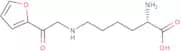
Furosine dihydrochloride
CAS:<p>Reference material for food analysis</p>Formula:C12H18N2O4•2HClPurity:Min. 98 Area-%Color and Shape:PowderMolecular weight:327.20 g/mol4-[(Pyridine-3-carbonyl)amino]butyric acid
CAS:<p>4-[(Pyridine-3-carbonyl)amino]butyric acid (4-PBA) is a non-proteinogenic amino acid that has been found in food and has been shown to have therapeutic effects on a number of diseases. 4-PBA is converted to gamma-aminobutyric acid (GABA) by the enzyme GABA transaminase. It also has a synergistic effect with sodium succinate, which is another precursor in the production of GABA. This synergistic effect increases the amount of GABA produced from 4-PBA and sodium succinate when they are consumed together. 4-PBA also binds to receptors for dopamine, which may be why it is effective for treating diabetic neuropathy and Parkinson's disease.</p>Formula:C10H12N2O3Purity:Min. 95%Color and Shape:White PowderMolecular weight:208.21 g/mol1,3-Diphenylacetone
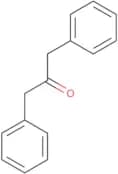
CAS:<p>1,3-Diphenylacetone is a redox potential polymer that is soluble in organic solvents and is used as a film-forming polymer. It has been shown to have some intramolecular hydrogen bonding between the ketone and the nitrogen atoms, which can be seen in its chemical structure. The FTIR spectra of this compound show that it has a hydroxyl group and gives off water vapor when heated. 1,3-Diphenylacetone is an excellent solvent for detergents because it does not corrode metals or rubber. This molecule also has a basic structure due to its benzyl groups.</p>Formula:C15H14OPurity:Min. 95%Color and Shape:PowderMolecular weight:210.28 g/molDL-Phosphinothricin ammonium salt
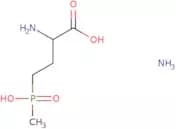
CAS:<p>Non-proteinogenic amino acid; Inhibitor of glutamine synthetase</p>Formula:C5H15N2O4PPurity:Min. 95 Area-%Color and Shape:White PowderMolecular weight:198.16 g/mol1-Pyrenebutyric acid
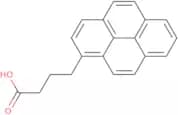
CAS:<p>1-Pyrenebutyric acid is a sodium salt that belongs to the group of polymerase chain reaction (PCR) reagents. It is used in PCR as a fluorescent probe for detecting the presence of dinucleotide phosphate and covalent linkages. 1-Pyrenebutyric acid has been shown to be a potential biomarker for electrochemical impedance spectroscopy and can be used as an optical sensor for optimal concentration. This compound has also been used in biological studies to detect the presence of human immunoglobulin, which binds to it with high affinity. 1-Pyrenebutyric acid undergoes a phase transition at a temperature between -190 and -195 degrees Celsius, which makes it useful as a fluorescence dye.</p>Formula:C20H16O2Purity:Min. 95%Color and Shape:Off-White PowderMolecular weight:288.34 g/mol4,4'-Di-tert-butyl-2,2'-bipyridine
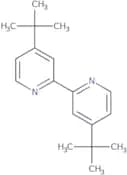
CAS:4,4'-Di-tert-butyl-2,2'-bipyridine is a maleate salt that is used in organic chemistry as a proton acceptor and donor. This compound has been shown to have an interaction with the functional theory by using voltammetry and nmr spectroscopic data. The structural analysis of 4,4'-di-tert-butyl-2,2'-bipyridine has also been done and it was found that this compound has agostic interactions. This compound has also been shown to be able to form neutral form crystals, which diffract x-rays well and have vibrational spectra.Formula:C18H24N2Purity:Min. 98 Area-%Color and Shape:PowderMolecular weight:268.41 g/mol4-Octylbenzylamine
CAS:<p>4-Octylbenzylamine is a hydrophobic molecule that is soluble in organic solvents. In simulations, it was shown to have affinity for anions and aromatic hydrocarbons, as well as the ability to be immobilized on surfaces. 4-Octylbenzylamine is also a chromatographic stationary phase that can be used to separate solutes with similar properties. This molecule has been oriented so that it binds to the hydrated surface of the column, which improves its affinity for anions and aromatic hydrocarbons. The high-performance liquid chromatography (HPLC) technique utilizes this property to separate molecules of different affinities from one another in a systematic manner.</p>Formula:C15H25NPurity:Min. 95%Color and Shape:PowderMolecular weight:219.37 g/mol1,4-Diazabicyclo[3.2.2]nonane dihydrochloride
CAS:<p>1,4-Diazabicyclo[3.2.2]nonane dihydrochloride is a fine chemical that is used as an intermediate in the synthesis of other chemicals. It has been shown to be a versatile building block for research chemicals and as a reaction component in the synthesis of complex compounds. 1,4-Diazabicyclo[3.2.2]nonane dihydrochloride is also useful in the synthesis of pharmaceuticals and other speciality chemicals due to its high quality and ability to function as a reagent.<br>1,4-Diazabicyclo[3.2.2]nonane dihydrochloride has been shown to have anti-inflammatory properties by inhibiting prostaglandin synthesis and can be used for the treatment of asthma, arthritis, and other inflammatory conditions.</p>Formula:C7H14N2·2HClPurity:Min. 95%Color and Shape:SolidMolecular weight:199.12 g/mol2,3-Diaminopyridine
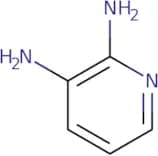
CAS:<p>2,3-Diaminopyridine is a synthetic compound that is used in the treatment of liver disease. It is an effective agent for the elimination of toxic substances from the body. 2,3-Diaminopyridine has been shown to be a potent inhibitor of oxidative stress and lipid peroxidation. This drug also shows high resistance to hydrolysis by rat liver microsomes. The pharmacokinetic properties of 2,3-diaminopyridine have been studied in rats and humans.<br>2,3-Diaminopyridine has been shown to be stable when complexed with human serum albumin or polyethylene glycol in solution and can be used as a reference standard for quantifying human serum albumin concentration by measuring the optical density at 280 nm.</p>Formula:C5H7N3Purity:Min. 98 Area-%Color and Shape:PowderMolecular weight:109.13 g/mol3,4-Diaminopyridine
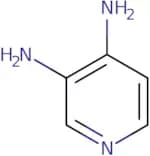
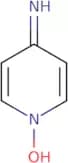
CAS:3,4-Diaminopyridine is a drug that can be used to treat some diseases. It is an aminopyridine with pharmacological effects on the central nervous system, cardiovascular system, and other organ systems. 3,4-Diaminopyridine has been shown to have potent antitumor activity against various tumor cells in vitro and in vivo. The drug also inhibits ATP-sensitive potassium channels and has been shown to prevent the development of autoimmune diseases by inhibiting the production of cytokines. 3,4-Diaminopyridine is a glycosidic compound that can exist as either a zwitterion or a monoanion depending on pH. The zwitterion form of 3,4-diaminopyridine binds with high affinity to the atp-sensitive K+ channel and causes cell death by increasing intracellular calcium concentration.Formula:C5H7N3Purity:Min. 95%Color and Shape:PowderMolecular weight:109.13 g/mol4-Aminopyridine N-oxide
CAS:<p>4-Aminopyridine N-oxide is a white, crystalline solid that is soluble in water and alcohol. It has a molecular weight of 128.2 and formula weight of 135.2. 4-Aminopyridine N-oxide reacts with acid solutions to produce nitrous acid and ammonia gas. The rate of the reaction depends on the concentration of aminopyridine and aniline, as well as the pH of the solution. The acetylation, diazotisation, and kinetics have also been studied extensively for this compound. Nitrous acid can react with amides to form azulene, which can then react with amines to form a molecule containing nitrogen, oxygen, carbon, hydrogen and one other element or compound from each group (e.g., NHCOCH). This reaction is reversible when solvents are present.br> 4-Aminopyridine N-oxide may be used as a precursor for other organic</p>Formula:C5H6N2OPurity:Min. 95%Color and Shape:Slightly Yellow PowderMolecular weight:110.11 g/molN-Boc-D-proline
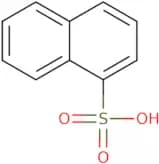
CAS:<p>N-Boc-D-proline is a lipase inhibitor that is used in the preparation of quinine, aldehyde, and carboxylate. N-Boc-D-proline has been shown to inhibit the activity of the sodium channels, which may be due to its ability to bind to the termini of these channels. The inhibition of sodium channels can lead to a decrease in nerve excitability and seizures. N-Boc-D-proline was synthesized by an organocatalytic method using sodium bicarbonate as the catalyst. It was found that this compound was stereoselective with respect to its activity on different enantiomers of chiral substrates. Preparative methods for N-Boc-D-proline include column chromatography or crystallization with diethyl ether or ethyl acetate. The isolated yield is about 99%.</p>Formula:C10H17NO4Purity:Min. 95%Color and Shape:PowderMolecular weight:215.25 g/mol1-Naphthalenesulfonic acid
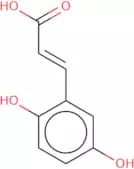
CAS:<p>1-Naphthalenesulfonic acid (1NS) is a sulfonated organic compound. It is an inhibitor of human serum albumin, with a high affinity for the hydroxyl group on the protein's surface. 1NS has been shown to have anti-cancer activity against malignant brain tumors in mice, and also inhibits HIV replication by inhibiting the function of the enzyme reverse transcriptase. 1NS has been shown to inhibit toll-like receptor 4 (TLR4), which may be related to its immunomodulatory effects.</p>Formula:C10H8O3SPurity:Min. 50.0 Area-%Color and Shape:White Beige Slightly Brown PowderMolecular weight:208.23 g/mol2,5-Dihydroxycinnamic acid
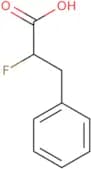
CAS:<p>2,5-Dihydroxycinnamic acid is an intermediate in the metabolism of 4-hydroxycinnamic acid and is a precursor for the formation of methylthioadenosine. It has been shown to stimulate the growth of human epidermal cells and increase colony-stimulating factor production. 2,5-Dihydroxycinnamic acid also has been found to have cytotoxic effects on HL-60 cells, as well as inhibitory effects on human serum. The detection sensitivity for this compound is 0.1 mg/L, which can be achieved using liquid chromatography with UV detection. 2,5-Dihydroxycinnamic acid can be prepared by hydrolysis of dimethylthiourea with alkaline or acidic conditions at room temperature or 37 degrees Celsius. This compound has pharmacokinetic properties that are similar to those of 4-hydroxycinnamic acid and is believed to act similarly by inhibiting protein</p>Formula:C9H8O4Purity:Min. 95%Color and Shape:Off-White PowderMolecular weight:180.16 g/mol2-Fluoro-3-phenylpropanoic acid
CAS:<p>Versatile small molecule scaffold</p>Formula:C9H9FO2Purity:Min. 95%Color and Shape:PowderMolecular weight:168.16 g/mol2'-Nitroacetophenone
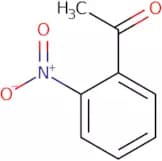
CAS:<p>2'-Nitroacetophenone is a chemical compound that is synthesized by the reaction of acetophenone with nitric acid and sulfuric acid in an acidic environment. The optimum conditions for this reaction are at 50°C and pH=1.5-2.0, which leads to the formation of ester hydrochloride. When 2'-nitroacetophenone comes into contact with choline, it binds to form the nitro group on the aromatic ring, which can be photochemically activated to form the nitro group on the benzene ring. This chemical has inhibitory properties against mammalian cells and may be used in cancer therapy. 2'-Nitroacetophenone also reacts with hydrogen gas in a water vapor environment to form hydrogen bonds, which are necessary for asymmetric synthesis reactions involving carbonyl groups.br>br> 2'-Nitroacetophenone is used as an intermediate for pharmaceuticals such as nitrosoureas and other antic</p>Formula:C8H7NO3Purity:Min. 95%Color and Shape:Yellow PowderMolecular weight:165.15 g/mol1-Nonanol
CAS:<p>1-Nonanol is a colorless liquid with a pleasant odor. It can be synthesized from methyl pentanoate by the asymmetric addition of an inorganic acid to the ester hydrochloride. This process results in a mixture of 1-nonanol and its isomer 2-nonanol, which can be separated using an analytical method such as gas chromatography. 1-Nonanol has been shown to have high transport properties, making it useful for detergent compositions. It has also been shown to exhibit strong hydrogen bonding abilities that may contribute to its adsorption mechanism.</p>Formula:C9H20OPurity:Min. 95%Color and Shape:Colorless Clear LiquidMolecular weight:144.25 g/mol3-(3,4-Dihydroxyphenyl)propionic acid
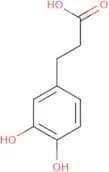
CAS:<p>3-(3,4-Dihydroxyphenyl)propionic acid (3,4-DHPA) is a chlorogenic acid that is found in the leaves of the coffee plant. It has been shown to have a synergic effect with benzalkonium chloride on postprandial blood glucose levels. 3,4-DHPA also has a hypoglycemic effect and can be used as a dietary supplement for people with diabetes. 3,4-DHPA was extracted from coffee leaves using solid phase microextraction and then analyzed by gas chromatography. The rate constant for the reaction was found to be 0.917 min-1 at 25 °C and pH 7.0. The biocompatible polymer poly(L-lactic acid) was used as the stationary phase in this experiment to improve the selectivity of separation.</p>Formula:C9H10O4Purity:Min. 95%Color and Shape:Off-White PowderMolecular weight:182.17 g/mol1,8-Diazaspiro[4.5]decan-2-one dihydrochloride
CAS:<p>Versatile small molecule scaffold</p>Formula:C8H14N2O•(HCl)2Purity:Min. 95%Color and Shape:PowderMolecular weight:227.13 g/mol2,6-Dichloropurine
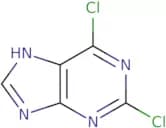
CAS:<p>2,6-Dichloropurine is a nitrogenous base that inhibits the activity of certain enzymes in the body. It has been shown to inhibit protease activity and nitro reductases, which are enzymes that metabolize nitrosamines. 2,6-Dichloropurine also inhibits the synthesis of epidermal growth factor (EGF) and adenosine A3 receptors in vivo. This drug has potent antitumor activity against various cancer cells and is used for the treatment of HIV infections. 2,6-Dichloropurine can be synthesized from 6-fluoro-3-indoxyl-beta-D-galactopyranoside with an intramolecular hydrogen atom.</p>Formula:C5H2Cl2N4Purity:Min. 98 Area-%Color and Shape:PowderMolecular weight:189 g/mol

![4-[(Pyridine-3-carbonyl)amino]butyric acid](/_next/image/?url=https%3A%2Fstatic.cymitquimica.com%2Fproducts%2F3D%2Fthumb-webp%2FFP15522.webp&w=3840&q=75)

![1,4-Diazabicyclo[3.2.2]nonane dihydrochloride](/_next/image/?url=https%3A%2Fstatic.cymitquimica.com%2Fproducts%2F3D%2Fthumb-webp%2FFD07110.webp&w=3840&q=75)


![1,8-Diazaspiro[4.5]decan-2-one dihydrochloride](/_next/image/?url=https%3A%2Fstatic.cymitquimica.com%2Fproducts%2F3D%2Fthumb-webp%2FGDD38984.webp&w=3840&q=75)