Building Blocks
This section contains fundamental products for the synthesis of organic and biological compounds. Building blocks are the essential starting materials used to construct complex molecules through various chemical reactions. They play a critical role in drug discovery, material science, and chemical research. At CymitQuimica, we offer a diverse range of high-quality building blocks to support your innovative research and industrial projects, ensuring you have the essential components for successful synthesis.
Subcategories of "Building Blocks"
- Boronic Acids & Boronic Acid Derivatives(5,756 products)
- Chiral Building Blocks(1,242 products)
- Hydrocarbon Building Blocks(6,095 products)
- Organic Building Blocks(61,051 products)
Found 199813 products of "Building Blocks"
Sort by
Purity (%)
0
100
|
0
|
50
|
90
|
95
|
100
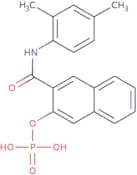
Naphthol AS-MX phosphate
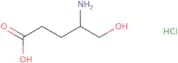
CAS:<p>Naphthol AS-MX phosphate is a synthetic naphthol dye that is used in the diagnosis of infectious diseases, such as Klebsiella aerogenes. It binds to human serum albumin and can be visualized by light microscopy. Naphthol AS-MX phosphate acts as an immunological adjuvant and has been shown to stimulate antibody production and enhance the immune response. This drug also has antidiabetic properties, which may be due to its ability to increase adipose tissue lipolysis.</p>Formula:C19H18NO5PPurity:Min. 95%Color and Shape:PowderMolecular weight:371.32 g/mol(4S)-4-Amino-5-hydroxypentanoic acid hydrochloride
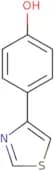
CAS:<p>Versatile small molecule scaffold</p>Formula:C5H11NO3•HClPurity:Min. 95%Color and Shape:PowderMolecular weight:169.61 g/mol4-(1,3-Thiazol-4-yl)phenol
CAS:<p>4-(1,3-Thiazol-4-yl)phenol is a diagnostic marker for bladder cancer. It is expressed in bladder cells and its levels are higher in urine samples of patients with bladder cancer than in controls. 4-(1,3-Thiazol-4-yl)phenol can be used as a biomarker for diagnosis of bladder cancer and to monitor the treatment response. The concentration of this compound can also be used to assess the risk of recurrence or progression to invasive disease. The function of 4-(1,3-thiazol-4-yl)phenol in the body is not known, but it may act as a growth factor or stabilizer for cells. This molecule has been shown to have therapeutic effects on epithelial cancers such as colorectal and pancreatic cancers.</p>Formula:C9H7NOSPurity:Min. 95%Color and Shape:PowderMolecular weight:177.22 g/mol5-Chloropentan-2-ol
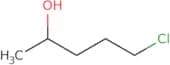
CAS:<p>5-Chloropentan-2-ol is a chemical compound that is found in the leaves of the tobacco plant, Nicotiana tabacum. It is an organic compound that belongs to the group of furans and has been classified as a dye sensitizer. 5-Chloropentan-2-ol is found in small quantities in the leaves of Nicotiana tabacum and has been shown to be responsible for some of the flavour and organoleptic properties of tobacco. The chemical structure of 5-chloropentan-2-ol consists of a 5 carbon chain with two hydroxyl groups on carbons 1 and 2. It has been shown to have high levels of mutagenicity when tested on bacteria, but does not affect animal cells.</p>Formula:C5H11ClOPurity:Min. 85%Molecular weight:122.59 g/mol2-[2-(Morpholin-4-yl)ethoxy]ethan-1-amine
CAS:2-[2-(Morpholin-4-yl)ethoxy]ethan-1-amine is a research chemical that is used as a reagent, reaction component, or building block in the synthesis of more complex compounds. It can be used to synthesize fine chemicals such as pharmaceuticals and agrochemicals.Formula:C8H18N2O2Purity:Min. 95%Color and Shape:Clear LiquidMolecular weight:174.24 g/mol3-[3-(Methylcarbamoyl)phenyl]propanoic acid
CAS:<p>Versatile small molecule scaffold</p>Formula:C11H13NO3Purity:Min. 95%Color and Shape:PowderMolecular weight:207.23 g/mol(2E)-3-(1,3-Oxazol-2-yl)prop-2-enoic acid
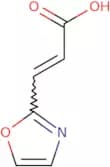
CAS:<p>1,3-Oxazole is an organic compound that belongs to the class of 1,3-diketones. It is a versatile building block that can be used in many different reactions. 1,3-Oxazole has been shown to be a reagent for use in research and as a speciality chemical. It has also been shown to be a useful intermediate for the synthesis of complex compounds. The compound is also a useful scaffold for developing high quality drug candidates with potential applications in medicine or other fields.</p>Formula:C6H5NO3Purity:Min. 95%Molecular weight:139.11 g/molKJ Pyr 9
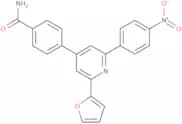
CAS:<p>KJ Pyr 9 is an all-trans retinoic acid (ATRA) derivative that has been shown to inhibit the growth of cancer cells in vitro. KJ Pyr 9 selectively binds to the retinoid X receptor, which is a transcription factor that regulates gene expression. ATRA derivatives are also known as potential biomarkers for colorectal adenocarcinoma and cervical cancer. KJ Pyr 9 was found to be cytostatic rather than cytotoxic, meaning it inhibits cell proliferation but does not kill cells. This molecule has low expression levels and may be a target for inhibitory compounds.</p>Formula:C22H15N3O4Purity:Min. 95%Molecular weight:385.37 g/mol[3-(Morpholinomethyl)phenyl]methylamine
CAS:<p>3-(Morpholinomethyl)phenyl]methylamine (3-MP) is a modified form of the drug 3-morpholinoaniline. It is an organic compound that has been used as a stabilizer in polyolefins, such as polyethylene, to prevent degradation by heat and light. 3-MP is also used to modify copolymers of polypropylene and polyethylene. This modification prevents the copolymer from being degraded by heat, light, or oxygen. The polymerization reaction creates a cross-linked structure that protects the copolymer from degradation.</p>Formula:C12H18N2OPurity:Min. 95%Color and Shape:Clear LiquidMolecular weight:206.29 g/moltrans-Isoferulic acid
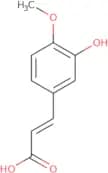
CAS:<p>Trans-iso-ferulic acid is a bioactive phenolic compound that has been shown to have antioxidant and anti-inflammatory properties. It is produced by the metabolism of ferulic acid in the body and can be found in plant cell walls. Trans-iso-ferulic acid has been shown to act as an antimicrobial agent against bacterial strains such as Escherichia coli, Bacillus cereus, Staphylococcus aureus, Klebsiella pneumoniae, Pseudomonas aeruginosa, and Candida albicans. It also has locomotor activity and has been shown to reduce the severity of cardiac disorders. Trans-iso-ferulic acid works by blocking the synthesis of fatty acids which are necessary for energy storage and making regulatory proteins that control metabolism. Trans-iso-ferulic acid also binds to anion radicals which may scavenge free radicals that are formed during oxidative stress. This process prevents lipid peroxidation from occurring which reduces inflammation caused</p>Formula:C10H10O4Purity:Min. 95%Molecular weight:194.18 g/mol3-Methylbutane-1,2-diamine dihydrochloride
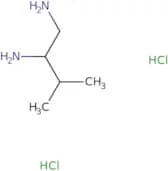
CAS:<p>3-Methylbutane-1,2-diamine dihydrochloride is a reagent that is used as a building block in organic synthesis. It can be used as an intermediate or reactant in the preparation of compounds with other functional groups. 3-Methylbutane-1,2-diamine dihydrochloride is also known to have applications in polymer chemistry and pharmaceuticals. This chemical has been assigned CAS No. 54750-81-1 and is available for purchase through various chemical suppliers.</p>Formula:C5H16Cl2N2Purity:Min. 95 Area-%Color and Shape:PowderMolecular weight:175.1 g/mol(3-Aminopropyl)(sulfamoyl)amine hydrochloride
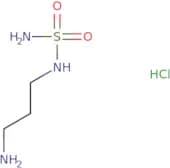
CAS:<p>Versatile small molecule scaffold</p>Formula:C3H12ClN3O2SPurity:Min. 95%Color and Shape:PowderMolecular weight:189.67 g/molNitrobenzene
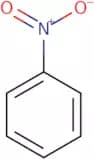
CAS:<p>Nitrobenzene is a chemical that is used in wastewater treatment. It reacts with sodium carbonate to form sodium nitrite and hydrogen fluoride. The reaction mechanism is not well understood, but it is thought that the hydrogen fluoride acts as a catalyst for the reaction. Nitrobenzene has been shown to have transport properties in natural water systems. It can be found in the environment from industrial waste or from the combustion of fossil fuels. Nitrobenzene has been shown to cause chronic exposure when ingested by humans and animals, as well as structural changes in DNA, which may lead to cancer. Nitrobenzene can also react with an inorganic acid to form an organic compound called a nitrosamine. These compounds are carcinogenic and mutagenic, and have been linked to various cancers such as bladder cancer, stomach cancer, pancreatic cancer, lung cancer, breast cancer, esophageal cancer and liver cancer. The most common nitrosamines are N-nit</p>Formula:C6H5NO2Purity:Min. 98 Area-%Color and Shape:Colorless Clear LiquidMolecular weight:123.11 g/mol3-Hydroxyoctanoic acid
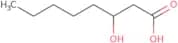
CAS:<p>3-Hydroxyoctanoic acid is an activated fatty acid that belongs to the group of short-chain fatty acids. It is a hydroxylated derivative of octanoic acid. 3-Hydroxyoctanoic acid has been shown to have antibiotic-resistant properties in human macrophages, which may be due to its ability to inhibit the enzyme activities of beta-lactamases and penicillinase. 3-Hydroxyoctanoic acid also has a nutrient effect on bacteria, preventing the formation of ester linkages between fatty acids and alkanoic acids. This activity may be due to its effects on energy metabolism in bacteria, which may be caused by its ability to inhibit cyclic lipopeptide synthesis and its effects on the citrate cycle.</p>Formula:C8H16O3Purity:Min. 95%Molecular weight:160.21 g/molPutrescine dihydrochloride
CAS:<p>Putrescine is a polyamine plant growth regulator affecting the synthesis of macromolecules. Promotes adventitious root formation. Precursor of spermidine.</p>Formula:C4H14Cl2N2Purity:Min. 98.0 Area-%Molecular weight:161.08 g/molRef: 3D-P-8000
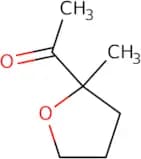
1kgTo inquire5kgTo inquire10kgTo inquire25kgTo inquire2500gTo inquire-Unit-kgkgTo inquire1-(2-Methyloxolan-2-yl)ethan-1-one
CAS:<p>Versatile small molecule scaffold</p>Formula:C7H12O2Purity:Min. 95%Molecular weight:128.17 g/mol2-Azaspiro[3.3]heptane-1-carboxylic acid hydrochloride
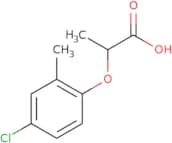
CAS:<p>2-Azaspiro[3.3]heptane-1-carboxylic acid hydrochloride is a versatile building block that can be used in the synthesis of a wide variety of chemical compounds. It is a high quality, useful intermediate that has been shown to be an effective scaffold for synthesis of various complex compounds.</p>Formula:C7H11NO2•HClPurity:Min. 95%Molecular weight:177.63 g/mol(2S)-2-(4-Chloro-2-methylphenoxy)propanoic acid
CAS:<p>(2S)-2-(4-Chloro-2-methylphenoxy)propanoic acid (MCPP) is a phenoxy herbicide that is used in the control of annual and perennial broadleaf weeds. It is often found in wastewater treatment plants because it binds to iron ions and can be removed by coagulation, adsorption, or chemical precipitation. MCPP has been shown to produce genotoxic effects in model systems and high values for enzyme activities. The long-term efficacy of MCPP was studied using a bacterial strain with high levels of resistance to this compound. Structural analysis showed that MCPP contains a chlorophenoxy radical, which may contribute to its carcinogenic potential.</p>Formula:C10H11ClO3Purity:Min. 95%Color and Shape:PowderMolecular weight:214.64 g/mol6-Formyl-2-methyl-4H-thieno[3,2-b]pyrrole-5-carboxylic acid
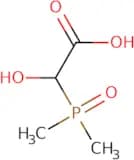
CAS:<p>Versatile small molecule scaffold</p>Formula:C9H7NO3SPurity:Min. 95%Molecular weight:209.22 g/mol2-(Dimethylphosphoryl)-2-hydroxyacetic acid
CAS:<p>2-(Dimethylphosphoryl)-2-hydroxyacetic acid (DMPPA) is a herbicide that inhibits acetaldehyde dehydrogenase, an enzyme in the biochemical pathway of acetaldehyde biosynthesis. DMPPA does not have any effect on glutamate and l-threonine metabolism or on the formation of diketones. The target enzyme is activated by the addition of glyphosate to the leaves. DMPPA is used for diagnosis of velvetleaf (Abutilon theophrasti), which is a weed found in corn fields in North America. The chemical can be applied as a foliar spray or as a soil application, with many different formulations available. The chemical has been shown to be effective against graminaceous weeds such as barnyardgrass (Echinochloa crusgalli) and crabgrass (Digitaria spp.).</p>Formula:C4H9O4PPurity:Min. 95%Molecular weight:152.09 g/mol

![2-[2-(Morpholin-4-yl)ethoxy]ethan-1-amine](/_next/image/?url=https%3A%2Fstatic.cymitquimica.com%2Fproducts%2F3D%2Fthumb-webp%2FVAA20713.webp&w=3840&q=75)
![3-[3-(Methylcarbamoyl)phenyl]propanoic acid](/_next/image/?url=https%3A%2Fstatic.cymitquimica.com%2Fproducts%2F3D%2Fthumb-webp%2FJZB49430.webp&w=3840&q=75)
![[3-(Morpholinomethyl)phenyl]methylamine](/_next/image/?url=https%3A%2Fstatic.cymitquimica.com%2Fproducts%2F3D%2Fthumb-webp%2FRDA27183.webp&w=3840&q=75)

![2-Azaspiro[3.3]heptane-1-carboxylic acid hydrochloride](/_next/image/?url=https%3A%2Fstatic.cymitquimica.com%2Fproducts%2F3D%2Fthumb-webp%2FJBD30513.webp&w=3840&q=75)
![6-Formyl-2-methyl-4H-thieno[3,2-b]pyrrole-5-carboxylic acid](/_next/image/?url=https%3A%2Fstatic.cymitquimica.com%2Fproducts%2F3D%2Fthumb-webp%2FSIB11266.webp&w=3840&q=75)