Building Blocks
This section contains fundamental products for the synthesis of organic and biological compounds. Building blocks are the essential starting materials used to construct complex molecules through various chemical reactions. They play a critical role in drug discovery, material science, and chemical research. At CymitQuimica, we offer a diverse range of high-quality building blocks to support your innovative research and industrial projects, ensuring you have the essential components for successful synthesis.
Subcategories of "Building Blocks"
- Boronic Acids & Boronic Acid Derivatives(5,756 products)
- Chiral Building Blocks(1,242 products)
- Hydrocarbon Building Blocks(6,095 products)
- Organic Building Blocks(61,055 products)
Found 199650 products of "Building Blocks"
Sort by
Purity (%)
0
100
|
0
|
50
|
90
|
95
|
100
(Propan-2-yl)[1-(thiophen-3-yl)ethyl]amine
CAS:<p>Versatile small molecule scaffold</p>Formula:C9H15NSPurity:Min. 95%Color and Shape:Clear LiquidMolecular weight:169.29 g/mol9-Ethylguanine
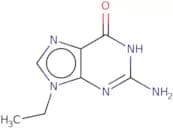
CAS:<p>9-Ethylguanine is a protonated guanine derivative that has significant cytotoxicity. It is an analog of the natural nucleobase guanosine and is structurally similar to the group P2 purine base, hypoxanthine. 9-Ethylguanine specifically binds with nitrogen atoms in DNA, forming hydrogen bonds with adjacent bases. The compound has low potency and therefore must be administered at high doses for it to be effective. 9-Ethylguanine has been shown to have anticancer activity against cervical cancer cells in cell cultures, but no biological studies have been conducted on other cancer types.</p>Formula:C7H9N5OPurity:Min. 95%Color and Shape:PowderMolecular weight:179.18 g/mol2-Ethoxybenzoic acid
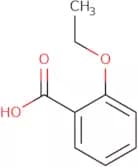
CAS:<p>Component in some dental cements</p>Formula:C9H10O3Purity:Min. 99.0 Area-%Color and Shape:Colorless Clear LiquidMolecular weight:166.17 g/mol2-Amino-4-methyl-N-(1,3-thiazol-2-yl)pentanamide
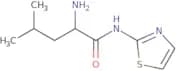
CAS:<p>Versatile small molecule scaffold</p>Formula:C9H15N3OSPurity:Min. 95%Color and Shape:PowderMolecular weight:213.3 g/mol3-Ethoxy-1,2,4-dithiazolidine-5-one
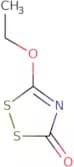
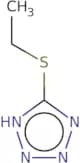
CAS:<p>3-Ethoxy-1,2,4-dithiazolidine-5-one (3ED) is a small molecule that has been shown to have potent antitumor activity against multiple tumor types. It is a selective inhibitor of epidermal growth factor receptor (EGFR) that can be used in combination with chemotherapy or radiation therapy. 3ED has also been shown to inhibit the growth of bladder cancer cells and cervical cancer cells by affecting the EGFR pathway. In addition, 3ED inhibits the proliferation of human urothelial carcinoma cells through its inhibition of the EGFR pathway and can be used as an adjuvant treatment for patients with nonmetastatic bladder cancer and patients with locally advanced or metastatic urothelial carcinoma. 3ED also inhibits creatine kinase, which is an enzyme important in maintaining the health of the detrusor muscle in the urinary bladder and could potentially be used to treat overactive bladder disease.</p>Formula:C4H5NO2S2Purity:Min. 97 Area-%Color and Shape:Yellow PowderMolecular weight:163.22 g/mol5-Ethylthio-1H-tetrazole - Conductivity < 30 uS/cm
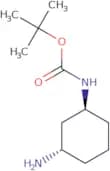
CAS:<p>5-Ethylthio-1H-tetrazole is an angiogenic inhibitor. It has been shown to inhibit the TLR2 and TLR4 pathways by binding to toll-like receptor-inhibitory proteins, which results in the inhibition of the intracellular signaling cascade. This compound also inhibits the expression of inflammatory cytokines and chemokines that are involved in bowel disease. 5-Ethylthio-1H-tetrazole has been shown to be a potent activator of PPARγ, which is a nuclear receptor that regulates the expression of genes important for lipid metabolism and cell proliferation. 5-Ethylthio-1H-tetrazole has also been shown to have antiinflammatory activity through inhibition of cyclooxygenase 2 (COX2) enzyme activity.</p>Formula:C3H6N4SColor and Shape:White PowderMolecular weight:130.17 g/mol(1S,3S)-1-(Boc-amino)cyclohexan-3-amine
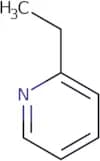
CAS:<p>Versatile small molecule scaffold</p>Formula:C11H22N2O2Purity:Min. 95%Molecular weight:214.3 g/mol2-Ethylpyridine
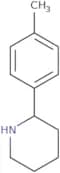
CAS:<p>2-Ethylpyridine is a chemical compound that can be derived from sodium succinate, 2-ethylpyridine, and trifluoroacetic acid. It has been shown to have biological properties such as the inhibition of mitochondrial membrane potential, which is the driving force for ATP synthesis in mitochondria. This drug also inhibits the production of hydrogen peroxide and nitric oxide by reacting with hydrochloric acid or nitrogen atoms. 2-Ethylpyridine can be used as a solid catalyst for reactions involving hydrogen bond formation or intermolecular hydrogen bond formation. 2-Ethylpyridine reacts with protocatechuic acid to form an intramolecular hydrogen bond and a group p2 type of reaction mechanism.</p>Formula:C7H9NPurity:Min. 95%Color and Shape:Colorless Clear LiquidMolecular weight:107.15 g/mol2-(4-Methylphenyl)piperidine
CAS:<p>Versatile small molecule scaffold</p>Formula:C12H17NPurity:Min. 95%Color and Shape:Clear LiquidMolecular weight:175.27 g/mol4-Chloro-7-azaindole
CAS:<p>4-Chloro-7-azaindole (4CA) is a molecule that has been shown to have significant cytotoxicity against cancer cells in vitro. 4CA inhibits the growth of cancer cells by binding to their DNA, preventing the synthesis of new DNA strands and leading to cell death. The inhibitory effect of 4CA on cancer cells can be attributed to its ability to bind to nitrogen atoms in the molecule's skeleton. This binding prevents the formation of hydrogen bonds between the molecule and other molecules or proteins, which are necessary for the synthesis of new DNA strands. 4CA has been shown to be active against human ovarian carcinoma and carcinoma cell lines in vitro.</p>Formula:C7H5N2ClPurity:Min. 95 Area-%Color and Shape:PowderMolecular weight:152.58 g/mol4H-Cyclopenta[2,1-b:3,4-b']dithiophene
CAS:<p>4H-Cyclopenta[2,1-b:3,4-b']dithiophene is a molecule that has been shown to be photovoltaic. It has an optical absorption spectrum that peaks in the UV region and is able to absorb light from 300 to 400 nm. 4H-Cyclopenta[2,1-b:3,4-b']dithiophene can be fabricated into devices by means of cyclic voltammetry or other techniques. As a result of its high electron mobility and its ability to absorb visible light, this molecule may lead to high efficiency solar cells. Photovoltaic devices made with 4H-Cyclopenta[2,1-b:3,4-b']dithiophene have been shown to have efficiencies as high as 2%.</p>Formula:C9H6S2Purity:Min. 95%Color and Shape:PowderMolecular weight:178.28 g/mol1,2-Epoxy-5-cyclooctene
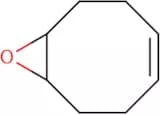
CAS:<p>1,2-Epoxy-5-cyclooctene is a cyclic epoxide that undergoes ring opening with the addition of a nucleophile. This reaction is catalyzed by a bromonium ion, which acts as the electrophile. The product of this reaction is 2-hydroxy-1,2-epoxycyclohexane. 1,2-Epoxy-5-cyclooctene has been used in synthesizing various compounds such as monoepoxides and hydrosilanes. It can also be used to produce compounds that are difficult to access through other methods. 1,2-Epoxy-5-cyclooctene has been studied using x-ray crystallography and conformational analysis.</p>Formula:C8H12OPurity:Min. 98 Area-%Color and Shape:Clear LiquidMolecular weight:124.18 g/molEthyl propiolate
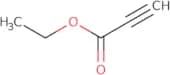
CAS:<p>Ethyl propiolate is a halide that is structurally related to the alkylating agent trifluoroacetic acid. Ethyl propiolate inhibits the activity of several enzymes including phosphofructokinase and pyruvate kinase, which are important for energy metabolism in cells. It also has been shown to have beneficial effects on autoimmune diseases such as lupus erythematosus. The mechanism of action of ethyl propiolate is due to its ability to react with activated oxygen and form an intramolecular hydrogen bond with carbon atoms in the substrate molecule. The reaction between ethyl propiolate and diethyl ketomalonate results in the formation of diethyl 2-propiolate, which can then be hydrolyzed by water into acetaldehyde and diethyl ketomalonate.</p>Formula:C5H6O2Purity:Min. 98 Area-%Color and Shape:Colorless Clear LiquidMolecular weight:98.1 g/mol2-{1-[(Pyridin-3-yl)methyl]piperidin-2-yl}ethan-1-ol
CAS:<p>Versatile small molecule scaffold</p>Formula:C13H20N2OPurity:Min. 95%Color and Shape:PowderMolecular weight:220.31 g/mol2-Chloro-4-trifluoromethylbenzoic acid
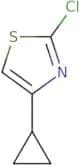
CAS:<p>2-Chloro-4-trifluoromethylbenzoic acid is a chemical compound with the formula CHClFO. It can be obtained by deprotonation of 2,4,6-trichlorobenzoic acid with butyllithium and subsequent reaction with chlorotrifluoromethane. The product has two regioisomers, one in which the chlorine atom is attached to the para position on the benzene ring and the other in which it is attached to the ortho position. Substituents such as alkyl groups or lithium reagents can affect both reactivity and selectivity. The halogen substituent can also be replaced by other functional groups to make derivatives of this compound.</p>Formula:C8H4ClF3O2Purity:Min. 95%Color and Shape:PowderMolecular weight:224.56 g/mol2-Chloro-4-cyclopropyl-1,3-thiazole
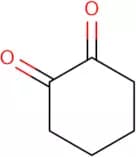
CAS:<p>Versatile small molecule scaffold</p>Formula:C6H6ClNSPurity:Min. 90%Color and Shape:Clear LiquidMolecular weight:159.64 g/molCyclohexane-1,2-dione
CAS:<p>Cyclohexane-1,2-dione is a natural compound that can be found in kidney beans and other plants. It has been shown to inhibit the growth of tumor cells in vitro. Cyclohexane-1,2-dione binds to DNA polymerase, preventing replication and transcription. This reaction mechanism is similar to that of the rifamycins. Cyclohexane-1,2-dione has also been shown to bind enzymes such as nitrite ion reductase with high affinity and inhibit their activity. Cyclohexane-1,2-dione is chemically stable and does not react with metal ions or form stable complexes with biological molecules. The redox potentials for this molecule are -0.42 V (5/6) under aerobic conditions and -0.52 V (5/6) under anaerobic conditions.</p>Formula:C6H8O2Purity:Min. 96.5%Color and Shape:PowderMolecular weight:112.13 g/molcis-4-Chloro-3-nitrocinnamic acid
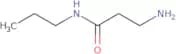
<p>Cis-4-Chloro-3-nitrocinnamic acid is an aromatic organic compound with potential utility in biochemical research and synthesis. This compound is typically derived from synthetic chemical processes involving chlorination and nitration reactions on cinnamic acid derivatives. Its molecular structure, characterized by both chloro and nitro functional groups, allows it to interact in unique ways with various biochemical pathways and molecular frameworks.</p>Formula:C9H6ClNO4Purity:Min. 95%Color and Shape:White PowderMolecular weight:227.6 g/mol3-Amino-N-propylpropanamide
CAS:<p>3-Amino-N-propylpropanamide is a reagent and useful intermediate. It is a fine chemical that has CAS No. 271591-60-7. 3-Amino-N-propylpropanamide can be used as a versatile building block in the synthesis of fine chemicals, such as speciality chemicals and research chemicals, and in the preparation of pharmaceuticals and agrochemicals. 3APPA may also be used as a reaction component in organic synthesis to form amides, ureas, sulfonamides, or phosphonates, which are important intermediates for pharmaceuticals and agrochemicals.</p>Formula:C6H14N2OPurity:Min. 95%Color and Shape:Clear LiquidMolecular weight:130.19 g/mol4-Methoxycyclohexane-1-sulfonyl chloride
CAS:<p>Versatile small molecule scaffold</p>Formula:C7H13ClO3SPurity:Min. 95%Color and Shape:Clear LiquidMolecular weight:212.7 g/mol
![(Propan-2-yl)[1-(thiophen-3-yl)ethyl]amine](/_next/image/?url=https%3A%2Fstatic.cymitquimica.com%2Fproducts%2F3D%2Fthumb-webp%2FAAC59964.webp&w=3840&q=75)


![4H-Cyclopenta[2,1-b:3,4-b']dithiophene](/_next/image/?url=https%3A%2Fstatic.cymitquimica.com%2Fproducts%2F3D%2Fthumb-webp%2FFC13994.webp&w=3840&q=75)
![2-{1-[(Pyridin-3-yl)methyl]piperidin-2-yl}ethan-1-ol](/_next/image/?url=https%3A%2Fstatic.cymitquimica.com%2Fproducts%2F3D%2Fthumb-webp%2FZZB80618.webp&w=3840&q=75)