


Building Blocks
This section contains fundamental products for the synthesis of organic and biological compounds. Building blocks are the essential starting materials used to construct complex molecules through various chemical reactions. They play a critical role in drug discovery, material science, and chemical research. At CymitQuimica, we offer a diverse range of high-quality building blocks to support your innovative research and industrial projects, ensuring you have the essential components for successful synthesis.
Subcategories of "Building Blocks"
- Boronic Acids & Boronic Acid Derivatives(5,756 products)
- Chiral Building Blocks(1,242 products)
- Hydrocarbon Building Blocks(6,095 products)
- Organic Building Blocks(61,051 products)
Found 199813 products of "Building Blocks"
Sort by
Purity (%)
0
100
|
0
|
50
|
90
|
95
|
100
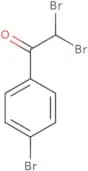
±,±,p-Tribromoacetophenone
CAS:<p>Tribromoacetophenone is a brominated analog of acetophenone. It can be accessed by the reaction of an acid chloride with acetylacetone and then reacting the resulting bromide with hydrogen bromide. Tribromoacetophenone has been studied as an anti-cancer agent, but has shown little activity in animals. It is also used in the synthesis of other compounds, such as covid-19, which is being studied for its potential use as a pandemic vaccine against influenza type A H5N1.</p>Formula:C8H5OBr3Purity:Min. 95%Color and Shape:PowderMolecular weight:356.84 g/mol7-Methyl-[1,2,4]triazolo[1,5-α]pyridin-6-amine
CAS:<p>7-Methyl-[1,2,4]triazolo[1,5-α]pyridin-6-amine is an organic chemical compound that is a reaction component and useful scaffold. It is also used as a reagent in the synthesis of other compounds, such as pharmaceuticals and agrochemicals. 7-Methyl-[1,2,4]triazolo[1,5-α]pyridin-6-amine has been shown to have high purity and quality. This chemical is a versatile building block for the synthesis of complex compounds.</p>Formula:C7H8N4Purity:Min. 95%Color and Shape:PowderMolecular weight:148.17 g/mol3',4'-Dimethylacetophenone
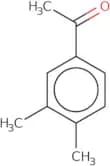
CAS:<p>3',4'-Dimethylacetophenone is a natural product that belongs to the class of salicylates. It is a yellow oily liquid with an odor reminiscent of ocimene, which has been shown to be an attractant for the cotton bollworm (Hirsutum). 3',4'-Dimethylacetophenone is also used in cyclization reactions, such as the conversion of a benzene ring into a cyclohexane ring. This compound can be found in many plants and flowers, including hirsutum, caryophyllene, gossypium, medicago, and chalcone. The molecule can be synthesized in several ways through combinations of different reactants.</p>Formula:C10H12OPurity:Min. 95%Color and Shape:PowderMolecular weight:148.2 g/mol(4S)-4-Amino-5-hydroxypentanoic acid hydrochloride
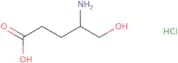
CAS:<p>Versatile small molecule scaffold</p>Formula:C5H11NO3•HClPurity:Min. 95%Color and Shape:PowderMolecular weight:169.61 g/mol2,5-Dimethoxybenzoic acid
CAS:<p>2,5-Dimethoxybenzoic acid (2,5-DMA) is a plant metabolite that belongs to the group of cinnamic acid derivatives. It can be found in plants and has been shown to have systemic effects. 2,5-DMA is involved in the cycloacylation of protocatechuic acid. This reaction is catalyzed by an enzyme called cyclooxygenase and requires molecular oxygen as a cofactor. 2,5-DMA also forms hydrogen bonds with methoxy groups and other molecules. The monoclonal antibodies against 2,5-DMA have been used for radiation therapy and are effective against cancer cells. Model studies show that 2,5-DMA can be converted into more potent metabolites by the action of cytochrome P450 enzymes or glutathione S-transferases.</p>Formula:C9H10O4Purity:Min. 95%Color and Shape:PowderMolecular weight:182.17 g/mol3-Iodopyrazin-2-ol
CAS:<p>Versatile small molecule scaffold</p>Formula:C4H3IN2OPurity:Min. 95%Color and Shape:PowderMolecular weight:221.98 g/mol2-(1-Ethyl-1H-pyrazol-4-yl)acetic acid
CAS:<p>Versatile small molecule scaffold</p>Formula:C7H10N2O2Purity:Min. 95%Color and Shape:PowderMolecular weight:154.17 g/mol11-Bromoundecanoic acid
CAS:<p>11-Bromoundecanoic acid is a heterobifunctional reagent that is used in the synthesis of phospholipids. This chemical reacts with an amide group on a phosphatidylcholine to introduce a bromine atom, which can be used as a fluorophore. The reaction is done in an organic solvent, such as dichloromethane, which facilitates the reaction by dissolving the reactants. The reaction can be monitored using fluorescence assay techniques and 11-bromoundecanoic acid is characterized by its constant ring-opening constant and fatty acid chain length.</p>Formula:C11H21BrO2Purity:Min. 95%Color and Shape:PowderMolecular weight:265.19 g/mol12-Bromo-1-aminododecane, hydrobromide
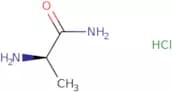
CAS:<p>12-Bromo-1-aminododecane, hydrobromide is a reagent that can be used as a building block in organic synthesis. It is also useful for the preparation of 12-bromo-1-aminododecane, hydrochloride, which has been shown to be an effective reaction component and reagent in both organic and organometallic synthesis. This compound has a CAS number of 14502-45-5 and can be purchased as a fine chemical or speciality chemical.</p>Formula:C12H27Br2NPurity:Min. 95%Color and Shape:PowderMolecular weight:345.16 g/molD-Alanine amide hydrochloride
CAS:D-Alanine amide hydrochloride is a molecule that belongs to the class of organic solvents. It is a chiral compound with high specificity for d-alanine. D-Alanine amide hydrochloride has been shown to block bacterial strains such as Acinetobacter, Ochrobactrum and Stenotrophomonas maltophilia. This drug also inhibits the growth of bacteria by binding to the active site of enzymes, preventing them from catalyzing reactions. The stereoselectivity of this drug is due to its pharmacophore that mimics the three amino acids found in d-alanine: an amide, an aliphatic chain, and a hydroxyl group.Formula:C3H8N2O·HClColor and Shape:White Off-White PowderMolecular weight:124.57 g/mol3-Methyl-5-(trifluoromethyl)isoxazole-4-carboxylic acid
CAS:<p>Versatile small molecule scaffold</p>Formula:C6H4F3NO3Purity:Min. 95%Molecular weight:195.1 g/molIndole-3-acetic acid
CAS:<p>Plant growth hormone. Regulates cell membrane electron transport and proton flux, plays important roles in a number of plant activities, including: development of the embryo, leafformation, phototropism, gravitropism, apical dominance, fruit development, abscission, root initiation.</p>Formula:C10H9NO2Purity:Min. 99 Area-%Molecular weight:175.19 g/molIndole-3-acetyl-DL-tryptophan
CAS:<p>Indole-3-acetyl-DL-tryptophan is a useful intermediate for the synthesis of various biologically active compounds. It is a white solid that can be synthesized from indole and tryptophan using acetic acid as a catalyst. Indole-3-acetyl-DL-tryptophan has been used in the synthesis of several complex compounds, such as β-(N) indolyloxypropanal, which is a fine chemical with potential use in the production of polyurethane foam. This compound has also been found to be an effective building block for the synthesis of novel scaffolds, such as 2-(1H-indol-2-yl)-N-(2H-[1,2,4]triazol-3-yl)ethanamine. Indole 3 acetyl DL tryptophan has also been shown to be an excellent intermediate in the synthesis of other heterocycles, such as pyrazolo</p>Formula:C21H19N3O3Molecular weight:361.4 g/molRef: 3D-I-1700
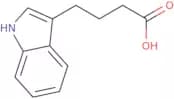
1gTo inquire5gTo inquire10gTo inquire500mgTo inquire2500mgTo inquire-Unit-ggTo inquireIndole-3-butyric acid
CAS:Indole-3-butyric acid is a chemical compound that has a wide range of applications. It is used in the synthesis of many organic compounds and can be used as a reagent or speciality chemical. Indole-3-butyric acid is also used as an intermediate in the synthesis of other compounds, such as indoles, indanones, and benzofuranones. The high quality of this compound makes it a useful scaffold for constructing complex molecules.Formula:C12H13NO2Molecular weight:203.24 g/molRef: 3D-I-2005
1kgTo inquire5kgTo inquire100gTo inquire10kgTo inquire2500gTo inquire-Unit-kgkgTo inquireIndole-3-carbinol
CAS:<p>Indole-3-carbinol is a fine chemical that has been used for research purposes as a reagent and speciality chemical. Indole-3-carbinol is also a versatile building block and reaction intermediate in organic synthesis, which has been used for the synthesis of many complex compounds. Indole-3-carbinol is also an important precursor to pharmaceuticals, including antiestrogens and anti-angiogenesis agents. Indole-3-carbinol has been shown to have antiinflammatory effects, which may be due to its ability to inhibit prostaglandin synthesis.</p>Formula:C9H9NOPurity:Min. 99 Area-%Molecular weight:147.18 g/molRef: 3D-I-2100
1kgTo inquire50gTo inquire100gTo inquire250gTo inquire500gTo inquire-Unit-ggTo inquire4,4,5,5-Tetramethyl-2-[4-(pentafluorosulfanyl)phenyl]-1,3,2-dioxaborolane
CAS:<p>Versatile small molecule scaffold</p>Formula:C12H16BF5O2SPurity:Min. 80%Molecular weight:330.13 g/mol2-[(2-{2-[(Oxiran-2-yl)methoxy]ethoxy}ethoxy)methyl]oxirane
CAS:<p>2-[(2-{2-[(Oxiran-2-yl)methoxy]ethoxy}ethoxy)methyl]oxirane is an ether that is used as a polymerizable monomer in the form of diglycidyl ether. It is biocompatible and has been shown to have antibacterial efficacy against Gram-positive bacteria. 2-[(2-{2-[(Oxiran-2-yl)methoxy]ethoxy}ethoxy)methyl]oxirane is also used to produce polymers with high molecular weight and low water solubility, which are used for various biomedical applications such as human immunoglobulin production or polymerase chain reactions.</p>Formula:C10H18O5Molecular weight:218.25 g/molIndole-3-carboxaldehyde
CAS:<p>Indole-3-carboxaldehyde is a versatile building block that can be used as an intermediate in the production of complex compounds. It is also a research chemical and reagent for speciality chemicals. Indole-3-carboxaldehyde has been shown to react with other chemicals to form high quality, useful intermediates or reaction components. This compound can also be used as a scaffold for chemical synthesis.</p>Formula:C9H7NOMolecular weight:145.16 g/molRef: 3D-I-2200
1kgTo inquire100gTo inquire250gTo inquire500gTo inquire2500gTo inquire-Unit-kgkgTo inquireIndole-4-carboxaldehyde
CAS:<p>Please enquire for more information about Indole-4-carboxaldehyde including the price, delivery time and more detailed product information at the technical inquiry form on this page</p>Formula:C9H7NOMolecular weight:145.16 g/mol[Hydroxy(propan-2-yl)carbamoyl]formic acid
CAS:<p>Hydroxy(propan-2-yl)carbamoyl formic acid is a metabolite of formaldehyde. It is used to measure formaldehyde in biological samples such as blood, serum, and urine. It also acts as a precursor for the production of other metabolites which are related to bowel disease and cardiac function. Hydroxy(propan-2-yl)carbamoyl formic acid has been shown to be a good indicator of iron homeostasis in vivo and in vitro models. This compound can be detected by chemiluminescence methods and can be used with zirconium oxide to study the effects on axonal growth.</p>Formula:C5H9NO4Purity:Min. 95%Molecular weight:147.13 g/mol

![7-Methyl-[1,2,4]triazolo[1,5-α]pyridin-6-amine](/_next/image/?url=https%3A%2Fstatic.cymitquimica.com%2Fproducts%2F3D%2Fthumb-webp%2FXLD46650.webp&w=3840&q=75)







![4,4,5,5-Tetramethyl-2-[4-(pentafluorosulfanyl)phenyl]-1,3,2-dioxaborolane](/_next/image/?url=https%3A%2Fstatic.cymitquimica.com%2Fproducts%2F3D%2Fthumb-webp%2FLBC27834.webp&w=3840&q=75)
![2-[(2-{2-[(Oxiran-2-yl)methoxy]ethoxy}ethoxy)methyl]oxirane](/_next/image/?url=https%3A%2Fstatic.cymitquimica.com%2Fproducts%2F3D%2Fthumb-webp%2FEAA20661.webp&w=3840&q=75)


![[Hydroxy(propan-2-yl)carbamoyl]formic acid](/_next/image/?url=https%3A%2Fstatic.cymitquimica.com%2Fproducts%2F3D%2Fthumb-webp%2FHFA41803.webp&w=3840&q=75)