Building Blocks
This section contains fundamental products for the synthesis of organic and biological compounds. Building blocks are the essential starting materials used to construct complex molecules through various chemical reactions. They play a critical role in drug discovery, material science, and chemical research. At CymitQuimica, we offer a diverse range of high-quality building blocks to support your innovative research and industrial projects, ensuring you have the essential components for successful synthesis.
Subcategories of "Building Blocks"
- Boronic Acids & Boronic Acid Derivatives(5,778 products)
- Chiral Building Blocks(1,242 products)
- Hydrocarbon Building Blocks(6,098 products)
- Organic Building Blocks(61,034 products)
Found 199601 products of "Building Blocks"
Sort by
Purity (%)
0
100
|
0
|
50
|
90
|
95
|
100
3-Ethoxy-1,2,4-dithiazolidine-5-one
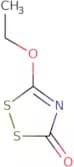
CAS:<p>3-Ethoxy-1,2,4-dithiazolidine-5-one (3ED) is a small molecule that has been shown to have potent antitumor activity against multiple tumor types. It is a selective inhibitor of epidermal growth factor receptor (EGFR) that can be used in combination with chemotherapy or radiation therapy. 3ED has also been shown to inhibit the growth of bladder cancer cells and cervical cancer cells by affecting the EGFR pathway. In addition, 3ED inhibits the proliferation of human urothelial carcinoma cells through its inhibition of the EGFR pathway and can be used as an adjuvant treatment for patients with nonmetastatic bladder cancer and patients with locally advanced or metastatic urothelial carcinoma. 3ED also inhibits creatine kinase, which is an enzyme important in maintaining the health of the detrusor muscle in the urinary bladder and could potentially be used to treat overactive bladder disease.</p>Formula:C4H5NO2S2Purity:Min. 97 Area-%Color and Shape:Yellow PowderMolecular weight:163.22 g/mol2-Ethoxybenzoic acid
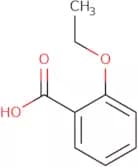
CAS:<p>Component in some dental cements</p>Formula:C9H10O3Purity:Min. 99.0 Area-%Color and Shape:Colorless Clear LiquidMolecular weight:166.17 g/mol3-Hydroxyheptanoic acid
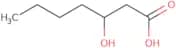
CAS:<p>3-Hydroxyheptanoic acid is a synthetic fatty acid that has been shown to have anti-cancer activity in vitro and in vivo. 3-Hydroxyheptanoic acid binds to the hydrophobic amino acids found in the membrane of cancer cells, preventing them from functioning as a transporter for nutrients and oxygen. This leads to cell death by depriving cells of vital nutrients. 3-Hydroxyheptanoic acid also inhibits the growth of mutant cells that have lost their ability to repair DNA damage, which may be due to its inhibition of protein synthesis. The hydrophobic nature of this molecule may also inhibit cancer cell invasion by inhibiting fatty acid synthase and other enzymes involved in lipid production.</p>Formula:C7H14O3Purity:Min. 95%Color and Shape:PowderMolecular weight:146.18 g/mol9-Ethylguanine
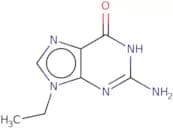
CAS:<p>9-Ethylguanine is a protonated guanine derivative that has significant cytotoxicity. It is an analog of the natural nucleobase guanosine and is structurally similar to the group P2 purine base, hypoxanthine. 9-Ethylguanine specifically binds with nitrogen atoms in DNA, forming hydrogen bonds with adjacent bases. The compound has low potency and therefore must be administered at high doses for it to be effective. 9-Ethylguanine has been shown to have anticancer activity against cervical cancer cells in cell cultures, but no biological studies have been conducted on other cancer types.</p>Formula:C7H9N5OPurity:Min. 95%Color and Shape:PowderMolecular weight:179.18 g/mol2-[4-(Aminomethyl)phenyl]acetonitrile
CAS:<p>Versatile small molecule scaffold</p>Formula:C9H10N2Purity:Min. 95%Color and Shape:PowderMolecular weight:146.19 g/molEthyl 2,4-dihydroxy-6-methylbenzoate
CAS:<p>Ethyl 2,4-dihydroxy-6-methylbenzoate is a phenolic acid that is found in lichens. It has been shown to have anti-cancer and anti-inflammatory properties. The hydrogen bonds of ethyl 2,4-dihydroxy-6-methylbenzoate are the result of an intramolecular hydrogen bonding between the benzoic acid group and the hydroxymethyl group. This compound can also be found in matrix effect health care products as well as wastewater treatment plants. Ethyl 2,4-dihydroxy-6-methylbenzoate has also been shown to inhibit enzymes such as uv absorption and phenolic acids.</p>Formula:C10H12O4Purity:Min. 95%Molecular weight:196.2 g/mol5-Ethylthio-1H-tetrazole - Conductivity >30 uS/cm
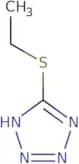
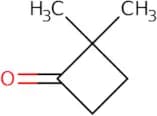
CAS:<p>5-Ethylthio-1H-tetrazole is a chloroformate that is used as an inhibitor of the cell membrane permeability. It can be prepared by the reaction of thiourea and ethyl bromoacetate in chloroform. This compound has been shown to inhibit the acidification of cells, which is caused by hydrogen ions leaking through the cell membrane. 5-Ethylthio-1H-tetrazole is also an inhibitor of RNA synthesis, which may be due to its ability to bind with nucleoside triphosphates and competitively inhibit ATPase activity. This product also has a luminescent property, which may be due to its ability to produce light upon oxidation in air or water.</p>Formula:C3H6N4SColor and Shape:PowderMolecular weight:130.17 g/mol2,2-Dimethylcyclobutan-1-one
CAS:<p>2,2-Dimethylcyclobutan-1-one is a cycloaddition product of sodium methoxide and trimethylchlorosilane. It is used as an alkylating agent in the preparation of fatty acids. 2,2-Dimethylcyclobutan-1-one can be prepared by reaction of zinc chloride with chlorinated hydrocarbons or alkynes. The product can be purified by distillation and deuterated. The reactants are thermally decomposed to form the desired product at elevated temperatures (≥200 °C). The reaction proceeds via nucleophilic substitution of chloride for the chlorine atom that is attached to the alkene. This process generates a new double bond between carbon atoms 4 and 5 in the molecule. Lastly, 2,2-dimethylcyclobutan-1-one has been found to form a complex with anthracene and emulsifying agents that stabilizes it against thermal decomposition.</p>Formula:C6H10OPurity:Min. 95%Color and Shape:Clear LiquidMolecular weight:98.14 g/molH-Glu(pNA)-OH
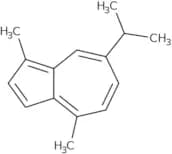
CAS:<p>Gamma-GPNA is a highly specific and sensitive substrate commonly employed for assessing gamma-glutamyl transferase activity in both serum and tissues, particularly through automated colorimetric methods. In this context, the dipeptide Gly-Gly serves as the glutamyl acceptor, facilitating the enzymatic reaction and subsequent detection of gamma-glutamyl transferase activity. This substrate has been widely utilized in enzymatic assays due to its specificity and sensitivity, allowing for accurate determination of gamma-glutamyl transferase levels in various biological samples.</p>Formula:C11H13N3O5Purity:Min. 95%Color and Shape:PowderMolecular weight:267.24 g/molGuaiazulene
CAS:<p>愈创木菊烯或甘蓝酮是菊烯的衍生物,是用于药品和化妆品的活性成分。它是在愈创木精油中发现的一种天然化合物,由于其抗氧化特性,历史上一直用于药用。愈创木菊烯也是一种具有免疫抑制特性的抗炎药,已用于治疗慢性炎症和食管念珠菌病。已经证明,愈创木菊烯可以作为细胞毒性剂以及脂质过氧化和六氟磷酸盐诱导的 DNA 损伤的抑制剂。此外,它还能抑制肿瘤生长并对口腔病原体表现出抗菌活性。一些研究表明,愈创木菊烯可能用于治疗关节炎等慢性疾病和作为干细胞相关治疗,取得了有希望的结果。</p>Formula:C15H18Purity:(Gc) Min. 99.00%Color and Shape:PowderMolecular weight:198.3 g/mol5-[(Pyrrolidin-3-yl)methyl]-1H-1,2,3,4-tetrazole hydrochloride
CAS:<p>Versatile small molecule scaffold</p>Formula:C6H12ClN5Purity:Min. 95%Color and Shape:PowderMolecular weight:189.65 g/mol1-[3-(Piperidine-1-carbonyl)phenyl]methanamine
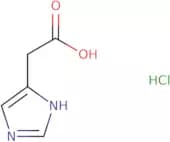
CAS:<p>Versatile small molecule scaffold</p>Formula:C13H18N2OPurity:Min. 95%Color and Shape:Clear LiquidMolecular weight:218.29 g/mol4-Imidazoleacetic acid HCl
CAS:<p>4-Imidazoleacetic acid HCl is a fluorescent probe that binds to the α1 subunit of the dinucleotide phosphate (NADH) oxidoreductase. It has been shown to inhibit mitochondrial functions, which may be due to its ability to inhibit the pentose phosphate pathway and reduce reactive oxygen species levels. 4-Imidazoleacetic acid HCl has also shown inhibitory properties against congestive heart failure by acting on the mitochondria and inhibiting energy metabolism. It can also be used as a chemical biology tool for studying protein interactions with NADH dehydrogenase. The x-ray crystal structures have revealed that 4-imidazoleacetic acid HCl binds to the active site of NADH oxidoreductase with an orientation that mimics a substrate molecule. This allows it to bind tightly and disrupt enzyme activity.</p>Formula:C5H6N2O2·HClPurity:Min. 95%Color and Shape:PowderMolecular weight:162.57 g/molIndole
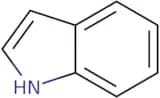
CAS:<p>Indole is a nitrogen-containing heterocyclic aromatic organic compound. Copper chloride in the presence of trifluoroacetic acid and indole gives rise to an indolenine derivative, which reacts with nitrogen atoms to form a copper nitride. This reaction is used as a model system for biological properties of indole. Indolenine has been shown to have bone cancer prevention and treatment effects in mice, and may also be beneficial in autoimmune diseases and metabolic disorders, due to its ability to inhibit toll-like receptor signaling pathways. The wild-type strain has shown resistance to antibiotics, which can be overcome by using mutant strains that are resistant to antibiotic treatments.</p>Formula:C8H7NPurity:Min. 95 Area-%Color and Shape:Off-White PowderMolecular weight:117.15 g/mol5-Iodoindole
CAS:<p>5-Iodoindole is an organic compound that is used as a nematicide. It has been shown to have cytostatic effects on the growth of human pathogens, juveniles, and model systems. 5-Iodoindole inhibits the production of reactive amines and pyridine in vivo. It also inhibits glutamine metabolism by competitive inhibition at the glutamate dehydrogenase enzyme. 5-Iodoindole also has hemolytic activity and is able to induce transcriptomic changes in P. aeruginosa cells.</p>Formula:C8H6NIPurity:Min. 95%Color and Shape:PowderMolecular weight:243.04 g/molIsatin
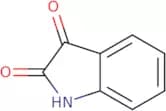
CAS:<p>Isatin is a natural compound that can be found in the bark of the Cinchona tree. It has inhibitory properties against the enzyme polymerase chain reaction (PCR) and has been shown to have antimicrobial activity. Isatin also has an effect on 5-HT concentrations, which may be due to its ability to inhibit platelet aggregation and induce vasoconstriction. Isatin has been shown to have anticancer effects in vitro, and also inhibits cellular transformation by reducing DNA synthesis.</p>Formula:C8H5NO2Purity:Min. 98 Area-%Color and Shape:Red PowderMolecular weight:147.13 g/mol6-Iodopurine
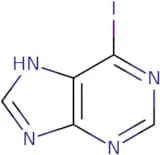
CAS:<p>6-Iodopurine is a biologically active substance that belongs to the group of carbinols. It is biosynthesized from 6-chloropurine and an iridoid glucoside, and has been shown to have biochemical properties. 6-Iodopurine can be converted into 6-iodoindoxyl by oxidation with halogens or transfer mechanism with palladium-catalyzed cross-coupling. A high efficiency method for the synthesis of this substance has been developed using a strain of bacteria. The reaction requires an activation energy of 150 kJ/mol.br><br>6-Iodopurine inhibits tumor growth by inhibiting DNA synthesis. It also possesses anti-inflammatory activity, which may be due to its inhibitory effects on prostaglandin synthesis.</p>Formula:C5H3IN4Purity:Min. 95%Color and Shape:White PowderMolecular weight:246.01 g/mol3-Indolemethanol
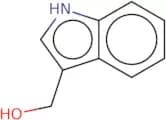
CAS:<p>3-Indolemethanol is a chemical compound that is used for chemiluminescent reaction. It can be used as an experimental model for studying the effects of 3-indolemethanol on murine hepatoma and human osteosarcoma cells in vitro. This compound has been shown to have oral hypoglycemic activity and to inhibit cancer cell growth. 3-Indolemethanol has also been shown to modulate signal pathways, such as the MAPK pathway, which may lead to pro-apoptotic protein activation or inhibition of physiological effects.</p>Formula:C9H9NOPurity:Min. 95%Color and Shape:White PowderMolecular weight:147.18 g/mol(2S,4S)-4-Methoxypyrrolidine-2-carboxylic acid
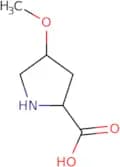
CAS:<p>Versatile small molecule scaffold</p>Formula:C6H11NO3Purity:Min. 95%Molecular weight:145.16 g/molIndole-3-carboxaldehyde
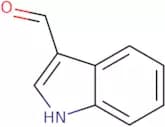
CAS:<p>Indole-3-carboxaldehyde is a chemical compound that is used as an antimicrobial agent. The biological properties of this compound are not well studied, but it has been shown to be effective against bacteria and fungi. Indole-3-carboxaldehyde has been shown to inhibit the enzyme activity of sodium carbonate, which is involved in the production of lactic acid in bacteria. This effect may contribute to its antibacterial activity. Indole-3-carboxaldehyde is also a potential anticancer agent because it can bind to toll-like receptor 4 (TLR4). Indole-3-carboxaldehyde reacts with sulfa drugs through a mechanism similar to the reaction between hydrogen peroxide and potassium permanganate. It has been shown that indole-3-carboxaldehyde can be used as a pesticide for plants and as an electrochemical impedance spectroscopy probe for histological analysis.</p>Formula:C9H7NOColor and Shape:PowderMolecular weight:145.16 g/mol

![2-[4-(Aminomethyl)phenyl]acetonitrile](/_next/image/?url=https%3A%2Fstatic.cymitquimica.com%2Fproducts%2F3D%2Fthumb-webp%2FJWC78525.webp&w=3840&q=75)


![5-[(Pyrrolidin-3-yl)methyl]-1H-1,2,3,4-tetrazole hydrochloride](/_next/image/?url=https%3A%2Fstatic.cymitquimica.com%2Fproducts%2F3D%2Fthumb-webp%2FNKD27200.webp&w=3840&q=75)
![1-[3-(Piperidine-1-carbonyl)phenyl]methanamine](/_next/image/?url=https%3A%2Fstatic.cymitquimica.com%2Fproducts%2F3D%2Fthumb-webp%2FRQB68866.webp&w=3840&q=75)