Building Blocks
This section contains fundamental products for the synthesis of organic and biological compounds. Building blocks are the essential starting materials used to construct complex molecules through various chemical reactions. They play a critical role in drug discovery, material science, and chemical research. At CymitQuimica, we offer a diverse range of high-quality building blocks to support your innovative research and industrial projects, ensuring you have the essential components for successful synthesis.
Subcategories of "Building Blocks"
- Boronic Acids & Boronic Acid Derivatives(5,778 products)
- Chiral Building Blocks(1,242 products)
- Hydrocarbon Building Blocks(6,098 products)
- Organic Building Blocks(61,034 products)
Found 199601 products of "Building Blocks"
Sort by
Purity (%)
0
100
|
0
|
50
|
90
|
95
|
100
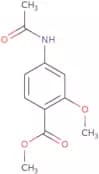
Methyl 4-acetamido-2-methoxybenzoate
CAS:Methyl 4-acetamido-2-methoxybenzoate is a chemical compound that belongs to the group of heterocycles. It is a precursor to the imidazopyridine, imidazopyrazine and thiazolopyridine classes of drugs. The protonation of methyl 4-acetamido-2-methoxybenzoate has been shown experimentally to be an important factor in its biological activity, especially for its binding affinity for DNA. Methyl 4-acetamido-2-methoxybenzoate has been used as an inotropic agent and as an atypical antipsychotic drug.Formula:C11H13NO4Purity:Min. 95%Color and Shape:PowderMolecular weight:223.23 g/mol4-Methylbenzamide
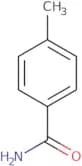
CAS:<p>4-Methylbenzamide is a palladium complex that has been used in the synthesis of imatinib, a drug used to treat chronic myeloid leukemia. 4-Methylbenzamide has been shown to form a hydrogen bond with water molecules and also exhibits cavity effects. The cavity effect can be explained by intermolecular hydrogen bonding and the deuterium isotope effect. The deuterium isotope effect is observed when an atom of deuterium replaces an atom of hydrogen in a molecule. This substitution leads to reduced boiling point and increased solubility for the compound. 4-Methylbenzamide is also known for its inhibitory effects on p38 kinase, which are seen through titration calorimetry.</p>Formula:C8H9NOPurity:Min. 95%Color and Shape:PowderMolecular weight:135.16 g/mol4-Methoxybenzamide
CAS:<p>4-Methoxybenzamide is a small molecule that has been shown to have anticancer activity in vitro and in vivo. It is a hydroxylated benzamide with an intramolecular hydrogen bond, which allows it to selectively bind to DNA at the C4' position of cytosine. The compound's anticancer effects are due to its ability to inhibit the transcription of genes involved in cancer cell proliferation and its ability to induce apoptosis via caspase activation. 4-Methoxybenzamide has been shown to be synergistic when used with other chemotherapeutics, such as cisplatin, doxorubicin or 5-fluorouracil. This drug also inhibits the uptake of these drugs by cancer cells, limiting their therapeutic effects on healthy tissues.</p>Formula:C8H9NO2Purity:Min. 95%Color and Shape:PowderMolecular weight:151.16 g/mol2'-Methoxyacetophenone
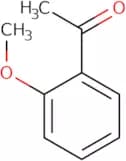
CAS:<p>2'-Methoxyacetophenone is a member of the class of halogenated phenols that exhibits anti-inflammatory activities. It inhibits protease activity in vitro and has been shown to have anti-inflammatory effects in vivo. 2'-Methoxyacetophenone is a ruthenium complex with hydrochloride salt that has been shown to be an efficient catalyst for acylation reactions. This compound also inhibits the transfer of the nerve impulse from the trigeminal nerve to the brain, which may be due to its ability to inhibit lipid peroxidation and protein autoxidation. 2'-Methoxyacetophenone has also been shown to have antimicrobial activity against gram-negative bacterial species, such as Proteus vulgaris, Escherichia coli, Pseudomonas aeruginosa, and Salmonella enterica.</p>Formula:C9H10O2Purity:Min. 98 Area-%Color and Shape:Clear LiquidMolecular weight:150.17 g/molMethyl 4-aminobenzoate
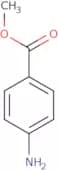
CAS:<p>Methyl 4-aminobenzoate is a chemical compound that is used as a fluorescence probe in the study of DNA replication. It can be used to detect the presence of viral RNA in cell culture, and has been shown to inhibit the replication of bacterial RNA. Methyl 4-aminobenzoate binds to guanine residues in DNA and forms an alkyl bond with them. This prevents the binding of other amino acids, which are essential for DNA replication. Methyl 4-aminobenzoate has also been shown to have pharmacokinetic properties that make it useful for intravenous administration and oral administration.</p>Formula:C8H9NO2Purity:Min. 97.5 Area-%Color and Shape:White PowderMolecular weight:151.16 g/mol2-Ethynylbenzoic acid
CAS:<p>2-Ethynylbenzoic acid is an organic compound with a carboxylic acid functional group. It is an efficient method for the synthesis of amides from primary and secondary alcohols in the presence of a chloride donor, such as thionyl chloride. The reaction system is typically carried out in an organic solvent, such as dichloromethane or chloroform. The reaction mechanism proceeds by protonation of the alkene followed by nucleophilic attack by the amine on the carbonyl carbon atom. This step forms a tetrahedral intermediate that tautomerizes to give a furyl intermediate. The furyl intermediate then undergoes oxidative carbonylation to form 2-ethynylbenzaldehyde, which reacts with the amine to form 2-ethynylbenzoic acid. In this process, stereoselectivity can be achieved by using an acceptor that favors one enantiomer of 2-ethynylbenzaldehyde</p>Formula:C9H6O2Purity:Min. 95%Color and Shape:Yellow solid.Molecular weight:146.14 g/mol1-Naphthol
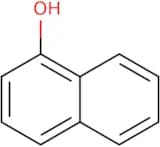
CAS:<p>Derivative of naphthalene; used in the synthesis of various chemicals and as a precursor in the production of dyes, pigments, and pharmaceuticals. It is particularly important in the manufacture of azo dyes, where it serves as a coupling agent in the diazo coupling reaction to produce colored compounds.</p>Formula:C10H7OHPurity:Min. 95%Color and Shape:PowderMolecular weight:144.17 g/mol5-Nitroindole
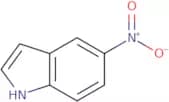
CAS:5-Nitroindole is a chemical used in wastewater treatment. It is an electron acceptor that can be used to reduce the cost of the process. 5-Nitroindole has significant cytotoxicity and polymerase chain activity in human pathogens, such as Escherichia coli, Salmonella enterica, Staphylococcus aureus, and Mycobacterium tuberculosis. The drug is stable under aerobic conditions and has shown no significant cytotoxicity to mammalian cells. 5-Nitroindole has been shown to hybridize with DNA duplexes containing guanine bases and form covalent bonds in a model system. The drug also has been shown to be present in colonies of colony-stimulating factor (CSF) cells that are found in the blood stream of healthy individuals.Formula:C8H6N2O2Purity:Min. 95%Color and Shape:Yellow PowderMolecular weight:162.15 g/mol2-Naphthaldehyde
CAS:<p>2-Naphthaldehyde is an antimicrobial agent that has been shown to inhibit the growth of bacteria in vitro. It has been shown to inhibit the synthesis of DNA, RNA and protein. 2-Naphthaldehyde is an intramolecular hydrogen acceptor and a substrate for coumarin derivatives. The reaction mechanism of 2-napthalaldehyde is not yet fully understood, but it has been proposed that 2-napthalaldehyde reacts with sodium carbonate to form sodium phenolate and acetone. 2-Naphthaldehyde also shows genotoxic activity, as it has been shown to induce structural aberrations in bacterial DNA. This chemical compound also forms coordination geometry complexes with metal ions such as copper and zinc.</p>Formula:C11H8OPurity:Min. 98%Color and Shape:Beige PowderMolecular weight:156.18 g/mol5-Nitroso-2,4,6-triaminopyrimidine
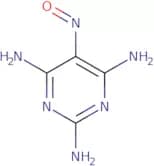
CAS:<p>5-Nitroso-2,4,6-triaminopyrimidine is a chemical compound that has been shown to have anticancer activity. It reacts with nucleophilic compounds such as hydroxides of metals and amides to form an amide bond. 5-Nitroso-2,4,6-triaminopyrimidine inhibits the enzyme glycosylase by reacting with it in a nucleophilic attack. This reaction leads to the formation of a stable nitrosamine intermediate that can be hydrolyzed by an acid or base. The inhibitory effect of 5-Nitroso-2,4,6-triaminopyrimidine on malonic acid decarboxylase (MAD) and anthranilic acid synthase (AAS) in animals is due to its ability to react with these enzymes in a similar way as for MAD and AAS in humans. Inhibition of MAD and AAS leads to reduced levels of malonic</p>Formula:C4H6N6OPurity:Min. 95%Color and Shape:Yellow PowderMolecular weight:154.13 g/mol2'-Nitroacetophenone
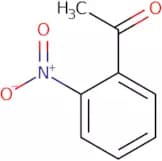
CAS:<p>2'-Nitroacetophenone is a chemical compound that is synthesized by the reaction of acetophenone with nitric acid and sulfuric acid in an acidic environment. The optimum conditions for this reaction are at 50°C and pH=1.5-2.0, which leads to the formation of ester hydrochloride. When 2'-nitroacetophenone comes into contact with choline, it binds to form the nitro group on the aromatic ring, which can be photochemically activated to form the nitro group on the benzene ring. This chemical has inhibitory properties against mammalian cells and may be used in cancer therapy. 2'-Nitroacetophenone also reacts with hydrogen gas in a water vapor environment to form hydrogen bonds, which are necessary for asymmetric synthesis reactions involving carbonyl groups.br>br> 2'-Nitroacetophenone is used as an intermediate for pharmaceuticals such as nitrosoureas and other antic</p>Formula:C8H7NO3Purity:Min. 95%Color and Shape:Yellow PowderMolecular weight:165.15 g/molBenzyl methyl ether
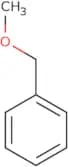
CAS:<p>Benzyl methyl ether is a colorless liquid with a sweet odor. It is used as an organic solvent in chemical reactions and as a solvent in the synthesis of pharmaceuticals, dyes, pesticides, and other organic compounds. Benzyl methyl ether has been shown to react with oxygen and light to produce benzoic acid. The reaction between benzyl methyl ether and glycol ether can be used for sample preparation prior to analysis using gas chromatography-mass spectrometry (GC-MS). GC-MS is often used for the identification of unknown substances in environmental samples. Benzyl methyl ether can also be used for chemical ionization (CI) in mass spectrometry.</p>Formula:C8H10OPurity:Min. 95%Molecular weight:122.17 g/mol2-(3-Methyl-1,2-oxazol-4-yl)acetic acid
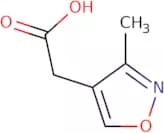
CAS:<p>2-(3-Methyl-1,2-oxazol-4-yl)acetic acid is a useful reagent with a wide range of applications. It is the starting material for the synthesis of many complex compounds that are used in pharmaceuticals, agrochemicals, and other industries. 2-(3-Methyl-1,2-oxazol-4-yl)acetic acid has been shown to be a versatile building block for the synthesis of speciality chemicals and research chemicals. The compound has also been used as a reaction component in organic synthesis.</p>Formula:C6H7NO3Purity:Min. 95%Color and Shape:PowderMolecular weight:141.12 g/molNaphthol AS-MX phosphate
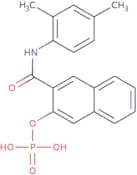
CAS:<p>Naphthol AS-MX phosphate is a synthetic naphthol dye that is used in the diagnosis of infectious diseases, such as Klebsiella aerogenes. It binds to human serum albumin and can be visualized by light microscopy. Naphthol AS-MX phosphate acts as an immunological adjuvant and has been shown to stimulate antibody production and enhance the immune response. This drug also has antidiabetic properties, which may be due to its ability to increase adipose tissue lipolysis.</p>Formula:C19H18NO5PPurity:Min. 95%Color and Shape:PowderMolecular weight:371.32 g/molNitrobenzene
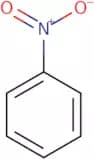
CAS:<p>Nitrobenzene is a chemical that is used in wastewater treatment. It reacts with sodium carbonate to form sodium nitrite and hydrogen fluoride. The reaction mechanism is not well understood, but it is thought that the hydrogen fluoride acts as a catalyst for the reaction. Nitrobenzene has been shown to have transport properties in natural water systems. It can be found in the environment from industrial waste or from the combustion of fossil fuels. Nitrobenzene has been shown to cause chronic exposure when ingested by humans and animals, as well as structural changes in DNA, which may lead to cancer. Nitrobenzene can also react with an inorganic acid to form an organic compound called a nitrosamine. These compounds are carcinogenic and mutagenic, and have been linked to various cancers such as bladder cancer, stomach cancer, pancreatic cancer, lung cancer, breast cancer, esophageal cancer and liver cancer. The most common nitrosamines are N-nit</p>Formula:C6H5NO2Purity:Min. 98 Area-%Color and Shape:Colorless Clear LiquidMolecular weight:123.11 g/molNaphthalene-1,4,5,8-tetracarboxylic dianhydride
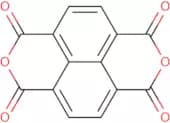
CAS:Naphthalene-1,4,5,8-tetracarboxylic dianhydride is a molecule that contains two carboxylic acid groups and one tetracarboxylic acid group. It is an adsorbent material that is used to remove water vapor from the atmosphere. Naphthalene-1,4,5,8-tetracarboxylic dianhydride is also used in wastewater treatment processes because it has high chemical stability and can be regenerated with anhydrous sodium. The transport properties of naphthalene-1,4,5,8-tetracarboxylic dianhydride are well suited for use as a model system for studying the kinetics of proton exchange membrane fuel cells (PEMFC). This compound has been studied using electrochemical impedance spectroscopy to determine its kinetic data.Formula:C14H4O6Purity:Min. 95 Area-%Color and Shape:Off-White PowderMolecular weight:268.18 g/mol(3-Nitrophenyl)acetone
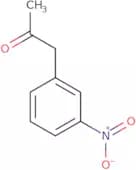
CAS:<p>3-Nitrophenylacetone is a white solid that is soluble in water and polar organic solvents. 3-Nitrophenylacetone can be used as a building block for the synthesis of other compounds, such as pharmaceuticals and dyes. This compound has been researched for its ability to inhibit protein glycosylation. 3-Nitrophenylacetone is also used as an intermediate in the synthesis of polyurethanes and polycarbonates.</p>Formula:C9H9NO3Purity:Min. 95%Color and Shape:White PowderMolecular weight:179.17 g/mol1-Nitroadamantane
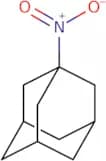
CAS:<p>1-Nitroadamantane is a metal-free catalyst that oxidizes organic compounds in the presence of water. It is synthesized using the following method: 1) The reaction of carbon monoxide with nitric acid produces nitrous acid, which reacts with a fatty acid to yield 1-nitroadamantane. 2) This product can be obtained from trifluoroacetic acid and hydrogen fluoride. 3) This product can also be prepared by reacting diphenyl ether with an acylurea.</p>Formula:C10H15NO2Purity:Min. 95%Color and Shape:White PowderMolecular weight:181.23 g/mol2-Nitro-4-(trifluoromethyl)cinnamic acid
CAS:<p>2-Nitro-4-(trifluoromethyl)cinnamic acid is a versatile building block that can be used in the synthesis of complex compounds. It is a useful reagent, speciality chemical, and reaction component. 2-Nitro-4-(trifluoromethyl)cinnamic acid has been shown to be an intermediate for the synthesis of other compounds such as anti-tuberculosis drugs, antibiotics, and pharmaceuticals. This compound also has high quality and can be used as a scaffold for the synthesis of other compounds.</p>Formula:C10H6F3NO4Purity:Min. 95%Molecular weight:261.15 g/molL-(2S,3aS,7aS)-Octahydroindole-2-carboxylic acid
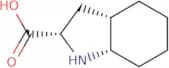
CAS:<p>L-Octahydroindole-2-carboxylic acid is a basic structure that is used in the industrial preparation of a number of chemical compounds. It is also used for the synthesis of L-(2S,3aS,7aS)-octahydroindole-2-carboxylic acid (LOTSC) and its ester hydrochloride salt. The kinetic energy of this molecule has been studied by measuring it's rate of reaction with cyclohexane ring. The inhibition study was done on lung cells to study the effects of LOTSC on growth factors and showed that this molecule inhibited the release of bradykinin B2, which is a peptide secreted by lungs. The pharmacokinetic properties have been studied in rats and shows that it has higher bioavailability than other molecules in this class.</p>Formula:C9H15NO2Purity:Min. 95%Color and Shape:PowderMolecular weight:169.22 g/mol