Building Blocks
This section contains fundamental products for the synthesis of organic and biological compounds. Building blocks are the essential starting materials used to construct complex molecules through various chemical reactions. They play a critical role in drug discovery, material science, and chemical research. At CymitQuimica, we offer a diverse range of high-quality building blocks to support your innovative research and industrial projects, ensuring you have the essential components for successful synthesis.
Subcategories of "Building Blocks"
- Boronic Acids & Boronic Acid Derivatives(5,778 products)
- Chiral Building Blocks(1,242 products)
- Hydrocarbon Building Blocks(6,098 products)
- Organic Building Blocks(61,034 products)
Found 199601 products of "Building Blocks"
Sort by
Purity (%)
0
100
|
0
|
50
|
90
|
95
|
100
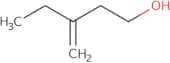
3-Buten-3-ethyl-1-ol
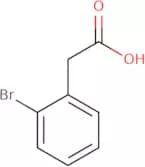
CAS:<p>3-Buten-3-ethyl-1-ol is a versatile building block that can be used as a reagent for chemical synthesis. It is a complex compound that can be used as a reaction component or intermediate in organic synthesis. 3-Buten-3-ethyl-1-ol has been shown to have antiinflammatory properties, which may be due to the inhibition of prostaglandin synthesis.</p>Formula:C6H12OPurity:Min. 95%Color and Shape:Clear LiquidMolecular weight:100.16 g/mol2-Bromophenylacetic acid
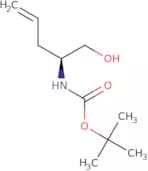
CAS:<p>2-Bromophenylacetic acid is a potent inhibitor of the human enzyme COX-2. It has been shown to have anticancer activity, which may be due to its ability to inhibit cellular proliferation and induce apoptosis in cancer cells. This compound has been tested in a variety of experimental models, including chromatographic assays and striatal membrane preparations, with promising results. 2-Bromophenylacetic acid also has potent inhibitory activity on the human enzyme COX-2 and can be used as a dietary supplement for anticancer therapy.<br>COX-2 inhibitors are usually administered as ethyl esters or solutes in order to prevent degradation by esterases or glucuronidases. The 2-bromophenyl group is electron donating and this may increase the reactivity of the carbon adjacent to it and lead to an acylation reaction with nucleophilic groups such as thiols or amines.</p>Formula:C8H7BrO2Purity:Min. 95%Color and Shape:White PowderMolecular weight:215.04 g/mol(S)-N-Boc-2-aminopent-4-en-1-ol
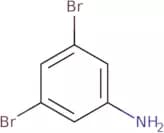
CAS:<p>(S)-N-Boc-2-aminopent-4-en-1-ol is an organic compound that is a useful scaffold for the synthesis of complex compounds. It is also a useful intermediate in organic synthesis and can be used as a building block to synthesize fine chemicals. The chemical has been registered with CAS number 116613-81-1.</p>Formula:C10H19NO3Purity:Min. 95%Color and Shape:Colourless To Yellow LiquidMolecular weight:201.26 g/mol3,5-Dibromoaniline
CAS:<p>3,5-Dibromoaniline is a chemical compound that belongs to the group of anilines. It can be used as an intermediate in organic synthesis. 3,5-Dibromoaniline can be obtained by gravimetric analysis and has a solute of about 0.1 g/100 mL in water. The melting point for this compound is about 245 °C and the boiling point is about 330 °C at normal atmospheric pressure. 3,5-Dibromoaniline has been shown to inhibit the growth of Trichophyton mentagrophytes and Coumarin derivatives, which are fungi that cause ringworm infections. This drug also has photophysical properties and can be used as a fluorescence probe for DNA hybridization studies.</p>Formula:C6H5NBr2Purity:Min. 98%Color and Shape:Brown To Black SolidMolecular weight:250.92 g/mol(S)-1-Boc-3-hydroxypiperidine
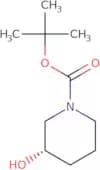
CAS:<p>Intermediate in the synthesis of ibrutinib</p>Formula:C10H19NO3Purity:Min. 97 Area-%Color and Shape:White PowderMolecular weight:201.26 g/mol2,3,5-Trichloro-4-methylpyridine
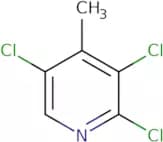
CAS:<p>2,3,5-Trichloro-4-methylpyridine is a chemical building block that is used in the synthesis of fine chemicals. It has been shown to be a useful intermediate and building block for complex compounds. This compound is an important reagent for the production of pharmaceuticals and other specialty chemicals. 2,3,5-Trichloro-4-methylpyridine is a versatile reactant that can be used in reactions with alkynes and amines to produce useful products such as quinazolinones and 3,4-dihydroisoquinolones.</p>Formula:C6H4Cl3NPurity:Min. 95 Area-%Color and Shape:PowderMolecular weight:196.46 g/mol2-Hydroxy-6-(methoxymethoxy)benzaldehyde
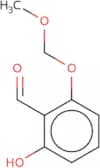
CAS:<p>2-Hydroxy-6-(methoxymethoxy)benzaldehyde is a chemical intermediate that can be used in the synthesis of a wide range of compounds. It is an aromatic compound which has two hydroxyl groups on the benzene ring. This product is a versatile building block, and is useful in the synthesis of complex compounds with high purity. 2-Hydroxy-6-(methoxymethoxy)benzaldehyde can be obtained as a white solid with a melting point of 57°C.</p>Formula:C9H10O4Purity:Min. 95%Color and Shape:Clear LiquidMolecular weight:182.17 g/mol2,2'-Bipyridine-4,4'-dicarboxamide
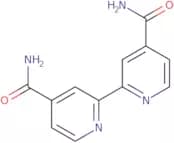
CAS:<p>2,2'-Bipyridine-4,4'-dicarboxamide is a catalyst that can be used in a variety of reactions. It has been used as an additive to increase yields and to accelerate catalytic reactions. The compound also has the ability to oxidize picolinic acid and form formic acid. This product can be used in glycerol synthesis or hydrogen peroxide production. 2,2'-Bipyridine-4,4'-dicarboxamide is a ligand that binds to picolinic acid and peroxide ions, forming an ion pair with the peroxide ion. This complex increases the efficiency of hydrogen peroxide evolution from water by up to 100%.</p>Formula:C12H10N4O2Purity:Min. 95%Color and Shape:PowderMolecular weight:242.23 g/mol3,5-Dihydroxytoluene
CAS:<p>3,5-Dihydroxytoluene is a natural compound that is structurally related to p-hydroxybenzoic acid. It has been shown to be an efficient fluorescent probe for the detection of quillaja saponaria in wastewater treatment plants. 3,5-Dihydroxytoluene also reacts with orcinol to produce a disulfide bond and can undergo polymerization reactions with nucleophiles such as amines and thiols. It is not active against aerobacter aerogenes, but has been shown to have high values against carcinoma cell lines.</p>Formula:C7H8O2Purity:Min. 97.5 Area-%Color and Shape:White Off-White PowderMolecular weight:124.14 g/mol3,3-Diphenylpropionic acid
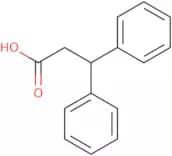
CAS:<p>3,3-Diphenylpropionic acid is a synthetic compound that is used to treat high blood pressure. It is an ester of hydrochloric acid and 3,3-diphenylpropionic acid. 3,3-Diphenylpropionic acid lowers blood pressure by inhibiting the activity of angiotensin II, which causes constriction and shrinking of the blood vessels. The safety profile for this drug has been evaluated in a number of studies in which it was shown that there were no significant adverse effects on the heart or other organs. This drug also has a beneficial effect on diabetic neuropathy and metabolic rate. 3,3-Diphenylpropionic acid is not active against bacteria or fungi but has been shown to be effective against amines by binding to them and preventing their interaction with DNA.</p>Formula:C15H14O2Purity:Min. 95%Color and Shape:White PowderMolecular weight:226.27 g/mol2',6'-Dimethoxyacetophenone
CAS:<p>2',6'-Dimethoxyacetophenone is a synthetic flavonoid that has been shown to be an anticarcinogenic. This compound is synthesized by cyclodehydration of 2,6-dimethoxybenzaldehyde with hydrochloric acid in the presence of magnesium chloride as a catalyst. The resulting product is then converted to 2',6'-dimethoxyacetophenone by acidic hydrolysis. 2',6'-Dimethoxyacetophenone can also be obtained through Wittig reaction of chlorides and magnesium or via phosphoranes synthesis using magnesium and cyanide as starting materials. This compound can also be produced by benzoylation of styrene followed by chalcone synthesis.</p>Formula:C10H12O3Purity:Min. 95%Color and Shape:PowderMolecular weight:180.2 g/mol2-Oxoadipic acid
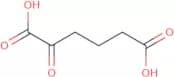
CAS:2-Oxoadipic acid is an intermediate in the metabolism of lysine, which is an essential amino acid that cannot be synthesized by humans and must be obtained from diet. It can be converted to picolinic acid by oxidation of the methyl group on the 2-position. The enzyme activities of 2-oxoadipic acid are similar to those of picolinic acid, but it has a longer half-life and does not cause toxicity in cells. 2-Oxoadipic acid has been used as a fluorescent derivative for biological samples and as a model system for studying cell signaling pathways and physiological functions. Chemical biology studies have shown that 2-oxoadipic acid is involved in energy metabolism and may serve as a precursor for synthesis of other compounds such as riboflavin.Formula:C6H8O5Purity:Min. 95%Color and Shape:PowderMolecular weight:160.12 g/molDimethylolurea
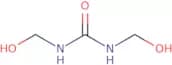
CAS:<p>Dimethylolurea is a formaldehyde releaser that has clinical relevance as a nutrient solution. Dimethylolurea has been shown to release formaldehyde, which may be used to treat bowel diseases and inflammatory bowel disease. Dimethylolurea can also induce an immune response in the human body. This chemical is not soluble in water but it is soluble in ethanol and methanol, which are often used as solvents for this drug. The reaction mechanism of dimethylurea is unclear. It may be due to intramolecular hydrogen transfer or metal hydroxides. As with other drugs, the surface methodology of dimethylurea depends on the size of the microcapsules.</p>Formula:C3H8N2O3Purity:Min. 95%Color and Shape:White PowderMolecular weight:120.11 g/mol4-Benzyloxybenzoic acid
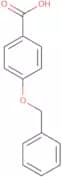
CAS:<p>4-Benzyloxybenzoic acid is a carboxylic acid that is structurally related to adenosine. It has been shown to bind to the group P2 adenosine receptor, which may be involved in the regulation of locomotor activity and photophysical properties. This compound also inhibits fatty acid biosynthesis and has inhibitory effects on nerve injury, amide formation, and benzoate degradation. It has been reported that 4-Benzyloxybenzoic acid binds to metal ions such as cobalt and manganese, which may be important for its antimycobacterial activity.</p>Formula:C14H12O3Purity:Min. 95%Color and Shape:PowderMolecular weight:228.24 g/mol5-Bromoindole-2-carboxylic acid ethyl ester
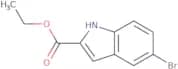
CAS:<p>5-Bromoindole-2-carboxylic acid ethyl ester (5-BIEC) is a carboxamide antibiotic that inhibits the growth of gram-negative bacteria, including pneumoniae. 5-BIEC has been shown to have an inhibitory concentration (IC50) of 0.9 μM against Escherichia coli and other gram negative bacteria. It also has anti-proliferative effects on cancer cells, which may be due to its ability to inhibit DNA replication by binding to the beta subunit of DNA gyrase. 5-BIEC is currently being studied as a potential anticancer drug for the treatment of breast cancer, colon cancer, and leukemia.</p>Formula:C11H10BrNO2Purity:Min. 98 Area-%Color and Shape:PowderMolecular weight:268.11 g/mol4-(Dimethylamino)benzaldehyde
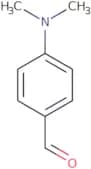
CAS:<p>4-(Dimethylamino)benzaldehyde (4DMAB) is an analytical reagent used to identify sulfa drugs. It has been shown to react with sulfonamides by the formation of a complex ion, which can be detected by analytical methods such as electrochemical impedance spectroscopy or ultraviolet spectroscopy. 4DMAB has also been studied for its anticarcinoid properties. The carcinoid syndrome is characterized by a tumor that releases serotonin and other substances into the bloodstream, causing severe diarrhea, flushing, and bronchial spasms. Studies have shown that 4DMAB inhibits the release of serotonin in this condition. As a result, it may be effective against carcinoid syndrome.</p>Formula:C9H11NOPurity:Min. 95%Color and Shape:White Slightly Yellow PowderMolecular weight:149.19 g/mol2,4-Dimethylbenzaldehyde
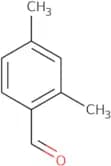
CAS:<p>2,4-Dimethylbenzaldehyde is used in the diagnosis of cancer. It reacts with acetaldehyde to form a compound that binds to hemoglobin and is excreted in the urine, leading to a diagnostic test for cancer. 2,4-Dimethylbenzaldehyde has been shown to be genotoxic in both in vitro and in vivo studies. This aromatic hydrocarbon has been shown to cause DNA strand breaks in the target cells through a reaction mechanism involving radical formation from acetaldehyde. In addition, 2,4-Dimethylbenzaldehyde has been shown to have genotoxic effects on mice exposed by inhalation or injection.</p>Formula:C9H10OPurity:Min. 90 Area-%Color and Shape:Colorless Clear LiquidMolecular weight:134.18 g/mol(2-Bromoethyl)benzene
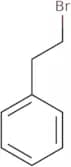
CAS:<p>2-Bromoethylbenzene is a nucleophilic substitutive agent that can be used in organic synthesis. It reacts with an electron-rich compound to form a covalent bond and release bromine. 2-Bromoethylbenzene has been shown to have therapeutic effects on autoimmune diseases such as arthritis and lupus erythematosus. It also has the ability to inhibit protease activity, which may be due to its hydroxy derivative. The reaction mechanism of 2-bromoethylbenzene is not fully understood, but it is known that halides can increase the rate of the substitution reaction. This chemical also has pharmaceutical applications, including as a precursor in amphetamine synthesis and as a reagent in kinetic studies of enzymes.</p>Formula:C8H9BrPurity:Min. 95%Color and Shape:Colorless Clear LiquidMolecular weight:185.06 g/mol4,4'-Dipyridyl - 98%
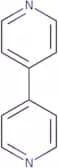
CAS:<p>4,4'-Dipyridyl is a cyclic peptide with a basic structure. It has been found to have inhibitory effects against the growth of bacteria in human serum and group P2. The x-ray crystal structures reveal that it has strong intermolecular hydrogen bonding interactions. Experimental solubility data and coordination models show that 4,4'-dipyridyl is soluble in anhydrous sodium. Structural analysis and kinetic energy calculations indicate that the inhibitor binding site is located on the hydroxyl groups of the backbone of the molecule. This ligand also binds to metal ions such as copper or zinc.</p>Formula:C10H8N2Color and Shape:Off-White PowderMolecular weight:156.19 g/mol4,5-Dichloro-3-hydroxypyridine
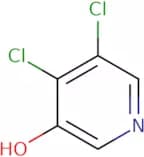
CAS:<p>4,5-Dichloro-3-hydroxypyridine is a reactive chemical that is a building block in organic synthesis. It is used as a reactant in the preparation of other compounds and as a reagent for various reactions, such as those involving amines, alcohols, and thiols. 4,5-Dichloro-3-hydroxypyridine has been found to be useful in the synthesis of heterocyclic compounds with an aromatic ring. It can also be used as an intermediate in the synthesis of pharmaceuticals. This chemical is classified by CAS number 1261269-63-9 and has an MW of 138.2 g/mol.</p>Formula:C5H3Cl2NOPurity:Min. 95%Color and Shape:White PowderMolecular weight:163.99 g/mol