Building Blocks
This section contains fundamental products for the synthesis of organic and biological compounds. Building blocks are the essential starting materials used to construct complex molecules through various chemical reactions. They play a critical role in drug discovery, material science, and chemical research. At CymitQuimica, we offer a diverse range of high-quality building blocks to support your innovative research and industrial projects, ensuring you have the essential components for successful synthesis.
Subcategories of "Building Blocks"
- Boronic Acids & Boronic Acid Derivatives(5,756 products)
- Chiral Building Blocks(1,242 products)
- Hydrocarbon Building Blocks(6,095 products)
- Organic Building Blocks(61,051 products)
Found 199813 products of "Building Blocks"
Sort by
Purity (%)
0
100
|
0
|
50
|
90
|
95
|
100
1-Cyano-2-hydroxy-3-butene
CAS:<p>1-Cyano-2-hydroxy-3-butene is a mitochondrial toxin that causes apoptosis in liver cells. It has been shown to cause liver lesions in CD1 mice. 1-Cyano-2-hydroxy-3-butene reduces the mitochondrial membrane potential, which leads to a decrease in ATP production and an increase in reactive oxygen species (ROS) production. This toxin also inhibits the transcriptional activity of nuclear receptors and induces the expression of cytochrome P450 2E1, leading to increased detoxification enzyme activity. 1-Cyano-2-hydroxy-3-butene is activated by mitochondria, which leads to its ability to cause apoptosis of liver cells.</p>Formula:C5H7NOPurity:Min. 95%Color and Shape:Colorless PowderMolecular weight:97.12 g/mol3-Carboxypropanesulfonamide
CAS:<p>3-Carboxypropanesulfonamide is a chemical compound that has been shown to have the ability to modulate cardiac cell function. This compound has been shown to be effective in a reaction monitoring technique, which monitors the functional groups and techniques of chemical reactions, in order to introduce this molecule into the cell membrane and alter its potential. 3-Carboxypropanesulfonamide is capable of changing the lipid composition of the membrane by introducing a linker group that can bind with other molecules such as cholesterol or phospholipids. This linker group alters the membrane potential of cells, leading to changes in ion flow and cellular response.</p>Formula:C4H9NO4SPurity:Min. 95%Color and Shape:White PowderMolecular weight:167.18 g/mol4-Cyclobutylbenzaldehyde
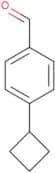
CAS:<p>4-Cyclobutylbenzaldehyde is a versatile building block that is used in the synthesis of complex compounds. This chemical is a reagent and speciality chemical which can be used for research purposes. It also has potential use as an intermediate or scaffold in organic synthesis. 4-Cyclobutylbenzaldehyde is a high quality compound with a CAS number of 875306-94-8.</p>Formula:C11H12OPurity:Min. 95%Color and Shape:Clear LiquidMolecular weight:160.22 g/mol3-Bromo-1-propanol
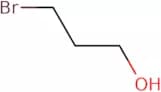
CAS:<p>3-Bromo-1-propanol is a chemical compound that contains a hydroxyl group and an asymmetric carbon atom. This molecule has been used as a model system to study the reaction mechanism of alcohol dehydrogenase, which is the enzyme responsible for the oxidation of ethanol. 3-Bromo-1-propanol has been shown to inhibit the growth of bacteria such as Staphylococcus aureus, which are resistant to penicillin. The pharmacokinetic properties of 3-bromo-1-propanol have been studied in dogs with congestive heart failure.</p>Formula:C3H7BrOPurity:Min. 97 Area-%Color and Shape:Colorless Clear LiquidMolecular weight:138.99 g/molTris(phenylthio)methane
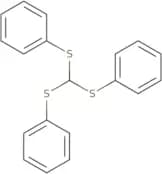
CAS:<p>Tris(phenylthio)methane is a formylating reagent that reacts with ethyl formate to produce the nitro compound. It is used in the preparation of β-amino acids and as an asymmetric synthesis catalyst. Tris(phenylthio)methane can be used as a polymerization initiator for metathesis reactions, such as the Suzuki reaction. It has been shown to be a good nucleophile and polymerizing agent when combined with hydrochloric acid or silver trifluoromethanesulfonate. Tris(phenylthio)methane may also react with chloride in the presence of base to produce phosphoric acid esters.</p>Formula:C19H16S3Purity:Min. 95%Color and Shape:Off-White PowderMolecular weight:340.53 g/mol3,3-Bis(hydroxymethyl)oxetane
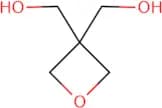
CAS:<p>3,3-Bis(hydroxymethyl)oxetane is a monomer that belongs to the class of polyols. It is synthesized by ring-opening polymerization of 3,3-bis(hydroxymethyl)oxetane with trifluoromethanesulfonic acid as the catalyst. The kinetic studies show that this monomer reacts with water at high rates and has a high melting point. It is also found to be an excellent uptake agent for organic nitrates. 3,3-Bis(hydroxymethyl)oxetane can be used in the production of polyurethanes and other polymers as well as in cosmetic products.</p>Formula:C5H10O3Purity:Min. 95%Color and Shape:PowderMolecular weight:118.13 g/mol1-Methyl-2-[(1-methyl-1H-imidazol-2-yl)disulfanyl]-1H-imidazole
CAS:<p>1,2-Dimethyl-1H-imidazolium chloride (1MDIC) is a useful building block for the synthesis of complex compounds. It is used as a reagent in organic synthesis and has been shown to be an effective catalyst for the Diels-Alder reaction. 1,2-Dimethyl-1H-imidazolium chloride is an excellent research chemical that can be used as a reaction component in organic synthesis and provide a versatile scaffold for the synthesis of diverse structures.</p>Formula:C8H10N4S2Purity:Min. 95%Color and Shape:PowderMolecular weight:226.3 g/mol2,3-Dihydroxybenzoic acid
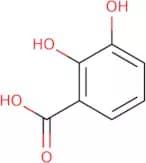
CAS:2,3-Dihydroxybenzoic acid is an antioxidant found in many plants. It has a protective effect against oxidative injury. 2,3-Dihydroxybenzoic acid has been used as a model for the study of infectious diseases and its effects on biological studies. This compound has been shown to prevent the growth of Aerobacter aerogenes and Dinucleotide phosphate. 2,3-Dihydroxybenzoic acid is also used as an ingredient in sephadex g-100 and it acts as an antimicrobial agent that prevents microbial growth in wastewater treatment systems.Formula:C7H6O4Purity:Min. 95%Color and Shape:PowderMolecular weight:154.12 g/mol5-Bromosalicylic acid
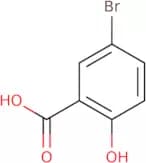
CAS:5-Bromosalicylic acid is a derivative of p-hydroxybenzoic acid that is used in wastewater treatment. The reaction of 5-bromosalicylic acid with the 1,3-benzodioxole-5-carboxylic acid leads to the formation of a new compound, which can be used as an intermediate in organic synthesis. 5-Bromosalicylic acid has been shown to inhibit the growth of hepg2 cells and K562 cells by damaging DNA. It also inhibits the suzuki coupling reaction by acting as a hydrogen sink and stabilizing the transition state through intramolecular hydrogen bonding interactions. A possible mechanism for this inhibition is that 5-bromosalicylic acid reacts with hydroxide ions to form bromohydroxylated products, which then react with amine compounds to produce carboxylates that can hydrogen bond with other molecules.Formula:C7H5BrO3Purity:Min. 95%Color and Shape:White PowderMolecular weight:217.02 g/mol(3S,6S)-3-[(2S)-Butan-2-yl]-6-methylpiperazine-2,5-dione
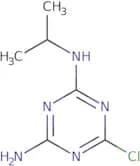
CAS:<p>(3S,6S)-3-[(2S)-Butan-2-yl]-6-methylpiperazine-2,5-dione is a chemical compound that acts as an anticoagulant. It inhibits the coagulation of blood by preventing platelets from clumping together and forming clots. This chemical also blocks the activation of platelets by increasing levels of cyclic adenosine monophosphate (cAMP) and cyclic guanosine monophosphate (cGMP). Studies have shown that this chemical inhibits viral replication in vitro. It blocks the PI3K/AKT pathways and reduces the expression of influenza virus proteins. The extract of Portulaca oleracea has been shown to contain flavonoids that have anti-inflammatory properties.</p>Formula:C9H16N2O2Purity:Min. 98 Area-%Color and Shape:PowderMolecular weight:184.24 g/mol2-Amino-4-isopropylamino-6-chlorotriazine
CAS:<p>Atrazine metabolite; herbicide</p>Formula:C6H10ClN5Purity:Min. 95%Color and Shape:White PowderMolecular weight:187.63 g/mol4',6'-Dihydrospiro[cyclopropane-1,5'-pyrrolo[1,2-b]pyrazole]-2'-carboxylic acid
CAS:<p>4,6-Dihydrospiro[cyclopropane-1,5'-pyrrolo[1,2-b]pyrazole]-2'-carboxylic acid is a fine chemical that can be used as a versatile building block in the manufacture of complex compounds. CAS No. 2287271-02-5 is a high quality research chemical and reagent that can be used to synthesize speciality chemicals and useful intermediates. It is also an important reaction component in the synthesis of useful scaffolds.</p>Formula:C9H10N2O2Purity:Min. 95%Color and Shape:PowderMolecular weight:178.19 g/mol3-Methyl-8-quinolinesulfonyl chloride
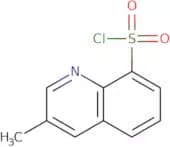
CAS:<p>3-Methyl-8-quinolinesulfonyl chloride (3MQSC) is a reaction product of 1,2,4-trioxane and thionyl chloride. 3MQSC is used as an intermediate in the production of l-citrulline from chloroacetic acid. It reacts with paraformaldehyde to form a solid phase synthesis catalyst. 3MQSC catalyzes the reaction between phosphorus pentachloride and chlorine to produce ethyl formate and hydrogen chloride gas. This process is industrialized for the production of ethyl formate, which is used for the manufacture of acetic acid, chlorinated solvents, polymers, and plastics. The high yield of this process makes it one of the most popular routes for producing ethyl formate. Catalysis by 3MQSC can be achieved at low temperature and pressure due to its resistance to heat and low boiling point.</p>Formula:C10H8ClNO2SPurity:Min. 97 Area-%Color and Shape:White Yellow PowderMolecular weight:241.69 g/mol2-Methyl-4-nitrobenzoic acid
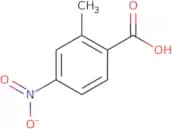
CAS:<p>2-Methyl-4-nitrobenzoic acid is a synthetic drug substance. The crystalline structure of 2-methyl-4-nitrobenzoic acid is polymorphic and it can be obtained in two different forms: anhydrous form and monohydrate form. The reaction yield for this compound is low, which may be due to the presence of additives or deionized water. This drug substance has a high solubility in hydroxide solutions and methylbenzene. It reacts slowly with hydrochloric acid and sodium hydroxide solution to produce 2-methyl-4-nitrobenzoic acid hydrochloride and sodium benzoate, respectively. 2-Methyl-4-nitrobenzoic acid has low bioavailability due to its poor absorption from the gastrointestinal tract into the bloodstream.</p>Formula:C8H7NO4Purity:Min. 95%Color and Shape:PowderMolecular weight:181.15 g/molTrimethylpyruvic acid
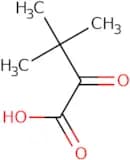
CAS:<p>Trimethylpyruvic acid is an organic compound that is a colorless liquid with a strong odor. It is produced by the oxidation of l-tert-leucine with hydrogen peroxide in the presence of sodium hydroxide. The molecule is chiral, which means it can exist as two different forms that have different physical and chemical properties. Trimethylpyruvic acid can be used for the synthesis of other molecules, including amides, carboxylic acids, and nucleotides. It also has photochemical properties and can be used in reactions that require heating or light.</p>Formula:C6H10O3Purity:Min. 95%Color and Shape:Clear LiquidMolecular weight:130.14 g/mol4-Methyl-4'-carboxy-2,2'-bipyridine
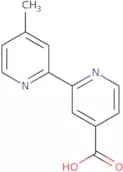
CAS:<p>4-Methyl-4'-carboxy-2,2'-bipyridine is a fluorescent probe that can be used to detect the presence of hydrogen peroxide in cells. It has been shown to bind to mitochondria and liver cells. The binding constants are in the range of 10 M. When exposed to light, 4-methyl-4'-carboxy-2,2'-bipyridine emits an orange fluorescence. This chemical has been used as an oxidation catalyst for amides and as an enhancer for reactive species in kinetic experiments. It also has been shown to have proton uptake properties.</p>Formula:C12H10N2O2Purity:Min. 95%Color and Shape:Off-White PowderMolecular weight:214.22 g/molcis-4,7,10,13,16,19-Docosahexaenoic acid
CAS:<p>cis-4,7,10,13,16,19-Docosahexaenoic acid (also known as DHA or cervonic acid) is one of the omega-3 fatty acids (a group of highly unsaturated fatty acids). As for most omega-3 fatty acids, good sources of DHA include fish oils and other seafoods. DHA plays a key role in human brain development and function and is also found in high concentration in the retina, central nervous system and skin. As such DHA is a key nutrient which is widely used as a dietary supplement, particularly for infants and pregnant women, with its potential health benefits currently being investigated across a number of different disease areas.</p>Formula:C22H32O2Purity:Min. 80 Area-%Color and Shape:Yellow Clear LiquidMolecular weight:328.49 g/molL-Serine tert-butyl ester hydrochloride
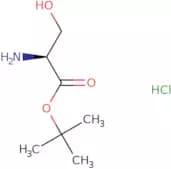
CAS:<p>L-Serine tert-butyl ester hydrochloride is a conditionally catalytic reagent that is used to synthesize aromatic compounds. It is an effective catalyst for toluene hydroxylation, and can be used in the synthesis of L-serine from serine. The tert-butyl group on the molecule prevents side reactions by sterically hindering other molecules from reacting with the reagent.</p>Formula:C7H15O3N·HClPurity:Area-% Min. 95 Area-%Color and Shape:White PowderMolecular weight:197.66 g/mol2-Methyl-5-nitroimidazole
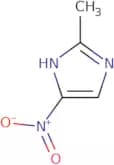
CAS:<p>2-Methyl-5-nitroimidazole, also known as menidazole, is an impurity of metronidazole, which is used as an antibacterial and antiprotozoal medication in the treatment of infections, including rosacea. 2-Methyl-5-nitroimidazole is a derivative of nitroimidazole and has potential antimicrobial and antitrichomonal activities. Its synthesis can be achieved using various methods, including nucleophilic reaction, ester derivatives, reaction with metronidazole, and substitution reactions. Several derivatives of 2-Methyl-5-nitroimidazole have been synthesized and tested for their antibacterial, antifungal, and antitrichomonal activities. Both 2-Methyl-5-nitroimidazole and its derivatives have potential applications as antimicrobial and antitrichomonal agents.</p>Formula:C4H5N3O2Purity:Min. 95%Color and Shape:PowderMolecular weight:127.1 g/moltrans-4-Coumaric acid
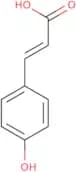
CAS:<p>Trans-4-coumaric acid or p-coumaric acid, is a derivative of the cinnamic acid. It is the initial substrate to produce several intermediates such as ferulic acid, caffeic acid, rosmarinic acid, gallic acid, and carnosic acid. Trans-4-coumaric acid, as well as its derivatives, have antioxidant properties; they are common ingredients in cosmetics and as dietary supplement.</p>Formula:C9H8O3Purity:Min. 98 Area-%Color and Shape:PowderMolecular weight:164.16 g/mol


![1-Methyl-2-[(1-methyl-1H-imidazol-2-yl)disulfanyl]-1H-imidazole](/_next/image/?url=https%3A%2Fstatic.cymitquimica.com%2Fproducts%2F3D%2Fthumb-webp%2FLCA74729.webp&w=3840&q=75)
![(3S,6S)-3-[(2S)-Butan-2-yl]-6-methylpiperazine-2,5-dione](/_next/image/?url=https%3A%2Fstatic.cymitquimica.com%2Fproducts%2F3D%2Fthumb-webp%2FKBA59069.webp&w=3840&q=75)
![4',6'-Dihydrospiro[cyclopropane-1,5'-pyrrolo[1,2-b]pyrazole]-2'-carboxylic acid](/_next/image/?url=https%3A%2Fstatic.cymitquimica.com%2Fproducts%2F3D%2Fthumb-webp%2FMRD27102.webp&w=3840&q=75)