Building Blocks
This section contains fundamental products for the synthesis of organic and biological compounds. Building blocks are the essential starting materials used to construct complex molecules through various chemical reactions. They play a critical role in drug discovery, material science, and chemical research. At CymitQuimica, we offer a diverse range of high-quality building blocks to support your innovative research and industrial projects, ensuring you have the essential components for successful synthesis.
Subcategories of "Building Blocks"
- Boronic Acids & Boronic Acid Derivatives(5,778 products)
- Chiral Building Blocks(1,242 products)
- Hydrocarbon Building Blocks(6,098 products)
- Organic Building Blocks(61,034 products)
Found 199601 products of "Building Blocks"
Sort by
Purity (%)
0
100
|
0
|
50
|
90
|
95
|
100
6-Amino-9H-purine-9-propanoic acid
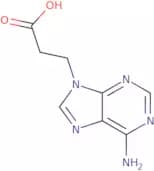
CAS:<p>6-Amino-9H-purine-9-propanoic acid is an acid lactam that belongs to the class of dihedral molecules. It is a colorless solid that crystallizes in plates, which have been shown to have a strong affinity for ammonium ions. 6-Amino-9H-purine-9-propanoic acid has been shown to be a substrate for the enzyme purine nucleoside phosphorylase, which catalyzes the phosphorolysis of nucleosides with the release of inorganic phosphate and ribose 5'-phosphate. The molecule can also react with electron radiation to form gamma rays, which may lead to its use as a molecular probe.</p>Formula:C8H9N5O2Purity:Min. 95%Color and Shape:PowderMolecular weight:207.19 g/mol1-Iododecane - Stabilized with copper chip
CAS:<p>Precursor to prepare 9-nonadecanone</p>Formula:C10H21IPurity:Min. 98 Area-%Color and Shape:Colorless Clear LiquidMolecular weight:268.18 g/molIndole-6-carboxylic acid methyl ester
CAS:<p>Please enquire for more information about Indole-6-carboxylic acid methyl ester including the price, delivery time and more detailed product information at the technical inquiry form on this page</p>Formula:C10H9NO2Purity:Min. 95%Color and Shape:PowderMolecular weight:175.19 g/molN2-Isobutyryl-5'-O-(4,4'-dimethoxytrityl)-2'-deoxyguanosine-3'-O-succinate triethylamine
CAS:Please enquire for more information about N2-Isobutyryl-5'-O-(4,4'-dimethoxytrityl)-2'-deoxyguanosine-3'-O-succinate triethylamine including the price, delivery time and more detailed product information at the technical inquiry form on this pageFormula:C39H41N5O10•C6H15NPurity:Min. 95%Molecular weight:840.96 g/mol3-Chloro-5-hydroxybenzoic acid methyl ester
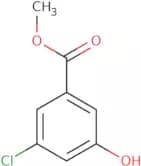
CAS:<p>3-Chloro-5-hydroxybenzoic acid methyl ester is a fine chemical that can be used as a versatile building block and reaction component in the synthesis of complex compounds. It is soluble in organic solvents such as dichloromethane, chloroform, and acetone. 3-Chloro-5-hydroxybenzoic acid methyl ester has CAS No. 98406-04-3 and a molecular weight of 149. 2.</p>Formula:C8H7ClO3Purity:Min. 98 Area-%Color and Shape:White Off-White PowderMolecular weight:186.59 g/mol3-Chloro-5-hydroxybenzoic acid ethyl ester
<p>Please enquire for more information about 3-Chloro-5-hydroxybenzoic acid ethyl ester including the price, delivery time and more detailed product information at the technical inquiry form on this page</p>Formula:C9H9ClO3Purity:Min. 98 Area-%Color and Shape:PowderMolecular weight:200.62 g/mol2-Chloro-1,3-propanediol
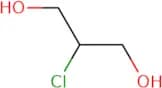
CAS:<p>2-Chloro-1,3-propanediol is a useful intermediate and building block in organic synthesis. It is also a reagent that can be used to synthesize other organic compounds. 2-Chloro-1,3-propanediol has been shown to be a versatile scaffold for the synthesis of many different types of organic molecules. It is also an important component of research chemicals and speciality chemicals. This chemical can be used as a high quality fine chemical or complex compound in the manufacture of other products.</p>Formula:C3H7ClO2Purity:Min. 97 Area-%Color and Shape:Colorless Clear LiquidMolecular weight:110.54 g/molIndole-3-acetyl-DL-tryptophan
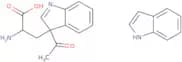
CAS:<p>Please enquire for more information about Indole-3-acetyl-DL-tryptophan including the price, delivery time and more detailed product information at the technical inquiry form on this page</p>Formula:C21H19N3O3Purity:Min. 95%Color and Shape:PowderMolecular weight:361.4 g/molEthyl 3,5-dichloro-4-methoxybenzoate
CAS:<p>Ethyl 3,5-dichloro-4-methoxybenzoate is an organic compound that has a variety of uses. It is an intermediate in the synthesis of various other compounds and as a reagent, it reacts with amines to form ureas. Ethyl 3,5-dichloro-4-methoxybenzoate can also be used as a complex building block for synthesizing other compounds. This chemical can be used as a speciality chemical or research chemical. As a versatile building block, ethyl 3,5-dichloro-4-methoxybenzoate can be used to make reaction components for synthesizing polymers or pharmaceuticals.</p>Formula:C10H10Cl2O3Purity:Min. 95%Color and Shape:PowderMolecular weight:249.09 g/mol4-(Cyclopropylmethyl)-1-oxa-4,9-diazaspiro[5.5]undecan-3-one hydrochloride
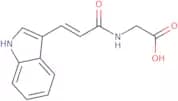
Please enquire for more information about 4-(Cyclopropylmethyl)-1-oxa-4,9-diazaspiro[5.5]undecan-3-one hydrochloride including the price, delivery time and more detailed product information at the technical inquiry form on this pageFormula:C12H20N2O2•(HCl)xPurity:Min. 95%Color and Shape:PowderIndole-3-acryloylglycine
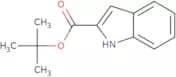
CAS:<p>Indole-3-acryloylglycine is a metabolite of tryptophan, which is an essential amino acid for humans. It has been shown to be a potential biomarker for inflammatory bowel disease (IBD). Indole-3-acryloylglycine can be detected in urine samples and can be used as a diagnostic tool to identify IBD patients. This method has also been validated using chromatographic and mass spectrometry methods. Dietary intake of 3-hydroxyanthranilic acid or kynurenine may affect the concentration of indole-3-acryloylglycine in the body.</p>Formula:C13H12N2O3Purity:Min. 98 Area-%Color and Shape:White Off-White PowderMolecular weight:244.25 g/molIndole-2-carboxylic acid tert-butyl ester
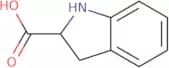
CAS:Indole-2-carboxylic acid tert-butyl ester is a synthetic compound that exhibits potent antiapoptotic activity. It has been shown to inhibit the bcl-2 family of proteins, which are involved in the regulation of apoptosis. Indole-2-carboxylic acid tert-butyl ester has also been shown to inhibit the growth of cancer cells in cell culture and induce apoptosis in these cells. This compound also inhibits the production of furan, which is a functional group found on some carcinogenic chemicals. Indole-2-carboxylic acid tert-butyl ester is an inhibitor of Bax protein, a proapoptotic protein that plays a role in regulating cell death.Formula:C13H15NO2Purity:Min. 95%Color and Shape:PowderMolecular weight:217.26 g/molIndoline-2-carboxylic acid
CAS:<p>Indoline-2-carboxylic acid is a photophysical molecule with an absorption maximum at 518 nm. It has been shown to inhibit the activity of enzymes such as cyclooxygenase, lipoxygenase, and monoamine oxidases. This compound has been found to be effective in the treatment of cancer cells. Indoline-2-carboxylic acid is also used in pharmaceutical preparations, where it binds to enantiomers of other molecules and inhibits their biological activity. Indoline-2-carboxylic acid reacts with hydrochloric acid to form allyl carbonate and amide.</p>Formula:C9H9NO2Purity:Min. 97 Area-%Color and Shape:PowderMolecular weight:163.17 g/molCetirizine propanediol ester dihydrochloride, mixture of regioisomers
Please enquire for more information about Cetirizine propanediol ester dihydrochloride, mixture of regioisomers including the price, delivery time and more detailed product information at the technical inquiry form on this pageFormula:C24H31ClN2O4•(HCl)2Purity:Min. 95%Color and Shape:PowderMolecular weight:519.89 g/molIsovanillin
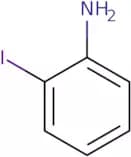
CAS:<p>Isovanillin is a naturally occurring compound in plants and has been shown to have biological effects on the mitochondria of cells. It has been found to inhibit the mitochondrial membrane potential of k562 cells, which is associated with cell death. Isovanillin has also been shown to affect bacterial strains, such as Acinetobacter baumannii, by inhibiting their growth. This x-ray crystal structure was determined using a lc-MS/MS method and it was found that isovanillin reacts with p-hydroxybenzoic acid to form methyl ethyl benzoate. Isovanillin is toxic and has been found to cause cellular physiology changes when administered at high concentrations.</p>Formula:C8H8O3Purity:Min. 95%Color and Shape:White PowderMolecular weight:152.15 g/mol2-Iodoaniline
CAS:<p>2-Iodoaniline is a nucleophilic compound that reacts with electrophiles to form alkyl halides. It is used in the synthesis of β-aminoesters, which are used as γ-secretase inhibitors for the treatment of Alzheimer's disease. 2-Iodoaniline has been shown to be an effective inhibitor of protozoan parasites, such as Leishmania major and Trypanosoma cruzi, by blocking the conversion of pyruvate to oxaloacetate via enzymatic action. The chloride ion stabilizes the phenoxide anion intermediate and facilitates nucleophilic attack on the aromatic ring. 2-Iodoaniline has also been shown to be a competitive inhibitor of acylation reactions, due to its ability to bind covalently with acyl groups and inhibit their formation.</p>Formula:C6H6INPurity:Min. 95%Color and Shape:White PowderMolecular weight:219.02 g/mol4-Iodobenzoic acid
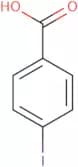
CAS:<p>4-Iodobenzoic acid is a chiral compound that can be used as a nutrient solution in the laboratory. It has been shown to be effective at removing p-hydroxybenzoic acid and 4-dimethylaminobenzoic acid from wastewater. The reaction mechanism of 4-iodobenzoic acid involves intramolecular hydrogen transfer from the hydroxyl group on the benzoic side chain to the iodine atom, which forms an intermediate that reacts with a second molecule of benzoic acid. This reaction mechanism is similar to that found in caproic acid, except for the substitution of hydrogen with iodine. The addition of sodium hypochlorite or potassium permanganate can lead to the oxidation of 4-iodobenzoic acid and its eventual decomposition into carbon dioxide and water.</p>Formula:C7H5IO2Purity:Min. 95%Color and Shape:PowderMolecular weight:248.02 g/molEthyl 4-amino-2-nitrobenzoate
CAS:<p>Ethyl 4-amino-2-nitrobenzoate is a chemical intermediate that is used in the synthesis of other chemicals. It is also a versatile building block with many uses, such as in the production of research chemicals or as a reagent. It has CAS No. 84228-46-6 and can be purchased from various suppliers.</p>Formula:C9H10N2O4Purity:Min. 95%Color and Shape:PowderMolecular weight:210.19 g/mol4-Iodopyridine
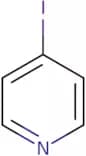
CAS:<p>4-Iodopyridine is a synthetic compound that can be used as an intermediate in organic synthesis. It can be used in cross-coupling reactions to form amides by converting the chloride to the corresponding sulfoxide, which can then undergo nucleophilic substitution with ethyl bromoacetate. 4-Iodopyridine is also used for analytical methods such as mass spectrometry and gas chromatography. The reaction solution of 4-iodopyridine has been shown to have a hydrogen bond with aryl boronic acids. This compound is also able to react with asymmetric reagents such as phenylboronic acid and 3,5-dimethylpyrazole.</p>Formula:C5H4INPurity:Min. 95%Color and Shape:PowderMolecular weight:205 g/mol4-Isobutylacetophenone
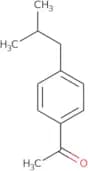
CAS:<p>4-Isobutylacetophenone is a nonsteroidal anti-inflammatory drug that can be used in the preparation of samples for membrane systems. It also has been shown to be an efficient contactor for the hydrogenation of methyl ketones. The reaction mechanism starts with the generation of intramolecular hydrogen, which is then transferred to the substrate and leads to the formation of the desired product. FTIR spectroscopy has been used to show that 4-isobutylacetophenone can be used as a solid catalyst for neutral pH reactions. Hydrochloric acid and hydrofluoric acid are both strong acids that can be used for this purpose.</p>Formula:C12H16OPurity:Min. 95%Color and Shape:Colorless Clear LiquidMolecular weight:176.25 g/mol





![4-(Cyclopropylmethyl)-1-oxa-4,9-diazaspiro[5.5]undecan-3-one hydrochloride](/_next/image/?url=https%3A%2Fstatic.cymitquimica.com%2Fproducts%2F3D%2Fthumb-webp%2FFC182982.webp&w=3840&q=75)