Building Blocks
This section contains fundamental products for the synthesis of organic and biological compounds. Building blocks are the essential starting materials used to construct complex molecules through various chemical reactions. They play a critical role in drug discovery, material science, and chemical research. At CymitQuimica, we offer a diverse range of high-quality building blocks to support your innovative research and industrial projects, ensuring you have the essential components for successful synthesis.
Subcategories of "Building Blocks"
- Boronic Acids & Boronic Acid Derivatives(5,778 products)
- Chiral Building Blocks(1,242 products)
- Hydrocarbon Building Blocks(6,098 products)
- Organic Building Blocks(61,034 products)
Found 199601 products of "Building Blocks"
Sort by
Purity (%)
0
100
|
0
|
50
|
90
|
95
|
100
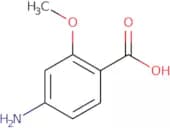
2-Methoxy-4-aminobenzoic acid
CAS:<p>2-Methoxy-4-aminobenzoic acid is a solute that can be used in the manufacture of pharmaceuticals. It has a high affinity for receptors and is potentially useful in the treatment of hypertension. 2-Methoxy-4-aminobenzoic acid has been shown to exhibit antihypertensive activity in animals by reducing cardiac output, systemic vascular resistance, and total peripheral resistance. The mechanism of action may be due to its ability to inhibit calcium ion influx into myocardial cells and block voltage-gated potassium channels. This drug also has an acidic pH, which makes it soluble in water. 2-Methoxy-4-aminobenzoic acid is insoluble in organic solvents such as hydrochloric acid or ether, which means it cannot be extracted from aqueous solutions by these solvents.</p>Formula:C8H9NO3Purity:Min. 95%Color and Shape:Off-White PowderMolecular weight:167.16 g/mol(5-Trifluoromethyl-thiophen-3-yl)-methanol
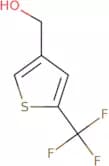
CAS:(5-Trifluoromethyl-thiophen-3-yl)-methanol is a fine chemical that is used as a building block for research chemicals, reagents, and specialty chemicals. It can be used in the synthesis of various complex compounds and is a versatile building block for organic reactions. (5-Trifluoromethyl-thiophen-3-yl)-methanol is an intermediate that can serve as a scaffold for the synthesis of more complex molecules. This compound has CAS No. 1447913-56-5 and has a high quality.Formula:C6H5F3OSPurity:Min. 95%Color and Shape:Clear LiquidMolecular weight:182.16 g/mol5-Methoxy-2-methylindole
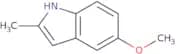
CAS:<p>5-Methoxy-2-methylindole is an organic solvent that has been shown to have a wide range of bioactive properties. It is used in the production of acetylcholine, which is an important neurotransmitter. 5-Methoxy-2-methylindole also reacts with chloride ions, which may be an important factor when considering the life cycles and bioactive substances of this molecule. The reaction yield depends on the pH of the solution. 5-Methoxy-2-methylindole can undergo chlorination reactions to form polychlorinated derivatives, which are used as petrochemicals. This molecule also has retinoid properties and can act as a proton donor or acceptor depending on whether it is protonated or deprotonated.</p>Formula:C10H11NOColor and Shape:PowderMolecular weight:161.2 g/molMesitaldehyde - 97%
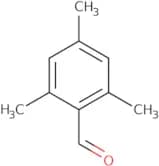
CAS:<p>Mesitaldehyde is a diazonium salt that is synthesized by the reaction of nitrosyl chloride and sodium carbonate in an acidic solution. This chemical has been studied for its potential use as a therapeutic drug due to its ability to inhibit the enzyme dpp-iv, which is involved in the development of diabetic neuropathy. Mesitaldehyde has also been shown to be an inhibitor of malonic acid, ethylmalonic acid and other organic acids. The analytical method for mesitaldehyde involves hydrolyzing the product with hydrochloric acid in order to produce ethylmalonic acid, which can then be quantified using spectrophotometry.</p>Formula:C10H12OPurity:Min. 95%Color and Shape:PowderMolecular weight:148.2 g/mol3-Mercaptophenylacetic acid
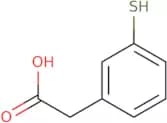
CAS:<p>3-Mercaptophenylacetic acid is an active form of 3-mercaptophenylacetic acid. It is a protein that is used to produce ribonuclease, which is a type of enzyme that breaks down RNA. The hydrolytic reaction of 3-mercaptophenylacetic acid can be facilitated by buffers such as guanidine hydrochloride and thiols such as glutathione. Diazotization with sodium nitrite or diazotization with potassium nitrite followed by treatment with sodium sulfite or potassium bisulfite will convert 3-mercaptophenylacetic acid to 3-mercaptophenol. Denaturant such as urea, guanidine hydrochloride, or triethanolamine can be used to convert the molecule into an aliphatic form. This will expand the molecule and create a more reactive molecule.</p>Formula:C8H8O2SPurity:Min. 95%Color and Shape:PowderMolecular weight:168.21 g/mol4-Mercaptophenylacetic acid
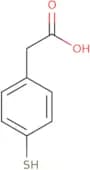
CAS:<p>4-Mercaptophenylacetic acid is a palladium complex that inhibits the synthesis of proteins by binding to the ribosome and blocking peptide bond formation. The molecule has a polymeric matrix with a high degree of crystallinity and an isolated yield of greater than 95%. 4-Mercaptophenylacetic acid is immobilized on a carboxylate surface and has been shown to have pharmacokinetic properties. It can be used in the treatment of cancer cells and inhibits protein synthesis, leading to cell death. 4-Mercaptophenylacetic acid also has anti-inflammatory activities due to its inhibition of prostaglandin synthesis.</p>Formula:C8H8O2SPurity:Min. 95%Color and Shape:Yellow PowderMolecular weight:168.21 g/mol3-Maleimidopropionic acid N-succinimidyl ester
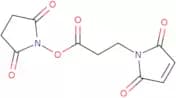
CAS:<p>3-Maleimidopropionic acid N-succinimidyl ester is a potent inducer of the transcriptional regulator NF-κB. It also inhibits the growth of human osteosarcoma cells and mesenchymal cells, which may be due to its activity on integrin receptors. 3-Maleimidopropionic acid N-succinimidyl ester has been shown to inhibit the growth of infectious diseases such as HIV and malaria, as well as leukemia inhibitory factor. This drug also has a chemical effect on iron homeostasis by inhibiting iron uptake in human serum and mouse liver cells.</p>Formula:C11H10N2O6Purity:Min. 98 Area-%Color and Shape:PowderMolecular weight:266.21 g/mol4-Cyanoindole
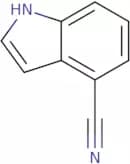
CAS:<p>The 4-cyanoindole is a fluorescent molecule that binds to proteins and affects protein homeostasis. It has been shown to bind to the sodium salt form of proteins, which are typically found in human liver cells. The binding of 4-cyanoindole to these proteins leads to its reduction by borohydride and fluorescence resonance energy transfer (FRET) between the molecule and the protein. This binding can be detected using a fluorescence lifetime spectroscopy technique, which detects changes in the fluorescence's lifetime as well as intensity. The binding of 4-cyanoindole to proteins has been shown to have anti-cancer properties. It has also been used for detection of monoclonal antibodies against cancer cells or for fluorescent labeling of cancer cells for immunofluorescent microscopy.</p>Formula:C9H6N2Color and Shape:White PowderMolecular weight:142.16 g/mol4-Chloroindole
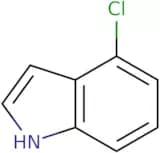
CAS:<p>4-Chloroindole is an indole compound that is a derivative of salicylic acid. It is used in the production of ethylene and casein, as well as being a major metabolite of anthranilic acid. 4-Chloroindole is also found in environmental pollutants and has been shown to be active against plant pathogens such as Pseudomonas syringae. It has been shown to inhibit the growth of Bacillus cereus by binding to its ribosomal RNA and inhibiting protein synthesis. In addition, it inhibits the biosynthesis of methylindole, which may be due to its ability to inhibit the enzyme tryptophan synthase.</p>Formula:C8H6ClNPurity:Min. 98 Area-%Color and Shape:Clear LiquidMolecular weight:151.59 g/molHexahydropyrrolo[1,2-a]pyrazine-1,4-dione
CAS:<p>Hexahydropyrrolo[1,2-a]pyrazine-1,4-dione is a neuroprotective compound that is structurally related to the well-known anti-inflammatory drug ketoprofen. It has been shown to inhibit the production of pro-inflammatory cytokines and reactive oxygen species in vitro by a mechanism involving inhibition of mitochondrial membrane permeability. Hexahydropyrrolo[1,2-a]pyrazine-1,4-dione also inhibits bacterial growth and urea nitrogen excretion in mice. This compound has been found in cyanobacteria and some etoac extracts, as well as in bacteria from the genera Pseudomonas and Staphylococcus.</p>Formula:C7H10N2O2Purity:Min. 95%Molecular weight:154.17 g/mola-Cyano-4-hydroxycinnamic acid
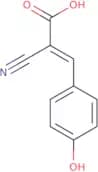
CAS:<p>a-Cyano-4-hydroxycinnamic acid is a cyclic peptide that has been shown to have cytotoxic and antimicrobial properties. It has been shown to be effective in reducing the viability of cells in vitro by interfering with DNA synthesis and cell signaling pathways, as well as causing oxidative stress. This compound also induces apoptosis in squamous carcinoma cells and hypoxic tumor cells; this effect may be due to its ability to induce the release of cytochrome c from mitochondria. a-Cyano-4-hydroxycinnamic acid has been shown to produce antibacterial activity against Gram-positive bacteria, such as Streptococcus pneumoniae and Staphylococcus aureus, but not against Gram-negative bacteria, such as Escherichia coli or Pseudomonas aeruginosa.</p>Formula:C10H7NO3Color and Shape:Slightly Yellow PowderMolecular weight:189.17 g/mol4,4'-Dipyridyl - 98%
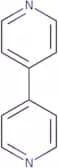
CAS:<p>4,4'-Dipyridyl is a cyclic peptide with a basic structure. It has been found to have inhibitory effects against the growth of bacteria in human serum and group P2. The x-ray crystal structures reveal that it has strong intermolecular hydrogen bonding interactions. Experimental solubility data and coordination models show that 4,4'-dipyridyl is soluble in anhydrous sodium. Structural analysis and kinetic energy calculations indicate that the inhibitor binding site is located on the hydroxyl groups of the backbone of the molecule. This ligand also binds to metal ions such as copper or zinc.</p>Formula:C10H8N2Color and Shape:Off-White PowderMolecular weight:156.19 g/molMono(2-ethylhexyl) terephthalate
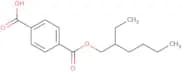
CAS:Please enquire for more information about Mono(2-ethylhexyl) terephthalate including the price, delivery time and more detailed product information at the technical inquiry form on this pageFormula:C16H22O4Purity:Min. 95%Color and Shape:PowderMolecular weight:278.34 g/mol2-Methoxy-1-((2-(trimethylsilyl)ethoxy)methyl)-1H-imidazole-5-carbaldehyde
<p>Please enquire for more information about 2-Methoxy-1-((2-(trimethylsilyl)ethoxy)methyl)-1H-imidazole-5-carbaldehyde including the price, delivery time and more detailed product information at the technical inquiry form on this page</p>Formula:C11H20N2O3SiPurity:Min. 95%Color and Shape:PowderMolecular weight:256.37 g/mol5-Chlorooxindole
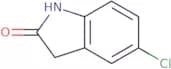
CAS:<p>5-Chlorooxindole is a synthetic, chemotherapeutic drug that has been shown to have anti-tumor activity in animal models. It is an oxindole derivative with the chemical formula CHNClO. The compound is synthesized by the reaction of 3,5-dichloroaniline and indole in chloroform and purified by column chromatography. 5-Chlorooxindole has shown potential as an antitumor agent because it inhibits cancer cell growth through mechanisms such as induction of apoptosis and suppression of tumor angiogenesis.</p>Formula:C8H6ClNOPurity:Min. 95%Molecular weight:167.59 g/molN-Methyl-1-quinolin-2-ylmethanamine dihydrochloride
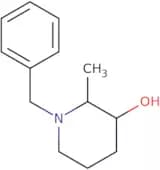
CAS:Please enquire for more information about N-Methyl-1-quinolin-2-ylmethanamine dihydrochloride including the price, delivery time and more detailed product information at the technical inquiry form on this pageFormula:C11H12N2•(HCl)2Purity:Min. 95%Color and Shape:PowderMolecular weight:245.15 g/mol1-Benzyl-2-methylpiperidin-3-ol
CAS:<p>Versatile small molecule scaffold</p>Formula:C13H19NOPurity:Min. 95%Color and Shape:PowderMolecular weight:205.3 g/mol1-[(2R)-2-(Hydroxymethyl)pyrrolidin-1-yl]ethan-1-one
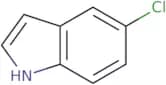
CAS:<p>Versatile small molecule scaffold</p>Formula:C7H13NO2Purity:Min. 95%Molecular weight:143.18 g/mol5-Chloroindole
CAS:<p>5-Chloroindole is a molecule that can bind to the CB2 cannabinoid receptor. It has been shown in experiments to be an allosteric modulator of this receptor. 5-Chloroindole has been found to have an inhibitory effect on degenerative diseases, such as Huntington's disease and Alzheimer's disease, and may have therapeutic potential for these disorders. 5-Chloroindole binds to a metal surface by forming hydrogen bonds with the oxygen atom of its carboxyl group and the metal surface. The nucleophilic nature of 5-chloroindole allows it to react with chloride ions present in solution. 5-Chloroindole reacts with the carbon source in tissue culture, which leads to receptor activity and inhibition of cell proliferation.</p>Formula:C8H6ClNColor and Shape:White PowderMolecular weight:151.59 g/mol7-Methylindole technical grade
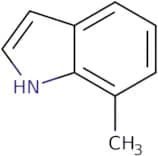
CAS:7-Methylidole is a heterocyclic chemical compound that is used as a precursor in the synthesis of many pharmaceuticals. It has been shown to have an inhibitory effect on the growth of cancer cells in tissue cultures and can be used as a marker for cancer cells. 7-Methylidole is also a virulence factor, which can be seen through assays on bacterial strains. This compound has been proven to be reactive with Polygonum cuspidatum. The reaction produces indirubin, which is a red pigment that is found in some species of Polygonum and other plants.Formula:C9H9NPurity:Min. 95%Color and Shape:PowderMolecular weight:131.17 g/mol

![Hexahydropyrrolo[1,2-a]pyrazine-1,4-dione](/_next/image/?url=https%3A%2Fstatic.cymitquimica.com%2Fproducts%2F3D%2Fthumb-webp%2FUAA17912.webp&w=3840&q=75)
![1-[(2R)-2-(Hydroxymethyl)pyrrolidin-1-yl]ethan-1-one](/_next/image/?url=https%3A%2Fstatic.cymitquimica.com%2Fproducts%2F3D%2Fthumb-webp%2FYEA95887.webp&w=3840&q=75)