Building Blocks
This section contains fundamental products for the synthesis of organic and biological compounds. Building blocks are the essential starting materials used to construct complex molecules through various chemical reactions. They play a critical role in drug discovery, material science, and chemical research. At CymitQuimica, we offer a diverse range of high-quality building blocks to support your innovative research and industrial projects, ensuring you have the essential components for successful synthesis.
Subcategories of "Building Blocks"
- Boronic Acids & Boronic Acid Derivatives(5,778 products)
- Chiral Building Blocks(1,242 products)
- Hydrocarbon Building Blocks(6,098 products)
- Organic Building Blocks(61,098 products)
Found 199594 products of "Building Blocks"
Sort by
Purity (%)
0
100
|
0
|
50
|
90
|
95
|
100
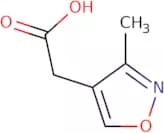
2-(3-Methyl-1,2-oxazol-4-yl)acetic acid
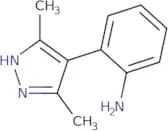
CAS:<p>2-(3-Methyl-1,2-oxazol-4-yl)acetic acid is a useful reagent with a wide range of applications. It is the starting material for the synthesis of many complex compounds that are used in pharmaceuticals, agrochemicals, and other industries. 2-(3-Methyl-1,2-oxazol-4-yl)acetic acid has been shown to be a versatile building block for the synthesis of speciality chemicals and research chemicals. The compound has also been used as a reaction component in organic synthesis.</p>Formula:C6H7NO3Purity:Min. 95%Color and Shape:PowderMolecular weight:141.12 g/mol2-(3,5-Dimethyl-1H-pyrazol-4-yl)aniline
CAS:Versatile small molecule scaffoldFormula:C11H13N3Purity:Min. 95%Color and Shape:PowderMolecular weight:187.24 g/mol(+)-Diacetyl-D-tartaric acid
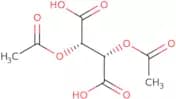
CAS:<p>(+)-Diacetyl-D-tartaric acid is a chiral organic compound that is soluble in organic solvents. It can be used as a catalyst for the asymmetric synthesis of organic compounds and has been shown to cleave bonds with high stereoselectivity. (+)-Diacetyl-D-tartaric acid also exhibits mesomorphic properties, meaning it changes from liquid to solid and vice versa at certain temperatures. The optical activity of this compound can be seen by its magnetic resonance spectrum, which displays two peaks at different wavelengths. This molecule has been shown to have potential uses in microscopy, as well as for the preparation of monomers for magnetic materials.</p>Formula:C8H10O8Purity:Min. 95%Color and Shape:White PowderMolecular weight:234.16 g/mol4-Methoxy-2-oxo-1,2-dihydropyridine-3-carboxylic acid
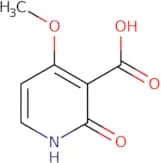
CAS:<p>4-Methoxy-2-oxo-1,2-dihydropyridine-3-carboxylic acid is a versatile building block and useful intermediate in organic synthesis. This compound can be used as a reagent or speciality chemical for research purposes. It has been shown to be an effective reactant in the preparation of diverse complex compounds. 4-Methoxy-2-oxo-1,2-dihydropyridine 3 carboxylic acid has also been shown to be a high quality material with applications in specialty chemicals and pharmaceuticals.</p>Formula:C7H7NO4Purity:Min. 95 Area-%Color and Shape:PowderMolecular weight:169.14 g/mol3,3-Difluorocyclobutanone
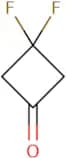
CAS:<p>Versatile small molecule scaffold</p>Formula:C4H4F2OPurity:Min. 95%Color and Shape:Clear LiquidMolecular weight:106.07 g/mol3,4-Dibenzyloxybenzaldehyde
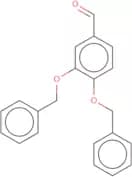
CAS:<p>3,4-Dibenzyloxybenzaldehyde is a chemical compound with the formula ClCH=C(O)CHO. This compound is an intermediate in the synthesis of the cancer drug daunorubicin. 3,4-Dibenzyloxybenzaldehyde has been shown to induce apoptosis in human ovary cells and has been detected in urine samples from patients undergoing chemotherapy for ovarian cancer. 3,4-Dibenzyloxybenzaldehyde also inhibits the production of flavonoids and has been shown to inhibit rat striatal membranes and rat atria.</p>Formula:C21H18O3Purity:Min. 95%Color and Shape:PowderMolecular weight:318.37 g/mol3',5'-Dibenzyloxyacetophenone
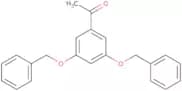
CAS:<p>3',5'-Dibenzyloxyacetophenone is a synthetic intermediate that can be used in the synthesis of 3-hydroxy-2-phenylpropionic acid. It can also be used to synthesize carbonyl reduction products, such as 3,5-dibenzyloxybenzoic acid and 2,3-dibenzyloxybenzoic acid. The carbonyl reduction reaction mechanism involves the addition of ethylene to the carbonyl group (C=O) and hydrogenation of the double bond between carbon atoms 1 and 2. This process may result in a mixture of products that are degradable or non-degradable and contain impurities.</p>Formula:C22H20O3Purity:Min. 95%Color and Shape:Beige PowderMolecular weight:332.39 g/mol1-(4-Hydroxyphenyl)dodecan-1-one
CAS:<p>Versatile small molecule scaffold</p>Formula:C18H28O2Purity:Min. 95%Molecular weight:276.4 g/mol1,3,5-Triaminobenzene trihydrochloride
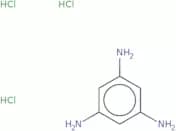
CAS:<p>1,3,5-Triaminobenzene trihydrochloride (TAT) is a low detection fluorescent probe that can be used as an introducing agent to introduce a triazine skeleton into a variety of heterocyclic amines. TAT has been shown to have the ability to bind with many different functional groups, such as amines and hydroxyls. The fluorescence of TAT is proportional to the amount of hydrogen bonding interactions between the probe and other molecules. TAT can be detected by means of energy-dispersive x-ray spectroscopy.</p>Formula:C6H12Cl3N3Purity:Min. 95%Color and Shape:White PowderMolecular weight:232.54 g/mol2,4,5-Triamino-6-hydroxypyrimidine sulfate
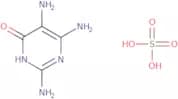
CAS:<p>2,4,5-Triamino-6-hydroxypyrimidine sulfate is a chemical compound that is a metabolite of the amino acid lysine. It is produced when lysine undergoes hydrolysis by enzymes and is converted to 2,4,5-triamino-6-hydroxypyrimidine sulfate by the addition of sulfate ions. This metabolite has been shown to have reactive properties and may play a role in mitochondrial dysfunction. 2,4,5-Triamino-6-hydroxypyrimidine sulfate has been used in binding experiments to measure the strength of protein interactions with other proteins or molecules. For example, it was used in experiments with dimethylformamide (DMF) to study the binding affinity of DMF with proteins such as cytochrome c oxidase. In these experiments, 2,4,5-triamino-6-hydroxypyrimidine sulfate was found to</p>Formula:C4H7N5O•H2SO4Purity:Min. 95%Color and Shape:PowderMolecular weight:239.21 g/mol5-Methoxy-2-nitrobenzoic acid
CAS:<p>5-Methoxy-2-nitrobenzoic acid is a compound that has been shown to have antiinflammatory properties. It has been found to inhibit the production of inflammatory mediators such as leukotrienes and prostaglandins. 5-Methoxy-2-nitrobenzoic acid also inhibits certain enzymes, such as cyclooxygenase and lipoxygenase, which are involved in the biosynthesis of these mediators. 5-Methoxy-2-nitrobenzoic acid may be useful in the treatment of inflammatory diseases such as arthritis or asthma. This drug can also be used for chemoprevention against cancer. The drug has been shown to inhibit the growth of tumor cells in vivo by oral administration. This is due to its ability to inhibit DNA synthesis and protein synthesis in cells by binding with DNA and inhibiting RNA synthesis through inhibition of ribonucleotide reductase.</p>Formula:C8H7NO5Purity:90%Color and Shape:PowderMolecular weight:197.14 g/mol2-Hydroxy-3-(4-methoxyphenyl)propanoic acid
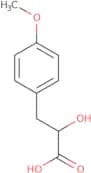
CAS:<p>2-Hydroxy-3-(4-methoxyphenyl)propanoic acid is a monocarboxylic acid that has been used in the synthesis of other compounds. It is an organic compound that is a colorless liquid with a fruity odor. 2-Hydroxy-3-(4-methoxyphenyl)propanoic acid is soluble in water, ethanol and ether. It is a weak acid with pKa values of 3.7 and 4.6. The chemical formula for this compound is C8H10O3P.</p>Formula:C10H12O4Purity:Min. 95%Molecular weight:196.2 g/mol1,2,4,5-Tetrabromobenzene
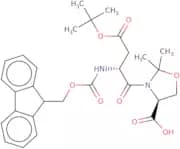
CAS:<p>1,2,4,5-Tetrabromobenzene is a brominated organic compound that forms a palladium complex. It has been studied by chemical ionization with an atmospheric pressure photoionization detector (APPI) and molecular modeling. The debromination reaction of 1,2,4,5-tetrabromobenzene was observed to take place in the liquid phase at room temperature. The detection limit for this reaction was found to be between 0.1 and 5 ppm. The most common form of 1,2,4,5-tetrabromobenzene is the monoclinic polymorph; however it can also exist as a trigonal system or as a hexagonal system when heated above its phase transition temperature. This compound is soluble in water and mercury chloride solutions but insoluble in ethers or chloroform.</p>Formula:C6H2Br4Purity:Min. 95%Color and Shape:White PowderMolecular weight:393.7 g/molFmoc-D-Asp(OtBu)-L-Ser(Psi(Me,Me)pro)-OH
<p>Fmoc-D-Asp(OtBu)-L-Ser(Psi(Me,Me)pro)-OH is a high quality reagent that can be used as an intermediate in the synthesis of complex compounds. It is a useful building block for the synthesis of speciality chemicals and research chemicals. Fmoc-D-Asp(OtBu)-L-Ser(Psi(Me,Me)pro)-OH is also a versatile building block that can be used to synthesize different types of compounds.</p>Formula:C29H34N2O8Purity:Min. 95%Color and Shape:PowderMolecular weight:538.59 g/mol1-[(2R)-2-(Hydroxymethyl)pyrrolidin-1-yl]ethan-1-one
CAS:<p>Versatile small molecule scaffold</p>Formula:C7H13NO2Purity:Min. 95%Molecular weight:143.18 g/molTrimethyl orthovalerate
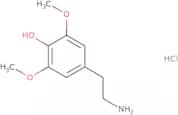
CAS:<p>Used for synthesis of dihydropyran-4-ones</p>Formula:C8H18O3Purity:Min. 97 Area-%Color and Shape:Colorless Clear LiquidMolecular weight:162.23 g/mol3,5-Dimethoxy-4-hydroxyphenethylamine hydrochloride
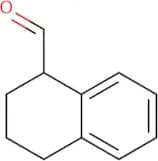
CAS:Controlled Product3,5-Dimethoxy-4-hydroxyphenethylamine hydrochloride is a fine chemical that is used as a building block for other compounds and as a reagent in research. It has been shown to be an effective intermediate in the synthesis of many complex compounds, such as 3,4-methylenedioxyamphetamine (MDA) and 3,4-methylenedioxymethamphetamine (MDMA), which are both psychoactive drugs. This building block can also be used to synthesize speciality chemicals such as psychotropic drugs or pharmaceuticals.Formula:C10H16ClNO3Purity:Min. 95%Color and Shape:PowderMolecular weight:233.69 g/mol1,2,3,4-Tetrahydronaphthalene-1-carbaldehyde
CAS:<p>1,2,3,4-Tetrahydronaphthalene-1-carbaldehyde is an organic compound that contains a nitrogen atom. It is used to treat autoimmune diseases and eye disorders. The compound has been shown to inhibit the production of glutamate in the retina of rats with experimental autoimmune encephalomyelitis (EAE), which may be due to its ability to suppress the activation of microglia cells and the release of proinflammatory cytokines. Tetrahydronaphthalene-1-carbaldehyde also inhibits cancer cell growth by binding to estrogen receptors and regulating gene expression. This drug also has anti-inflammatory effects by inhibiting cyclooxygenase 2 and lipoxygenase, as well as being a control agent for chronic kidney disease.</p>Formula:C11H12OPurity:Min. 95%Color and Shape:Clear LiquidMolecular weight:160.22 g/mol(R)-3-Aminoquinuclidine dihydrochloride
CAS:3-Aminoquinuclidine dihydrochloride is a high quality, reagent, complex compound that can be used as a useful intermediate to produce other fine chemicals. The CAS number for this compound is 123536-14-1. 3-Aminoquinuclidine dihydrochloride is a fine chemical that has many uses in the production of research chemicals and speciality chemicals. This compound can be used as a versatile building block in synthesis reactions and as a reaction component.Formula:C7H16Cl2N2Purity:Min. 97 Area-%Molecular weight:199.12 g/molRef: 3D-Q-100108
25gTo inquire50gTo inquire100gTo inquire250gTo inquire500gTo inquire-Unit-ggTo inquire1,8-Diazido-3,6-dioxaoctane
CAS:<p>1,8-Diazido-3,6-dioxaoctane is a synthetic molecule that is used in the synthesis of macrolactones, polymers, and biomolecules. It can be used as a bioconjugate to attach other functional groups to biomaterials and polymers, such as azido groups. This compound has high sensitivity and thermal stability with good solubility in organic solvents. 1,8-Diazido-3,6-dioxaoctane has been shown to be compatible with many functional groups and is an important monomer for use in cross-linked polymers.</p>Formula:C6H12N6O2Purity:Min. 95%Color and Shape:Colorless PowderMolecular weight:200.2 g/mol




![1-[(2R)-2-(Hydroxymethyl)pyrrolidin-1-yl]ethan-1-one](/_next/image/?url=https%3A%2Fstatic.cymitquimica.com%2Fproducts%2F3D%2Fthumb-webp%2FYEA95887.webp&w=3840&q=75)