Building Blocks
Subcategories of "Building Blocks"
- Boronic Acids & Boronic Acid Derivatives(5,781 products)
- Chiral Building Blocks(1,242 products)
- Hydrocarbon Building Blocks(6,101 products)
- Organic Building Blocks(61,033 products)
Found 205320 products of "Building Blocks"
Indole-3-acetic acid
CAS:Plant growth hormone. Regulates cell membrane electron transport and proton flux, plays important roles in a number of plant activities, including: development of the embryo, leafformation, phototropism, gravitropism, apical dominance, fruit development, abscission, root initiation.
Formula:C10H9NO2Purity:Min. 99 Area-%Molecular weight:175.19 g/molcis-2-Decenoic acid
CAS:cis-2-Decenoic acid is a fatty acid that acts as an antimicrobial agent. It has been shown to inhibit the growth of many human pathogens, including methicillin-resistant Staphylococcus aureus, Pseudomonas aeruginosa, and Candida albicans. cis-2-Decenoic acid also inhibits the production of proinflammatory cytokines by lipopolysaccharide and stimulates the production of anti-inflammatory cytokines. cis-2-Decenoic acid was also found to be effective against diabetic neuropathy biofilm in mice and may be useful for treatment of this condition.
Formula:C10H18O2Purity:Min. 98 Area-%Color and Shape:Clear LiquidMolecular weight:170.25 g/mol1-(3-Azetidinyl)-pyrrolidine dihydrochloride
CAS:1-(3-Azetidinyl)-pyrrolidine dihydrochloride is a high quality, versatile building block that can be used as a reagent in the synthesis of complex compounds and as an intermediate in the synthesis of fine chemicals. 1-(3-Azetidinyl)-pyrrolidine dihydrochloride is an excellent starting material for the synthesis of a wide range of compounds. It can also act as a speciality chemical or research chemical. 1-(3-Azetidinyl)-pyrrolidine dihydrochloride has CAS No. 1024589-68-1 and can be found on our website at www.chemistryworldstore.comFormula:C7H14N2•(HCl)2Purity:Min. 95%Color and Shape:PowderMolecular weight:199.12 g/molQuinoline 2,4-dicarboxylic acid
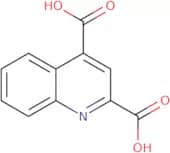
CAS:Quinoline 2,4-dicarboxylic acid (QDA) is a novel cytotoxic agent that targets cervical cancer cells. It inhibits the uptake of glucose and other nutrients by cervical cancer cells, leading to cell death through apoptosis. QDA also inhibits the expression of genes involved in cross-linking reactions, which are important for the structural integrity of proteins. This agent has been shown to inhibit the growth of aniline-induced breast cancer cells and glutamate-stimulated PC12 cells. QDA binds to DNA and forms covalent bonds with nucleotide bases, inhibiting DNA synthesis, as well as interfering with protein synthesis and cell division. The QDA mechanism is similar to that of benzoquinolines and estrone sulfate.
Formula:C11H7NO4Purity:Min. 95%Color and Shape:White PowderMolecular weight:217.18 g/molPiperazine-1,4-bis(2-ethanesulfonic acid) disodium
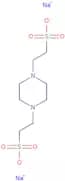
CAS:Piperazine-1,4-bis(2-ethanesulfonic acid) disodium (PIPES) is a conjugate that can be used as a catalyst in organic syntheses. PIPES is also used to modulate biological processes, such as the treatment of chronic pain. It has been shown to be an effective inhibitor of cholesterol esterase and gene product, which are enzymes associated with the development of Alzheimer's disease. PIPES has been shown to reduce axonal growth in vitro.Formula:C8H18N2O6S2•Na2Color and Shape:PowderMolecular weight:348.35 g/molCaffeic acid
CAS:Caffeic acid is naturally produced by the metabolism of plants and fungi. Caffeic acid has an antioxidant activity that can be higher than tocopherol in oil-in-water emulsions. Caffeic acid has proven antimicrobial activity against Staphylococcus aureus. In mice, caffeic acid inhibits the enzyme 5-lipoxygenase thus inhibititing the biosynthesis of the inflammatory mediators leukotrienes.Formula:C9H8O4Purity:Min. 98.0 Area-%Molecular weight:180.16 g/molRef: 3D-C-1500
1kgTo inquire25gTo inquire250gTo inquire500gTo inquire2500gTo inquire-Unit-ggTo inquire2-(Dimethylphosphoryl)-2-hydroxyacetic acid
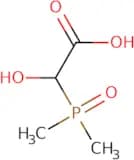
CAS:2-(Dimethylphosphoryl)-2-hydroxyacetic acid (DMPPA) is a herbicide that inhibits acetaldehyde dehydrogenase, an enzyme in the biochemical pathway of acetaldehyde biosynthesis. DMPPA does not have any effect on glutamate and l-threonine metabolism or on the formation of diketones. The target enzyme is activated by the addition of glyphosate to the leaves. DMPPA is used for diagnosis of velvetleaf (Abutilon theophrasti), which is a weed found in corn fields in North America. The chemical can be applied as a foliar spray or as a soil application, with many different formulations available. The chemical has been shown to be effective against graminaceous weeds such as barnyardgrass (Echinochloa crusgalli) and crabgrass (Digitaria spp.).Formula:C4H9O4PPurity:Min. 95%Molecular weight:152.09 g/molIndole-4-carboxylic acid methyl ester
CAS:Indole-4-carboxylic acid methyl ester is a fine chemical that is used as a building block in the synthesis of complex compounds. It can be used as a reagent, speciality chemical, or intermediate, and it has versatile applications in the synthesis of pharmaceuticals and dyes. Indole-4-carboxylic acid methyl ester has been shown to react with alcohols to form ketones, which are useful scaffolds for organic chemistry. It can also be used as a reaction component for the synthesis of other compounds.Formula:C10H9NO2Molecular weight:175.19 g/molRef: 3D-I-2510
1kgTo inquire50gTo inquire100gTo inquire250gTo inquire500gTo inquire-Unit-ggTo inquire2-Hydroxy-4-(pyrrolidin-1-yl)benzaldehyde
CAS:Versatile small molecule scaffoldFormula:C11H13NO2Purity:Min. 95%Molecular weight:191.23 g/moltert-Butyl 3-(piperidin-4-yl)azetidine-1-carboxylate
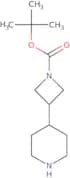
CAS:tert-Butyl 3-(piperidin-4-yl)azetidine-1-carboxylate is a fine chemical that is used as a reagent, research chemical, or speciality chemical. It has been shown to be a versatile building block and useful scaffold for the synthesis of complex compounds. This compound has been shown to undergo a number of reactions, including cyclization and Michael addition.Formula:C13H24N2O2Purity:Min. 95%Molecular weight:240.34 g/mol(+)-Diacetyl-D-tartaric acid
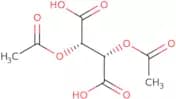
CAS:(+)-Diacetyl-D-tartaric acid is a chiral organic compound that is soluble in organic solvents. It can be used as a catalyst for the asymmetric synthesis of organic compounds and has been shown to cleave bonds with high stereoselectivity. (+)-Diacetyl-D-tartaric acid also exhibits mesomorphic properties, meaning it changes from liquid to solid and vice versa at certain temperatures. The optical activity of this compound can be seen by its magnetic resonance spectrum, which displays two peaks at different wavelengths. This molecule has been shown to have potential uses in microscopy, as well as for the preparation of monomers for magnetic materials.Formula:C8H10O8Purity:Min. 95%Color and Shape:White PowderMolecular weight:234.16 g/mol5-Carboxyvanillic acid
CAS:5-Carboxyvanillic acid is a chemical compound that belongs to the class of organic compounds known as carboxylic acids. It is also called o-vanillin, and it has a molecular weight of 116.19 g/mol. 5-Carboxyvanillic acid is one of the main ingredients in natural vanilla flavour. The hydroxyl group on the 5th carbon atom of this molecule reacts with a proton, which results in an addition reaction mechanism. The reaction proceeds through two steps: first, protonation occurs at the 5th carbon atom; second, deprotonation occurs at the 4th carbon atom. This chemical compound can be found as a white crystalline solid and as a volatile oil.Formula:C9H8O6Purity:Min. 95%Color and Shape:PowderMolecular weight:212.16 g/mol[Hydroxy(propan-2-yl)carbamoyl]formic acid
CAS:Hydroxy(propan-2-yl)carbamoyl formic acid is a metabolite of formaldehyde. It is used to measure formaldehyde in biological samples such as blood, serum, and urine. It also acts as a precursor for the production of other metabolites which are related to bowel disease and cardiac function. Hydroxy(propan-2-yl)carbamoyl formic acid has been shown to be a good indicator of iron homeostasis in vivo and in vitro models. This compound can be detected by chemiluminescence methods and can be used with zirconium oxide to study the effects on axonal growth.Formula:C5H9NO4Purity:Min. 95%Molecular weight:147.13 g/mol3-(4-Fluorophenyl)cyclopentan-1-amine
CAS:Versatile small molecule scaffoldFormula:C11H14FNPurity:(%) Min. 80%Molecular weight:179.23 g/mol4-Cyanobenzophenone
CAS:4-Cyanobenzophenone is an organic compound that is used as a reactant in the synthesis of other compounds. 4-Cyanobenzophenone has a number of applications, including use as a reagent in organic synthesis and as a building block for the synthesis of more complex compounds. It can also be used to synthesize antimalarial drugs, antibiotics, and other pharmaceuticals.Formula:C14H9NOPurity:Min. 98 Area-%Molecular weight:207.23 g/molIndole-3-acetyl-DL-tryptophan
CAS:Indole-3-acetyl-DL-tryptophan is a useful intermediate for the synthesis of various biologically active compounds. It is a white solid that can be synthesized from indole and tryptophan using acetic acid as a catalyst. Indole-3-acetyl-DL-tryptophan has been used in the synthesis of several complex compounds, such as β-(N) indolyloxypropanal, which is a fine chemical with potential use in the production of polyurethane foam. This compound has also been found to be an effective building block for the synthesis of novel scaffolds, such as 2-(1H-indol-2-yl)-N-(2H-[1,2,4]triazol-3-yl)ethanamine. Indole 3 acetyl DL tryptophan has also been shown to be an excellent intermediate in the synthesis of other heterocycles, such as pyrazolo
Formula:C21H19N3O3Molecular weight:361.4 g/molRef: 3D-I-1700
1gTo inquire5gTo inquire10gTo inquire500mgTo inquire2500mgTo inquire-Unit-ggTo inquire2-Amino-3-sulfanylpropanamide hydrochloride
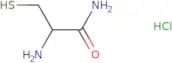
CAS:2-Amino-3-sulfanylpropanamide hydrochloride is an organic chemical compound that can be used as a reaction component, reagent, or useful scaffold. It has the CAS number 867-85-6 and is classified as a speciality chemical. This product is versatile and can be used as a building block for complex compounds or fine chemicals.Formula:C3H9ClN2OSPurity:Min. 95%Color and Shape:PowderMolecular weight:156.64 g/mol3-Iodopyrazin-2-ol
CAS:Versatile small molecule scaffoldFormula:C4H3IN2OPurity:Min. 95%Color and Shape:PowderMolecular weight:221.98 g/mol2,6-Dimethoxy-4-propylphenol
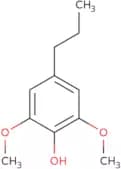
CAS:2,6-Dimethoxy-4-propylphenol is an organic solvent that is used in the synthesis of pharmaceuticals and agricultural chemicals. It is also a precursor for lignin, a natural polymer found in plants. 2,6-Dimethoxy-4-propylphenol can be converted to 2,6-dimethoxyphenol by hydrolysis with water vapor or an acid catalyst. The skeleton of 2,6-dimethoxy-4-propylphenol is a carbon chain with ether linkages that are susceptible to hydrolysis reactions. These reactions produce monomers and fatty acids.
Formula:C11H16O3Purity:Min. 95%Color and Shape:Clear LiquidMolecular weight:196.24 g/mol2,4-Dimethylpyrrole
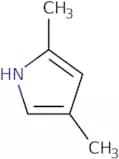
CAS:2,4-dimethylpyrrole (DMP) is a N-heterocycle with two methyl groups. It is used as a dopant in jet fuels to promote oxidative degradation and is converted into a reactive fuel (Kabana, 2011). To a lesser extent, 2,4-dimethylpyrrole has shown antifungal properties and has been used as an active agent against pathogens causing head blight and root rot in some cereals (Sefer, 2017).Formula:C6H9NPurity:Min. 96%Color and Shape:Brown Colorless Clear LiquidMolecular weight:95.14 g/mol





![[Hydroxy(propan-2-yl)carbamoyl]formic acid](/_next/image/?url=https%3A%2Fstatic.cymitquimica.com%2Fproducts%2F3D%2Fthumb-webp%2FHFA41803.webp&w=3840&q=75)