Building Blocks
Subcategories of "Building Blocks"
- Boronic Acids & Boronic Acid Derivatives(5,783 products)
- Chiral Building Blocks(1,242 products)
- Hydrocarbon Building Blocks(6,105 products)
- Organic Building Blocks(61,055 products)
Found 205383 products of "Building Blocks"
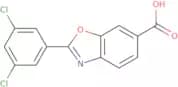
2-(3,5-Dichlorophenyl)-6-benzoxazole carboxylic acid
CAS:2-(3,5-Dichlorophenyl)-6-benzoxazole carboxylic acid (XZP) is a diagnostic agent used in the diagnosis of certain diseases. XZP binds to the matrix metalloproteinases and inhibits their activity, which has been shown to reduce the effects of these enzymes on collagen fibers. This inhibition can be demonstrated using a titration calorimetry technique. The drug is also a potential therapeutic agent for congestive heart failure, as it can stimulate cardiac natriuretic peptide levels and reduce transthyretin levels. XZP has also been shown to be an effective adjunct therapy in vancomycin therapy for treatment of tubulointerstitial injury in rats.Formula:C14H7Cl2NO3Purity:Min. 98 Area-%Color and Shape:PowderMolecular weight:308.12 g/mol3,5-Dihydroxytoluene monohydrate
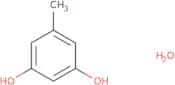
CAS:3,5-Dihydroxytoluene monohydrate (3,5-DHMT) is a glycan that is extracted from soybean. It has been shown to have antimicrobial properties and can be used in the treatment of hypoxic tumors. 3,5-DHMT binds to fatty acids on the surface of bacteria and prevents them from attaching to the cell wall. This prevents the bacteria from multiplying and causes their death. 3,5-DHMT has been shown to inhibit bacterial growth by binding to the molecule at an activation energy that is lower than other glycosidic bonds such as those found in glucose or ribose. The molecule also inhibits gland cells in humans which produce surfactant proteins, inhibiting mucus production and potentially reducing asthma symptoms.Formula:C7H8O2·H2OPurity:(%) Min. 98%Color and Shape:White Clear LiquidMolecular weight:142.15 g/mol1-Amino-3-phenyl-2-propanone Hydrochloride
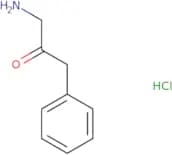
CAS:1-Amino-3-phenyl-2-propanone Hydrochloride is a versatile building block that can be used as a reagent and speciality chemical. It can also be used as an intermediate in the synthesis of other compounds and pharmaceuticals. 1-Amino-3-phenyl-2-propanone Hydrochloride is soluble in water, ethanol, ether, chloroform, benzene, and acetone. This product has a CAS No. 41173-00-6 and can be shipped to Canada.Formula:C9H12ClNOPurity:Min. 95%Molecular weight:185.65 g/molMinoxidil
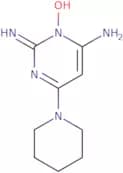
CAS:Anti-androgen; anti-hypertensive; alopecia treatmentFormula:C9H15N5OPurity:Min. 95%Color and Shape:White Off-White PowderMolecular weight:209.25 g/mol3-Fluoro-4-hydroxyphenylacetic acid
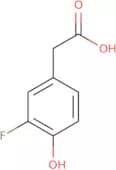
CAS:3-Fluoro-4-hydroxyphenylacetic acid is a fluorinated aromatic compound that has been shown to have serotonergic, dopaminergic and noradrenergic actions. 3-Fluoro-4-hydroxyphenylacetic acid has been shown to interact with the serotonin receptor 5HT2A in cell culture and in vivo, as well as with the dopamine receptor DRD2. This compound also interacts with the eschscholtzia receptor. 3-Fluoro-4-hydroxyphenylacetic acid is biosynthesized from 5-hydroxyindoleacetic acid (5HIAA).Formula:C8H7FO3Purity:Min. 95%Color and Shape:PowderMolecular weight:170.14 g/molKisspeptin-234 trifluoroacetate
CAS:Please enquire for more information about Kisspeptin-234 trifluoroacetate including the price, delivery time and more detailed product information at the technical inquiry form on this page
Formula:C63H78N18O13•(C2HF3O2)xPurity:Min. 95 Area-%Molecular weight:1,295.41 g/mol2-Chloro-N-(3,4-dihydro-2H-1-benzopyran-4-yl)acetamide
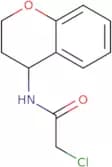
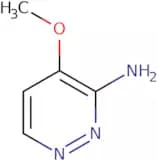
CAS:Versatile small molecule scaffoldFormula:C11H12ClNO2Purity:Min. 95%Color and Shape:PowderMolecular weight:225.67 g/mol4-Methoxypyridazin-3-amine
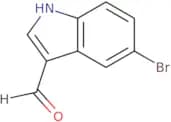
CAS:4-Methoxypyridazin-3-amine is a high quality chemical that can be used as a reagent, complex compound, useful intermediate, fine chemical, or speciality chemical. It is a versatile building block that can be used in reactions to make other chemicals such as pharmaceuticals and dyes. The 4-methoxypyridazin-3-amine molecule has shown promising results in research on the development of new drugs with potential anti-cancer properties.Formula:C5H7N3OPurity:Min. 95%Color and Shape:PowderMolecular weight:125.13 g/mol5-Bromoindole-3-carboxaldehyde
CAS:5-Bromoindole-3-carboxaldehyde is a water molecule that has been crystallized in the form of an amide. It is a chemical substance with asymmetric synthesis and significant antifungal activity. 5-Bromoindole-3-carboxaldehyde is active against some strains of the fungus Candida albicans and has been shown to inhibit the growth of kidney cells. This molecule also binds to the neurokinin 1 receptor and is used as a probe for fluorescence studies. The efficient method for synthesizing 5-Bromoindole-3-carboxaldehyde includes using silico analysis to confirm the structure on a computer, then performing an asymmetric synthesis with an acid catalyst to produce this compound.
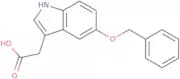
Formula:C9H6BrNOPurity:Min. 98 Area-%Color and Shape:PowderMolecular weight:224.05 g/mol5-Benzyloxyindole-3-acetic acid
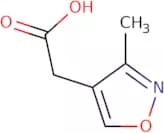
CAS:5-Benzyloxyindole-3-acetic acid is a synthetic chemical that is used as a plant growth regulator. It inhibits the uptake of other plant nutrients, such as nitrates and phosphate ions by roots, which leads to decreased plant growth. This compound also has an inhibitory effect on membranes and morphology. The inhibition of membrane transport can lead to cell death, which can be seen in the case of plants treated with this chemical. 5-Benzyloxyindole-3-acetic acid has been shown to affect the response pathway of plants at temperatures between c1-c3 degrees Celsius.Formula:C17H15NO3Purity:Min. 95%Color and Shape:PowderMolecular weight:281.31 g/mol2-(3-Methyl-1,2-oxazol-4-yl)acetic acid
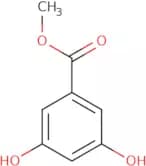
CAS:2-(3-Methyl-1,2-oxazol-4-yl)acetic acid is a useful reagent with a wide range of applications. It is the starting material for the synthesis of many complex compounds that are used in pharmaceuticals, agrochemicals, and other industries. 2-(3-Methyl-1,2-oxazol-4-yl)acetic acid has been shown to be a versatile building block for the synthesis of speciality chemicals and research chemicals. The compound has also been used as a reaction component in organic synthesis.Formula:C6H7NO3Purity:Min. 95%Color and Shape:PowderMolecular weight:141.12 g/mol3,5-Dihydroxybenzoic acid methyl ester
CAS:3,5-Dihydroxybenzoic acid methyl ester is a potent tyrosinase inhibitor that has been shown to be effective in inhibiting the production of melanin. 3,5-Dihydroxybenzoic acid methyl ester is an active ingredient in skin lightening products and has been shown to be more potent than kojic acid, arbutin and ascorbic acid. The reaction mechanism of 3,5-Dihydroxybenzoic acid methyl ester is stepwise with hydroxybenzoic acid (HBA) being the first substrate. HBA reacts with iron oxides to form a ferric hydroxide intermediate that undergoes gelation reactions with chloride ions. This results in a molecule containing three ether linkages, which are responsible for its inhibitory activity on the enzyme tyrosinase.
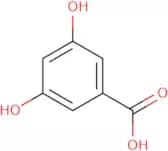
Formula:C8H8O4Purity:Min. 95%Color and Shape:PowderMolecular weight:168.15 g/mol3,5-Dihydroxybenzoic acid
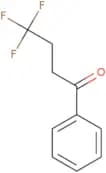
CAS:3,5-Dihydroxybenzoic acid is a phenolic compound that belongs to the class of aromatic compounds. It is an inhibitor of the enzyme 3-hydroxyphenylpyruvate dioxygenase and is used in the treatment of obesity. It has been shown to have a low potency for inhibiting this enzyme, although it does not inhibit other enzymes such as p-hydroxybenzoate hydroxylase. 3,5-Dihydroxybenzoic acid binds to human serum albumin through hydrogen bonding interactions and can inhibit the absorption of dietary phenols by binding to them. This compound also acts as a protocatechuic acid structural analog and has been shown to be hydrated in solution.Formula:C7H6O4Purity:Min. 95%Color and Shape:White PowderMolecular weight:154.12 g/mol4,4,4-Trifluoro-1-phenylbutan-1-one
CAS:4,4,4-Trifluoro-1-phenylbutan-1-one is an organic solvent and inexpensively reactant that is used in the production of dioxane. It is a colorless liquid with a pungent odor that can be found in many industrial applications. The substance has been shown to be toxic to humans at high doses.
Formula:C10H9F3OPurity:Min. 95%Color and Shape:PowderMolecular weight:202.17 g/mol3,4-Dihydroxybenzoic acid
CAS:Dietary polyphenolFormula:C7H6O4Purity:Min. 95%Color and Shape:PowderMolecular weight:154.12 g/mol2-{Bicyclo[2.2.1]heptan-2-yl}acetamide
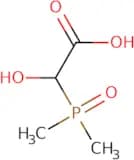
CAS:Versatile small molecule scaffoldFormula:C9H15NOPurity:Min. 95%Color and Shape:PowderMolecular weight:153.22 g/mol2-(Dimethylphosphoryl)-2-hydroxyacetic acid
CAS:2-(Dimethylphosphoryl)-2-hydroxyacetic acid (DMPPA) is a herbicide that inhibits acetaldehyde dehydrogenase, an enzyme in the biochemical pathway of acetaldehyde biosynthesis. DMPPA does not have any effect on glutamate and l-threonine metabolism or on the formation of diketones. The target enzyme is activated by the addition of glyphosate to the leaves. DMPPA is used for diagnosis of velvetleaf (Abutilon theophrasti), which is a weed found in corn fields in North America. The chemical can be applied as a foliar spray or as a soil application, with many different formulations available. The chemical has been shown to be effective against graminaceous weeds such as barnyardgrass (Echinochloa crusgalli) and crabgrass (Digitaria spp.).Formula:C4H9O4PPurity:Min. 95%Molecular weight:152.09 g/mol5-Fluoroindole
CAS:5-Fluoroindole is a reagent that can be used in organic synthesis. It can be used to synthesize a variety of compounds, including pharmaceuticals and agrochemicals. 5-Fluoroindole is also useful as an intermediate for the synthesis of complex molecules or fine chemicals. 5-Fluoroindole can be used as a building block for the preparation of other chemical compounds. It is a versatile building block with many applications in research and industry.Formula:C8H6FNMolecular weight:135.14 g/mol2-(Bromomethyl)benzoic acid
CAS:2-(Bromomethyl)benzoic acid is a functional group that can be found in many organic compounds. It is a derivative of phthalic acid and has some similar properties, including the ability to form micelles and radical species. 2-(Bromomethyl)benzoic acid has been shown to react with carbon tetrachloride or terephthalic acid to produce peroxides. This reaction is initiated by oxidation of the carbon-carbon double bond, which produces a radical pair that reacts with oxygen in the air to form radicals that are stabilized by resonance. 2-(Bromomethyl)benzoic acid also reacts with an inorganic base such as sodium hydroxide or potassium hydroxide to produce bromine gas and water.Formula:C8H7BrO2Purity:Min. 97 Area-%Color and Shape:White Off-White PowderMolecular weight:215.04 g/mol3-Formylindole-5-carboxylic acid methyl ester
CAS:3-Formylindole-5-carboxylic acid methyl ester is a chemical compound that can be used as a building block or intermediate for the synthesis of more complex compounds. 3-Formylindole-5-carboxylic acid methyl ester has a high purity and is an excellent reagent for use in research. This chemical may also be used as a starting material for the synthesis of speciality chemicals and fine chemicals.Formula:C11H9NO3Purity:Min. 98.0 Area-%Molecular weight:203.20 g/mol


![2-{Bicyclo[2.2.1]heptan-2-yl}acetamide](/_next/image/?url=https%3A%2Fstatic.cymitquimica.com%2Fproducts%2F3D%2Fthumb-webp%2FBDA64995.webp&w=3840&q=75)