Building Blocks
This section contains fundamental products for the synthesis of organic and biological compounds. Building blocks are the essential starting materials used to construct complex molecules through various chemical reactions. They play a critical role in drug discovery, material science, and chemical research. At CymitQuimica, we offer a diverse range of high-quality building blocks to support your innovative research and industrial projects, ensuring you have the essential components for successful synthesis.
Subcategories of "Building Blocks"
- Boronic Acids & Boronic Acid Derivatives(5,778 products)
- Chiral Building Blocks(1,242 products)
- Hydrocarbon Building Blocks(6,098 products)
- Organic Building Blocks(61,059 products)
Found 199580 products of "Building Blocks"
Sort by
Purity (%)
0
100
|
0
|
50
|
90
|
95
|
100
2-Hydroxy-5-nitrobenzohydrazide
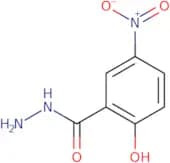
CAS:<p>2-Hydroxy-5-nitrobenzohydrazide is an antibacterial agent that binds to the hydroxylase domain of bacterial 7-ethoxycoumarin hydroxylase, a key enzyme in the synthesis of tetranuclear cofactors. It forms a coordination geometry with the metal ions that are required for this enzyme, thereby blocking its activity. 2-Hydroxy-5-nitrobenzohydrazide has been shown to be effective against bacteria such as Staphylococcus aureus, Escherichia coli, and Pseudomonas aeruginosa. This compound also has a specific affinity for mononuclear bacteria such as Proteus mirabilis and Klebsiella pneumoniae.<br>2-Hydroxy-5-nitrobenzohydrazide is not active against Gram positive bacteria due to its lack of binding affinity for the epoxide hydrolase domain of bacterial 7-ethoxycou</p>Formula:C7H7N3O4Purity:Min. 95%Molecular weight:197.15 g/molBenzyl phenyl ether
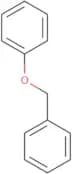
CAS:<p>Benzyl phenyl ether is a catalyst that is used in the synthesis of amide compounds for pharmaceuticals, insecticides, and other organic compounds. It has been shown to inhibit the growth of infectious diseases by inhibiting the transfer reactions that are required for the production of amides from amino acids. Benzyl phenyl ether also inhibits autoimmune diseases by blocking the reaction between amines and nitrosamines. It also reacts with lignin which is found in plant cell walls and can be used as a catalyst in the manufacture of phenol and phenolic resins.</p>Formula:C13H12OPurity:Min. 95%Molecular weight:184.23 g/mol2-Methoxy-1-naphthoic Acid
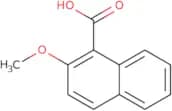
CAS:<p>2-Methoxy-1-naphthoic Acid is a molecule with two methoxy groups and one naphthalene ring. It has been shown to induce DNA adducts in the human epidermoid carcinoma cells, which may be due to its covalent binding to nucleic acids. The frequency of this compound has been shown to shift when it interacts with murine leukemia cells, which may be due to the formation of intramolecular hydrogen bonds. 2-Methoxy-1-naphthoic Acid also has the ability to form hydrogen bonds with other molecules, such as with the chelate ring of metal ions and other organic compounds. This property can be used for techniques such as nuclear magnetic resonance (NMR) spectroscopy and X-ray crystallography.</p>Formula:C12H10O3Purity:Min. 95%Molecular weight:202.21 g/molMethyl 1-hydroxy-2-naphthoate
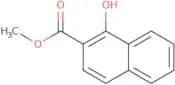
CAS:<p>Methyl 1-hydroxy-2-naphthoate is a wittig reaction product of hexane and chlorides. It is an alkyl ester that can be isolated as a colorless liquid with a boiling point of 87°C. The molecule has two tautomers, one of which is the 1-hydroxy-2-acetonaphthone and the other is the 1,2,3,4-tetrahydronapthalene. The hydroxynaphthoate group can undergo photostability to form the 1-hydroxy-2-acetonaphthone tautomer.</p>Formula:C12H10O3Purity:Min. 95%Molecular weight:202.21 g/mol4-Trifluoromethanesulfinylbenzoic acid
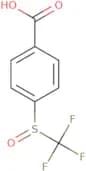
CAS:Versatile small molecule scaffoldFormula:C8H5F3O3SPurity:Min. 95%Molecular weight:238.19 g/mol2,4-Dichloro-5-nitrobenzene-1-sulfonyl chloride
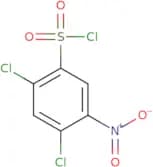
CAS:Versatile small molecule scaffoldFormula:C6H2Cl3NO4SPurity:Min. 95%Molecular weight:290.5 g/mol(2S)-2-(Carbamoylamino)-3-phenylpropanoic acid
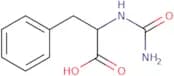
CAS:<p>(2S)-2-(Carbamoylamino)-3-phenylpropanoic acid is a nutritional supplement that is used as a transcriptional regulator. It binds to the hydroxyl group of DNA and alters gene expression. (2S)-2-(Carbamoylamino)-3-phenylpropanoic acid has been shown to suppress the expression of chronic kidney disease genes in mice, which may be due to its ability to inhibit hydrogenated protein synthesis. This drug also inhibits monoamine reuptake and cross-links dna strands. (2S)-2-(Carbamoylamino)-3-phenylpropanoic acid is also an inhibitor of dna replication and has been shown to bind to monoclonal antibodies that recognize specific bacterial strains, including Mycobacterium tuberculosis.</p>Formula:C10H12N2O3Purity:Min. 95%Molecular weight:208.21 g/mol3',4'-Dihydro-1'H-spiro[cyclohexane-1,2'-quinazoline]-4'-one
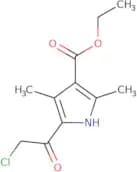
CAS:Versatile small molecule scaffoldFormula:C13H16N2OPurity:Min. 95%Molecular weight:216.28 g/molEthyl 5-(2-chloroacetyl)-2,4-dimethyl-1H-pyrrole-3-carboxylate
CAS:Versatile small molecule scaffoldFormula:C11H14ClNO3Purity:Min. 95%Molecular weight:243.68 g/mol2,3-Dimethoxy-6,7,8,9-tetrahydro-5H-benzo[7]annulen-5-one
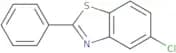
CAS:Versatile small molecule scaffoldFormula:C13H16O3Purity:Min. 95%Molecular weight:220.3 g/mol5-Chloro-2-phenyl-1,3-benzothiazole
CAS:<p>5-Chloro-2-phenyl-1,3-benzothiazole is a benzothiazole with a phenyl ring and a phenyl group. It has two dihedral angles: one at the center of the ring system, and the other at the junction of the phenyl and benzene rings. The molecule has a molecular weight of 229.5 g/mol and a melting point of 243°C. 5-Chloro-2-phenyl-1,3-benzothiazole is used as an intermediate in chemical synthesis.</p>Formula:C13H8ClNSPurity:Min. 95%Molecular weight:245.73 g/mol3-(Trifluoromethylsulphonyl)benzoic acid
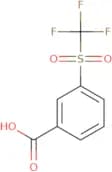
CAS:Versatile small molecule scaffoldFormula:C8H5F3O4SPurity:Min. 95%Molecular weight:254.18 g/mol4-Phenylbicyclo[2.2.2]octane-1-carboxylic acid ee
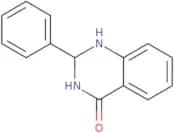
CAS:Versatile small molecule scaffoldFormula:C15H18O2Purity:Min. 95%Molecular weight:230.3 g/mol2-Phenyl-2,3-dihydroquinazolin-4(1H)-one
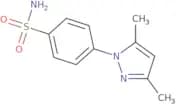
CAS:<p>2-Phenyl-2,3-dihydroquinazolin-4(1H)-one (2PDQ) is a heterocyclic compound that has been used as a building block for the synthesis of other heterocycles. 2PDQ is an efficient catalyst for the condensation reaction between benzaldehyde and anthranilamide, which produces a mixture of products. This mixture can be purified using column chromatography. The optimal conditions for this reaction are pH 8 and temperature 80°C. 2PDQ can also be used to catalyze the condensation of glycols with aldehydes to produce polyethylene glycol (PEG) oligomers. In addition, it can be used in supramolecular systems by binding β-cyclodextrin, which stabilizes the molecules involved in these systems.</p>Formula:C14H12N2OPurity:Min. 95%Molecular weight:224.26 g/mol4-(3,5-Dimethyl-1H-pyrazol-1-yl)benzene-1-sulfonamide
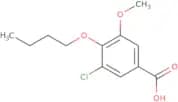
CAS:<p>4-(3,5-Dimethyl-1H-pyrazol-1-yl)benzenesulfonamide is a centrosymmetric molecule with a dimer in the central position. It has hydrogen bonds that form between two molecules of the same type. The molecule has two hydrogen atoms bonded to each oxygen atom on the sulfonamide group and one hydrogen atom bonded to each carbon atom on the benzene ring. This molecule also has coordinated bonds, which are formed when an electron is shared by two atoms. This molecule also has symmetry in its molecular structure and can be found in nature as a component of some enzymes.</p>Formula:C11H13N3O2SPurity:Min. 95%Molecular weight:251.31 g/mol4-Butoxy-3-chloro-5-methoxybenzoic acid
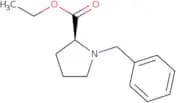
CAS:<p>Versatile small molecule scaffold</p>Formula:C12H15ClO4Purity:Min. 95%Molecular weight:258.7 g/molethyl benzyl-L-prolinate
CAS:<p>Ethyl benzyl-L-prolinate is a nitrogenous organic compound that can be prepared by the oxidation of ethyl benzyl-L-proline. Crystalline ethyl benzyl-L-prolinate is an enantioselective reagent for the cyanosilylation of aldehydes with phenyllithium. It is also a stable magnesium reagent that has been used in preparative methods to produce α,β-unsaturated ketones and esters.</p>Formula:C14H19NO2Purity:Min. 95%Molecular weight:233.31 g/mol2-[(4-Bromophenyl)sulfanyl]pyridine-3-carboxylic acid
CAS:Versatile small molecule scaffoldFormula:C12H8BrNO2SPurity:Min. 95%Molecular weight:310.17 g/molDiphenamid
CAS:<p>Diphenamid is a diphenyl ether herbicide. It is used to control weeds in agricultural crops and dry hay, straw, and cereal grains. Diphenamid has been shown to inhibit the growth of certain fungi such as Triticum aestivum. The toxicological effects of diphenamid have been studied extensively and it has been classified as practically non-toxic to humans, with no evidence of carcinogenicity or mutagenicity. Diphenamid has also been shown to be an effective weed killer for plants that are grown in low light conditions. This study was conducted using a flow system that simulated low light conditions, which consisted of anhydrous sodium carbonate solution and methanol solvent. A linear regression analysis showed that the uptake rate increased with increasing concentrations of diphenamid in the nutrient solution.</p>Formula:C16H17NOPurity:Min. 95%Molecular weight:239.31 g/molBis(2-hydroxyethyl) terephthalate
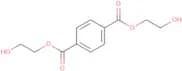
CAS:Bis(2-hydroxyethyl) terephthalate (BHT) is the glycol ester of terephthalic acid. It is a colorless, odorless, viscous liquid that is soluble in water and has a synergetic effect with polyethylene glycols. BHT is used to increase the stability of plastics and other materials against chemical degradation by inhibiting oxidation reactions. This compound can be prepared by reacting trifluoroacetic acid with ethylene glycol. The activation energy for this reaction is 28 kJ/mol. The reaction mechanism involves an intramolecular hydrogen bond between the hydroxy group on the 2-position of the terephthalate molecule and the carbonyl group on the 1-position. The high values are due to its ability to intercept radiation from UV light sources and gamma rays.Formula:C12H14O6Purity:94%Molecular weight:254.24 g/mol

![3',4'-Dihydro-1'H-spiro[cyclohexane-1,2'-quinazoline]-4'-one](/_next/image/?url=https%3A%2Fstatic.cymitquimica.com%2Fproducts%2F3D%2Fthumb-webp%2FAAA95031.webp&w=3840&q=75)
![2,3-Dimethoxy-6,7,8,9-tetrahydro-5H-benzo[7]annulen-5-one](/_next/image/?url=https%3A%2Fstatic.cymitquimica.com%2Fproducts%2F3D%2Fthumb-webp%2FAAA95199.webp&w=3840&q=75)
![4-Phenylbicyclo[2.2.2]octane-1-carboxylic acid ee](/_next/image/?url=https%3A%2Fstatic.cymitquimica.com%2Fproducts%2F3D%2Fthumb-webp%2FAAA95369.webp&w=3840&q=75)
![2-[(4-Bromophenyl)sulfanyl]pyridine-3-carboxylic acid](/_next/image/?url=https%3A%2Fstatic.cymitquimica.com%2Fproducts%2F3D%2Fthumb-webp%2FAAA95552.webp&w=3840&q=75)