Building Blocks
This section contains fundamental products for the synthesis of organic and biological compounds. Building blocks are the essential starting materials used to construct complex molecules through various chemical reactions. They play a critical role in drug discovery, material science, and chemical research. At CymitQuimica, we offer a diverse range of high-quality building blocks to support your innovative research and industrial projects, ensuring you have the essential components for successful synthesis.
Subcategories of "Building Blocks"
- Boronic Acids & Boronic Acid Derivatives(5,778 products)
- Chiral Building Blocks(1,242 products)
- Hydrocarbon Building Blocks(6,098 products)
- Organic Building Blocks(61,059 products)
Found 199580 products of "Building Blocks"
Sort by
Purity (%)
0
100
|
0
|
50
|
90
|
95
|
100
2-[2-Phenyl-4-(thiophen-2-yl)-1,3-thiazol-5-yl]acetic acid
CAS:<p>Versatile small molecule scaffold</p>Formula:C15H11NO2S2Purity:Min. 95%Molecular weight:301.4 g/mol2-[4-(4-Methylphenyl)-2-phenyl-1,3-thiazol-5-yl]acetic acid
CAS:<p>Versatile small molecule scaffold</p>Formula:C18H15NO2SPurity:Min. 95%Molecular weight:309.4 g/molN-[2-(Dimethylamino)ethyl]pyridin-2-amine
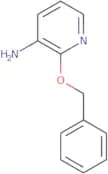
CAS:Versatile small molecule scaffoldFormula:C9H15N3Purity:Min. 95%Molecular weight:165.24 g/mol2-(Benzyloxy)pyridin-3-amine
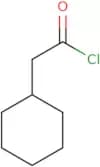
CAS:<p>Versatile small molecule scaffold</p>Formula:C12H12N2OPurity:Min. 95%Molecular weight:200.24 g/molCyclohexylacetyl chloride
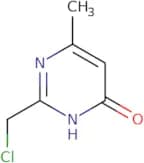
CAS:<p>Cyclohexylacetyl chloride is a versatile chemical compound that has various applications in research and industry. It is commonly used as a reagent in organic synthesis, particularly in the preparation of indolin-2-one derivatives. Cyclohexylacetyl chloride can also be used as a starting material for the synthesis of fatty acids and other organic compounds. Additionally, it is utilized in the production of biomass electrodes and has been found to have potential applications in the field of pharmaceuticals. With its wide range of uses, cyclohexylacetyl chloride is an essential component for researchers and industries alike.</p>Formula:C8H13ClOPurity:Min. 95%Molecular weight:160.64 g/mol2-(Chloromethyl)-6-methylpyrimidin-4-ol
CAS:<p>Versatile small molecule scaffold</p>Formula:C6H7ClN2OPurity:Min. 95%Molecular weight:158.59 g/mol4,7-Dichloroindolin-2-one
CAS:<p>Versatile small molecule scaffold</p>Formula:C8H5Cl2NOPurity:Min. 95%Molecular weight:202.03 g/mol2-methyl-3-nitrobenzaldehyde
CAS:<p>2-Methyl-3-nitrobenzaldehyde is a versatile compound that has various applications in different fields. It is commonly used as a fluorescent probe for detecting collagen, growth factors, fatty acids, and porphyrins. This compound also plays a role in the synthesis of TGF-beta, ketorolac, gamma-butyrolactone, dopamine, and other important molecules. Additionally, 2-Methyl-3-nitrobenzaldehyde is known for its phase transfer properties, making it useful in halide reactions and organic synthesis. Its polymorphic form allows for different applications depending on the specific needs of the research or industry. Overall, this compound is a valuable tool for scientists and researchers working in the field of research chemicals.</p>Formula:C8H7NO3Purity:Min. 95%Molecular weight:165.1 g/mol4-[2-(Pyrrolidin-1-yl)ethoxy]phenol
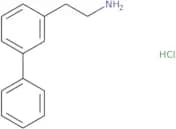
CAS:Versatile small molecule scaffoldFormula:C12H17NO2Purity:Min. 95%Molecular weight:207.27 g/mol2-(3-Phenylphenyl)ethan-1-amine hydrochloride
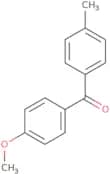
CAS:<p>Versatile small molecule scaffold</p>Formula:C14H16ClNPurity:Min. 95%Molecular weight:233.73 g/mol(4-Methoxyphenyl)(4-methylphenyl)methanone
CAS:<p>The chemical formula for 4-Methoxyphenyl)(4-methylphenyl)methanone is C13H14O2. The molecular weight of this compound is 216.24 g/mol. This liquid boils at a temperature of 160 °C and freezes at -6 °C. It has a density of 1.065 g/cm3 and a refractive index of 1.4991. This compound is soluble in ether, acetone, benzene, and chloroform but insoluble in water.END></p>Formula:C15H14O2Purity:Min. 95%Molecular weight:226.27 g/molN-[(3,5-Dimethyl-1-phenyl-1H-pyrazol-4-yl)methylidene]hydroxylamine
CAS:<p>Versatile small molecule scaffold</p>Formula:C12H13N3OPurity:Min. 95%Molecular weight:215.25 g/mol3-(2-Fluorophenyl)-2-thioxo-2,3-dihydroquinazolin-4(1H)-one
CAS:<p>Versatile small molecule scaffold</p>Formula:C14H9FN2OSPurity:Min. 95%Molecular weight:272.3 g/mol2-Methyl-6-(pyrrolidin-2-yl)pyridine
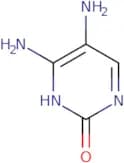
CAS:Versatile small molecule scaffoldFormula:C10H14N2Purity:Min. 95%Molecular weight:162.23 g/mol4,5-diamino-1,2-dihydropyrimidin-2-one
CAS:<p>4,5-diamino-1,2-dihydropyrimidin-2-one is a versatile compound with various applications in different fields. It is commonly used in research as a precursor for the synthesis of other chemicals and compounds. This compound can be synthesized from glycolaldehyde and electrophoresis has been used to study its properties.</p>Formula:C4H6N4OPurity:Min. 95%Molecular weight:126.12 g/mol5-Amino-1-methyl-1,2,3,4-tetrahydropyrimidine-2,4-dione
CAS:Versatile small molecule scaffoldFormula:C5H7N3O2Purity:Min. 95%Molecular weight:141.13 g/mol3-(Acetylamino)benzenesulfonyl chloride
CAS:<p>3-(Acetylamino)benzenesulfonyl chloride is a versatile chemical compound that has various applications across different industries. It is commonly used as a reagent in organic synthesis and research laboratories. This compound is known for its high purity and stability, making it ideal for use in demanding experimental procedures.</p>Formula:C8H8ClNO3SPurity:Min. 95%Molecular weight:233.67 g/mol4-Hydrazinyl-6-methoxypyrimidine
CAS:<p>Versatile small molecule scaffold</p>Formula:C5H8N4OPurity:Min. 95%Molecular weight:140.14 g/mol3-[(Pyridin-2-ylmethyl)sulfanyl]propanoic acid
CAS:<p>Versatile small molecule scaffold</p>Formula:C9H11NO2SPurity:Min. 95%Molecular weight:197.26 g/mol2-Amino-1-(naphthalen-1-yl)ethan-1-ol
CAS:Versatile small molecule scaffoldFormula:C12H13NOPurity:Min. 95%Molecular weight:187.24 g/mol
![2-[2-Phenyl-4-(thiophen-2-yl)-1,3-thiazol-5-yl]acetic acid](/_next/image/?url=https%3A%2Fstatic.cymitquimica.com%2Fproducts%2F3D%2Fthumb-webp%2FYAA82162.webp&w=3840&q=75)

![2-[4-(4-Methylphenyl)-2-phenyl-1,3-thiazol-5-yl]acetic acid](/_next/image/?url=https%3A%2Fstatic.cymitquimica.com%2Fproducts%2F3D%2Fthumb-webp%2FYAA82163.webp&w=3840&q=75)
![N-[2-(Dimethylamino)ethyl]pyridin-2-amine](/_next/image/?url=https%3A%2Fstatic.cymitquimica.com%2Fproducts%2F3D%2Fthumb-webp%2FYAA82672.webp&w=3840&q=75)
![4-[2-(Pyrrolidin-1-yl)ethoxy]phenol](/_next/image/?url=https%3A%2Fstatic.cymitquimica.com%2Fproducts%2F3D%2Fthumb-webp%2FYAA87768.webp&w=3840&q=75)
![N-[(3,5-Dimethyl-1-phenyl-1H-pyrazol-4-yl)methylidene]hydroxylamine](/_next/image/?url=https%3A%2Fstatic.cymitquimica.com%2Fproducts%2F3D%2Fthumb-webp%2FYAA89008.webp&w=3840&q=75)
![3-[(Pyridin-2-ylmethyl)sulfanyl]propanoic acid](/_next/image/?url=https%3A%2Fstatic.cymitquimica.com%2Fproducts%2F3D%2Fthumb-webp%2FYAA90907.webp&w=3840&q=75)