Building Blocks
Subcategories of "Building Blocks"
- Boronic Acids & Boronic Acid Derivatives(5,778 products)
- Chiral Building Blocks(1,243 products)
- Hydrocarbon Building Blocks(6,099 products)
- Organic Building Blocks(61,038 products)
Found 205376 products of "Building Blocks"
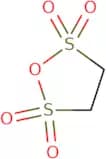
1,2,5-Oxadithiolane 2,2,5,5-tetraoxide
CAS:Versatile small molecule scaffold
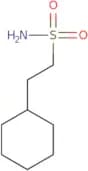
Formula:C2H4O5S2Purity:Min. 95%Molecular weight:172.19 g/mol2-Cyclohexylethane-1-sulfonamide
CAS:Versatile small molecule scaffold
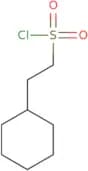
Formula:C8H17NO2SPurity:Min. 95%Molecular weight:191.29 g/mol2-Cyclohexylethane-1-sulfonyl chloride
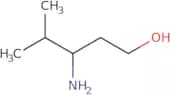
CAS:Versatile small molecule scaffoldFormula:C8H15ClO2SPurity:Min. 95%Molecular weight:210.72 g/mol3-Amino-4-methyl-pentan-1-ol
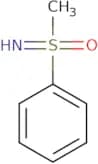
CAS:Versatile small molecule scaffoldFormula:C6H15NOPurity:Min. 95%Molecular weight:117.19 g/molS-Methyl-S-phenylsulfoximine
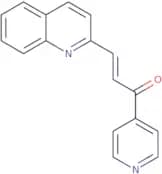
CAS:S-Methyl-S-phenylsulfoximine is a chiral sulfoxide that has been used as a reagent in organic synthesis. It reacts with alkenes to form symmetrical sulfoxides. S-Methyl-S-phenylsulfoximine is also known to react with carbonyl groups in the presence of an acid catalyst, forming an acetonitrile derivative. S-Methyl-S-phenylsulfoximine can be synthesized by reacting sulfoxide with acetone, followed by hydrogenation of the resulting alcohol. This functional group has been used in control experiments to probe the mechanism of photocatalytic reactions and it has been used as a surrogate for drug molecules.Formula:C7H9NOSPurity:Min. 95%Molecular weight:155.22 g/mol1-(Pyridin-4-yl)-3-(quinolin-2-yl)prop-2-en-1-one
CAS:1-(Pyridin-4-yl)-3-(quinolin-2-yl)prop-2-en-1-one is a small molecule that inhibits the aerobic glycolysis pathway in cancer cells. It has been shown to induce immunogenic cell death in colorectal adenocarcinoma cells and to reduce tumor size in immunodeficient mice. This compound may be useful for cancer therapy as it targets the immune system, rather than directly killing tumor cells. 1-(Pyridin-4-yl)-3-(quinolin-2-yl)prop-2-en-1-one has also been shown to inhibit aneurysm formation and to have antiangiogenic properties in mouse models of pancreatic cancer.
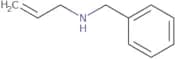
Formula:C17H12N2OPurity:Min. 95%Molecular weight:260.3 g/molN-Allylbenzylamine
CAS:N-Allylbenzylamine is an aliphatic hydrocarbon that is found in a variety of natural sources, including peanuts. It has shown anticancer activity against certain cell lines and may be useful in the treatment of cancer. N-Allylbenzylamine reacts with primary amines to form reaction products such as benzyl amine, which is used as a polymerization initiator in the production of polyurethane. The β-amino acid group can be incorporated into proteins by substitution with an amino acid side chain and is important for bone metabolism. N-Allylbenzylamine has also been shown to have anti-inflammatory properties due to its ability to inhibit prostaglandin synthesis.
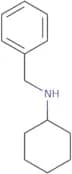
Formula:C10H13NPurity:Min. 95%Molecular weight:147.22 g/molN-Benzylcyclohexanamine
CAS:N-Benzylcyclohexanamine is a protected cyclohexylamine and is soluble in organic solvents such as benzene and chloroform, but insoluble in water.
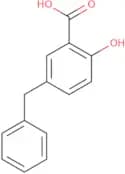
Formula:C13H19NPurity:Min. 95%Color and Shape:Clear LiquidMolecular weight:189.3 g/mol5-Benzyl-2-hydroxybenzoic acid
CAS:Versatile small molecule scaffold
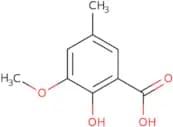
Formula:C14H12O3Purity:Min. 95%Molecular weight:228.24 g/mol2-Hydroxy-3-methoxy-5-methylbenzoic acid
CAS:2-Hydroxy-3-methoxy-5-methylbenzoic acid is a molecule that has been shown to be an effective antioxidant. It has been shown to have an activation energy of 36.8 kJ/mol and a high rate of reaction with peroxides. The kinetic parameters for 2-hydroxy-3-methoxy-5-methylbenzoic acid are not well understood, but it has been experimentally determined that the oxidation reactions are fast, irreversible, and exothermic. It can also be used as a model compound for lignin oxidation in the environment. The molecular structure is shown below:
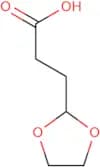
Formula:C9H10O4Purity:Min. 95%Molecular weight:182.17 g/mol3-(1,3-Dioxolan-2-yl)propanoic acid
CAS:Versatile small molecule scaffoldFormula:C6H10O4Purity:Min. 95%Molecular weight:146.14 g/molHexahydro-benzo[1,3]dioxol-2-one
CAS:Versatile small molecule scaffold
Formula:C7H10O3Purity:Min. 95%Molecular weight:142.15 g/molEthyl 5-formyl-3,4-dimethyl-1H-pyrrole-2-carboxylate
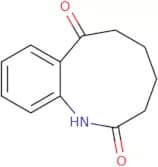
CAS:Ethyl 5-formyl-3,4-dimethyl-1H-pyrrole-2-carboxylate is a conformationally restricted pyrrole derivative that has been synthesized as the dihydrate. It is a layered compound with a centrosymmetric crystal structure. The molecule has two imine groups and a phenyl ring connected to the central carbon atom by two hydrogen bonds. The hydrazone group also forms hydrogen bonds with the carbonyl group of the adjacent molecule, which is stabilized by resonance.Formula:C10H13NO3Purity:Min. 95%Molecular weight:195.21 g/mol2,3,4,5,6,7-Hexahydro-1H-1-benzazonine-2,7-dione
CAS:Versatile small molecule scaffold
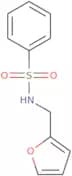
Formula:C12H13NO2Purity:Min. 95%Molecular weight:203.24 g/molN-(Furan-2-ylmethyl)benzenesulfonamide
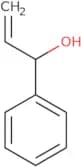
CAS:Versatile small molecule scaffoldFormula:C11H11NO3SPurity:Min. 95%Molecular weight:237.28 g/molα-Vinylbenzyl alcohol
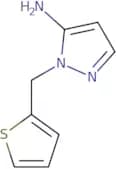
CAS:α-Vinylbenzyl alcohol is a chiral compound with a hydroxyl group. It is an allylation product of hydrochloric acid and allyl chloride. α-Vinylbenzyl alcohol has been shown to be effective against allergic reactions in human serum, which are caused by the release of histamine. This chemical compound also has nucleophilic attack capabilities that can produce reaction products such as malonic acid or allyl carbonate. The effective dose for this drug is not known, but it may be around 1mg/kg of body weight.Formula:C9H10OPurity:Min. 95%Molecular weight:134.17 g/mol1-(Thiophen-2-ylmethyl)-1H-pyrazol-5-amine
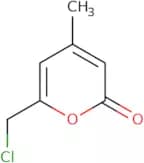
CAS:Versatile small molecule scaffoldFormula:C8H9N3SPurity:Min. 95%Molecular weight:179.24 g/mol6-(Chloromethyl)-4-methyl-2H-pyran-2-one
CAS:Versatile small molecule scaffold
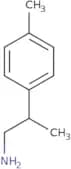
Formula:C7H7ClO2Purity:Min. 95%Molecular weight:158.58 g/mol2-(4-Methylphenyl)propan-1-amine
CAS:Controlled ProductVersatile small molecule scaffold
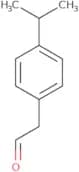
Formula:C10H15NPurity:Min. 95%Molecular weight:149.23 g/mol(4-Isopropylphenyl)acetaldehyde
CAS:4-Isopropylphenyl)acetaldehyde is a phosphodiesterase inhibitor that has been shown to inhibit the activity of cyclic nucleotide phosphodiesterases. These enzymes have been implicated in the development of Alzheimer's disease and other neurological disorders. 4-Isopropylphenyl)acetaldehyde inhibits the formation rate of cAMP, which leads to downstream effects on neurotransmitter release, causing an increase in signaling from receptor cells and an increase in cytoarchitecture. The drug also inhibits phosphodiesterase activity in nasal tissue and parathyroid glands, leading to increased levels of intracellular cAMP. 4-Isopropylphenyl)acetaldehyde is only active against cyclic nucleotide phosphodiesterases that are sensitive to inhibition by this compound.Formula:C11H14OPurity:Min. 95%Molecular weight:162.23 g/mol

![Hexahydro-benzo[1,3]dioxol-2-one](/_next/image/?url=https%3A%2Fstatic.cymitquimica.com%2Fproducts%2F3D%2Fthumb-webp%2FEAA38922.webp&w=3840&q=75)