


Building Blocks
This section contains fundamental products for the synthesis of organic and biological compounds. Building blocks are the essential starting materials used to construct complex molecules through various chemical reactions. They play a critical role in drug discovery, material science, and chemical research. At CymitQuimica, we offer a diverse range of high-quality building blocks to support your innovative research and industrial projects, ensuring you have the essential components for successful synthesis.
Subcategories of "Building Blocks"
- Boronic Acids & Boronic Acid Derivatives(5,756 products)
- Chiral Building Blocks(1,242 products)
- Hydrocarbon Building Blocks(6,095 products)
- Organic Building Blocks(61,038 products)
Found 196817 products of "Building Blocks"
Sort by
Purity (%)
0
100
|
0
|
50
|
90
|
95
|
100
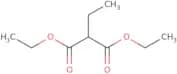
Diethyl Ethylmalonate
CAS:<p>Diethyl ethylmalonate is a chemical compound that belongs to the group of polycarboxylic acids. It is primarily used as a solvent for coatings and adhesives, as well as a catalyst in the Friedel-Crafts reaction. Diethyl ethylmalonate has been shown to undergo a number of reactions, often in the presence of chlorine or another halogen atom. This compound reacts with malonic acid to form diethyl succinate, which can be hydrolyzed by water to form carbon dioxide and ethanol. Diethyl ethylmalonate also binds to receptors on cells, which may be related to its viscosity. The reactivity of this compound can be controlled by varying the particle size.</p>Formula:C9H16O4Purity:Min. 95%Molecular weight:188.22 g/mol2-(2-Chloroethyl)-3,4-dihydro-2H-1,3-benzoxazin-4-one
CAS:<p>2-(2-Chloroethyl)-3,4-dihydro-2H-1,3-benzoxazin-4-one is a synthetic compound that has been shown to have cox-2 inhibitory activity. Cox-2 is an enzyme that participates in the inflammatory response and is upregulated in autoimmune diseases. 2-(2-Chloroethyl)-3,4-dihydro-2H-1,3-benzoxazin-4-one has been shown to be biocompatible with human cells and tissues in vitro. This agent also shows antiinflammatory activity and may be useful for treating a variety of conditions such as cancer or body mass index (BMI) associated with obesity. Studies have shown that 2-(2-Chloroethyl)-3,4-dihydro--2H--1,3--benzoxazin--4--one inhibits the production of proinflammatory cytok</p>Formula:C10H10ClNO2Purity:Min. 95%Molecular weight:211.64 g/mol2-[(8-Chloro-1-naphthyl)thio]acetic acid
CAS:<p>Versatile small molecule scaffold</p>Formula:C12H9ClO2SPurity:Min. 95%Molecular weight:252.72 g/mol2-Phenyl-3-butyn-2-ol
CAS:<p>2-Phenyl-3-butyn-2-ol (2PB2) is an organic compound that has been shown to inhibit the growth of cancer cells in vitro. It is a structural analogue of phenylacetate, which inhibits cell proliferation by inducing apoptosis. 2PB2 induces regression by altering the functional theory of population growth. It is also an isomeric compound and its structure activity relationship has been studied using logistic regression. 2PB2 is protonated at acidic pH, but not at physiological pH, which may be due to its carbinol group. This compound also has a lipase inhibitor effect and was found to interact with molecular descriptors that are involved in cancer cell proliferation.</p>Formula:C10H10OPurity:Min. 95%Molecular weight:146.19 g/molTrimethadione
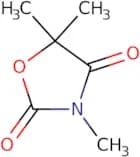
CAS:<p>Trimethadione is an oral hypoglycemic agent. It has been shown to be effective in treating diabetes mellitus, although it has not been approved for that indication by the U.S. Food and Drug Administration (FDA). Trimethadione acts as a competitive inhibitor of the enzyme cytochrome P450 3A4 and other cytochrome P450 enzymes, which may lead to drug interactions. Trimethadione is metabolized by human liver microsomes into trimethadione-N-oxide, which is then converted to trimethadione-N-oxide glucuronide. This compound also inhibits the enzyme dihydropyrimidine dehydrogenase and stimulates glucose oxidation in muscle cells. Trimethadione has been shown to have anti-depressant effects in experimental models of depression, but its efficacy for this use remains unclear.</p>Formula:C6H9NO3Purity:Min. 95%Molecular weight:143.14 g/mol1-Bromo-2,2-dimethoxypropane
CAS:<p>1-Bromo-2,2-dimethoxypropane is a drug that is used in the synthesis of other compounds. It has been shown to have an inhibitory effect on the reuptake of serotonin, dopamine and norepinephrine by 5-HT1A receptors. This drug may also act as an agonist at β-adrenergic receptors. 1-Bromo-2,2-dimethoxypropane selectively binds to 5-HT1A receptors, leading to increased serotonin levels in the brain.</p>Formula:C5H11BrO2Purity:Min. 95%Molecular weight:183.04 g/mol2-(Hydroxymethyl)-2-nitro-1,3-propanediol
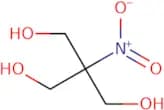
CAS:<p>2-(Hydroxymethyl)-2-nitro-1,3-propanediol is a detergent composition that has been shown to inhibit the growth of microorganisms. It has been used in experimental studies as a potential antimicrobial agent and is classified as a biocide. 2-(Hydroxymethyl)-2-nitro-1,3-propanediol is active against gram positive bacteria such as Staphylococcus aureus and Streptococcus pyogenes. This compound also inhibits the growth of gram negative bacteria such as Pseudomonas aeruginosa, Salmonella typhimurium, Escherichia coli, and Klebsiella pneumoniae. 2-(Hydroxymethyl)-2-nitro-1,3-propanediol is highly toxic to yeast cells and does not have any effect on fungi cells or human erythrocytes.</p>Formula:C4H9NO5Purity:Min. 95%Molecular weight:151.12 g/molBis(2-ethoxyethyl)amine
CAS:<p>Bis(2-ethoxyethyl)amine is a molecule that contains an anion. It is used as a nitrate reductase inhibitor. Bis(2-ethoxyethyl)amine has been shown to be effective in the treatment of esophageal papillomas, and has also been shown to have anti-tumor activity in animals. Mechanistically, bis(2-ethoxyethyl)amine inhibits the formation of nitrosamines by acting as a ligand for the enzyme nitrosamine reductase (NAR). Bis(2-ethoxyethyl)amine binds to NAR, preventing it from binding with its cofactor NADPH and inhibiting the formation of carcinogenic nitrosamines.</p>Formula:C8H19NO2Purity:Min. 95%Molecular weight:161.25 g/molOctanenitrile
CAS:<p>Octanenitrile is a colorless liquid with a boiling point of 29.8 °C. It is soluble in water, ether, and chloroform, but insoluble in hexane. Octanenitrile has been shown to have an effect on the phase transition temperature by using deuterium isotopes. This compound can also be used to study the deuterium isotope effect on autoimmune diseases and cancer. The amine group in octanenitrile can be used to synthesize methylamines, one of which is malonic acid. The ph optimum for octanenitrile is 7-8. Octanenitrile reacts with hydrochloric acid to produce hydrogen chloride gas and dipropyl ether (CH3-CH2-O-CH3). Octanenitrile also has intramolecular hydrogen bonding that stabilizes the molecule, reducing activation energies for subsequent reactions such as fatty acid synthesis or polyunsaturated fatty acid synthesis</p>Formula:C8H15NPurity:Min. 95%Molecular weight:125.21 g/molDiallylamine
CAS:<p>Diallylamine is a colorless, volatile liquid that is miscible with water and most organic solvents. It is chemically stable and has a constant boiling point. Diallylamine has the ability to bind nitrogen atoms from the air and transfer them to other substances. It can also react with trifluoroacetic acid in the presence of water vapor to produce polymers and particles. This reaction mechanism is determined by structural analysis, which shows that diallylamine has an ester hydrochloride linkage between two fatty acids with hydroxyl groups on each end.</p>Formula:C8H17NPurity:Min. 95%Molecular weight:127.23 g/mol3,5-Dimethylmorpholine
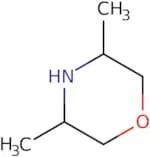
CAS:<p>3,5-Dimethylmorpholine is a chiral amide that has anticancer activity. It is a linker that can be used to form amide bonds between two molecules. 3,5-Dimethylmorpholine has been shown to have labile proton and cellular reactivity in vitro. The reaction selectivity of 3,5-dimethylmorpholine can be improved by using piperidine as the solvent. This compound exhibits anticancer activity against CDK4/6 (cyclin-dependent kinase 4/6) inhibitor-resistant cell lines. It also exhibits anticancerc activity in vitro against cells with high levels of cdk4/6 inhibition.</p>Formula:C6H13NOPurity:Min. 95%Molecular weight:115.17 g/mol6-(3-Methoxyphenyl)-3-methyl-[1,2]oxazolo[5,4-b]pyridine-4-carboxylic acid
CAS:<p>Versatile small molecule scaffold</p>Formula:C15H12N2O4Purity:Min. 95%Molecular weight:284.27 g/mol1-(2-Fluorophenyl)-6-(4-fluorophenyl)-1H-pyrazolo[3,4-b]pyridine-4-carboxylic acid
CAS:<p>Versatile small molecule scaffold</p>Formula:C19H11F2N3O2Purity:Min. 95%Molecular weight:351.3 g/mol6-[4-(Difluoromethoxy)phenyl]-1-methyl-1H-pyrazolo[3,4-b]pyridine-4-carboxylic acid
CAS:<p>Versatile small molecule scaffold</p>Formula:C15H11F2N3O3Purity:Min. 95%Molecular weight:319.26 g/mol1-Methyl-6-(pyridin-3-yl)-1H-pyrazolo[3,4-b]pyridine-4-carboxylic acid
CAS:<p>Versatile small molecule scaffold</p>Formula:C13H10N4O2Purity:Min. 95%Molecular weight:254.24 g/mol2-[6-Cyclopropyl-4-(methoxycarbonyl)-3-methyl-1H-pyrazolo[3,4-b]pyridin-1-yl]acetic acid
CAS:<p>Versatile small molecule scaffold</p>Formula:C14H15N3O4Purity:Min. 95%Molecular weight:289.29 g/mol3-Cyclopropyl-1,6-bis(4-fluorophenyl)-1H-pyrazolo[3,4-b]pyridine-4-carboxylic acid
CAS:<p>Versatile small molecule scaffold</p>Formula:C22H15F2N3O2Purity:Min. 95%Molecular weight:391.4 g/mol(2,2-Difluoroethyl)({[4-methoxy-3-(methoxymethyl)phenyl]methyl})amine
CAS:<p>Versatile small molecule scaffold</p>Formula:C12H17F2NO2Purity:Min. 95%Molecular weight:245.27 g/mol5-({N-[(Furan-2-yl)methyl]methanesulfonamido}methyl)furan-2-carboxylic acid
CAS:<p>Versatile small molecule scaffold</p>Formula:C12H13NO6SPurity:Min. 95%Molecular weight:299.3 g/mol2-[4-(Methoxycarbonyl)-3,6-dimethyl-1H-pyrazolo[3,4-b]pyridin-1-yl]acetic acid
CAS:<p>Versatile small molecule scaffold</p>Formula:C12H13N3O4Purity:Min. 95%Molecular weight:263.25 g/mol


![2-[(8-Chloro-1-naphthyl)thio]acetic acid](/_next/image/?url=https%3A%2Fstatic.cymitquimica.com%2Fproducts%2F3D%2Fthumb-webp%2FAAA12994.webp&w=3840&q=75)





![6-(3-Methoxyphenyl)-3-methyl-[1,2]oxazolo[5,4-b]pyridine-4-carboxylic acid](/_next/image/?url=https%3A%2Fstatic.cymitquimica.com%2Fproducts%2F3D%2Fthumb-webp%2FLQB38903.webp&w=3840&q=75)
![1-(2-Fluorophenyl)-6-(4-fluorophenyl)-1H-pyrazolo[3,4-b]pyridine-4-carboxylic acid](/_next/image/?url=https%3A%2Fstatic.cymitquimica.com%2Fproducts%2F3D%2Fthumb-webp%2FLQB39646.webp&w=3840&q=75)
![6-[4-(Difluoromethoxy)phenyl]-1-methyl-1H-pyrazolo[3,4-b]pyridine-4-carboxylic acid](/_next/image/?url=https%3A%2Fstatic.cymitquimica.com%2Fproducts%2F3D%2Fthumb-webp%2FLQB39652.webp&w=3840&q=75)
![1-Methyl-6-(pyridin-3-yl)-1H-pyrazolo[3,4-b]pyridine-4-carboxylic acid](/_next/image/?url=https%3A%2Fstatic.cymitquimica.com%2Fproducts%2F3D%2Fthumb-webp%2FLQB39662.webp&w=3840&q=75)
![2-[6-Cyclopropyl-4-(methoxycarbonyl)-3-methyl-1H-pyrazolo[3,4-b]pyridin-1-yl]acetic acid](/_next/image/?url=https%3A%2Fstatic.cymitquimica.com%2Fproducts%2F3D%2Fthumb-webp%2FLQB39663.webp&w=3840&q=75)
![3-Cyclopropyl-1,6-bis(4-fluorophenyl)-1H-pyrazolo[3,4-b]pyridine-4-carboxylic acid](/_next/image/?url=https%3A%2Fstatic.cymitquimica.com%2Fproducts%2F3D%2Fthumb-webp%2FLQB39668.webp&w=3840&q=75)
![(2,2-Difluoroethyl)({[4-methoxy-3-(methoxymethyl)phenyl]methyl})amine](/_next/image/?url=https%3A%2Fstatic.cymitquimica.com%2Fproducts%2F3D%2Fthumb-webp%2FLQB39669.webp&w=3840&q=75)
![5-({N-[(Furan-2-yl)methyl]methanesulfonamido}methyl)furan-2-carboxylic acid](/_next/image/?url=https%3A%2Fstatic.cymitquimica.com%2Fproducts%2F3D%2Fthumb-webp%2FLQB39680.webp&w=3840&q=75)
![2-[4-(Methoxycarbonyl)-3,6-dimethyl-1H-pyrazolo[3,4-b]pyridin-1-yl]acetic acid](/_next/image/?url=https%3A%2Fstatic.cymitquimica.com%2Fproducts%2F3D%2Fthumb-webp%2FLQB39705.webp&w=3840&q=75)