Building Blocks
Subcategories of "Building Blocks"
- Boronic Acids & Boronic Acid Derivatives(5,805 products)
- Chiral Building Blocks(1,248 products)
- Hydrocarbon Building Blocks(6,118 products)
- Organic Building Blocks(61,447 products)
Found 208423 products of "Building Blocks"
3-Azabicyclo[3.2.2]nonane HCl
CAS:Versatile small molecule scaffold
Formula:C8H16ClNPurity:Min. 95%Molecular weight:161.67 g/molMethyl 6-methyl-7-oxooctanoate
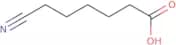
CAS:Versatile small molecule scaffoldFormula:C10H18O3Purity:Min. 95%Molecular weight:186.25 g/mol6-Cyanohexanoic acid
CAS:6-Cyanohexanoic acid is a compound that belongs to the group of oximes. It is a deacetylase inhibitor, which inhibits the activity of histone deacetylases (HDACs). 6-Cyanohexanoic acid has been shown to inhibit HDACs in vitro and in vivo. 6-Cyanohexanoic acid also functions as an acetylcholinesterase inhibitor, and can be used for the treatment of Alzheimer's disease. This molecule has been shown to be effective against aluminium toxicity, by reducing its accumulation in the brain. 6-Cyanohexanoic acid also inhibits crotonoyl-CoA reductase, which can be used as a potential treatment for metabolic diseases such as type 2 diabetes.
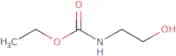
Formula:C7H11NO2Purity:Min. 95%Molecular weight:141.17 g/molEthyl N-(2-hydroxyethyl)carbamate
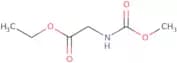
CAS:Ethyl N-(2-hydroxyethyl)carbamate is a carbamate insecticide that is used in agriculture and horticultural industries to control lepidopteran insects. It is a metabolite of methoprene, which is an insect growth regulator. The ethyl group of ethyl N-(2-hydroxyethyl)carbamate is conjugated with the hydroxyl group of the 2-hydroxyethylamine moiety. This results in the formation of an antigenic site for antibody production, enhancing immunosorbent assays for determination of methoprene residues in plants or animal tissues.Formula:C5H11NO3Purity:Min. 95%Molecular weight:133.15 g/molEthyl 2-((methoxycarbonyl)amino)acetate
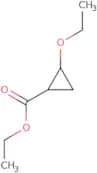
CAS:Versatile small molecule scaffoldFormula:C6H11NO4Purity:Min. 95%Molecular weight:161.16 g/molEthyl 2-ethoxycyclopropane-1-carboxylate
CAS:Versatile small molecule scaffoldFormula:C8H14O3Purity:Min. 95%Molecular weight:158.19 g/mol1-Oxa-4-thia-8-azaspiro[4.5]decane
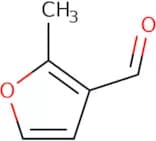
CAS:Versatile small molecule scaffoldFormula:C7H13NOSPurity:Min. 95%Molecular weight:159.25 g/mol2-Methyl-3-furaldehyde
CAS:Versatile small molecule scaffold
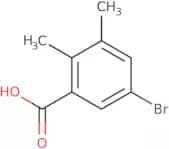
Formula:C6H6O2Purity:Min. 95%Molecular weight:110.11 g/mol5-Bromo-2,3-dimethylbenzoic acid
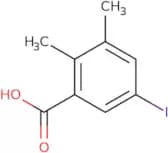
CAS:Versatile small molecule scaffoldFormula:C9H9BrO2Purity:Min. 95%Molecular weight:229.07 g/mol5-Iodo-2,3-dimethylbenzoic acid
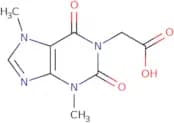
CAS:Versatile small molecule scaffoldFormula:C9H9IO2Purity:Min. 95%Molecular weight:276.07 g/mol2-(3,7-Dimethyl-2,6-dioxo-2,3,6,7-tetrahydro-1H-purin-1-yl)acetic acid
CAS:Controlled Product2-(3,7-Dimethyl-2,6-dioxo-2,3,6,7-tetrahydro-1H-purin-1-yl)acetic acid is a molecule used in various industries. It is an organic solvent that can be used to deodorize and clean surfaces. This compound is also used as a diagnostic agent for animal health. 2-(3,7-Dimethyl-2,6-dioxo-2,3,6,7-tetrahydro-1H-purin-- 1yl)acetic acid has been shown to have carboxylic acid group properties. It can be found in the leaves of marrubium and caffeic acid.
Formula:C9H10N4O4Purity:Min. 95%Molecular weight:238.2 g/mol2-[(Pyridin-2-yl)formamido]acetic acid
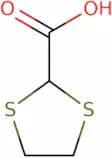
CAS:2-[(Pyridin-2-yl)formamido]acetic acid is a chemical substance which can be used as a substrate in the production of 2-(pyridin-2-yl)acetic acid. It is also used to investigate the pharmacokinetics and biological properties of aromatic hydrocarbons. This compound has been found to induce proton release from fibrinogen and to inhibit aerobic glycolysis, n-oxide hydroxylase, and hydroxylase. 2-[(Pyridin-2-yl)formamido]acetic acid is an orally active compound that is excreted mainly in urine.Formula:C8H8N2O3Purity:Min. 95%Molecular weight:180.16 g/mol1,3-Dithiolane-2-carboxylic acid
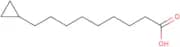
CAS:1,3-Dithiolane-2-carboxylic acid is an organic molecule with the chemical formula C4H4O4. It is a dithiolane carboxylic acid that has been used in the preparation of glyoxylic acid and its derivatives. 1,3-Dithiolane-2-carboxylic acid can be prepared from the condensation of acetaldehyde and ethyl formate to give diethyl acetal, followed by reaction with sodium bisulfite to yield ethyl thioacetate. This compound can also be prepared by alkylation of diethyl sulfide with propylene oxide or butanol. The esterification of 1,3-dithiolane-2-carboxylic acid yields glyoxylic acid. Preparative methods for this compound include the use of acetals and dithioacetals as sources.Formula:C4H6O2S2Purity:Min. 95%Molecular weight:150.2 g/mol9-Cyclopropylnonanoic acid
CAS:Versatile small molecule scaffold
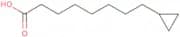
Formula:C12H22O2Purity:Min. 95%Molecular weight:198.3 g/mol8-Cyclopropyloctanoic acid
CAS:Versatile small molecule scaffoldFormula:C11H20O2Purity:Min. 95%Molecular weight:184.3 g/mol2-([(Benzyloxy)carbonyl]amino)-3-(4-hydroxyphenyl)propanoic acid
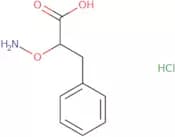
CAS:2-([(Benzyloxy)carbonyl]amino)-3-(4-hydroxyphenyl)propanoic acid is a chemical compound that belongs to the class of amino acid derivatives. It has an optical isomer with a different configuration at the chiral centre and has been used as an experiment to study the optical properties of β-cyclodextrin. 2-([(Benzyloxy)carbonyl]amino)-3-(4-hydroxyphenyl)propanoic acid can be separated by chromatography using enantioseparation, which is a technique for separating molecules based on their asymmetric properties. The molecule functions as a cosolvent and transesterification agent in organic solvents. 2-([(Benzyloxy)carbonyl]amino)-3-(4-hydroxyphenyl)propanoic acid can also be synthesized from other compounds, such as acetophenone and benzaldehyde,Formula:C17H17NO5Purity:Min. 95%Molecular weight:315.32 g/mol2-(Aminooxy)-3-phenylpropanoic acid hydrochloride
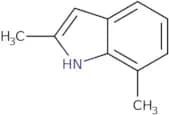
CAS:Versatile small molecule scaffoldFormula:C9H12ClNO3Purity:Min. 95%Molecular weight:217.65 g/mol2,7-Dimethyl-1H-indole
CAS:2,7-Dimethyl-1H-indole (3,4-dimethylaniline) is a nitrogenous organic compound that is used in the synthesis of trifluoride and dipyrroles. 3,4-Dimethylaniline can be synthesized by the reaction of 2,7-dimethylindole with magnesium metal and a halogenated hydrocarbon. This chemical has been shown to react with Grignard reagents to form quinoxalines. It is also used as a chromatographic stationary phase for separating organic compounds. 3,4-Dimethylaniline has been found to have a nonbasic character and cannot form salts with acids or bases. It is not soluble in water but soluble in most organic solvents such as ethers and alcohols.Formula:C10H11NPurity:Min. 95%Molecular weight:145.2 g/mol1,8-Diazatricyclo[7.4.0.0,2,7]trideca-2,4,6,8-tetraene
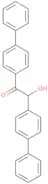
CAS:1,8-Diazatricyclo[7.4.0.0,2,7]trideca-2,4,6,8-tetraene is an organic compound that belongs to the class of piperidines. It has a high yield with a reaction mixture of hydrochloric acid and ammonium hydroxide in chloroform at room temperature for 2 hours. The product can be cyclized to form 1,3-diazabicyclo[5.4.0]undecane with diaphragm reduction or hydrogenation in the presence of a Pd/C catalyst under environmentally friendly conditions.Formula:C11H12N2Purity:Min. 95%Molecular weight:172.2 g/mol2-Hydroxy-1,2-bis(4-phenylphenyl)ethan-1-one
CAS:Versatile small molecule scaffoldFormula:C26H20O2Purity:Min. 95%Molecular weight:364.4 g/mol
![3-Azabicyclo[3.2.2]nonane HCl](/_next/image/?url=https%3A%2Fstatic.cymitquimica.com%2Fproducts%2F3D%2Fthumb-webp%2FFAA59741.webp&w=3840&q=75)


![1-Oxa-4-thia-8-azaspiro[4.5]decane](/_next/image/?url=https%3A%2Fstatic.cymitquimica.com%2Fproducts%2F3D%2Fthumb-webp%2FFAA60898.webp&w=3840&q=75)
![2-[(Pyridin-2-yl)formamido]acetic acid](/_next/image/?url=https%3A%2Fstatic.cymitquimica.com%2Fproducts%2F3D%2Fthumb-webp%2FFAA61629.webp&w=3840&q=75)
![2-([(Benzyloxy)carbonyl]amino)-3-(4-hydroxyphenyl)propanoic acid](/_next/image/?url=https%3A%2Fstatic.cymitquimica.com%2Fproducts%2F3D%2Fthumb-webp%2FFAA61898.webp&w=3840&q=75)
![1,8-Diazatricyclo[7.4.0.0,2,7]trideca-2,4,6,8-tetraene](/_next/image/?url=https%3A%2Fstatic.cymitquimica.com%2Fproducts%2F3D%2Fthumb-webp%2FFAA62283.webp&w=3840&q=75)