Building Blocks
This section contains fundamental products for the synthesis of organic and biological compounds. Building blocks are the essential starting materials used to construct complex molecules through various chemical reactions. They play a critical role in drug discovery, material science, and chemical research. At CymitQuimica, we offer a diverse range of high-quality building blocks to support your innovative research and industrial projects, ensuring you have the essential components for successful synthesis.
Subcategories of "Building Blocks"
- Boronic Acids & Boronic Acid Derivatives(5,756 products)
- Chiral Building Blocks(1,242 products)
- Hydrocarbon Building Blocks(6,095 products)
- Organic Building Blocks(61,055 products)
Found 199650 products of "Building Blocks"
Sort by
Purity (%)
0
100
|
0
|
50
|
90
|
95
|
100
3,3,3-Trifluoropropyl 4-methylbenzenesulfonate
CAS:Versatile small molecule scaffoldFormula:C10H11F3O3SPurity:Min. 95%Molecular weight:268.25 g/molMethyl(2,2,3,3,3-pentafluoropropyl)amine hydrochloride
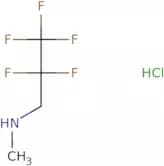
CAS:<p>Versatile small molecule scaffold</p>Formula:C4H7ClF5NPurity:Min. 95%Molecular weight:199.55 g/mol(3-Chloropropyl)trimethylsilane
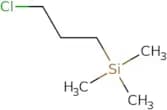
CAS:<p>3-Chloropropyltrimethylsilane is a diphenyl ether that inhibits the cross-linking of proteins and enzymes in infectious diseases. It has been shown to be an effective catalyst for oxidation reactions, such as the conversion of metal carbonyls to unsaturated alkyls. 3-Chloropropyltrimethylsilane has also been shown to inhibit cavities in glycol ethers and corrosion in hydrochloric acid solutions. This chemical has fluorescence properties. The structural formula is CHClSi(CH)CHCl, and it is a colorless liquid with a boiling point of -71°C.</p>Formula:C6H15ClSiPurity:Min. 95%Molecular weight:150.72 g/mol(Trimethylsilyl)acetic acid
CAS:<p>(Trimethylsilyl)acetic acid is an organosilicon compound that has a hydroxyl group and three methyl groups. It is a metastable substance with a boiling point of about 130 degrees Celsius. (Trimethylsilyl)acetic acid can be synthesized by reacting bromoacetic acid with methyllithium or trimethylsilyl chloride. This compound has been shown to have kinetic properties such as molecular ions, kinetic energy, and inorganic acids. It also has functional groups that are able to interact with detergent compositions.</p>Formula:C5H12O2SiPurity:Min. 95%Molecular weight:132.23 g/mol4-(Trimethylsilyl)butanoic acid
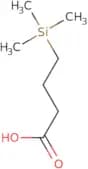
CAS:<p>Versatile small molecule scaffold</p>Formula:C7H16O2SiPurity:Min. 95%Molecular weight:160.29 g/mol2-Methoxy-1,4-naphthoquinone
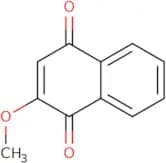
CAS:<p>2-Methoxy-1,4-naphthoquinone is a natural compound that has low potency and significant cytotoxicity. It inhibits the polymerase chain reaction (PCR) by inhibiting DNA synthesis in the bacteria. This compound also exhibits antiinflammatory activity which may be due to its ability to inhibit prostaglandin synthesis. 2-Methoxy-1,4-naphthoquinone has been shown to exhibit minimal toxicity in mice and humans. It is structurally similar to p-hydroxybenzoic acid, a common ingredient found in food and cosmetics. 2-Methoxy-1,4-naphthoquinone has been used for the treatment of infectious diseases such as oral pathogens and bacterial infections caused by Helicobacter pylori or c. glabrata.</p>Formula:C11H8O3Purity:Min. 95%Molecular weight:188.18 g/mol5-Acetyl-2-chlorobenzene-1-sulfonamide
CAS:<p>Versatile small molecule scaffold</p>Formula:C8H8ClNO3SPurity:Min. 95%Molecular weight:233.67 g/mol2-[(4-Methylphenyl)amino]acetohydrazide
CAS:<p>2-[(4-Methylphenyl)amino]acetohydrazide is a crystalline solid that belongs to the group of hydrazides. It has an asymmetric, planar, two-dimensional crystal structure with dihedral angles of 1.2° and 2.6°. The compound contains a benzene ring and two hydrogen bonds.</p>Formula:C9H13N3OPurity:Min. 95%Molecular weight:179.22 g/molChloromethyl Methyl Sulfone
CAS:<p>Chloromethyl Methyl Sulfone is a nucleophilic acceptor for aldehydes and pyridinium compounds. It can be synthesized by the reaction of methyl sulfoxide and hydrochloric acid in the presence of triazole and hydroxide ion. Chloromethyl Methyl Sulfone is a crystalline solid that can be used to study the interaction of kinesin with methyl sulfones. This compound has been shown to have an inhibitory effect on cellular activity, which may be due to its ability to react with chloride ions, forming chloromethyl methyl sulfonium chloride.</p>Formula:C2H5ClO2SPurity:Min. 95%Molecular weight:128.58 g/mol5-Oxo-1-[4-(trifluoromethyl)phenyl]-pyrrolidine-3-carboxylic acid
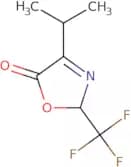
CAS:<p>Versatile small molecule scaffold</p>Formula:C12H10F3NO3Purity:Min. 95%Molecular weight:273.21 g/mol4-(Propan-2-yl)-2-(trifluoromethyl)-2,5-dihydro-1,3-oxazol-5-one
CAS:<p>Versatile small molecule scaffold</p>Formula:C7H8F3NO2Purity:Min. 95%Molecular weight:195.14 g/mol1-(3-Fluoro-4-methoxyphenyl)propan-2-one
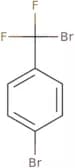
CAS:<p>Versatile small molecule scaffold</p>Formula:C10H11FO2Purity:Min. 95%Molecular weight:182.19 g/mol1-bromo-4-(bromodifluoromethyl)benzene
CAS:<p>Versatile small molecule scaffold</p>Formula:C7H4Br2F2Purity:Min. 95%Molecular weight:285.91 g/mol(N-4,N-4,2-Trimethyl)-1,4-benzenediamine
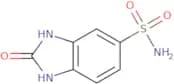
CAS:<p>Versatile small molecule scaffold</p>Formula:C9H14N2Purity:Min. 95%Molecular weight:150.23 g/mol2-Oxo-2,3-dihydro-1H-1,3-benzodiazole-5-sulfonamide
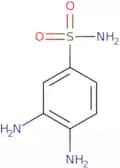
CAS:Versatile small molecule scaffoldFormula:C7H7N3O3SPurity:Min. 95%Molecular weight:213.22 g/mol3,4-Diaminobenzenesulphonamide
CAS:<p>3,4-Diaminobenzenesulphonamide is a chemical compound that is used as an intermediate in organic synthesis and non-apoptotic cell death. 3,4-Diaminobenzenesulphonamide reacts with iron chloride to form ferroptosis, an environmental pollutant. It can also be used for the treatment of various cancers. 3,4-Diaminobenzenesulphonamide binds to the iron in the cell and causes cell death by forming reactive oxygen species that induce ferroptosis. 3,4-Diaminobenzenesulphonamide is also a non-apoptotic cell death agent that inhibits mitochondrial membrane potential and leads to cellular necrosis.</p>Formula:C6H9N3O2S·2ClHPurity:Min. 95%Molecular weight:260.14 g/molThianthrene 5-oxide
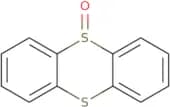
CAS:<p>Thianthrene 5-oxide is a molecule that has been synthesized by the reaction of hydrochloric acid and thioxanthone. The molecule contains five rings which are connected with intramolecular hydrogen bonds, forming a pseudoequatorial structure. Thianthrene 5-oxide contains two functional groups, the sulfinyl group and the hydroxyl group. These functional groups are nucleophilic and can react with electrophiles to form transfer reactions.</p>Formula:C12H8OS2Purity:Min. 95%Color and Shape:PowderMolecular weight:232.3 g/moltrans-2-Phenyl-1-cyclohexanol
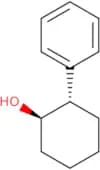
CAS:<p>Trans-2-phenyl-1-cyclohexanol is a hydroxylated cyclohexanol. It is used as a reagent in organic synthesis for the dehydration of alcohols and the acetylation of acyclic carboxylic acids. Trans-2-phenyl-1-cyclohexanol can be prepared from cyclopentene oxide and chloride by the following sequence: trans,trans,trans-2,4'-dichlorobenzophenone → trans,trans,trans-2,4'-dichlorocyclopentene → trans,trans,trans-2-(chloromethyl)cyclohexane → trans,trans,trans-2-(chloromethyl)cyclohexanol. This compound has been investigated as a model system in kinetic studies of transfer reactions such as hydrogen transfer reactions.</p>Formula:C6H5C6H10OHPurity:Min. 95%Molecular weight:176.25 g/mol2-Fluorobut-2-enoic acid
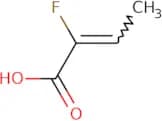
CAS:<p>Versatile small molecule scaffold</p>Formula:C4H5FO2Purity:Min. 95%Molecular weight:104.08 g/mol3,3-Difluorobutanoic acid
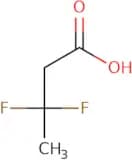
CAS:<p>Versatile small molecule scaffold</p>Formula:C4H6F2O2Purity:Min. 95%Molecular weight:124.09 g/mol




![2-[(4-Methylphenyl)amino]acetohydrazide](/_next/image/?url=https%3A%2Fstatic.cymitquimica.com%2Fproducts%2F3D%2Fthumb-webp%2FCAA35099.webp&w=3840&q=75)

![5-Oxo-1-[4-(trifluoromethyl)phenyl]-pyrrolidine-3-carboxylic acid](/_next/image/?url=https%3A%2Fstatic.cymitquimica.com%2Fproducts%2F3D%2Fthumb-webp%2FCAA35727.webp&w=3840&q=75)