


Building Blocks
This section contains fundamental products for the synthesis of organic and biological compounds. Building blocks are the essential starting materials used to construct complex molecules through various chemical reactions. They play a critical role in drug discovery, material science, and chemical research. At CymitQuimica, we offer a diverse range of high-quality building blocks to support your innovative research and industrial projects, ensuring you have the essential components for successful synthesis.
Subcategories of "Building Blocks"
- Boronic Acids & Boronic Acid Derivatives(5,756 products)
- Chiral Building Blocks(1,242 products)
- Hydrocarbon Building Blocks(6,095 products)
- Organic Building Blocks(61,055 products)
Found 199650 products of "Building Blocks"
Sort by
Purity (%)
0
100
|
0
|
50
|
90
|
95
|
100
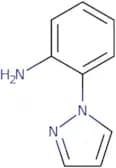
1-(2-Aminophenyl)-1H-pyrazole
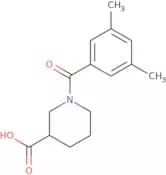
CAS:<p>1-(2-Aminophenyl)-1H-pyrazole is a chemical compound that is used in the synthesis of other compounds. It can be produced by various reactions from benzyl chloride and ammonia. The reactivity of 1-(2-aminophenyl)-1H-pyrazole has been studied using single crystal X-ray diffraction. This technique was used to determine the structure and reaction pathway of this molecule as well as to study its catalytic properties. 1-(2-Aminophenyl)-1H-pyrazole is a ligand that binds to metal ions, such as aluminium, in order to form complexes with different functional groups.</p>Formula:C9H9N3Purity:Min. 95%Molecular weight:159.19 g/mol1-(3,5-Dimethylbenzoyl)piperidine-3-carboxylic acid
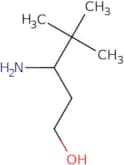
CAS:<p>Versatile small molecule scaffold</p>Formula:C15H19NO3Purity:Min. 95%Molecular weight:261.32 g/mol3-Amino-4,4-dimethylpentan-1-ol
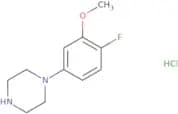
CAS:<p>Versatile small molecule scaffold</p>Formula:C7H17NOPurity:Min. 95%Molecular weight:131.22 g/mol1-(4-Fluoro-3-methoxyphenyl)piperazine hydrochloride
CAS:Controlled Product<p>Versatile small molecule scaffold</p>Formula:C11H16ClFN2OPurity:Min. 95%Molecular weight:246.71 g/molRef: 3D-DXC56724
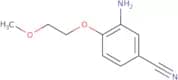
Discontinued product3-Amino-4-(2-methoxyethoxy)benzonitrile
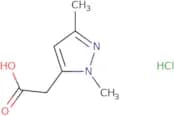
CAS:<p>Versatile small molecule scaffold</p>Formula:C10H12N2O2Purity:Min. 95%Molecular weight:192.21 g/mol2-(1,3-Dimethyl-1H-pyrazol-5-yl)acetic acid hydrochloride
CAS:<p>Versatile small molecule scaffold</p>Formula:C7H11ClN2O2Purity:Min. 95%Molecular weight:190.6 g/molrac-tert-Butyl N-[(3R,4S)-4-(4-fluorophenyl)pyrrolidin-3-yl]carbamate
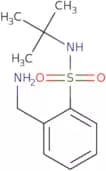
CAS:<p>Versatile small molecule scaffold</p>Formula:C15H21FN2O2Purity:Min. 95%Molecular weight:280.34 g/mol2-(Aminomethyl)-N-tert-butylbenzene-1-sulfonamide
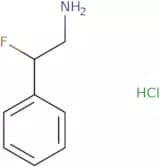
CAS:<p>Versatile small molecule scaffold</p>Formula:C11H18N2O2SPurity:Min. 95%Molecular weight:242.34 g/mol(2S)-2-Fluoro-2-phenylethan-1-amine hydrochloride
CAS:<p>Versatile small molecule scaffold</p>Formula:C8H11ClFNPurity:Min. 95%Molecular weight:175.63 g/molRef: 3D-XZB16372
Discontinued product3-[(2-Methyl-2-propen-1-yl)thio]-5H-1,2,4-triazino[5,6-b]indole
CAS:<p>3-[(2-Methyl-2-propen-1-yl)thio]-5H-1,2,4-triazino[5,6-b]indole is a recombinant protein that binds to the ribosomal protein L11. It has been shown to inhibit the biosynthesis of the bacterial cell wall and therefore inhibit replication of the bacterial genome. 3-[(2-Methyl-2-propen-1-yl)thio]-5H-1,2,4-triazino[5,6-b]indole also inhibits the synthesis of proteins essential for cell division. This compound has been shown to bind to ribosomes in both prokaryotic and eukaryotic cells. It may have potential as an inhibitor of cancerous cells because it inhibits protein synthesis in mammalian cells.</p>Formula:C13H12N4SPurity:Min. 95%Molecular weight:256.33 g/molRef: 3D-DNA02311
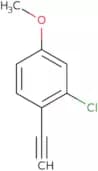
Discontinued product2-Chloro-1-ethynyl-4-methoxybenzene
CAS:<p>Versatile small molecule scaffold</p>Formula:C9H7ClOPurity:Min. 95%Molecular weight:166.6 g/molRef: 3D-DGA44068
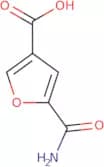
Discontinued product5-Carbamoylfuran-3-carboxylic acid
CAS:<p>Versatile small molecule scaffold</p>Formula:C6H5NO4Purity:Min. 95%Molecular weight:155.11 g/molRef: 3D-LIC70608
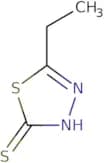
Discontinued product5-Ethyl-1,3,4-thiadiazole-2-thiol
CAS:<p>Versatile small molecule scaffold</p>Formula:C4H6N2S2Purity:Min. 95%Molecular weight:146.2 g/molRef: 3D-MBA66351
Discontinued product4,5-Dihydroxy-2,3-dihydro-1H-isoindole-1,3-dione
CAS:4,5-Dihydroxy-2,3-dihydro-1H-isoindole-1,3-dione is a molybdenum compound with a hydroxyl group. It has been shown to inhibit the growth of bacteria that are resistant to penicillin by binding to the penicillin-binding proteins in their cell wall. 4,5-Dihydroxy-2,3-dihydro-1H-isoindole-1,3-dione has been found to be an effective inhibitor of polymer film formation when used in conjunction with 3 chloroperoxybenzoic acid. This compound also has been shown to have anti bacterial properties against Escherichia coli and Pseudomonas aeruginosa. 4,5-Dihydroxy -2,3 -dihydro -1H -isoindole -1,3 -dione may also have environmental applications due itsFormula:C8H5NO4Purity:Min. 95%Molecular weight:179.13 g/molRef: 3D-DGA35672
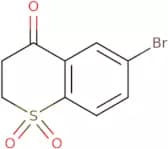
Discontinued product6-Bromo-2,3-dihydrothiochromen-1,1-dioxide-4-one
CAS:<p>Versatile small molecule scaffold</p>Formula:C9H7BrO3SPurity:Min. 95%Molecular weight:275.12 g/mol3-Methoxyazetidine-3-carboxamide hydrochloride
CAS:Versatile small molecule scaffoldFormula:C5H11ClN2O2Purity:Min. 95%Molecular weight:166.6 g/molRef: 3D-MRD33097
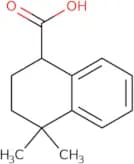
Discontinued product4,4-Dimethyl-1,2,3,4-tetrahydronaphthalene-1-carboxylic acid
CAS:<p>Versatile small molecule scaffold</p>Formula:C13H16O2Purity:Min. 95%Molecular weight:204.26 g/molRef: 3D-DDA10380
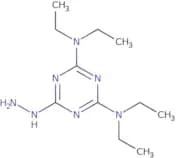
Discontinued productN2,N2,N4,N4-Tetraethyl-6-hydrazinylidene-3,6-dihydro-1,3,5-triazine-2,4-diamine
CAS:<p>Tetrodotoxin is a potent neurotoxin that blocks the transfer of nerve impulses. It is used as a pharmacological treatment for diseases of the urinary tract such as bladder and urethral spasms, bladder dysfunction, and urinary retention. Tetrodotoxin can also be used for the treatment of other conditions that affect the target tissue such as stenosis or cavity. This drug has been shown to be beneficial in autoimmune diseases, inflammatory diseases, and infections. Tetrodotoxin is implanted into the body through devices such as catheters or balloons to treat these conditions. The drug has anticholinergic properties which may cause side effects like dry mouth, blurred vision, difficulty urinating, and dizziness.</p>Formula:C11H23N7Purity:Min. 95%Molecular weight:253.35 g/molRef: 3D-NAA95736
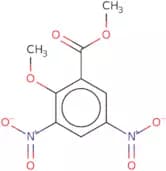
Discontinued productMethyl 2-methoxy-3,5-dinitrobenzoate
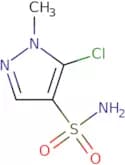
CAS:<p>Versatile small molecule scaffold</p>Formula:C9H8N2O7Purity:Min. 95%Molecular weight:256.2 g/mol5-Chloro-1-methyl-1H-pyrazole-4-sulfonamide
CAS:<p>Versatile small molecule scaffold</p>Formula:C4H6ClN3O2SPurity:Min. 95%Molecular weight:195.63 g/molRef: 3D-NDA39850
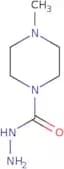
Discontinued product4-Methylpiperazine-1-carbohydrazide
CAS:<p>Versatile small molecule scaffold</p>Formula:C6H14N4OPurity:Min. 95%Molecular weight:158.2 g/molRef: 3D-NDA70165
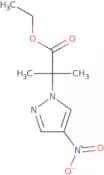
Discontinued product2-Methyl-2-(4-nitro-pyrazol-1-yl)-propionic acid ethyl ester
CAS:<p>Versatile small molecule scaffold</p>Formula:C9H13N3O4Purity:Min. 95%Molecular weight:227.22 g/molRef: 3D-CQB24373
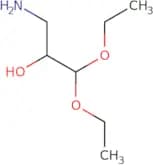
Discontinued product3-Amino-1,1-diethoxypropan-2-ol
CAS:<p>Versatile small molecule scaffold</p>Formula:C7H17NO3Purity:Min. 95%Molecular weight:163.21 g/molRef: 3D-QEA82718
Discontinued product3-Chloro-1,2,4-benzotriazine
CAS:<p>3-Chloro-1,2,4-benzotriazine is an organic compound that is used as an anti-cancer agent. It is a cytotoxin that inhibits the growth of cells by binding to DNA. The Suzuki reaction was used to synthesize this compound in high yields. 3-Chloro-1,2,4-benzotriazine has potential anti-cancer activity and can be used in conjunction with other cytotoxic agents to treat cancer. This drug has been shown to have cytotoxic effects on tumor cells by inhibiting DNA synthesis and cell division.</p>Formula:C7H4ClN3Purity:Min. 95%Molecular weight:165.58 g/molRef: 3D-RDA66921
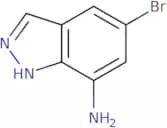
Discontinued product7-Amino-5-bromo-1H-indazole
CAS:<p>Versatile small molecule scaffold</p>Formula:C7H6N3BrPurity:Min. 95%Molecular weight:212.04 g/molRef: 3D-RMA81086
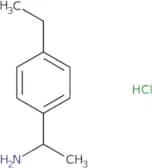
Discontinued product(1R)-1-(4-Ethylphenyl)ethan-1-amine hydrochloride
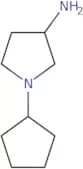
CAS:<p>Versatile small molecule scaffold</p>Formula:C10H16ClNPurity:Min. 95%Molecular weight:185.69 g/mol1-cyclopentylpyrrolidin-3-amine
CAS:<p>Versatile small molecule scaffold</p>Formula:C9H18N2Purity:Min. 95%Molecular weight:154.25 g/molRef: 3D-IMB71303
Discontinued product2-Chloro-N-[2-(3-chlorophenyl)ethyl]acetamide
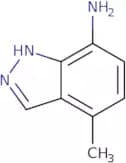
CAS:<p>Versatile small molecule scaffold</p>Formula:C10H11Cl2NOPurity:Min. 95%Molecular weight:232.1 g/mol4-Methyl-1H-indazol-7-amine
CAS:<p>Versatile small molecule scaffold</p>Formula:C8H9N3Purity:Min. 95%Molecular weight:147.18 g/mol(1-Ethyl-4-methyl-1H-imidazol-2-yl)-methanol
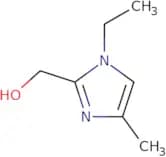
CAS:<p>Versatile small molecule scaffold</p>Formula:C7H12N2OPurity:Min. 95%Molecular weight:140.18 g/molRef: 3D-FZC89974
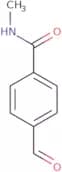
Discontinued product4-Formyl-N-methyl-benzamide
CAS:<p>Versatile small molecule scaffold</p>Formula:C9H9NO2Purity:Min. 95%Molecular weight:163.18 g/mol1-[4-(Methylsulfanyl)phenyl]ethan-1-amine hydrochloride
CAS:<p>Versatile small molecule scaffold</p>Formula:C9H14ClNSPurity:Min. 95%Molecular weight:203.73 g/molRef: 3D-FIA93777
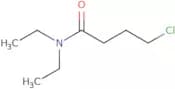
Discontinued product4-Chloro-N,N-diethyl-butyramide
CAS:<p>Versatile small molecule scaffold</p>Formula:C8H16ClNOPurity:Min. 95%Molecular weight:177.67 g/molRef: 3D-GCA79428
Discontinued product2-Aza-bicyclo[4.1.0]heptane hydrochloride
CAS:<p>Versatile small molecule scaffold</p>Formula:C6H11N·HClPurity:Min. 95%Molecular weight:133.62 g/molRef: 3D-CHC19518
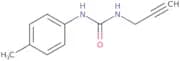
Discontinued product1-(4-Methylphenyl)-3-(prop-2-yn-1-yl)urea
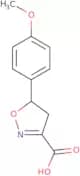
CAS:<p>1-(4-Methylphenyl)-3-(prop-2-yn-1-yl)urea is a fluorescent derivative that can be detected with certain techniques. It has been used to detect phosphatases in cervical cancer cells and tumor cells. This compound is a ligand for the surface antigen of placental alkaline phosphatase (PLAP). It can also bind to other organic ligands, such as recombinant human erythropoietin (EPO), which may be useful for redirecting the action of this protein. 1-(4-Methylphenyl)-3-(prop-2-yn-1-yl)urea is an organic bispecific molecule that binds to two receptors, one on tumor cells and one on normal cells. This binding leads to cell death by apoptosis through the release of cytochrome c from mitochondria.</p>Formula:C11H12N2OPurity:Min. 95%Molecular weight:188.23 g/mol5-(4-Methoxyphenyl)-4,5-dihydro-1,2-oxazole-3-carboxylic acid
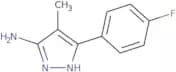
CAS:<p>Versatile small molecule scaffold</p>Formula:C11H11NO4Purity:Min. 95%Molecular weight:221.21 g/mol5-(4-Fluoro-phenyl)-4-methyl-2H-pyrazol-3-ylamine
CAS:<p>Versatile small molecule scaffold</p>Formula:C10H10FN3Purity:Min. 95%Molecular weight:191.2 g/molRef: 3D-TTB06047
Discontinued product(2S,5S)-1-{[(9H-Fluoren-9-yl)methoxy]carbonyl}-5-phenylpyrrolidine-2-carboxylic acid
CAS:<p>Versatile small molecule scaffold</p>Formula:C26H23NO4Purity:Min. 95%Molecular weight:413.5 g/molRef: 3D-UYB95360
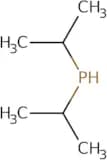
Discontinued productDiisopropylphosphine, 10wt.% in hexane
CAS:<p>Please enquire for more information about Diisopropylphosphine, 10wt.% in hexane including the price, delivery time and more detailed product information at the technical inquiry form on this page</p>Formula:C6H15PPurity:Min. 95%Molecular weight:118.16 g/molRef: 3D-VAA49153
Discontinued productThieno[2,3-b]pyridine-5-carbonitrile
CAS:<p>Thienopyridine analogs are a class of chemical compounds that function as agonists of the receptor α. These compounds have been shown to inhibit fatty acid oxidation and ATP production in rat liver cells, which may be due to their ability to activate AMP-activated protein kinase (AMPK). Thienopyridine analogs are being investigated for use as anti-inflammatory agents and cancer treatments.</p>Formula:C8H4N2SPurity:Min. 95%Molecular weight:160.2 g/molRef: 3D-WAA34431
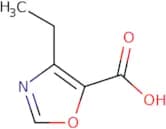
Discontinued product4-Ethyl-1,3-oxazole-5-carboxylic acid
CAS:<p>Versatile small molecule scaffold</p>Formula:C6H7NO3Purity:Min. 95%Molecular weight:141.12 g/molRef: 3D-XMB14527
Discontinued product[1-(1H-Pyrazole-4-sulfonyl)piperidin-3-yl]methanamine
CAS:<p>Versatile small molecule scaffold</p>Formula:C9H16N4O2SPurity:Min. 95%Molecular weight:244.32 g/molRef: 3D-XZB14507
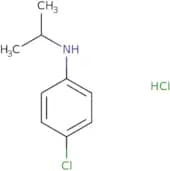
Discontinued product4-Chloro-N-(propan-2-yl)aniline hydrochloride
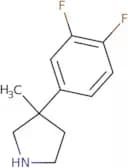
CAS:<p>Versatile small molecule scaffold</p>Formula:C9H13Cl2NPurity:Min. 95%Molecular weight:206.11 g/mol3-(3,4-Difluorophenyl)-3-methylpyrrolidine
CAS:<p>Versatile small molecule scaffold</p>Formula:C11H13F2NPurity:Min. 95%Molecular weight:197.22 g/mol5H,6H,7H-Pyrrolo[3,4-b]pyridine-2-carboxylic acid hydrochloride
CAS:<p>Versatile small molecule scaffold</p>Formula:C8H9ClN2O2Purity:Min. 95%Molecular weight:200.62 g/molRef: 3D-FDD55460
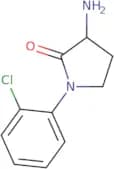
Discontinued product3-Amino-1-(2-chlorophenyl)pyrrolidin-2-one
CAS:<p>Versatile small molecule scaffold</p>Formula:C10H11ClN2OPurity:Min. 95%Molecular weight:210.66 g/molRef: 3D-AAC28734
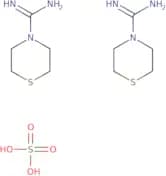
Discontinued productBis(thiomorpholine-4-carboximidamide) sulfate
CAS:<p>Versatile small molecule scaffold</p>Formula:C10H24N6O4S3Purity:Min. 95%Molecular weight:388.5 g/mol2-[2-(Furan-2-yl)-2-oxoethylidene]-3-methyl-1,3-thiazolidin-4-one
CAS:<p>Versatile small molecule scaffold</p>Formula:C10H9NO3SPurity:Min. 95%Molecular weight:223.25 g/molRef: 3D-AQB93221
Discontinued product3-Boc-3-azabicyclo[3.2.1]octan-8-amine
CAS:<p>Versatile small molecule scaffold</p>Formula:C12H22N2O2Purity:Min. 95%Molecular weight:226.32 g/mol2-Bromo-3,3,3-trifluoro-1-propene
CAS:Controlled Product<p>2-Bromo-3,3,3-trifluoro-1-propene is a chemical compound that has been synthesized in an asymmetric reaction. The reactant is bromopropane and the product is 2,2,2-trifluoropropene. The methylene group on the propene molecule is activated by the nucleophilic attack of a fluoride ion from hydrogen fluoride to form a cavity with a highly strained bond. The kinetic study of this reaction revealed that the activation energy for the reaction is 42 kJ/mol. Palladium-catalyzed coupling reactions are catalyzed by palladium and require nonpolar solvents such as toluene or dichloromethane. This type of reaction has been shown to be exothermic with an isolated yield of 1%.</p>Formula:C3H2BrF3Purity:Min. 95%Color and Shape:Colorless PowderMolecular weight:174.95 g/mol

![rac-tert-Butyl N-[(3R,4S)-4-(4-fluorophenyl)pyrrolidin-3-yl]carbamate](/_next/image/?url=https%3A%2Fstatic.cymitquimica.com%2Fproducts%2F3D%2Fthumb-webp%2FDQC54964.webp&w=3840&q=75)
![3-[(2-Methyl-2-propen-1-yl)thio]-5H-1,2,4-triazino[5,6-b]indole](/_next/image/?url=https%3A%2Fstatic.cymitquimica.com%2Fproducts%2F3D%2Fthumb-webp%2FDNA02311.webp&w=3840&q=75)

![2-Chloro-N-[2-(3-chlorophenyl)ethyl]acetamide](/_next/image/?url=https%3A%2Fstatic.cymitquimica.com%2Fproducts%2F3D%2Fthumb-webp%2FJBA16215.webp&w=3840&q=75)
![1-[4-(Methylsulfanyl)phenyl]ethan-1-amine hydrochloride](/_next/image/?url=https%3A%2Fstatic.cymitquimica.com%2Fproducts%2F3D%2Fthumb-webp%2FFIA93777.webp&w=3840&q=75)
![2-Aza-bicyclo[4.1.0]heptane hydrochloride](/_next/image/?url=https%3A%2Fstatic.cymitquimica.com%2Fproducts%2F3D%2Fthumb-webp%2FCHC19518.webp&w=3840&q=75)
![(2S,5S)-1-{[(9H-Fluoren-9-yl)methoxy]carbonyl}-5-phenylpyrrolidine-2-carboxylic acid](/_next/image/?url=https%3A%2Fstatic.cymitquimica.com%2Fproducts%2F3D%2Fthumb-webp%2FUYB95360.webp&w=3840&q=75)
![Thieno[2,3-b]pyridine-5-carbonitrile](/_next/image/?url=https%3A%2Fstatic.cymitquimica.com%2Fproducts%2F3D%2Fthumb-webp%2FWAA34431.webp&w=3840&q=75)
![[1-(1H-Pyrazole-4-sulfonyl)piperidin-3-yl]methanamine](/_next/image/?url=https%3A%2Fstatic.cymitquimica.com%2Fproducts%2F3D%2Fthumb-webp%2FXZB14507.webp&w=3840&q=75)
![5H,6H,7H-Pyrrolo[3,4-b]pyridine-2-carboxylic acid hydrochloride](/_next/image/?url=https%3A%2Fstatic.cymitquimica.com%2Fproducts%2F3D%2Fthumb-webp%2FFDD55460.webp&w=3840&q=75)
![2-[2-(Furan-2-yl)-2-oxoethylidene]-3-methyl-1,3-thiazolidin-4-one](/_next/image/?url=https%3A%2Fstatic.cymitquimica.com%2Fproducts%2F3D%2Fthumb-webp%2FAQB93221.webp&w=3840&q=75)
![3-Boc-3-azabicyclo[3.2.1]octan-8-amine](/_next/image/?url=https%3A%2Fstatic.cymitquimica.com%2Fproducts%2F3D%2Fthumb-webp%2FFDC76351.webp&w=3840&q=75)
