Building Blocks
This section contains fundamental products for the synthesis of organic and biological compounds. Building blocks are the essential starting materials used to construct complex molecules through various chemical reactions. They play a critical role in drug discovery, material science, and chemical research. At CymitQuimica, we offer a diverse range of high-quality building blocks to support your innovative research and industrial projects, ensuring you have the essential components for successful synthesis.
Subcategories of "Building Blocks"
- Boronic Acids & Boronic Acid Derivatives(5,756 products)
- Chiral Building Blocks(1,242 products)
- Hydrocarbon Building Blocks(6,095 products)
- Organic Building Blocks(61,038 products)
Found 196817 products of "Building Blocks"
Sort by
Purity (%)
0
100
|
0
|
50
|
90
|
95
|
100
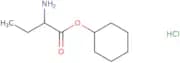
Cyclohexyl (2S)-2-aminobutanoate hydrochloride
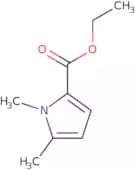
CAS:<p>Versatile small molecule scaffold</p>Formula:C10H20ClNO2Purity:Min. 95%Molecular weight:221.72 g/molEthyl 1,5-dimethyl-1H-pyrrole-2-carboxylate
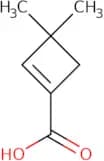
CAS:<p>Versatile small molecule scaffold</p>Formula:C9H13NO2Purity:Min. 95%Molecular weight:167.2 g/mol3,3-Dimethylcyclobut-1-ene-1-carboxylic acid
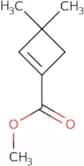
CAS:<p>Versatile small molecule scaffold</p>Formula:C7H10O2Purity:Min. 95%Molecular weight:126.16 g/mol1-Cyclobutene-1-carboxylic acid, 3,3-dimethyl-, methyl ester
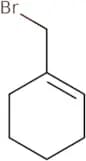
CAS:<p>Versatile small molecule scaffold</p>Formula:C8H12O2Purity:Min. 95%Molecular weight:140.18 g/mol1-(Bromomethyl)cyclohexene
CAS:<p>1-(Bromomethyl)cyclohexene is a synthetic reagent that can be used in the preparation of homoallylic alcohols. The reaction with thionyl chloride leads to the formation of 1-(chloromethyl)cyclohexene, which has been shown to undergo rearrangements to yield cyclic alcohols. This compound is also an intermediate in the synthesis of macrocyclic compounds and can be used as a mediated agent for the synthesis of aldehydes.</p>Formula:C7H11BrPurity:Min. 95%Molecular weight:175.07 g/mol8-Methoxy-4,5-dihydro-1H-benzo[d]azepin-2(3H)-one
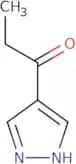
CAS:<p>Versatile small molecule scaffold</p>Formula:C11H13NO2Purity:Min. 95%Molecular weight:191.23 g/mol1-(1H-Pyrazol-4-yl)propan-1-one
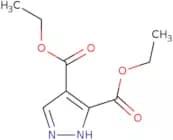
CAS:<p>Versatile small molecule scaffold</p>Formula:C6H8N2OPurity:Min. 95%Molecular weight:124.14 g/moldiethyl 1H-pyrazole-3,4-dicarboxylate
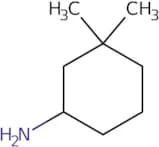
CAS:<p>Versatile small molecule scaffold</p>Formula:C9H12N2O4Purity:Min. 95%Molecular weight:212.2 g/mol3,3-Dimethylcyclohexan-1-amine
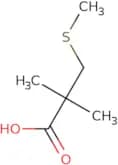
CAS:<p>Versatile small molecule scaffold</p>Formula:C8H17NPurity:Min. 95%Molecular weight:127.23 g/mol2,2-dimethyl-3-(methylsulfanyl)propanoic acid
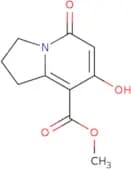
CAS:<p>Versatile small molecule scaffold</p>Formula:C6H12O2SPurity:Min. 95%Molecular weight:148.22 g/molMethyl 7-hydroxy-5-oxo-1,2,3,5-tetrahydroindolizine-8-carboxylate
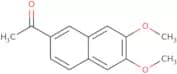
CAS:<p>Versatile small molecule scaffold</p>Formula:C10H11NO4Purity:Min. 95%Molecular weight:209.2 g/mol1-(6,7-Dimethoxynaphthalen-2-yl)ethan-1-one
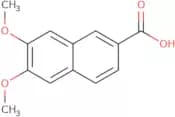
CAS:<p>Versatile small molecule scaffold</p>Formula:C14H14O3Purity:Min. 95%Molecular weight:230.26 g/mol6,7-Dimethoxynaphthalene-2-carboxylic acid
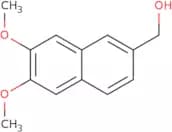
CAS:<p>Versatile small molecule scaffold</p>Formula:C13H12O4Purity:Min. 95%Molecular weight:232.23 g/mol(6,7-Dimethoxynaphthalen-2-yl)methanol
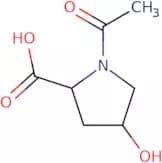
CAS:<p>Versatile small molecule scaffold</p>Formula:C13H14O3Purity:Min. 95%Molecular weight:218.25 g/mol(2R,4R)-1-Acetyl-4-hydroxypyrrolidine-2-carboxylic acid
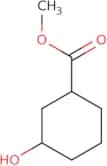
CAS:<p>Versatile small molecule scaffold</p>Formula:C7H11NO4Purity:Min. 95%Molecular weight:173.17 g/molMethyl 3-hydroxycyclohexanecarboxylate
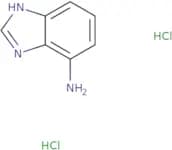
CAS:<p>Versatile small molecule scaffold</p>Formula:C8H14O3Purity:Min. 95%Molecular weight:158.19 g/mol1H-1,3-Benzodiazol-7-amine dihydrochloride
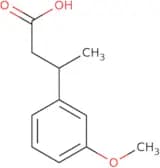
CAS:<p>Versatile small molecule scaffold</p>Formula:C7H9Cl2N3Purity:Min. 95%Molecular weight:206.07 g/mol3-(3-Methoxyphenyl)butanoic acid
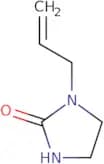
CAS:<p>Versatile small molecule scaffold</p>Formula:C11H14O3Purity:Min. 95%Molecular weight:194.23 g/mol1-(Prop-2-en-1-yl)imidazolidin-2-one
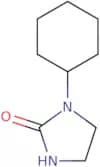
CAS:<p>Versatile small molecule scaffold</p>Formula:C6H10N2OPurity:Min. 95%Molecular weight:126.16 g/mol1-Cyclohexylimidazolidin-2-one
CAS:<p>Versatile small molecule scaffold</p>Formula:C9H16N2OPurity:Min. 95%Molecular weight:168.24 g/mol1-[(Pyridin-3-yl)methyl]imidazolidin-2-one
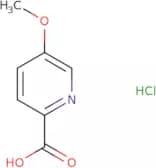
CAS:<p>Versatile small molecule scaffold</p>Formula:C9H11N3OPurity:Min. 95%Molecular weight:177.2 g/mol5-Methoxypyridine-2-carboxylic acid hydrochloride
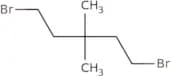
CAS:<p>Versatile small molecule scaffold</p>Formula:C7H8ClNO3Purity:Min. 95%Molecular weight:189.59 g/mol1,5-Dibromo-3,3-dimethylpentane
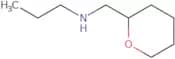
CAS:<p>Versatile small molecule scaffold</p>Formula:C7H14Br2Purity:Min. 95%Molecular weight:257.99 g/mol(Oxan-2-ylmethyl)(propyl)amine
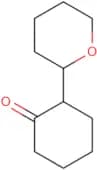
CAS:<p>Versatile small molecule scaffold</p>Formula:C9H19NOPurity:Min. 95%Molecular weight:157.25 g/mol2-(Oxan-2-yl)cyclohexan-1-one
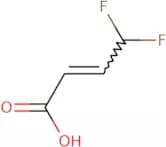
CAS:<p>Versatile small molecule scaffold</p>Formula:C11H18O2Purity:Min. 95%Molecular weight:182.3 g/mol4,4-Difluoro-but-2-enoic acid
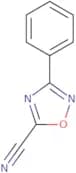
CAS:<p>Versatile small molecule scaffold</p>Formula:C4H4F2O2Purity:Min. 95%Molecular weight:122.07 g/mol3-Phenyl-1,2,4-oxadiazole-5-carbonitrile
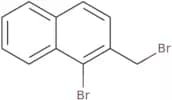
CAS:<p>Versatile small molecule scaffold</p>Formula:C9H5N3OPurity:Min. 95%Molecular weight:171.16 g/mol1-Bromo-2-(bromomethyl)naphthalene
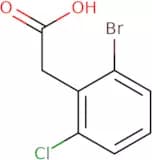
CAS:<p>1-Bromo-2-(bromomethyl)naphthalene is an organic compound that has a chiral center. It is a ligand in coordination chemistry and can be used as a starting material for the synthesis of other compounds. 1-Bromo-2-(bromomethyl)naphthalene crystallizes in the orthorhombic space group Pna21, with cell dimensions of a = 15.02 Å, b = 13.77 Å, c = 13.91 Å, α = 90°, β = 90°, γ = 90°. The molecular structure has been determined by x-ray diffraction data collected at 100 K on beamline I06 at the Advanced Photon Source synchrotron facility in Illinois. The crystal structure contains two molecules per asymmetric unit, with an approximate Z value of 2 (atoms are ordered according to their atomic numbers). One molecule is oriented parallel to</p>Formula:C11H8Br2Purity:Min. 95%Molecular weight:299.99 g/mol2-(2-Bromo-6-chlorophenyl)acetic acid
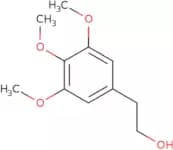
CAS:<p>Versatile small molecule scaffold</p>Formula:C8H6BrClO2Purity:Min. 95%Molecular weight:249.49 g/mol2-(3,4,5-Trimethoxyphenyl)ethanol
CAS:Controlled Product<p>2-(3,4,5-Trimethoxyphenyl)ethanol is a conjugate of 3,4,5-trimethoxybenzaldehyde and ethanol. It has shown in vitro antifungal activity against Candida strains and antibacterial activity against Escherichia coli and Staphylococcus aureus. 2-(3,4,5-Trimethoxyphenyl)ethanol can be used as an antifungal agent in the treatment of fungal infections. It has also been shown to act as an acetoacetate receptor for the conversion of acetoacetate into acetoacetyl CoA during fatty acid synthesis. This compound has also been used in the synthesis of mescaline.</p>Formula:C11H16O4Purity:Min. 95%Molecular weight:212.24 g/mol1-Methyl-2,6,7-trioxabicyclo[2.2.2]octan-4-amine
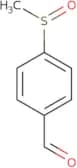
CAS:<p>Versatile small molecule scaffold</p>Formula:C6H11NO3Purity:Min. 95%Molecular weight:145.16 g/mol4-Methanesulfinylbenzaldehyde
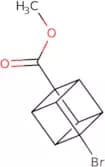
CAS:<p>4-Methanesulfinylbenzaldehyde is an antiinflammatory agent that inhibits the production of prostaglandin E2 (PGE2) by inhibiting the conversion of arachidonic acid to PGE2. It also has antioxidant properties, which may be due to its ability to inhibit peroxide oxidation. 4-Methanesulfinylbenzaldehyde is used in the treatment of inflammatory skin diseases such as atopic dermatitis, acne vulgaris and psoriasis.</p>Formula:C8H8O2SPurity:Min. 95%Molecular weight:168.21 g/molMethyl (1S,2R,3R,8S)-4-bromocubane-1-carboxylate
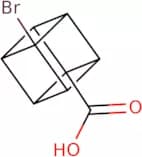
CAS:<p>Methyl (1S,2R,3R,8S)-4-bromocubane-1-carboxylate is an experimental compound that has been shown to produce efficient crystallization of various organic compounds. It is a vicinal difunctional reagent with the carbonyl group on one end and the fluorine atom at the other. It is an X-ray sensitive substance and can be used for x-ray diffraction studies. This compound is also useful for preparing carbonyl fluorides. Methyl (1S,2R,3R,8S)-4-bromocubane-1-carboxylate can be used in crystallography studies because it forms well defined crystals in space groups P21/n and P21/c.</p>Formula:C10H9BrO2Purity:Min. 95%Molecular weight:241.08 g/mol8-Bromocubane-1-carboxylic acid
CAS:<p>Versatile small molecule scaffold</p>Formula:C9H7BrO2Purity:Min. 95%Molecular weight:227.05 g/mol5-(Aminomethyl)benzo[b]furan
CAS:<p>5-(Aminomethyl)benzo[b]furan is a drug that has been shown to inhibit the histamine h3 receptor and transcriptase. It has been used in the treatment of allergic reactions, such as those caused by histamine release. The drug is classified as a non-nucleoside inhibitor of reverse transcriptase. 5-(Aminomethyl)benzo[b]furan has also been shown to be effective against viral strains that are resistant to nucleoside analogues, such as HIV-1, HIV-2, and influenza A. 5-(Aminomethyl)benzo[b]furan binds to the active site of reverse transcriptase and inhibits the synthesis of viral RNA from single-stranded DNA. This binding prevents the formation of a double-stranded DNA with complementary RNA template necessary for viral replication.</p>Formula:C9H9NOPurity:Min. 95%Molecular weight:147.17 g/mol4-Hydroxy-1-methyl-1H-pyrazolo[3,4-b]pyridine-5-carboxylic acid
CAS:<p>Versatile small molecule scaffold</p>Formula:C8H7N3O3Purity:Min. 95%Molecular weight:193.16 g/molEthyl 4-chloro-1-methyl-1H-pyrazolo[3,4-b]pyridine-5-carboxylate
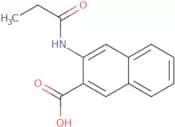
CAS:<p>Versatile small molecule scaffold</p>Formula:C10H10ClN3O2Purity:Min. 95%Molecular weight:239.66 g/mol3-Propanamidonaphthalene-2-carboxylic acid
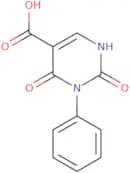
CAS:<p>Versatile small molecule scaffold</p>Formula:C14H13NO3Purity:Min. 95%Molecular weight:243.26 g/mol2,4-Dioxo-3-phenyl-1,2,3,4-tetrahydropyrimidine-5-carboxylic acid
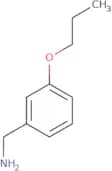
CAS:<p>Versatile small molecule scaffold</p>Formula:C11H8N2O4Purity:Min. 95%Molecular weight:232.19 g/mol(3-Propoxyphenyl)methanamine hydrochloride
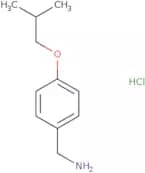
CAS:<p>Versatile small molecule scaffold</p>Formula:C10H16ClNOPurity:Min. 95%Molecular weight:201.7 g/mol(4-Isobutoxyphenyl)methanamine hydrochloride
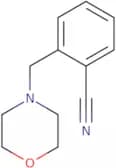
CAS:<p>Versatile small molecule scaffold</p>Formula:C11H18ClNOPurity:Min. 95%Molecular weight:215.72 g/mol2-(Morpholinomethyl)benzonitrile
CAS:<p>Versatile small molecule scaffold</p>Formula:C12H14N2OPurity:Min. 95%Molecular weight:202.26 g/mol4-[(Phenylamino)methyl]benzonitrile
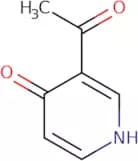
CAS:<p>Versatile small molecule scaffold</p>Formula:C14H12N2Purity:Min. 95%Molecular weight:208.26 g/mol3-Acetylpyridin-4(1H)-one
CAS:<p>Versatile small molecule scaffold</p>Formula:C7H7NO2Purity:Min. 95%Molecular weight:137.14 g/molO-[(3-Pyridyl)methyl]hydroxylamine
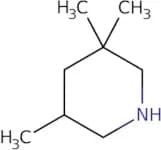
CAS:<p>O-[(3-Pyridyl)methyl]hydroxylamine is an epimer of hydroxylamine. It is a nucleic acid that can be enzymatically synthesized and is used in the synthesis of oligosaccharides with uronic acids, such as dermatan sulfate. O-[(3-Pyridyl)methyl]hydroxylamine attacks sulfated glycosaminoglycans and glycosaminoglycan chains in the skin, causing a loss of water from the skin. This drug has been shown to have affinity for dermatan and deuterium, which may result in its use as a marker for dermatan sulfate.</p>Formula:C6H8N2OPurity:Min. 95%Molecular weight:124.14 g/mol3,3,5-Trimethylpiperidine
CAS:<p>Versatile small molecule scaffold</p>Formula:C8H17NPurity:Min. 95%Molecular weight:127.23 g/mol1-(1-Methyl-piperidin-4-yl)-ethanol
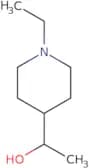
CAS:<p>Versatile small molecule scaffold</p>Formula:C8H17NOPurity:Min. 95%Molecular weight:143.22 g/mol1-(1-Ethylpiperidin-4-yl)ethan-1-ol
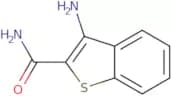
CAS:<p>Versatile small molecule scaffold</p>Formula:C9H19NOPurity:Min. 95%Molecular weight:157.25 g/mol3-Amino-1-benzothiophene-2-carboxamide
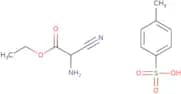
CAS:<p>Versatile small molecule scaffold</p>Formula:C9H8N2OSPurity:Min. 95%Molecular weight:192.24 g/molEthyl 2-amino-2-cyanoacetate 4-methylbenzenesulfonate
CAS:<p>Versatile small molecule scaffold</p>Formula:C12H16N2O5SPurity:Min. 95%Molecular weight:300.33 g/mol3-[(2-Aminophenyl)sulfanyl]-2-methylpropanenitrile
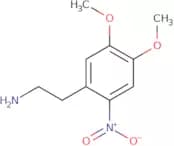
CAS:<p>Versatile small molecule scaffold</p>Formula:C10H12N2SPurity:Min. 95%Molecular weight:192.28 g/mol2-(4,5-Dimethoxy-2-nitrophenyl)ethan-1-amine
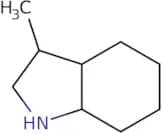
CAS:Controlled Product<p>Versatile small molecule scaffold</p>Formula:C10H14N2O4Purity:Min. 95%Molecular weight:226.23 g/mol3-Methyl-octahydro-1H-indole
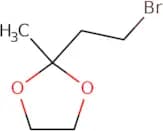
CAS:<p>Versatile small molecule scaffold</p>Formula:C9H17NPurity:Min. 95%Molecular weight:139.24 g/mol2-(2-Bromoethyl)-2-methyl-1,3-dioxolane
CAS:<p>2-(2-Bromoethyl)-2-methyl-1,3-dioxolane is a carbonyl compound that can be used to form an asymmetric epoxide from an ethylene. This product has been shown to produce isolated yields of ketones and acetals. It is a reagent for the asymmetric synthesis of alcohols and amines. 2-(2-Bromoethyl)-2-methyl-1,3-dioxolane also reacts with benzene in the presence of an acid catalyst to give a mixture of epoxides.</p>Formula:C6H11BrO2Purity:Min. 95%Molecular weight:195.06 g/mol4-Azaspiro[bicyclo[2.2.2]octane-2,4'-imidazolidine]-2',5'-dione
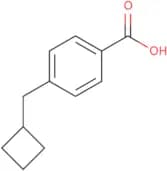
CAS:Versatile small molecule scaffoldFormula:C9H13N3O2Purity:Min. 95%Molecular weight:195.22 g/mol4-(Cyclobutylmethyl)benzoic acid
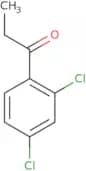
CAS:<p>Versatile small molecule scaffold</p>Formula:C12H14O2Purity:Min. 95%Molecular weight:190.24 g/mol2',4'-Dichloropropiophenone
CAS:<p>2',4'-Dichloropropiophenone is an organic solvent that is used in pharmaceuticals. It has been shown to be a versatile reagent for the synthesis of chalcones and other types of compounds. 2',4'-Dichloropropiophenone can be used in the cross-coupling reaction, which involves the coupling of two organic molecules using a metal catalyst (usually copper) to generate new compounds. The dehydrohalogenating reaction, which involves the conversion of epoxides into alcohols, can be performed with 2',4'-dichloropropiophenone. This compound also reacts with amines to form oximes or aziridines and with epoxy groups to form epoxy ethers. Finally, it is an oxidant that can react with benzene to produce phenols, biphenyls, or nitrobenzenes.</p>Formula:C9H8Cl2OPurity:Min. 95%Molecular weight:203.06 g/moltert-Butylamino-acetic acid ethyl ester
CAS:<p>Versatile small molecule scaffold</p>Formula:C8H17NO2Purity:Min. 95%Molecular weight:159.23 g/mol2-{[(2,2,2-Trifluoroethoxy)carbonyl]amino}acetic acid
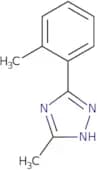
CAS:<p>Versatile small molecule scaffold</p>Formula:C5H6F3NO4Purity:Min. 95%Molecular weight:201.1 g/mol3-Methyl-5-(2-methylphenyl)-1H-1,2,4-triazole
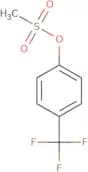
CAS:<p>Versatile small molecule scaffold</p>Formula:C10H11N3Purity:Min. 95%Molecular weight:173.21 g/mol4-(Trifluoromethyl)phenyl methanesulfonate
CAS:<p>Versatile small molecule scaffold</p>Formula:C8H7F3O3SPurity:Min. 95%Molecular weight:240.2 g/mol2-Ethyl-3-methylquinoxaline
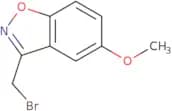
CAS:<p>Quinoxalines are a class of heterocyclic compounds that is structurally related to the more common amino acid, tryptophan. They are typically synthesized by modifications of the quinoxaline ring system with epoxide, amine, or carbonyl groups. Quinoxalines can be analyzed using many different techniques including gas chromatography-mass spectrometry, liquid chromatography-mass spectrometry, and nuclear magnetic resonance spectroscopy. The most common modification is the addition of an aminoguanidine group that is used to distinguish between 2-ethyl-3-methylquinoxaline and 3-ethyl-2-methylquinoxaline. The reaction time between glyoxal and aniline to produce 2-ethyl-3-methylquinoxaline can be optimized by adding potassium dichromate as a catalyst.</p>Formula:C11H12N2Purity:Min. 95%Molecular weight:172.23 g/mol3-(Bromomethyl)-5-methoxy-1,2-benzoxazole
CAS:<p>Versatile small molecule scaffold</p>Formula:C9H8BrNO2Purity:Min. 95%Molecular weight:242.07 g/mol2,6-Dimethyl-4-methoxybenzoic acid
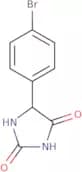
CAS:<p>Versatile small molecule scaffold</p>Formula:C10H12O3Purity:Min. 95%Molecular weight:180.2 g/mol5-(4-Bromophenyl)imidazolidine-2,4-dione
CAS:<p>Versatile small molecule scaffold</p>Formula:C9H7BrN2O2Purity:Min. 95%Molecular weight:255.07 g/mol2-[3-Bromo-4-(propan-2-yloxy)phenyl]acetonitrile
CAS:<p>Versatile small molecule scaffold</p>Formula:C11H12BrNOPurity:Min. 95%Molecular weight:254.12 g/molEthyl 3-[(5-hydroxypentyl)(methyl)amino]propanoate
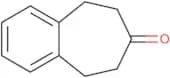
CAS:<p>Versatile small molecule scaffold</p>Formula:C11H23NO3Purity:Min. 95%Molecular weight:217.31 g/mol5,6,8,9-Tetrahydrobenzocyclohepten-7-one
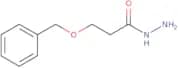
CAS:<p>5,6,8,9-Tetrahydrobenzocyclohepten-7-one is a methylated analogue of benzocycloheptene. It is prepared by the reaction of dichlorocarbene (1) with 7-hydroxybenzocycloheptene (2). The deuterium isotope effect on the conformation of 5,6,8,9-tetrahydrobenzocyclohepten-7-one has been investigated using a spectroscopic technique. The reaction parameters have been optimized for this transformation to produce the desired product in high yield.</p>Formula:C11H12OPurity:Min. 95%Molecular weight:160.22 g/mol3-(Benzyloxy)propanehydrazide
CAS:<p>Versatile small molecule scaffold</p>Formula:C10H14N2O2Purity:Min. 95%Molecular weight:194.23 g/mol2-[5-Oxo-1-(pyridin-2-yl)-2,5-dihydro-1H-pyrazol-3-yl]acetic acid
CAS:<p>Versatile small molecule scaffold</p>Formula:C10H9N3O3Purity:Min. 95%Molecular weight:219.2 g/mol3H,4H-Pyrido[3,2-d][1,2,3]triazin-4-one
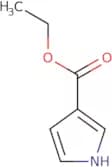
CAS:<p>3H,4H-Pyrido[3,2-d][1,2,3]triazin-4-one is a heterocyclic compound that belongs to the group of endometriosis drugs. It has been shown to inhibit tyrosine kinase and thus has a proliferative effect on the skeleton. 3H,4H-Pyrido[3,2-d][1,2,3]triazin-4-one also has an antiangiogenic activity that prevents the formation of new blood vessels from pre-existing ones. This drug also inhibits tumor growth by blocking cell division and may cause cancerous cells to self destruct. 3H,4H-Pyrido[3,2-d][1,2,3]triazin-4-one can be used to treat symptom of endometriosis such as pain and infertility.</p>Formula:C6H4N4OPurity:Min. 95%Molecular weight:148.12 g/molEthyl 1H-pyrrole-3-carboxylate
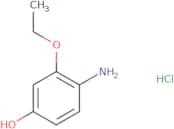
CAS:<p>Ethyl 1H-pyrrole-3-carboxylate is a nitro compound that has been shown to be efficient and multisubstituted. It reacts with carbon monoxide to form a nitro group, which can then be reduced by reductive means. Ethyl 1H-pyrrole-3-carboxylate is also capable of forming vinyl or carbonyl compounds in the presence of appropriate reagents.</p>Formula:C7H9NO2Purity:Min. 95%Molecular weight:139.15 g/mol4-Amino-3-ethoxyphenol hydrochloride
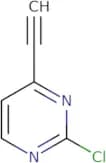
CAS:<p>Versatile small molecule scaffold</p>Formula:C8H12ClNO2Purity:Min. 95%Molecular weight:189.64 g/mol2-Chloro-4-ethynylpyrimidine
CAS:<p>2-Chloro-4-ethynylpyrimidine is a chemical compound that belongs to the family of meridianins. It has been shown to have medicinal properties, and is used in the treatment of trypanosomiasis. This molecule also has physicochemical properties that warrant further investigation. Optimization studies have shown that 2-chloro-4-ethynylpyrimidine can be synthesized with yields of up to 76% using nitrosoarenes as reactants.</p>Formula:C6H3ClN2Purity:Min. 95%Molecular weight:138.55 g/mol1-(3-Ethylpyridin-4-yl)ethan-1-one
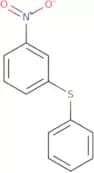
CAS:<p>Versatile small molecule scaffold</p>Formula:C9H11NOPurity:Min. 95%Molecular weight:149.19 g/mol1-Nitro-3-(phenylsulfanyl)benzene
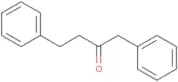
CAS:<p>1-Nitro-3-(phenylsulfanyl)benzene is a compound that belongs to the class of organic compounds with a molecular formula C11H10O3S. It has a transmittance of 0.10 and a polycondensation value of 3.2. The conformation of 1-nitro-3-(phenylsulfanyl)benzene is linear, and it has an average refractive index of 1.5214. This compound has high stabilities, as well as being n-methyl-2-pyrrolidone and sulfur stable, with birefringence values of 0.0805 and -0.0125 respectively. The steric effect on this compound is negligible, with the refractive index being polarizable in optical activity experiments, with an average optical rotation value of -5°/Mol at 20°C (298K).</p>Formula:C12H9NO2SPurity:Min. 95%Molecular weight:231.27 g/mol1,4-Diphenylbutan-2-one
CAS:<p>1,4-Diphenylbutan-2-one is a chemical compound that has been shown to have anticancer activity. It is an inhibitor of the enzyme tyrosinase and can be used as an anti-cancer treatment. 1,4-Diphenylbutan-2-one binds to the active site of tyrosinase and blocks the formation of melanin, which is the pigment in skin cells that gives the skin its color. 1,4-Diphenylbutan-2-one also inhibits growth factor receptors on cancer cells, which prevents tumor growth. This drug has minimal toxicity levels in humans and has been shown to have minimal interactions with other drugs or substances.</p>Formula:C16H16OPurity:Min. 95%Molecular weight:224.3 g/mol5-Methyl-4H,7H-thieno[3,2-b]pyridin-7-one
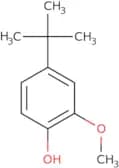
CAS:<p>Versatile small molecule scaffold</p>Formula:C8H7NOSPurity:Min. 95%Molecular weight:165.21 g/mol4-tert-Butyl-2-methoxyphenol
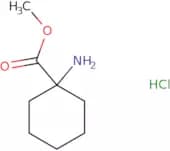
CAS:<p>Versatile small molecule scaffold</p>Formula:C11H16O2Purity:Min. 95%Molecular weight:180.24 g/molMethyl 1-aminocyclohexanecarboxylate hydrochloride
CAS:<p>Versatile small molecule scaffold</p>Formula:C8H16ClNO2Purity:Min. 95%Molecular weight:193.67 g/mol2-[4-(3-Formyl-2,5-dimethyl-1H-pyrrol-1-yl)phenoxy]acetic acid
CAS:<p>Versatile small molecule scaffold</p>Formula:C15H15NO4Purity:Min. 95%Molecular weight:273.28 g/molImportazole
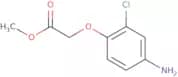
CAS:<p>Importazole is a protein that inhibits the polymerase chain reaction (PCR) by binding to the DNA strand. It has been shown to inhibit cancer cell proliferation and induce apoptosis in HL-60 cells. Importazole also prevents the binding of taxane drugs to nuclear receptors, which may be beneficial for chemotherapy treatment. Importazole binds to DNA and blocks transcriptional regulation, which leads to neuronal death in rats. This protein has been shown to bind to both DNA and receptor activity, and also has an effect on cell nuclei.</p>Formula:C20H22N4Purity:Min. 95%Molecular weight:318.42 g/molMethyl 2-(4-amino-2-chlorophenoxy)acetate
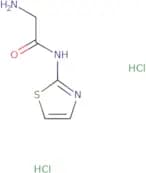
CAS:<p>Versatile small molecule scaffold</p>Formula:C9H10ClNO3Purity:Min. 95%Molecular weight:215.63 g/molN~1~-1,3-Thiazol-2-ylglycinamide dihydrochloride
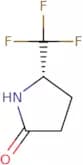
CAS:<p>Versatile small molecule scaffold</p>Formula:C5H9Cl2N3OSPurity:Min. 95%Molecular weight:230.12 g/mol(5S)-5-(Trifluoromethyl)pyrrolidin-2-one
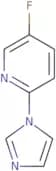
CAS:<p>5-Trifluoromethylpyrrolidin-2-one is an organic compound with the chemical formula C5H4F3O. It has a molecular weight of 113.13 g/mol. 5-Trifluoromethylpyrrolidin-2-one is a chiral molecule that occurs as two enantiomers, (5S)-5-(trifluoromethyl)pyrrolidin-2-one and (5R)-5-(trifluoromethyl)pyrrolidin-2-one. The former is more active than the latter. 5FP reacts with sulfur to give the corresponding sulfide, trifluoroethylsulfide.</p>Formula:C5H6F3NOPurity:Min. 95%Molecular weight:153.1 g/mol5-Fluoro-2-(1H-imidazol-1-yl)pyridine
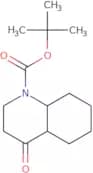
CAS:<p>Versatile small molecule scaffold</p>Formula:C8H6FN3Purity:Min. 95%Molecular weight:163.15 g/moltert-Butyl 4-oxo-decahydroquinoline-1-carboxylate
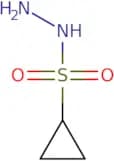
CAS:<p>Versatile small molecule scaffold</p>Formula:C14H23NO3Purity:Min. 95%Molecular weight:253.34 g/molCyclopropanesulfonohydrazide
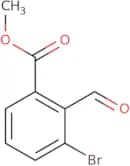
CAS:<p>Versatile small molecule scaffold</p>Formula:C3H8N2O2SPurity:Min. 95%Molecular weight:136.18 g/molMethyl 3-bromo-2-formylbenzoate
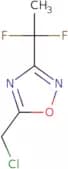
CAS:<p>Versatile small molecule scaffold</p>Formula:C9H7BrO3Purity:Min. 95%Molecular weight:243.05 g/mol5-(Chloromethyl)-3-(1,1-difluoroethyl)-1,2,4-oxadiazole
CAS:<p>Versatile small molecule scaffold</p>Formula:C5H5ClF2N2OPurity:Min. 95%Molecular weight:182.55 g/mol5-Chloroquinoxalin-6-amine
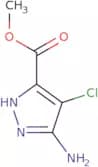
CAS:<p>Versatile small molecule scaffold</p>Formula:C8H6ClN3Purity:Min. 95%Molecular weight:179.6 g/molMethyl 5-amino-4-chloro-1H-pyrazole-3-carboxylate
CAS:<p>Versatile small molecule scaffold</p>Formula:C5H6ClN3O2Purity:Min. 95%Molecular weight:175.57 g/mol[6-(2,2-Dimethylpropanamido)pyridin-3-yl]boronic acid
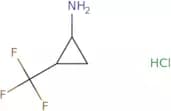
CAS:<p>Versatile small molecule scaffold</p>Formula:C10H15BN2O3Purity:Min. 95%Molecular weight:222.05 g/molrac-(1R,2R)-2-(Trifluoromethyl)cyclopropan-1-amine hydrochloride
CAS:<p>Versatile small molecule scaffold</p>Formula:C4H7ClF3NPurity:Min. 95%Molecular weight:161.55 g/mol3-[(Naphthalen-1-yl)methyl]pyrrolidin-2-one
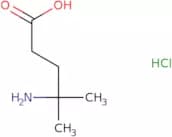
CAS:<p>Versatile small molecule scaffold</p>Formula:C15H15NOPurity:Min. 95%Molecular weight:225.3 g/mol4-Amino-4-methylpentanoic acid hydrochloride
CAS:<p>Versatile small molecule scaffold</p>Formula:C6H14ClNO2Purity:Min. 95%Molecular weight:167.63 g/mol4-Aminopentanoic acid hydrochloride
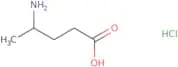
CAS:<p>Versatile small molecule scaffold</p>Formula:C5H12ClNO2Purity:Min. 95%Molecular weight:153.61 g/mol2-(3-Fluorophenyl)morpholine
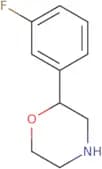
CAS:<p>Versatile small molecule scaffold</p>Formula:C10H12FNOPurity:Min. 95%Color and Shape:Clear LiquidMolecular weight:181.21 g/mol5-Nitropyridine-3-sulfonamide
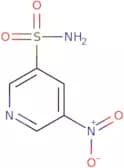
CAS:<p>5-Nitropyridine-3-sulfonamide (5NPS) is a synthetic, broad-spectrum antibacterial agent that has high activity against a range of Gram-positive and Gram-negative bacteria. 5NPS inhibits the synthesis of cell walls in bacteria by inhibiting the enzyme transpeptidase. This drug has shown anticoccidial effects against Eimeria tenella and also has an amide group which increases its water solubility. 5NPS is also active against resistant strains of coccidia and can be used to prevent coccidiosis in poultry, cattle, sheep, goats, and swine.</p>Formula:C5H5N3O4SPurity:Min. 95%Molecular weight:203.18 g/mol5-Bromopyridine-3-sulphonamide
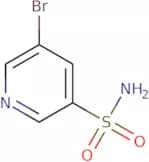
CAS:<p>Versatile small molecule scaffold</p>Formula:C5H5BrN2O2SPurity:Min. 95%Molecular weight:237.08 g/mol3-[2-(Aminomethyl)pyrrolidin-1-yl]propan-1-ol
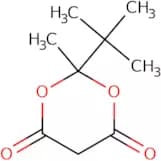
CAS:<p>Versatile small molecule scaffold</p>Formula:C8H18N2OPurity:Min. 95%Molecular weight:158.24 g/mol2-tert-Butyl-2-methyl-1,3-dioxane-4,6-dione
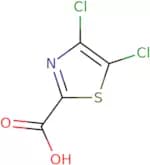
CAS:<p>Versatile small molecule scaffold</p>Formula:C9H14O4Purity:Min. 95%Molecular weight:186.2 g/molDichloro-1,3-thiazole-2-carboxylic acid
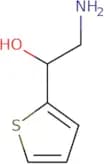
CAS:<p>Versatile small molecule scaffold</p>Formula:C4HCl2NO2SPurity:Min. 95%Molecular weight:198.03 g/mol2-Amino-1-(thiophen-2-yl)ethan-1-ol
CAS:<p>Versatile small molecule scaffold</p>Formula:C6H9NOSPurity:Min. 95%Molecular weight:143.21 g/mol4,5,6,7-Tetrahydrothieno[2,3-c]pyridine
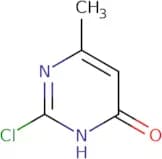
CAS:<p>This heterocycle is a potent inhibitor of the enzyme called nitroreductase, which is involved in the synthesis of nitroaromatic compounds that are carcinogenic. It has been shown to induce apoptotic cell death by binding to the skeleton and inhibiting protein synthesis. The drug also interacts with mononuclear cells, inducing apoptosis in those cells at low doses and cytotoxicity at higher doses. This agent has been shown to have inhibitory activity against cancer cells and can be used for treatment of cancers such as colon cancer.</p>Formula:C7H9NSPurity:Min. 95%Molecular weight:139.22 g/mol2-Chloro-6-methylpyrimidin-4-ol
CAS:<p>Versatile small molecule scaffold</p>Formula:C5H5ClN2OPurity:Min. 95%Molecular weight:144.56 g/mol1-{Bicyclo[2.2.2]octan-2-yl}ethan-1-ol
CAS:<p>Versatile small molecule scaffold</p>Formula:C10H18OPurity:Min. 95%Molecular weight:154.25 g/molBicyclo[2.2.2]octane-2-carbaldehyde
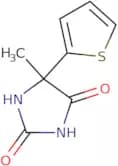
CAS:<p>Versatile small molecule scaffold</p>Formula:C9H14OPurity:Min. 95%Molecular weight:138.21 g/mol5-Methyl-5-(thiophen-2-yl)imidazolidine-2,4-dione
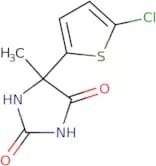
CAS:<p>Versatile small molecule scaffold</p>Formula:C8H8N2O2SPurity:Min. 95%Molecular weight:196.23 g/mol5-(5-Chlorothiophen-2-yl)-5-methylimidazolidine-2,4-dione
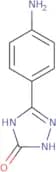
CAS:<p>Versatile small molecule scaffold</p>Formula:C8H7ClN2O2SPurity:Min. 95%Molecular weight:230.67 g/mol3-(4-Aminophenyl)-4,5-dihydro-1H-1,2,4-triazol-5-one
CAS:<p>Versatile small molecule scaffold</p>Formula:C8H8N4OPurity:Min. 95%Molecular weight:176.18 g/mol4-(3-Chloro-2-oxopropyl)benzonitrile
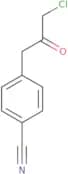
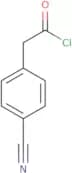
CAS:<p>Versatile small molecule scaffold</p>Formula:C10H8ClNOPurity:Min. 95%Molecular weight:193.63 g/mol2-(4-Cyanophenyl)acetyl chloride
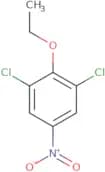
CAS:<p>Versatile small molecule scaffold</p>Formula:C9H6ClNOPurity:Min. 95%Molecular weight:179.6 g/mol1,3-Dichloro-2-ethoxy-5-nitrobenzene
CAS:<p>Versatile small molecule scaffold</p>Formula:C8H7Cl2NO3Purity:Min. 95%Molecular weight:236.05 g/mol6-(2-Hydroxyethyl)-5-methyl[1,2,4]triazolo-[1,5-a]pyrimidin-7(4H)-one
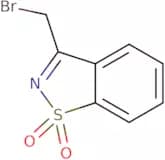
CAS:<p>Versatile small molecule scaffold</p>Formula:C8H10N4O2Purity:Min. 95%Molecular weight:194.19 g/mol3-(Bromomethyl)-1,2-benzisothiazol 1,1-dioxide
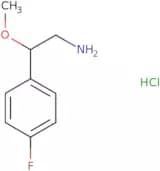
CAS:<p>Versatile small molecule scaffold</p>Formula:C8H6BrNO2SPurity:Min. 95%Molecular weight:260.11 g/mol2-(4-Fluorophenyl)-2-methoxyethan-1-amine hydrochloride
CAS:Controlled Product<p>Versatile small molecule scaffold</p>Formula:C9H13ClFNOPurity:Min. 95%Molecular weight:205.66 g/mol1-(4-Fluorophenyl)-1-methoxypropan-2-amine hydrochloride
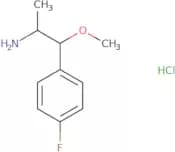
CAS:Controlled Product<p>Versatile small molecule scaffold</p>Formula:C10H15ClFNOPurity:Min. 95%Molecular weight:219.68 g/mol2,6-Dichloropyridine-3-carboxamide
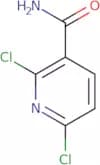
CAS:<p>2,6-Dichloropyridine-3-carboxamide is a boronic acid that is used in organic synthesis. It is a cross-coupling partner in Suzuki and Sonogashira reactions. 2,6-Dichloropyridine-3-carboxamide can be prepared by the reaction of an aryl boronic acid with 2,6-dichloropyridine. This reaction proceeds smoothly at room temperature and has been shown to proceed with high yield. The compound was also found to inhibit tyrosine kinase activity when expressed in cells. It is an organometallic molecule that contains a pyridinium group and an alkene section. The metathesis reactions of this compound have been studied extensively and it has been shown to undergo both metathesis reactions under different conditions.</p>Formula:C6H4Cl2N2OPurity:Min. 95%Molecular weight:191.01 g/mol4-(Oxan-4-yl)phenol
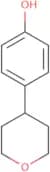
CAS:<p>Versatile small molecule scaffold</p>Formula:C11H14O2Purity:Min. 95%Molecular weight:178.23 g/molMethyl 2-[2-(4-hydroxyphenyl)acetamido]acetate
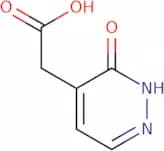
CAS:<p>Versatile small molecule scaffold</p>Formula:C11H13NO4Purity:Min. 95%Molecular weight:223.22 g/mol2-(3-Oxo-2,3-dihydropyridazin-4-yl)acetic acid
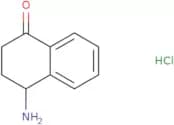
CAS:<p>Versatile small molecule scaffold</p>Formula:C6H6N2O3Purity:Min. 95%Molecular weight:154.12 g/mol4-Amino-1,2,3,4-tetrahydronaphthalen-1-one hydrochloride
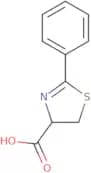
CAS:<p>Versatile small molecule scaffold</p>Formula:C10H12ClNOPurity:Min. 95%Molecular weight:197.66 g/mol(4R)-2-Phenyl-4,5-dihydro-1,3-thiazole-4-carboxylic acid
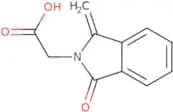
CAS:<p>Versatile small molecule scaffold</p>Formula:C10H9NO2SPurity:Min. 95%Molecular weight:207.25 g/mol2-(1-Methylidene-3-oxo-2,3-dihydro-1H-isoindol-2-yl)acetic acid
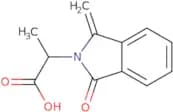
CAS:<p>Versatile small molecule scaffold</p>Formula:C11H9NO3Purity:Min. 95%Molecular weight:203.19 g/mol1,3-Dihydro-±-methyl-1-methylene-3-oxo-2H-isoindole-2-acetic acid
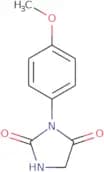
CAS:<p>Versatile small molecule scaffold</p>Formula:C12H11NO3Purity:Min. 95%Molecular weight:217.22 g/mol3-(4-Methoxyphenyl)imidazolidine-2,4-dione
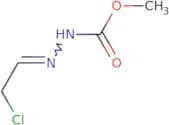
CAS:<p>Versatile small molecule scaffold</p>Formula:C10H10N2O3Purity:Min. 95%Molecular weight:206.2 g/molN'-(2-Chloroethylidene)methoxycarbohydrazide
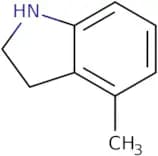
CAS:<p>Versatile small molecule scaffold</p>Formula:C4H7ClN2O2Purity:Min. 95%Molecular weight:150.56 g/mol4-Methylindoline
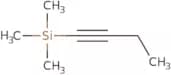
CAS:<p>Versatile small molecule scaffold</p>Formula:C9H11NPurity:Min. 95%Molecular weight:133.19 g/molBut-1-yn-1-yltrimethylsilane
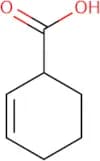
CAS:<p>But-1-yn-1-yltrimethylsilane is a sulfonation byproduct that can be found in tetrahydrofuran. It is an organic compound with the formula CH3(CH2)3SiOSO3H. This product has been shown to produce sulfonate, which is a keyword for this product.</p>Formula:C7H14SiPurity:Min. 95%Molecular weight:126.27 g/molCyclohex-2-ene-1-carboxylic acid
CAS:<p>Cyclohex-2-ene-1-carboxylic acid is a solute that is soluble in water. It has a molecular weight of 142.11 g/mol and a boiling point of 169°C. It is also soluble in ethanol, ether, chloroform, and acetone. Cyclohex-2-ene-1-carboxylic acid is synthesized from the hydrolysis of cyclohexane carboxylic acid via the hydration reaction with water. The hydroxy group on the molecule makes it an excellent solvent for various organic compounds as well as lipids and proteins.</p>Formula:C7H10O2Purity:Min. 95%Molecular weight:126.15 g/mol2-(2-Methoxyphenyl)propanenitrile
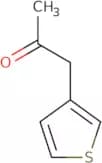
CAS:<p>Versatile small molecule scaffold</p>Formula:C10H11NOPurity:Min. 95%Molecular weight:161.2 g/mol1-(Thiophen-3-yl)propan-2-one
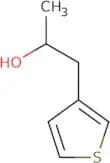
CAS:<p>Versatile small molecule scaffold</p>Formula:C7H8OSPurity:Min. 95%Molecular weight:140.2 g/mol1-(Thiophen-3-yl)propan-2-ol
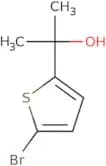
CAS:<p>Versatile small molecule scaffold</p>Formula:C7H10OSPurity:Min. 95%Molecular weight:142.22 g/mol2-(5-Bromothiophen-2-yl)propan-2-ol
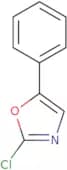
CAS:<p>Versatile small molecule scaffold</p>Formula:C7H9BrOSPurity:Min. 95%Molecular weight:221.12 g/mol2-Chloro-5-phenyloxazole
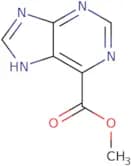
CAS:<p>2-Chloro-5-phenyloxazole is an organic compound that belongs to the class of c2-6 alkenyl, acyloxyalkyl, and formyl compounds. It is also a carboxylic acid derivative. 2-Chloro-5-phenyloxazole has been shown to be active against bacteria such as Staphylococcus aureus and Pseudomonas aeruginosa. This drug has been shown to have antibacterial properties against a variety of organisms, including gram positive and gram negative bacteria.</p>Formula:C9H6ClNOPurity:Min. 95%Molecular weight:179.6 g/molMethyl 9H-purine-6-carboxylate
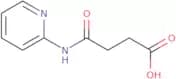
CAS:<p>Methyl 9H-purine-6-carboxylate is a methyl ester of a purine. It is an organic compound that can be synthesized from the corresponding amine by reacting it with methanol and carbon monoxide in the presence of a palladium catalyst. The methyl group on this molecule is a substituent that has been shown to increase the rate of reaction with diazonium salts, which are used in the synthesis of other purines. This ester is also used as a precursor for the synthesis of other purines.</p>Formula:C7H6N4O2Purity:Min. 95%Molecular weight:178.15 g/mol4-Oxo-4-(pyridin-2-ylamino)butanoic acid
CAS:<p>4-Oxo-4-(pyridin-2-ylamino)butanoic acid is an amide compound that is synthesized by reacting a pyridine with butanoic acid. This heterocyclic compound has been shown to have magnetic properties and it can be used as a synthon to generate other heterocyclic compounds. 4-Oxo-4-(pyridin-2-ylamino)butanoic acid can be oxidized to form the nitrate salt. The square planar geometry of this molecule displays four chiral centers, which gives it the ability to bind to metal ions in order to form complexes. This chemical is also known as a ligand, because it binds reversibly with a metal ion, such as copper or silver.</p>Formula:C9H10N2O3Purity:Min. 95%Molecular weight:194.19 g/molEthyl [1,2,4]triazolo[1,5-a]pyridine-2-carboxylate
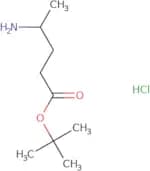
CAS:<p>Versatile small molecule scaffold</p>Formula:C9H9N3O2Purity:Min. 95%Molecular weight:191.19 g/moltert-Butyl 4-aminopentanoate hydrochloride
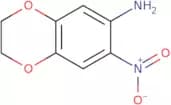
CAS:<p>Versatile small molecule scaffold</p>Formula:C9H20ClNO2Purity:Min. 95%Molecular weight:209.71 g/mol7-Nitro-2,3-dihydro-1,4-benzodioxin-6-amine
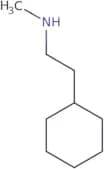
CAS:<p>Versatile small molecule scaffold</p>Formula:C8H8N2O4Purity:Min. 95%Molecular weight:196.16 g/mol(2-Cyclohexylethyl)(methyl)amine
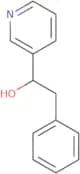
CAS:<p>Versatile small molecule scaffold</p>Formula:C9H19NPurity:Min. 95%Molecular weight:141.25 g/mol2-Phenyl-1-(pyridin-3-yl)ethan-1-ol
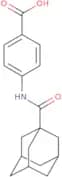
CAS:<p>Versatile small molecule scaffold</p>Formula:C13H13NOPurity:Min. 95%Molecular weight:199.25 g/mol4-(Adamantane-1-amido)benzoic acid
CAS:<p>Versatile small molecule scaffold</p>Formula:C18H21NO3Purity:Min. 95%Molecular weight:299.4 g/mol2-(2,2,2-Trifluoroethoxy)aniline hydrochloride
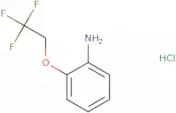
CAS:<p>Versatile small molecule scaffold</p>Formula:C8H9ClF3NOPurity:Min. 95%Molecular weight:227.61 g/mol4-Bromopicolinic hydrazide
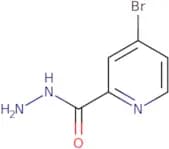
CAS:<p>4-Bromopicolinic hydrazide is a chemical compound that has antibacterial activity. It is active against bacteria like B. subtilis, P. pneumoniae, and S. aureus as well as fungi such as M. macrophomina and A. fumigatus. 4-Bromopicolinic hydrazide is effective against bacterial strains like phaseolina, K. pneumoniae, and C. sclerotium, but not against E. coli or other Gram-negative bacteria that have been shown to be resistant to ampicillin in vitro studies. It also has antifungal properties which are active against A. fumigatus and M. macrophomina in vitro studies.br>br><br>4-Bromopicolinic hydrazide inhibits the synthesis of DNA by binding to the enzyme DNA polymerase and preventing it from making copies of the bacterial DNA during replication.br>br><br>This drug has</p>Formula:C6H6BrN3OPurity:Min. 95%Molecular weight:216.04 g/mol2-(1H-Imidazol-1-ylmethyl)pyridine
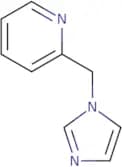
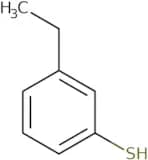
CAS:<p>Versatile small molecule scaffold</p>Formula:C9H9N3Purity:Min. 95%Molecular weight:159.19 g/mol3-Ethylbenzenethiol
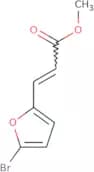
CAS:<p>3-Ethylbenzenethiol is a chlorinated derivative of benzenethiol that is used as a reagent in organic synthesis. It has been used to synthesize potassium and copper chlorides, and it has also been used in the preparation of 2-iodobenzoic acid. 3-Ethylbenzenethiol is a strong bronchodilator with cataleptic properties that can be used to control coughs. It has been shown to have antitussive effects when given at high doses, with no adverse side effects.</p>Formula:C8H10SPurity:Min. 95%Molecular weight:138.23 g/molMethyl (2E)-3-(5-bromofuran-2-yl)prop-2-enoate
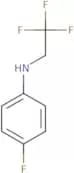
CAS:<p>Versatile small molecule scaffold</p>Formula:C8H7BrO3Purity:Min. 95%Molecular weight:231.04 g/mol(4-Fluoro-phenyl)-(2,2,2-trifluoro-ethyl)-amine
CAS:<p>Versatile small molecule scaffold</p>Formula:C8H7F4NPurity:Min. 95%Molecular weight:193.14 g/mol1-(4-Methoxyphenyl)-5-phenyl-1H-pyrazole-3-carboxylic acid
CAS:<p>Versatile small molecule scaffold</p>Formula:C17H14N2O3Purity:Min. 95%Molecular weight:294.3 g/molSpiro[4.5]dec-3-en-2-one
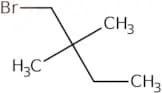
CAS:<p>Versatile small molecule scaffold</p>Formula:C10H14OPurity:Min. 95%Molecular weight:150.22 g/mol1-Bromo-2,2-dimethylbutane
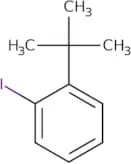
CAS:<p>Versatile small molecule scaffold</p>Formula:C6H13BrPurity:Min. 95%Molecular weight:165.07 g/mol1-tert-Butyl-2-iodobenzene
CAS:<p>Versatile small molecule scaffold</p>Formula:C10H13IPurity:Min. 95%Molecular weight:260.11 g/mol[2-(Methoxymethyl)phenyl]methanol
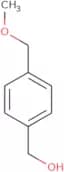
CAS:<p>Versatile small molecule scaffold</p>Formula:C9H12O2Purity:Min. 95%Molecular weight:152.19 g/mol(4-Methoxymethyl-phenyl)-methanol
CAS:<p>4-Methoxymethyl-phenyl)-methanol is an inorganic chemical. It is a synthetic compound that has been used as an experimental result to study the effects of introducing chloride into mosquitoes. The nitro group on the molecule was found to be of particular interest, as it may be able to react with a variety of organic compounds, including pyrethroid insecticides. 4-Methoxymethyl-phenyl)-methanol can be synthesized by reacting methoxymethyl chloride with potassium hydroxide in a constant temperature reaction.</p>Formula:C9H12O2Purity:Min. 95%Molecular weight:152.19 g/mol2-Iso-butoxy-5-chlorobenzoic acid
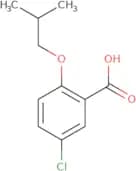
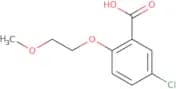
CAS:<p>Versatile small molecule scaffold</p>Formula:C11H13ClO3Purity:Min. 95%Molecular weight:228.67 g/mol5-Chloro-2-(2-methoxyethoxy)benzoic acid
CAS:<p>Versatile small molecule scaffold</p>Formula:C10H11ClO4Purity:Min. 95%Molecular weight:230.64 g/mol5-Bromo-2-(methylsulfanyl)benzoic acid
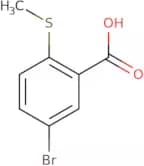
CAS:<p>Versatile small molecule scaffold</p>Formula:C8H7BrO2SPurity:Min. 95%Molecular weight:247.11 g/moltert-Butyl N-(5-methylthiophen-2-yl)carbamate
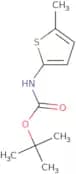
CAS:<p>Versatile small molecule scaffold</p>Formula:C10H15NO2SPurity:Min. 95%Molecular weight:213.3 g/mol3-Amino-1-benzofuran-2-carbonitrile
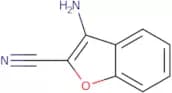
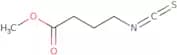
CAS:<p>3-Amino-1-benzofuran-2-carbonitrile is a heterocyclic compound that belongs to the isothiocyanate family. It has been shown to be an analog of phenyl isothiocyanate by x-ray crystallography, and it reacts with selenium dioxide in a 1:1 ratio to form selenides. The reaction mechanism is believed to be analogous to the reaction of phenyl isothiocyanate, although this has not yet been confirmed. The reaction proceeds with a refluxing pyridine as solvent, which crystallizes on cooling.</p>Formula:C9H6N2OPurity:Min. 95%Molecular weight:158.16 g/molMethyl 4-isothiocyanatobutanoate
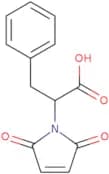
CAS:<p>Methyl 4-isothiocyanatobutanoate (MITC) is a synthetic insecticide that is used in agriculture and against pests of brassica plants. MITC has been shown to be toxic to human pathogens, such as Salmonella enterica, Escherichia coli, Pseudomonas aeruginosa, and Staphylococcus aureus. MITC has a high volatility and can be applied to the leaves of plants. It has also been shown to have microbicidal properties against insects that are resistant to other insecticides.</p>Formula:C6H9NO2SPurity:Min. 95%Molecular weight:159.21 g/mol2-(2,5-Dioxo-2,5-dihydro-1H-pyrrol-1-yl)-3-phenylpropanoic acid
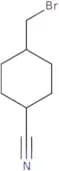
CAS:<p>2-(2,5-Dioxo-2,5-dihydro-1H-pyrrol-1-yl)-3-phenylpropanoic acid is a chemical that can be used as a reactional or catalyst in the production of aspartame. It is synthesized from toluenesulfonic acid and l-aspartic acid. 2-(2,5-Dioxo-2,5-dihydro-1H-pyrrol-1-yl)-3-phenylpropanoic acid is also used in the production of other chemical substances such as sulfuric acid and phosphoric acid.</p>Formula:C13H11NO4Purity:Min. 95%Molecular weight:245.23 g/mol4-(Bromomethyl)cyclohexane-1-carbonitrile
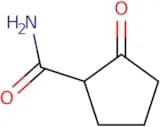
CAS:<p>Versatile small molecule scaffold</p>Formula:C8H12BrNPurity:Min. 95%Molecular weight:202.09 g/mol2-Oxocyclopentane-1-carboxamide
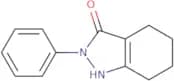
CAS:<p>2-Oxocyclopentane-1-carboxamide is an organic compound that is used in the synthesis of cycloalkanols. It has been shown to be a suitable catalyst for the asymmetric synthesis of hydroxyamides and cyclic alcohols. 2-Oxocyclopentane-1-carboxamide is an organocatalytic, catalytic reagent that can be used in chemoenzymatic reactions with a high degree of enantiopurity. It can also be used to produce chiral compounds, such as epoxides, oxazolidines, and hydrazones. This chemical has been shown to have yields up to 98%.</p>Formula:C6H9NO2Purity:Min. 95%Molecular weight:127.14 g/mol2-Phenyl-4,5,6,7-tetrahydro-1H-indazol-3(2H)-one
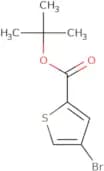
CAS:<p>Versatile small molecule scaffold</p>Formula:C13H14N2OPurity:Min. 95%Molecular weight:214.26 g/moltert-Butyl 4-bromothiophene-2-carboxylate
CAS:<p>Versatile small molecule scaffold</p>Formula:C9H11BrO2SPurity:Min. 95%Molecular weight:263.15 g/mol6-Chlorothieno[2,3-b]pyridine
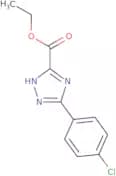
CAS:<p>6-Chlorothieno[2,3-b]pyridine is a mechanistic probe that can be used to rationalize the mechanism of organic reactions. It has been shown to undergo fragmentation in an electron-initiated reaction.</p>Formula:C7H4ClNSPurity:Min. 95%Molecular weight:169.63 g/molEthyl 5-(4-chlorophenyl)-1H-1,2,4-triazole-3-carboxylate
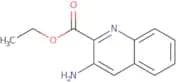
CAS:<p>Versatile small molecule scaffold</p>Formula:C11H10ClN3O2Purity:Min. 95%Molecular weight:251.67 g/mol3-Aminoquinolin-2-yl ethyl carbonate
CAS:<p>3-Aminoquinolin-2-yl ethyl carbonate is a versatile compound that has various applications in different fields. It is commonly used for crystallization purposes, as it helps to facilitate the formation of crystals in chemical reactions. Additionally, it has antimuscarinic properties and can be used as an ingredient in medications like tolterodine tartrate, which is used to treat urinary incontinence.</p>Formula:C12H12N2O3Purity:Min. 95%Molecular weight:232.24 g/mol3-(Bromomethyl)quinoxalin-2(1H)-one
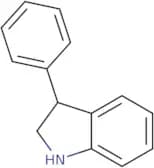
CAS:<p>3-(Bromomethyl)quinoxalin-2(1H)-one is an organic compound that reacts with a variety of aromatic amines and is obtained by condensation of phthalimide with piperidine. This white crystalline solid has been shown to be soluble in water, ethanol, acetone, and ether. The salt of this compound can be prepared by the reaction of 3-(bromomethyl)quinoxalin-2(1H)-one with sodium methoxide or sodium in dimethyl sulfate. 3-(Bromomethyl)quinoxalin-2(1H)-one is used as a reagent for the synthesis of other organic compounds.</p>Formula:C9H7BrN2OPurity:Min. 95%Molecular weight:239.07 g/mol3-Phenyl-2,3-dihydro-1H-indole
CAS:<p>3-Phenyl-2,3-dihydro-1H-indole is a dichlorophenyl that can be oxidized to yield ethylene. It has been shown to have pharmacological properties and potential use as a pharmacological agent. 3-Phenyl-2,3-dihydro-1H-indole is also an anilino heterocycle. It exhibits intestinal activity and coagulant properties.</p>Formula:C14H13NPurity:Min. 95%Molecular weight:195.26 g/mol2-[4-(Trifluoromethyl)phenyl]morpholine oxalate
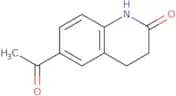
CAS:<p>Versatile small molecule scaffold</p>Formula:C11H12F3NO·C2H2O4Purity:Min. 95%Molecular weight:321.25 g/mol6-Acetyl-1,2,3,4-tetrahydroquinolin-2-one
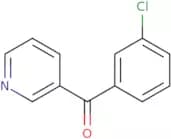
CAS:<p>Versatile small molecule scaffold</p>Formula:C11H11NO2Purity:Min. 95%Molecular weight:189.21 g/mol3-(3-Chlorobenzoyl)pyridine
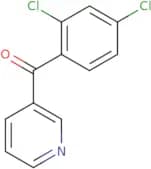
CAS:<p>Versatile small molecule scaffold</p>Formula:C12H8ClNOPurity:Min. 95%Molecular weight:217.65 g/mol3-(2,4-Dichlorobenzoyl)pyridine
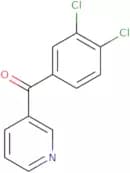
CAS:<p>Versatile small molecule scaffold</p>Formula:C12H7Cl2NOPurity:Min. 95%Molecular weight:252.09 g/mol3-(3,4-Dichlorobenzoyl)pyridine
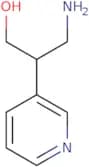
CAS:<p>Versatile small molecule scaffold</p>Formula:C12H7Cl2NOPurity:Min. 95%Molecular weight:252.09 g/mol3-Amino-2-(pyridin-3-yl)propan-1-ol
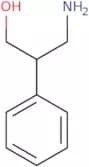
CAS:<p>Versatile small molecule scaffold</p>Formula:C8H12N2OPurity:Min. 95%Molecular weight:152.19 g/mol3-Amino-2-phenylpropan-1-ol
CAS:<p>3-Amino-2-phenylpropan-1-ol is a compound that is the product of the reaction between an amine and an aldehyde. It can be synthesized by reacting an amine with an aldehyde in the presence of hydrochloric acid, and it can be used to produce other compounds such as lysergic acid and 3-hydroxypropylamine. This compound has been shown to react with isocyanates to form oximes, which are useful in organic synthesis. 3-Amino-2-phenylpropan-1-ol also reacts with amines to form imines, which have been shown to have antihistamine effects on rats. 3-Amino-2-phenylpropan-1-ol has been modified structurally, including by modification of its chloride group or by formation of cyclic structures such as lactams or lactones.</p>Formula:C9H13NOPurity:Min. 95%Molecular weight:151.21 g/mol4-{[4-(Propan-2-yl)phenyl]sulfanyl}aniline
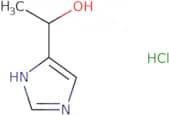
CAS:<p>Versatile small molecule scaffold</p>Formula:C15H17NSPurity:Min. 95%Molecular weight:243.4 g/mol1-(1H-Imidazol-4-yl)ethanol Hydrochloride
CAS:<p>Versatile small molecule scaffold</p>Formula:C5H8N2O·HClPurity:Min. 95%Molecular weight:148.59 g/mol7-benzyl-2-methyl-5,6,7,8-tetrahydropyrido[3,4-d]pyrimidin-4(3H)-one
CAS:<p>Versatile small molecule scaffold</p>Formula:C15H17N3OPurity:Min. 95%Molecular weight:255.32 g/molPyrido[3,4-d]pyrimidin-4(3H)-one, 5,6,7,8-tetrahydro-2-methyl-, 2HCl
CAS:Versatile small molecule scaffoldFormula:C8H13Cl2N3OPurity:Min. 95%Molecular weight:238.11 g/mol3-[(3-Aminopropyl)(methyl)phosphoryl]propan-1-amine
CAS:<p>Versatile small molecule scaffold</p>Formula:C7H19N2OPPurity:Min. 95%Molecular weight:178.21 g/mol1H,2H,3H,4H,5H,6H-Cyclopenta[C]pyrrole-1,3-dione
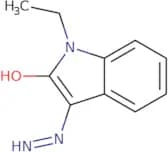
CAS:<p>Versatile small molecule scaffold</p>Formula:C7H7NO2Purity:Min. 95%Molecular weight:137.14 g/mol1-Ethyl-3-hydrazinylidene-2,3-dihydro-1H-indol-2-one
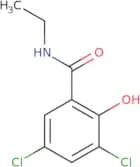
CAS:<p>Versatile small molecule scaffold</p>Formula:C10H11N3OPurity:Min. 95%Molecular weight:189.21 g/mol3,5-Dichloro-N-ethyl-2-hydroxy-benzamide
CAS:<p>Versatile small molecule scaffold</p>Formula:C9H9Cl2NO2Purity:Min. 95%Molecular weight:234.08 g/mol(3R)-5-Oxothiomorpholine-3-carboxylic acid
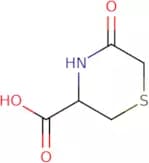
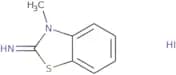
CAS:<p>(3R)-5-Oxothiomorpholine-3-carboxylic acid is a lactam antibiotic that inhibits the growth of bacteria by binding to ribosomes. It acts as an analogue of penicillin, but has a higher affinity for the ribosome. The chemical structure of (3R)-5-oxothiomorpholine-3-carboxylic acid consists of a trifluoroacetate ester at the 3 position, which is responsible for its acidic properties. This drug also contains two functional groups at the 5 position, which are responsible for its ability to interact with sulfoxides and eluting chemicals in chromatography. (3R)-5-Oxothiomorpholine-3-carboxylic acid is used in analytical chemistry as a model for other compounds with similar structures.</p>Formula:C5H7NO3SPurity:Min. 95%Molecular weight:161.18 g/mol3-Methyl-2,3-dihydro-1,3-benzothiazol-2-imine hydroiodide
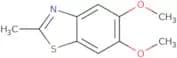
CAS:<p>Versatile small molecule scaffold</p>Formula:C8H9IN2SPurity:Min. 95%Molecular weight:292.14 g/mol5,6-Dimethoxy-2-methyl-1,3-benzothiazole
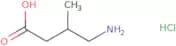
CAS:<p>Versatile small molecule scaffold</p>Formula:C10H11NO2SPurity:Min. 95%Molecular weight:209.27 g/mol4-Amino-3-methylbutanoic acid hydrochloride
CAS:<p>Versatile small molecule scaffold</p>Formula:C5H12ClNO2Purity:Min. 95%Molecular weight:153.61 g/mol1-Oxaspiro[5.5]undec-2-en-4-one
CAS:<p>Versatile small molecule scaffold</p>Formula:C10H14O2Purity:Min. 95%Molecular weight:166.22 g/mol2-(5-Ethylthiophen-2-yl)-2-oxoacetic acid
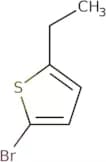
CAS:<p>Versatile small molecule scaffold</p>Formula:C8H8O3SPurity:Min. 95%Molecular weight:184.2 g/mol2-Bromo-5-ethylthiophene
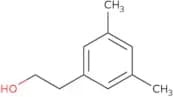
CAS:<p>2-Bromo-5-ethylthiophene is a brominated electron donor that has been used as an electron delocalizer in macrocyclic compounds. The electron delocalization is due to the coplanarity of the bithienyl and tetramer rings. 2-Bromo-5-ethylthiophene can be used for the synthesis of polymeric materials, such as polyimides, by lowering the melting point. It is also an excellent reagent for MALDI-TOF analysis in mass spectroscopy.</p>Formula:C6H7BrSPurity:Min. 95%Molecular weight:191.09 g/mol2-(3,5-Dimethylphenyl)ethan-1-ol
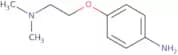
CAS:<p>Versatile small molecule scaffold</p>Formula:C10H14OPurity:Min. 95%Molecular weight:150.22 g/mol4-(2-Dimethylamino-ethoxy)-phenylamine
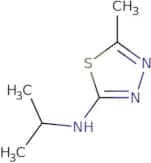
CAS:Controlled Product<p>4-(2-Dimethylamino-ethoxy)-phenylamine is a synthetic, sustainable, membrane lipid that can form hydrophobic liposomes. These lipids are amphiphilic and form lamellar phases with one or two layers of molecules. The cavity in these phases can be filled with water, which may be useful for optical microscopy. The polymerase chain reaction (PCR) catalyzes the replication of DNA and RNA strands using 4-(2-dimethylamino-ethoxy)-phenylamine to coat the surface of the DNA template strand. This process allows for amplification of small amounts of target DNA sequences for research purposes.</p>Formula:C10H16N2OPurity:Min. 95%Molecular weight:180.25 g/mol5-Methyl-N-(propan-2-yl)-1,3,4-thiadiazol-2-amine
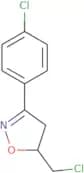
CAS:<p>Versatile small molecule scaffold</p>Formula:C6H11N3SPurity:Min. 95%Molecular weight:157.24 g/mol5-(Chloromethyl)-3-(4-chlorophenyl)-4,5-dihydro-1,2-oxazole
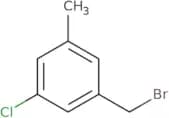
CAS:<p>Versatile small molecule scaffold</p>Formula:C10H9Cl2NOPurity:Min. 95%Molecular weight:230.09 g/mol1-(Bromomethyl)-3-chloro-5-methylbenzene
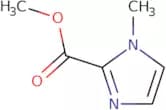
CAS:<p>Versatile small molecule scaffold</p>Formula:C8H8BrClPurity:Min. 95%Molecular weight:219.5 g/molMethyl 1-methyl-1H-imidazole-2-carboxylate
CAS:<p>Versatile small molecule scaffold</p>Formula:C6H8N2O2Purity:Min. 95%Molecular weight:140.14 g/mol

![8-Methoxy-4,5-dihydro-1H-benzo[d]azepin-2(3H)-one](/_next/image/?url=https%3A%2Fstatic.cymitquimica.com%2Fproducts%2F3D%2Fthumb-webp%2FMBA68206.webp&w=3840&q=75)
![1-[(Pyridin-3-yl)methyl]imidazolidin-2-one](/_next/image/?url=https%3A%2Fstatic.cymitquimica.com%2Fproducts%2F3D%2Fthumb-webp%2FMBA73290.webp&w=3840&q=75)
![1-Methyl-2,6,7-trioxabicyclo[2.2.2]octan-4-amine](/_next/image/?url=https%3A%2Fstatic.cymitquimica.com%2Fproducts%2F3D%2Fthumb-webp%2FMBA78752.webp&w=3840&q=75)
![5-(Aminomethyl)benzo[b]furan](/_next/image/?url=https%3A%2Fstatic.cymitquimica.com%2Fproducts%2F3D%2Fthumb-webp%2FMBA79808.webp&w=3840&q=75)
![4-Hydroxy-1-methyl-1H-pyrazolo[3,4-b]pyridine-5-carboxylic acid](/_next/image/?url=https%3A%2Fstatic.cymitquimica.com%2Fproducts%2F3D%2Fthumb-webp%2FMBA80004.webp&w=3840&q=75)
![Ethyl 4-chloro-1-methyl-1H-pyrazolo[3,4-b]pyridine-5-carboxylate](/_next/image/?url=https%3A%2Fstatic.cymitquimica.com%2Fproducts%2F3D%2Fthumb-webp%2FMBA80157.webp&w=3840&q=75)
![4-[(Phenylamino)methyl]benzonitrile](/_next/image/?url=https%3A%2Fstatic.cymitquimica.com%2Fproducts%2F3D%2Fthumb-webp%2FMBA81249.webp&w=3840&q=75)
![O-[(3-Pyridyl)methyl]hydroxylamine](/_next/image/?url=https%3A%2Fstatic.cymitquimica.com%2Fproducts%2F3D%2Fthumb-webp%2FMBA83220.webp&w=3840&q=75)
![3-[(2-Aminophenyl)sulfanyl]-2-methylpropanenitrile](/_next/image/?url=https%3A%2Fstatic.cymitquimica.com%2Fproducts%2F3D%2Fthumb-webp%2FMBA84563.webp&w=3840&q=75)
![4-Azaspiro[bicyclo[2.2.2]octane-2,4'-imidazolidine]-2',5'-dione](/_next/image/?url=https%3A%2Fstatic.cymitquimica.com%2Fproducts%2F3D%2Fthumb-webp%2FMBA87420.webp&w=3840&q=75)

![2-{[(2,2,2-Trifluoroethoxy)carbonyl]amino}acetic acid](/_next/image/?url=https%3A%2Fstatic.cymitquimica.com%2Fproducts%2F3D%2Fthumb-webp%2FMBA88815.webp&w=3840&q=75)


![2-[3-Bromo-4-(propan-2-yloxy)phenyl]acetonitrile](/_next/image/?url=https%3A%2Fstatic.cymitquimica.com%2Fproducts%2F3D%2Fthumb-webp%2FMBA94639.webp&w=3840&q=75)
![Ethyl 3-[(5-hydroxypentyl)(methyl)amino]propanoate](/_next/image/?url=https%3A%2Fstatic.cymitquimica.com%2Fproducts%2F3D%2Fthumb-webp%2FMBA94715.webp&w=3840&q=75)
![2-[5-Oxo-1-(pyridin-2-yl)-2,5-dihydro-1H-pyrazol-3-yl]acetic acid](/_next/image/?url=https%3A%2Fstatic.cymitquimica.com%2Fproducts%2F3D%2Fthumb-webp%2FMBA95919.webp&w=3840&q=75)
![3H,4H-Pyrido[3,2-d][1,2,3]triazin-4-one](/_next/image/?url=https%3A%2Fstatic.cymitquimica.com%2Fproducts%2F3D%2Fthumb-webp%2FMBA96289.webp&w=3840&q=75)

![5-Methyl-4H,7H-thieno[3,2-b]pyridin-7-one](/_next/image/?url=https%3A%2Fstatic.cymitquimica.com%2Fproducts%2F3D%2Fthumb-webp%2FMBA98604.webp&w=3840&q=75)
![2-[4-(3-Formyl-2,5-dimethyl-1H-pyrrol-1-yl)phenoxy]acetic acid](/_next/image/?url=https%3A%2Fstatic.cymitquimica.com%2Fproducts%2F3D%2Fthumb-webp%2FMBB15428.webp&w=3840&q=75)

![[6-(2,2-Dimethylpropanamido)pyridin-3-yl]boronic acid](/_next/image/?url=https%3A%2Fstatic.cymitquimica.com%2Fproducts%2F3D%2Fthumb-webp%2FMBC75289.webp&w=3840&q=75)
![3-[(Naphthalen-1-yl)methyl]pyrrolidin-2-one](/_next/image/?url=https%3A%2Fstatic.cymitquimica.com%2Fproducts%2F3D%2Fthumb-webp%2FMBD71944.webp&w=3840&q=75)
![3-[2-(Aminomethyl)pyrrolidin-1-yl]propan-1-ol](/_next/image/?url=https%3A%2Fstatic.cymitquimica.com%2Fproducts%2F3D%2Fthumb-webp%2FMCA01211.webp&w=3840&q=75)
![4,5,6,7-Tetrahydrothieno[2,3-c]pyridine](/_next/image/?url=https%3A%2Fstatic.cymitquimica.com%2Fproducts%2F3D%2Fthumb-webp%2FMCA01971.webp&w=3840&q=75)
![1-{Bicyclo[2.2.2]octan-2-yl}ethan-1-ol](/_next/image/?url=https%3A%2Fstatic.cymitquimica.com%2Fproducts%2F3D%2Fthumb-webp%2FMCA02828.webp&w=3840&q=75)
![Bicyclo[2.2.2]octane-2-carbaldehyde](/_next/image/?url=https%3A%2Fstatic.cymitquimica.com%2Fproducts%2F3D%2Fthumb-webp%2FMCA02829.webp&w=3840&q=75)
![6-(2-Hydroxyethyl)-5-methyl[1,2,4]triazolo-[1,5-a]pyrimidin-7(4H)-one](/_next/image/?url=https%3A%2Fstatic.cymitquimica.com%2Fproducts%2F3D%2Fthumb-webp%2FMCA05306.webp&w=3840&q=75)
![Methyl 2-[2-(4-hydroxyphenyl)acetamido]acetate](/_next/image/?url=https%3A%2Fstatic.cymitquimica.com%2Fproducts%2F3D%2Fthumb-webp%2FMCA08672.webp&w=3840&q=75)
![Ethyl [1,2,4]triazolo[1,5-a]pyridine-2-carboxylate](/_next/image/?url=https%3A%2Fstatic.cymitquimica.com%2Fproducts%2F3D%2Fthumb-webp%2FMCA13558.webp&w=3840&q=75)
![Spiro[4.5]dec-3-en-2-one](/_next/image/?url=https%3A%2Fstatic.cymitquimica.com%2Fproducts%2F3D%2Fthumb-webp%2FMCA16749.webp&w=3840&q=75)
![[2-(Methoxymethyl)phenyl]methanol](/_next/image/?url=https%3A%2Fstatic.cymitquimica.com%2Fproducts%2F3D%2Fthumb-webp%2FMCA17288.webp&w=3840&q=75)
![6-Chlorothieno[2,3-b]pyridine](/_next/image/?url=https%3A%2Fstatic.cymitquimica.com%2Fproducts%2F3D%2Fthumb-webp%2FMCA22618.webp&w=3840&q=75)
![2-[4-(Trifluoromethyl)phenyl]morpholine oxalate](/_next/image/?url=https%3A%2Fstatic.cymitquimica.com%2Fproducts%2F3D%2Fthumb-webp%2FMCA24372.webp&w=3840&q=75)
![4-{[4-(Propan-2-yl)phenyl]sulfanyl}aniline](/_next/image/?url=https%3A%2Fstatic.cymitquimica.com%2Fproducts%2F3D%2Fthumb-webp%2FMCA24850.webp&w=3840&q=75)
![7-benzyl-2-methyl-5,6,7,8-tetrahydropyrido[3,4-d]pyrimidin-4(3H)-one](/_next/image/?url=https%3A%2Fstatic.cymitquimica.com%2Fproducts%2F3D%2Fthumb-webp%2FMCA25992.webp&w=3840&q=75)
![Pyrido[3,4-d]pyrimidin-4(3H)-one, 5,6,7,8-tetrahydro-2-methyl-, 2HCl](/_next/image/?url=https%3A%2Fstatic.cymitquimica.com%2Fproducts%2F3D%2Fthumb-webp%2FMCA26000.webp&w=3840&q=75)
![3-[(3-Aminopropyl)(methyl)phosphoryl]propan-1-amine](/_next/image/?url=https%3A%2Fstatic.cymitquimica.com%2Fproducts%2F3D%2Fthumb-webp%2FMCA27190.webp&w=3840&q=75)
![1H,2H,3H,4H,5H,6H-Cyclopenta[C]pyrrole-1,3-dione](/_next/image/?url=https%3A%2Fstatic.cymitquimica.com%2Fproducts%2F3D%2Fthumb-webp%2FMCA29138.webp&w=3840&q=75)
![1-Oxaspiro[5.5]undec-2-en-4-one](/_next/image/?url=https%3A%2Fstatic.cymitquimica.com%2Fproducts%2F3D%2Fthumb-webp%2FMCA32209.webp&w=3840&q=75)