Building Blocks
This section contains fundamental products for the synthesis of organic and biological compounds. Building blocks are the essential starting materials used to construct complex molecules through various chemical reactions. They play a critical role in drug discovery, material science, and chemical research. At CymitQuimica, we offer a diverse range of high-quality building blocks to support your innovative research and industrial projects, ensuring you have the essential components for successful synthesis.
Subcategories of "Building Blocks"
- Boronic Acids & Boronic Acid Derivatives(5,756 products)
- Chiral Building Blocks(1,242 products)
- Hydrocarbon Building Blocks(6,095 products)
- Organic Building Blocks(61,037 products)
Found 196200 products of "Building Blocks"
Sort by
Purity (%)
0
100
|
0
|
50
|
90
|
95
|
100
Bicyclo[2.2.2]octane-2-carbaldehyde
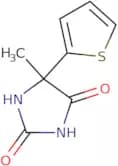
CAS:<p>Versatile small molecule scaffold</p>Formula:C9H14OPurity:Min. 95%Molecular weight:138.21 g/mol5-Methyl-5-(thiophen-2-yl)imidazolidine-2,4-dione
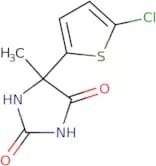
CAS:<p>Versatile small molecule scaffold</p>Formula:C8H8N2O2SPurity:Min. 95%Molecular weight:196.23 g/mol5-(5-Chlorothiophen-2-yl)-5-methylimidazolidine-2,4-dione
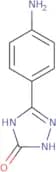
CAS:<p>Versatile small molecule scaffold</p>Formula:C8H7ClN2O2SPurity:Min. 95%Molecular weight:230.67 g/mol3-(4-Aminophenyl)-4,5-dihydro-1H-1,2,4-triazol-5-one
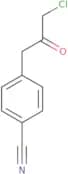
CAS:<p>Versatile small molecule scaffold</p>Formula:C8H8N4OPurity:Min. 95%Molecular weight:176.18 g/mol4-(3-Chloro-2-oxopropyl)benzonitrile
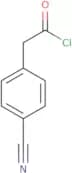
CAS:<p>Versatile small molecule scaffold</p>Formula:C10H8ClNOPurity:Min. 95%Molecular weight:193.63 g/mol2-(4-Cyanophenyl)acetyl chloride
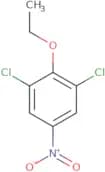
CAS:<p>Versatile small molecule scaffold</p>Formula:C9H6ClNOPurity:Min. 95%Molecular weight:179.6 g/mol1,3-Dichloro-2-ethoxy-5-nitrobenzene
CAS:<p>Versatile small molecule scaffold</p>Formula:C8H7Cl2NO3Purity:Min. 95%Molecular weight:236.05 g/mol6-(2-Hydroxyethyl)-5-methyl[1,2,4]triazolo-[1,5-a]pyrimidin-7(4H)-one
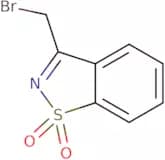
CAS:<p>Versatile small molecule scaffold</p>Formula:C8H10N4O2Purity:Min. 95%Molecular weight:194.19 g/mol3-(Bromomethyl)-1,2-benzisothiazol 1,1-dioxide
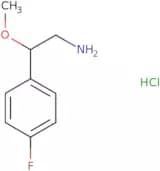
CAS:<p>Versatile small molecule scaffold</p>Formula:C8H6BrNO2SPurity:Min. 95%Molecular weight:260.11 g/mol2-(4-Fluorophenyl)-2-methoxyethan-1-amine hydrochloride
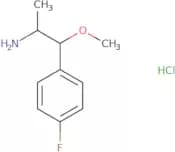
CAS:Controlled Product<p>Versatile small molecule scaffold</p>Formula:C9H13ClFNOPurity:Min. 95%Molecular weight:205.66 g/mol1-(4-Fluorophenyl)-1-methoxypropan-2-amine hydrochloride
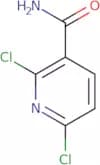
CAS:Controlled Product<p>Versatile small molecule scaffold</p>Formula:C10H15ClFNOPurity:Min. 95%Molecular weight:219.68 g/mol2,6-Dichloropyridine-3-carboxamide
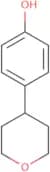
CAS:<p>2,6-Dichloropyridine-3-carboxamide is a boronic acid that is used in organic synthesis. It is a cross-coupling partner in Suzuki and Sonogashira reactions. 2,6-Dichloropyridine-3-carboxamide can be prepared by the reaction of an aryl boronic acid with 2,6-dichloropyridine. This reaction proceeds smoothly at room temperature and has been shown to proceed with high yield. The compound was also found to inhibit tyrosine kinase activity when expressed in cells. It is an organometallic molecule that contains a pyridinium group and an alkene section. The metathesis reactions of this compound have been studied extensively and it has been shown to undergo both metathesis reactions under different conditions.</p>Formula:C6H4Cl2N2OPurity:Min. 95%Molecular weight:191.01 g/mol4-(Oxan-4-yl)phenol
CAS:<p>Versatile small molecule scaffold</p>Formula:C11H14O2Purity:Min. 95%Molecular weight:178.23 g/molMethyl 2-[2-(4-hydroxyphenyl)acetamido]acetate
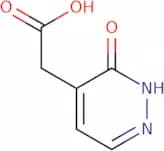
CAS:<p>Versatile small molecule scaffold</p>Formula:C11H13NO4Purity:Min. 95%Molecular weight:223.22 g/mol2-(3-Oxo-2,3-dihydropyridazin-4-yl)acetic acid
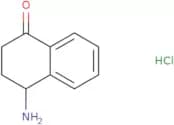
CAS:<p>Versatile small molecule scaffold</p>Formula:C6H6N2O3Purity:Min. 95%Molecular weight:154.12 g/mol4-Amino-1,2,3,4-tetrahydronaphthalen-1-one hydrochloride
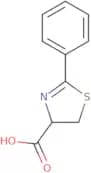
CAS:<p>Versatile small molecule scaffold</p>Formula:C10H12ClNOPurity:Min. 95%Molecular weight:197.66 g/mol(4R)-2-Phenyl-4,5-dihydro-1,3-thiazole-4-carboxylic acid
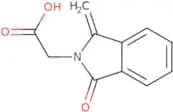
CAS:<p>Versatile small molecule scaffold</p>Formula:C10H9NO2SPurity:Min. 95%Molecular weight:207.25 g/mol2-(1-Methylidene-3-oxo-2,3-dihydro-1H-isoindol-2-yl)acetic acid
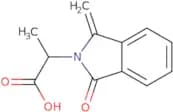
CAS:<p>Versatile small molecule scaffold</p>Formula:C11H9NO3Purity:Min. 95%Molecular weight:203.19 g/mol1,3-Dihydro-±-methyl-1-methylene-3-oxo-2H-isoindole-2-acetic acid
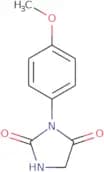
CAS:<p>Versatile small molecule scaffold</p>Formula:C12H11NO3Purity:Min. 95%Molecular weight:217.22 g/mol3-(4-Methoxyphenyl)imidazolidine-2,4-dione
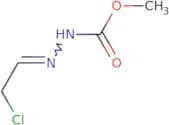
CAS:<p>Versatile small molecule scaffold</p>Formula:C10H10N2O3Purity:Min. 95%Molecular weight:206.2 g/molN'-(2-Chloroethylidene)methoxycarbohydrazide
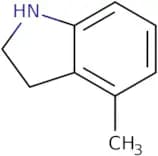
CAS:<p>Versatile small molecule scaffold</p>Formula:C4H7ClN2O2Purity:Min. 95%Molecular weight:150.56 g/mol4-Methylindoline
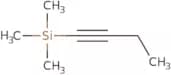
CAS:<p>Versatile small molecule scaffold</p>Formula:C9H11NPurity:Min. 95%Molecular weight:133.19 g/molBut-1-yn-1-yltrimethylsilane
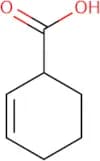
CAS:<p>But-1-yn-1-yltrimethylsilane is a sulfonation byproduct that can be found in tetrahydrofuran. It is an organic compound with the formula CH3(CH2)3SiOSO3H. This product has been shown to produce sulfonate, which is a keyword for this product.</p>Formula:C7H14SiPurity:Min. 95%Molecular weight:126.27 g/molCyclohex-2-ene-1-carboxylic acid
CAS:<p>Cyclohex-2-ene-1-carboxylic acid is a solute that is soluble in water. It has a molecular weight of 142.11 g/mol and a boiling point of 169°C. It is also soluble in ethanol, ether, chloroform, and acetone. Cyclohex-2-ene-1-carboxylic acid is synthesized from the hydrolysis of cyclohexane carboxylic acid via the hydration reaction with water. The hydroxy group on the molecule makes it an excellent solvent for various organic compounds as well as lipids and proteins.</p>Formula:C7H10O2Purity:Min. 95%Molecular weight:126.15 g/mol2-(2-Methoxyphenyl)propanenitrile
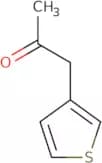
CAS:<p>Versatile small molecule scaffold</p>Formula:C10H11NOPurity:Min. 95%Molecular weight:161.2 g/mol1-(Thiophen-3-yl)propan-2-one
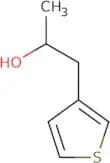
CAS:<p>Versatile small molecule scaffold</p>Formula:C7H8OSPurity:Min. 95%Molecular weight:140.2 g/mol1-(Thiophen-3-yl)propan-2-ol
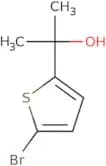
CAS:<p>Versatile small molecule scaffold</p>Formula:C7H10OSPurity:Min. 95%Molecular weight:142.22 g/mol2-(5-Bromothiophen-2-yl)propan-2-ol
CAS:<p>Versatile small molecule scaffold</p>Formula:C7H9BrOSPurity:Min. 95%Molecular weight:221.12 g/mol2-Chloro-5-phenyloxazole
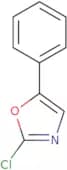
CAS:<p>2-Chloro-5-phenyloxazole is an organic compound that belongs to the class of c2-6 alkenyl, acyloxyalkyl, and formyl compounds. It is also a carboxylic acid derivative. 2-Chloro-5-phenyloxazole has been shown to be active against bacteria such as Staphylococcus aureus and Pseudomonas aeruginosa. This drug has been shown to have antibacterial properties against a variety of organisms, including gram positive and gram negative bacteria.</p>Formula:C9H6ClNOPurity:Min. 95%Molecular weight:179.6 g/molMethyl 9H-purine-6-carboxylate
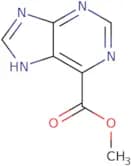
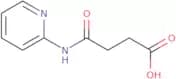
CAS:<p>Methyl 9H-purine-6-carboxylate is a methyl ester of a purine. It is an organic compound that can be synthesized from the corresponding amine by reacting it with methanol and carbon monoxide in the presence of a palladium catalyst. The methyl group on this molecule is a substituent that has been shown to increase the rate of reaction with diazonium salts, which are used in the synthesis of other purines. This ester is also used as a precursor for the synthesis of other purines.</p>Formula:C7H6N4O2Purity:Min. 95%Molecular weight:178.15 g/mol4-Oxo-4-(pyridin-2-ylamino)butanoic acid
CAS:<p>4-Oxo-4-(pyridin-2-ylamino)butanoic acid is an amide compound that is synthesized by reacting a pyridine with butanoic acid. This heterocyclic compound has been shown to have magnetic properties and it can be used as a synthon to generate other heterocyclic compounds. 4-Oxo-4-(pyridin-2-ylamino)butanoic acid can be oxidized to form the nitrate salt. The square planar geometry of this molecule displays four chiral centers, which gives it the ability to bind to metal ions in order to form complexes. This chemical is also known as a ligand, because it binds reversibly with a metal ion, such as copper or silver.</p>Formula:C9H10N2O3Purity:Min. 95%Molecular weight:194.19 g/molEthyl [1,2,4]triazolo[1,5-a]pyridine-2-carboxylate
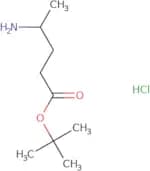
CAS:<p>Versatile small molecule scaffold</p>Formula:C9H9N3O2Purity:Min. 95%Molecular weight:191.19 g/moltert-Butyl 4-aminopentanoate hydrochloride
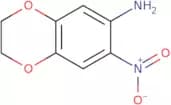
CAS:<p>Versatile small molecule scaffold</p>Formula:C9H20ClNO2Purity:Min. 95%Molecular weight:209.71 g/mol7-Nitro-2,3-dihydro-1,4-benzodioxin-6-amine
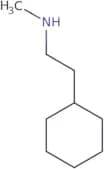
CAS:<p>Versatile small molecule scaffold</p>Formula:C8H8N2O4Purity:Min. 95%Molecular weight:196.16 g/mol(2-Cyclohexylethyl)(methyl)amine
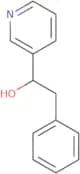
CAS:<p>Versatile small molecule scaffold</p>Formula:C9H19NPurity:Min. 95%Molecular weight:141.25 g/mol2-Phenyl-1-(pyridin-3-yl)ethan-1-ol
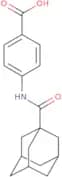
CAS:<p>Versatile small molecule scaffold</p>Formula:C13H13NOPurity:Min. 95%Molecular weight:199.25 g/mol4-(Adamantane-1-amido)benzoic acid
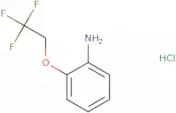
CAS:<p>Versatile small molecule scaffold</p>Formula:C18H21NO3Purity:Min. 95%Molecular weight:299.4 g/mol2-(2,2,2-Trifluoroethoxy)aniline hydrochloride
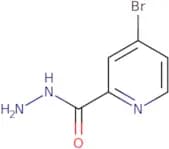
CAS:<p>Versatile small molecule scaffold</p>Formula:C8H9ClF3NOPurity:Min. 95%Molecular weight:227.61 g/mol4-Bromopicolinic hydrazide
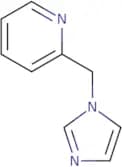
CAS:<p>4-Bromopicolinic hydrazide is a chemical compound that has antibacterial activity. It is active against bacteria like B. subtilis, P. pneumoniae, and S. aureus as well as fungi such as M. macrophomina and A. fumigatus. 4-Bromopicolinic hydrazide is effective against bacterial strains like phaseolina, K. pneumoniae, and C. sclerotium, but not against E. coli or other Gram-negative bacteria that have been shown to be resistant to ampicillin in vitro studies. It also has antifungal properties which are active against A. fumigatus and M. macrophomina in vitro studies.br>br><br>4-Bromopicolinic hydrazide inhibits the synthesis of DNA by binding to the enzyme DNA polymerase and preventing it from making copies of the bacterial DNA during replication.br>br><br>This drug has</p>Formula:C6H6BrN3OPurity:Min. 95%Molecular weight:216.04 g/mol2-(1H-Imidazol-1-ylmethyl)pyridine
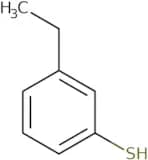
CAS:<p>Versatile small molecule scaffold</p>Formula:C9H9N3Purity:Min. 95%Molecular weight:159.19 g/mol3-Ethylbenzenethiol
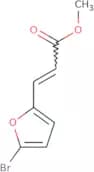
CAS:<p>3-Ethylbenzenethiol is a chlorinated derivative of benzenethiol that is used as a reagent in organic synthesis. It has been used to synthesize potassium and copper chlorides, and it has also been used in the preparation of 2-iodobenzoic acid. 3-Ethylbenzenethiol is a strong bronchodilator with cataleptic properties that can be used to control coughs. It has been shown to have antitussive effects when given at high doses, with no adverse side effects.</p>Formula:C8H10SPurity:Min. 95%Molecular weight:138.23 g/molMethyl (2E)-3-(5-bromofuran-2-yl)prop-2-enoate
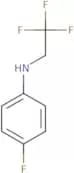
CAS:<p>Versatile small molecule scaffold</p>Formula:C8H7BrO3Purity:Min. 95%Molecular weight:231.04 g/mol(4-Fluoro-phenyl)-(2,2,2-trifluoro-ethyl)-amine
CAS:<p>Versatile small molecule scaffold</p>Formula:C8H7F4NPurity:Min. 95%Molecular weight:193.14 g/mol1-(4-Methoxyphenyl)-5-phenyl-1H-pyrazole-3-carboxylic acid
CAS:<p>Versatile small molecule scaffold</p>Formula:C17H14N2O3Purity:Min. 95%Molecular weight:294.3 g/molSpiro[4.5]dec-3-en-2-one
CAS:<p>Versatile small molecule scaffold</p>Formula:C10H14OPurity:Min. 95%Molecular weight:150.22 g/mol1-Bromo-2,2-dimethylbutane
CAS:<p>Versatile small molecule scaffold</p>Formula:C6H13BrPurity:Min. 95%Molecular weight:165.07 g/mol1-tert-Butyl-2-iodobenzene
CAS:<p>Versatile small molecule scaffold</p>Formula:C10H13IPurity:Min. 95%Molecular weight:260.11 g/mol[2-(Methoxymethyl)phenyl]methanol
CAS:<p>Versatile small molecule scaffold</p>Formula:C9H12O2Purity:Min. 95%Molecular weight:152.19 g/mol(4-Methoxymethyl-phenyl)-methanol
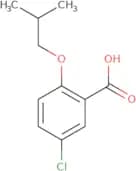
CAS:<p>4-Methoxymethyl-phenyl)-methanol is an inorganic chemical. It is a synthetic compound that has been used as an experimental result to study the effects of introducing chloride into mosquitoes. The nitro group on the molecule was found to be of particular interest, as it may be able to react with a variety of organic compounds, including pyrethroid insecticides. 4-Methoxymethyl-phenyl)-methanol can be synthesized by reacting methoxymethyl chloride with potassium hydroxide in a constant temperature reaction.</p>Formula:C9H12O2Purity:Min. 95%Molecular weight:152.19 g/mol2-Iso-butoxy-5-chlorobenzoic acid
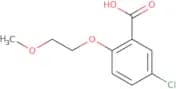
CAS:<p>Versatile small molecule scaffold</p>Formula:C11H13ClO3Purity:Min. 95%Molecular weight:228.67 g/mol5-Chloro-2-(2-methoxyethoxy)benzoic acid
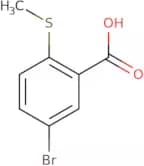
CAS:<p>Versatile small molecule scaffold</p>Formula:C10H11ClO4Purity:Min. 95%Molecular weight:230.64 g/mol5-Bromo-2-(methylsulfanyl)benzoic acid
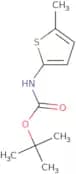
CAS:<p>Versatile small molecule scaffold</p>Formula:C8H7BrO2SPurity:Min. 95%Molecular weight:247.11 g/moltert-Butyl N-(5-methylthiophen-2-yl)carbamate
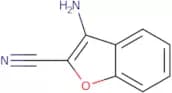
CAS:<p>Versatile small molecule scaffold</p>Formula:C10H15NO2SPurity:Min. 95%Molecular weight:213.3 g/mol3-Amino-1-benzofuran-2-carbonitrile
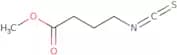
CAS:<p>3-Amino-1-benzofuran-2-carbonitrile is a heterocyclic compound that belongs to the isothiocyanate family. It has been shown to be an analog of phenyl isothiocyanate by x-ray crystallography, and it reacts with selenium dioxide in a 1:1 ratio to form selenides. The reaction mechanism is believed to be analogous to the reaction of phenyl isothiocyanate, although this has not yet been confirmed. The reaction proceeds with a refluxing pyridine as solvent, which crystallizes on cooling.</p>Formula:C9H6N2OPurity:Min. 95%Molecular weight:158.16 g/molMethyl 4-isothiocyanatobutanoate
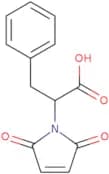
CAS:<p>Methyl 4-isothiocyanatobutanoate (MITC) is a synthetic insecticide that is used in agriculture and against pests of brassica plants. MITC has been shown to be toxic to human pathogens, such as Salmonella enterica, Escherichia coli, Pseudomonas aeruginosa, and Staphylococcus aureus. MITC has a high volatility and can be applied to the leaves of plants. It has also been shown to have microbicidal properties against insects that are resistant to other insecticides.</p>Formula:C6H9NO2SPurity:Min. 95%Molecular weight:159.21 g/mol2-(2,5-Dioxo-2,5-dihydro-1H-pyrrol-1-yl)-3-phenylpropanoic acid
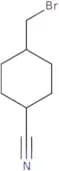
CAS:<p>2-(2,5-Dioxo-2,5-dihydro-1H-pyrrol-1-yl)-3-phenylpropanoic acid is a chemical that can be used as a reactional or catalyst in the production of aspartame. It is synthesized from toluenesulfonic acid and l-aspartic acid. 2-(2,5-Dioxo-2,5-dihydro-1H-pyrrol-1-yl)-3-phenylpropanoic acid is also used in the production of other chemical substances such as sulfuric acid and phosphoric acid.</p>Formula:C13H11NO4Purity:Min. 95%Molecular weight:245.23 g/mol4-(Bromomethyl)cyclohexane-1-carbonitrile
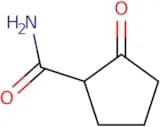
CAS:<p>Versatile small molecule scaffold</p>Formula:C8H12BrNPurity:Min. 95%Molecular weight:202.09 g/mol2-Oxocyclopentane-1-carboxamide
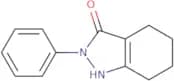
CAS:<p>2-Oxocyclopentane-1-carboxamide is an organic compound that is used in the synthesis of cycloalkanols. It has been shown to be a suitable catalyst for the asymmetric synthesis of hydroxyamides and cyclic alcohols. 2-Oxocyclopentane-1-carboxamide is an organocatalytic, catalytic reagent that can be used in chemoenzymatic reactions with a high degree of enantiopurity. It can also be used to produce chiral compounds, such as epoxides, oxazolidines, and hydrazones. This chemical has been shown to have yields up to 98%.</p>Formula:C6H9NO2Purity:Min. 95%Molecular weight:127.14 g/mol2-Phenyl-4,5,6,7-tetrahydro-1H-indazol-3(2H)-one
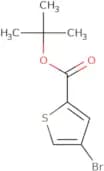
CAS:<p>Versatile small molecule scaffold</p>Formula:C13H14N2OPurity:Min. 95%Molecular weight:214.26 g/moltert-Butyl 4-bromothiophene-2-carboxylate
CAS:<p>Versatile small molecule scaffold</p>Formula:C9H11BrO2SPurity:Min. 95%Molecular weight:263.15 g/mol6-Chlorothieno[2,3-b]pyridine
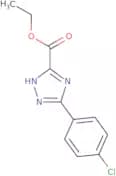
CAS:<p>6-Chlorothieno[2,3-b]pyridine is a mechanistic probe that can be used to rationalize the mechanism of organic reactions. It has been shown to undergo fragmentation in an electron-initiated reaction.</p>Formula:C7H4ClNSPurity:Min. 95%Molecular weight:169.63 g/molEthyl 5-(4-chlorophenyl)-1H-1,2,4-triazole-3-carboxylate
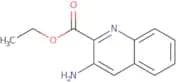
CAS:<p>Versatile small molecule scaffold</p>Formula:C11H10ClN3O2Purity:Min. 95%Molecular weight:251.67 g/mol3-Aminoquinolin-2-yl ethyl carbonate
CAS:<p>3-Aminoquinolin-2-yl ethyl carbonate is a versatile compound that has various applications in different fields. It is commonly used for crystallization purposes, as it helps to facilitate the formation of crystals in chemical reactions. Additionally, it has antimuscarinic properties and can be used as an ingredient in medications like tolterodine tartrate, which is used to treat urinary incontinence.</p>Formula:C12H12N2O3Purity:Min. 95%Molecular weight:232.24 g/mol3-(Bromomethyl)quinoxalin-2(1H)-one
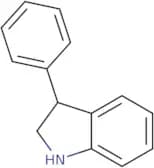
CAS:<p>3-(Bromomethyl)quinoxalin-2(1H)-one is an organic compound that reacts with a variety of aromatic amines and is obtained by condensation of phthalimide with piperidine. This white crystalline solid has been shown to be soluble in water, ethanol, acetone, and ether. The salt of this compound can be prepared by the reaction of 3-(bromomethyl)quinoxalin-2(1H)-one with sodium methoxide or sodium in dimethyl sulfate. 3-(Bromomethyl)quinoxalin-2(1H)-one is used as a reagent for the synthesis of other organic compounds.</p>Formula:C9H7BrN2OPurity:Min. 95%Molecular weight:239.07 g/mol3-Phenyl-2,3-dihydro-1H-indole
CAS:<p>3-Phenyl-2,3-dihydro-1H-indole is a dichlorophenyl that can be oxidized to yield ethylene. It has been shown to have pharmacological properties and potential use as a pharmacological agent. 3-Phenyl-2,3-dihydro-1H-indole is also an anilino heterocycle. It exhibits intestinal activity and coagulant properties.</p>Formula:C14H13NPurity:Min. 95%Molecular weight:195.26 g/mol2-[4-(Trifluoromethyl)phenyl]morpholine oxalate
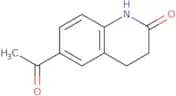
CAS:<p>Versatile small molecule scaffold</p>Formula:C11H12F3NO·C2H2O4Purity:Min. 95%Molecular weight:321.25 g/mol6-Acetyl-1,2,3,4-tetrahydroquinolin-2-one
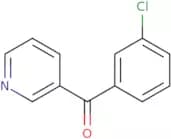
CAS:<p>Versatile small molecule scaffold</p>Formula:C11H11NO2Purity:Min. 95%Molecular weight:189.21 g/mol3-(3-Chlorobenzoyl)pyridine
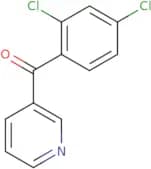
CAS:<p>Versatile small molecule scaffold</p>Formula:C12H8ClNOPurity:Min. 95%Molecular weight:217.65 g/mol3-(2,4-Dichlorobenzoyl)pyridine
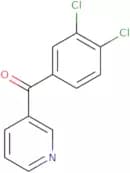
CAS:<p>Versatile small molecule scaffold</p>Formula:C12H7Cl2NOPurity:Min. 95%Molecular weight:252.09 g/mol3-(3,4-Dichlorobenzoyl)pyridine
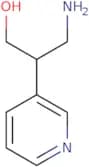
CAS:<p>Versatile small molecule scaffold</p>Formula:C12H7Cl2NOPurity:Min. 95%Molecular weight:252.09 g/mol3-Amino-2-(pyridin-3-yl)propan-1-ol
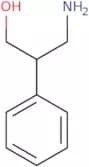
CAS:<p>Versatile small molecule scaffold</p>Formula:C8H12N2OPurity:Min. 95%Molecular weight:152.19 g/mol3-Amino-2-phenylpropan-1-ol
CAS:<p>3-Amino-2-phenylpropan-1-ol is a compound that is the product of the reaction between an amine and an aldehyde. It can be synthesized by reacting an amine with an aldehyde in the presence of hydrochloric acid, and it can be used to produce other compounds such as lysergic acid and 3-hydroxypropylamine. This compound has been shown to react with isocyanates to form oximes, which are useful in organic synthesis. 3-Amino-2-phenylpropan-1-ol also reacts with amines to form imines, which have been shown to have antihistamine effects on rats. 3-Amino-2-phenylpropan-1-ol has been modified structurally, including by modification of its chloride group or by formation of cyclic structures such as lactams or lactones.</p>Formula:C9H13NOPurity:Min. 95%Molecular weight:151.21 g/mol4-{[4-(Propan-2-yl)phenyl]sulfanyl}aniline
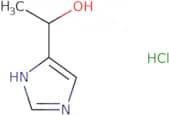
CAS:<p>Versatile small molecule scaffold</p>Formula:C15H17NSPurity:Min. 95%Molecular weight:243.4 g/mol1-(1H-Imidazol-4-yl)ethanol Hydrochloride
CAS:<p>Versatile small molecule scaffold</p>Formula:C5H8N2O·HClPurity:Min. 95%Molecular weight:148.59 g/mol7-benzyl-2-methyl-5,6,7,8-tetrahydropyrido[3,4-d]pyrimidin-4(3H)-one
CAS:<p>Versatile small molecule scaffold</p>Formula:C15H17N3OPurity:Min. 95%Molecular weight:255.32 g/molPyrido[3,4-d]pyrimidin-4(3H)-one, 5,6,7,8-tetrahydro-2-methyl-, 2HCl
CAS:<p>Versatile small molecule scaffold</p>Formula:C8H13Cl2N3OPurity:Min. 95%Molecular weight:238.11 g/mol3-[(3-Aminopropyl)(methyl)phosphoryl]propan-1-amine
CAS:<p>Versatile small molecule scaffold</p>Formula:C7H19N2OPPurity:Min. 95%Molecular weight:178.21 g/mol1H,2H,3H,4H,5H,6H-Cyclopenta[C]pyrrole-1,3-dione
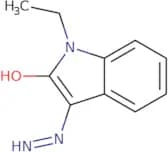
CAS:<p>Versatile small molecule scaffold</p>Formula:C7H7NO2Purity:Min. 95%Molecular weight:137.14 g/mol1-Ethyl-3-hydrazinylidene-2,3-dihydro-1H-indol-2-one
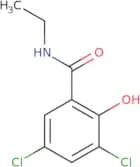
CAS:<p>Versatile small molecule scaffold</p>Formula:C10H11N3OPurity:Min. 95%Molecular weight:189.21 g/mol3,5-Dichloro-N-ethyl-2-hydroxy-benzamide
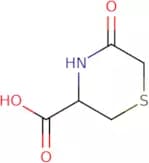
CAS:<p>Versatile small molecule scaffold</p>Formula:C9H9Cl2NO2Purity:Min. 95%Molecular weight:234.08 g/mol(3R)-5-Oxothiomorpholine-3-carboxylic acid
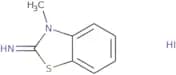
CAS:<p>(3R)-5-Oxothiomorpholine-3-carboxylic acid is a lactam antibiotic that inhibits the growth of bacteria by binding to ribosomes. It acts as an analogue of penicillin, but has a higher affinity for the ribosome. The chemical structure of (3R)-5-oxothiomorpholine-3-carboxylic acid consists of a trifluoroacetate ester at the 3 position, which is responsible for its acidic properties. This drug also contains two functional groups at the 5 position, which are responsible for its ability to interact with sulfoxides and eluting chemicals in chromatography. (3R)-5-Oxothiomorpholine-3-carboxylic acid is used in analytical chemistry as a model for other compounds with similar structures.</p>Formula:C5H7NO3SPurity:Min. 95%Molecular weight:161.18 g/mol3-Methyl-2,3-dihydro-1,3-benzothiazol-2-imine hydroiodide
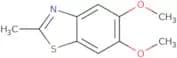
CAS:<p>Versatile small molecule scaffold</p>Formula:C8H9IN2SPurity:Min. 95%Molecular weight:292.14 g/mol5,6-Dimethoxy-2-methyl-1,3-benzothiazole
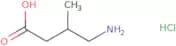
CAS:<p>Versatile small molecule scaffold</p>Formula:C10H11NO2SPurity:Min. 95%Molecular weight:209.27 g/mol4-Amino-3-methylbutanoic acid hydrochloride
CAS:<p>Versatile small molecule scaffold</p>Formula:C5H12ClNO2Purity:Min. 95%Molecular weight:153.61 g/mol1-Oxaspiro[5.5]undec-2-en-4-one
CAS:<p>Versatile small molecule scaffold</p>Formula:C10H14O2Purity:Min. 95%Molecular weight:166.22 g/mol2-(5-Ethylthiophen-2-yl)-2-oxoacetic acid
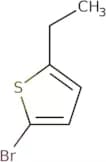
CAS:<p>Versatile small molecule scaffold</p>Formula:C8H8O3SPurity:Min. 95%Molecular weight:184.2 g/mol2-Bromo-5-ethylthiophene
CAS:<p>2-Bromo-5-ethylthiophene is a brominated electron donor that has been used as an electron delocalizer in macrocyclic compounds. The electron delocalization is due to the coplanarity of the bithienyl and tetramer rings. 2-Bromo-5-ethylthiophene can be used for the synthesis of polymeric materials, such as polyimides, by lowering the melting point. It is also an excellent reagent for MALDI-TOF analysis in mass spectroscopy.</p>Formula:C6H7BrSPurity:Min. 95%Molecular weight:191.09 g/mol2-(3,5-Dimethylphenyl)ethan-1-ol
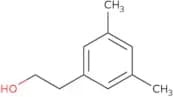
CAS:<p>Versatile small molecule scaffold</p>Formula:C10H14OPurity:Min. 95%Molecular weight:150.22 g/mol4-(2-Dimethylamino-ethoxy)-phenylamine
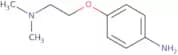
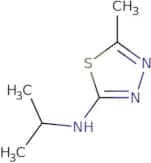
CAS:Controlled Product<p>4-(2-Dimethylamino-ethoxy)-phenylamine is a synthetic, sustainable, membrane lipid that can form hydrophobic liposomes. These lipids are amphiphilic and form lamellar phases with one or two layers of molecules. The cavity in these phases can be filled with water, which may be useful for optical microscopy. The polymerase chain reaction (PCR) catalyzes the replication of DNA and RNA strands using 4-(2-dimethylamino-ethoxy)-phenylamine to coat the surface of the DNA template strand. This process allows for amplification of small amounts of target DNA sequences for research purposes.</p>Formula:C10H16N2OPurity:Min. 95%Molecular weight:180.25 g/mol5-Methyl-N-(propan-2-yl)-1,3,4-thiadiazol-2-amine
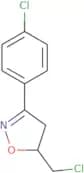
CAS:<p>Versatile small molecule scaffold</p>Formula:C6H11N3SPurity:Min. 95%Molecular weight:157.24 g/mol5-(Chloromethyl)-3-(4-chlorophenyl)-4,5-dihydro-1,2-oxazole
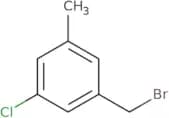
CAS:<p>Versatile small molecule scaffold</p>Formula:C10H9Cl2NOPurity:Min. 95%Molecular weight:230.09 g/mol1-(Bromomethyl)-3-chloro-5-methylbenzene
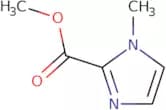
CAS:<p>Versatile small molecule scaffold</p>Formula:C8H8BrClPurity:Min. 95%Molecular weight:219.5 g/molMethyl 1-methyl-1H-imidazole-2-carboxylate
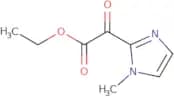
CAS:<p>Versatile small molecule scaffold</p>Formula:C6H8N2O2Purity:Min. 95%Molecular weight:140.14 g/molEthyl 2-(1-methylimidazol-2-yl)-2-oxoacetate
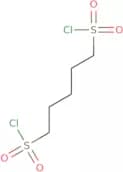
CAS:<p>Versatile small molecule scaffold</p>Formula:C8H10N2O3Purity:Min. 95%Molecular weight:182.18 g/molPentane-1,5-disulfonyl dichloride
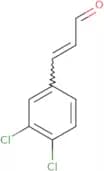
CAS:<p>Versatile small molecule scaffold</p>Formula:C5H10Cl2O4S2Purity:Min. 95%Molecular weight:269.2 g/mol(2E)-3-(3,4-Dichlorophenyl)prop-2-enal
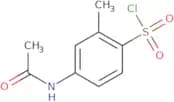
CAS:<p>Versatile small molecule scaffold</p>Formula:C9H6Cl2OPurity:Min. 95%Molecular weight:201.05 g/mol4-Acetylamino-2-methyl-benzenesulfonyl chloride
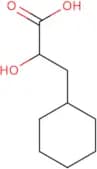
CAS:<p>Versatile small molecule scaffold</p>Formula:C9H10ClNO3SPurity:Min. 95%Molecular weight:247.69 g/mol(2S)-3-Cyclohexyl-2-hydroxypropanoic acid
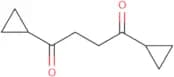
CAS:<p>(2S)-3-Cyclohexyl-2-hydroxypropanoic acid is an organic compound with the chemical formula CHCHOHCOH. It is a white solid that is soluble in water and polar organic solvents. (2S)-3-Cyclohexyl-2-hydroxypropanoic acid has been used for the synthesis of phenylpyruvic acid, which is an intermediate for the production of pharmaceuticals. The molecule has an acidic hydrolysis, which can be carried out through a nucleophilic substitution reaction with cyanide ion. The product of this reaction is phenylacetaldehyde, which can be converted to benzaldehyde. This process is enantioselective because it produces only one chiral form of benzaldehyde from a racemic mixture.</p>Formula:C9H16O3Purity:Min. 95%Molecular weight:172.22 g/mol1,4-Dicyclopropylbutane-1,4-dione
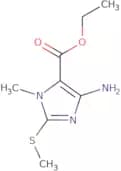
CAS:<p>Versatile small molecule scaffold</p>Formula:C10H14O2Purity:Min. 95%Molecular weight:166.22 g/molEthyl 4-amino-1-methyl-2-(methylsulfanyl)-1H-imidazole-5-carboxylate
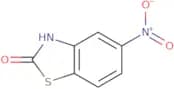
CAS:<p>Versatile small molecule scaffold</p>Formula:C8H13N3O2SPurity:Min. 95%Molecular weight:215.28 g/mol5-Nitro-2,3-dihydro-1,3-benzothiazol-2-one
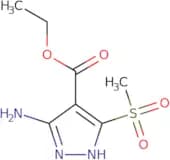
CAS:<p>Versatile small molecule scaffold</p>Formula:C7H4N2O3SPurity:Min. 95%Molecular weight:196.19 g/molEthyl 5-amino-3-methanesulfonyl-1H-pyrazole-4-carboxylate
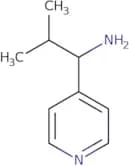
CAS:<p>Versatile small molecule scaffold</p>Formula:C7H11N3O4SPurity:Min. 95%Molecular weight:233.25 g/mol2-Methyl-1-(pyridin-4-yl)propan-1-amine
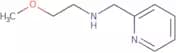
CAS:<p>Versatile small molecule scaffold</p>Formula:C9H14N2Purity:Min. 95%Molecular weight:150.22 g/mol(2-Methoxyethyl)(pyridin-2-ylmethyl)amine
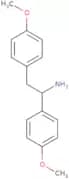
CAS:<p>2-Methoxyethyl)(pyridin-2-ylmethyl)amine is a coordination compound that has the ability to bind metal ions. It crystallizes in an orthorhombic system, and its color is light yellow. The oxygen atoms are bound to two halides, which are connected by four tetradentate ligands. 2-Methoxyethyl)(pyridin-2-ylmethyl)amine has a phenolic group with an oxygen atom that forms a molecule with a mononuclear ligand. This substance can be used as a ligand for coordination compounds.</p>Formula:C9H14N2OPurity:Min. 95%Molecular weight:166.22 g/mol1,2-Bis(4-methoxyphenyl)ethan-1-amine hydrochloride
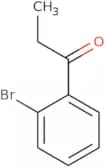
CAS:<p>1,2-Bis(4-methoxyphenyl)ethan-1-amine hydrochloride is an optical isomer of the industrial chemical 1,2-diaminobenzene. It has been shown to be a proton source in metal halides, and can be used as a kinetic probe of proton transfer reactions. The functionalities of this compound have been demonstrated by its ability to form carboxylic acids with different functional groups and isomers. The C=N bonds are highly reactive, which leads to the formation of diborane. This molecule has also been shown to be a competitive inhibitor of 6-membered ring enzymes such as reversed-phase HPLC and kinetically competitive inhibition.</p>Formula:C16H19NO2Purity:Min. 95%Molecular weight:257.33 g/mol1-(2-Bromophenyl)propan-1-one
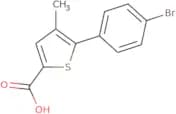
CAS:<p>1-(2-Bromophenyl)propan-1-one is a chemical compound that is generated from the reaction of bromobenzene and lithium. It is a useful intermediate for the synthesis of various organic compounds, such as cyclopentanones and butyllithium. The reaction proceeds through an intramolecular cyclization in which a ketone reacts with a lithium enolate to form a lactam.</p>Formula:C9H9BrOPurity:Min. 95%Molecular weight:213.07 g/mol5-(4-Bromo-phenyl)-4-methyl-thiophene-2-carboxylic acid
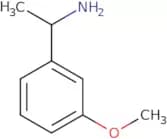
CAS:<p>Versatile small molecule scaffold</p>Formula:C12H9BrO2SPurity:Min. 95%Molecular weight:297.17 g/mol1-(3-Methoxyphenyl)ethylamine
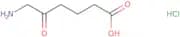
CAS:<p>1-(3-Methoxyphenyl)ethylamine is an enantiomer of the amino acid phenylalanine, and it has been used in the synthesis of racemic drugs. The optical properties of 1-(3-methoxyphenyl)ethylamine are different from those of other amino acids and can be used to create a chiral environment. This molecule can also be used as a calcimimetic that stimulates bone formation by increasing osteoblasts. It also inhibits aminotransferases and increases the production of malic acid, which is important for the synthesis of lactic acid. In addition, this molecule can be used as an efficient method for asymmetric synthesis with organic solvents such as amines or crystallography.</p>Formula:C9H13NOPurity:Min. 95%Molecular weight:151.21 g/mol6-Amino-5-oxohexanoic acid hydrochloride
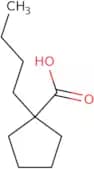
CAS:<p>6-Amino-5-oxohexanoic acid hydrochloride is a metabolite of the amino acid 6-aminohexanoic acid. It is excreted in the urine and can be detected by resonance spectroscopy, ion-exchange chromatography, and magnetic resonance spectroscopy. The metabolite has been found to have acidic properties, which can be determined by gas-liquid chromatography. 6-Amino-5-oxohexanoic acid hydrochloride can be used as a biomarker for cerebrospinal fluid and has also been used in biochemical studies to explore the equilibrium between ionized and nonionized forms of acids.</p>Formula:C6H12ClNO3Purity:Min. 95%Molecular weight:181.62 g/mol1-Butylcyclopentane-1-carboxylic acid
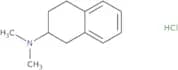
CAS:<p>Versatile small molecule scaffold</p>Formula:C10H18O2Purity:Min. 95%Molecular weight:170.25 g/molN,N-Dimethyl-1,2,3,4-tetrahydronaphthalen-2-amine hydrochloride
CAS:Controlled Product<p>Versatile small molecule scaffold</p>Formula:C12H18ClNPurity:Min. 95%Molecular weight:211.73 g/mol4-[3-(Dimethylamino)propoxy]aniline
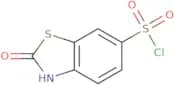
CAS:<p>4-[3-(Dimethylamino)propoxy]aniline is an antimicrobial agent that is a derivative of the amino acid aniline. It has been shown to have antimicrobial activity against Gram-positive and Gram-negative bacteria, as well as fungi. 4-[3-(Dimethylamino)propoxy]aniline has also been found to inhibit the growth of certain antibiotic-resistant bacteria, such as Staphylococcus aureus. This compound is used in pharmaceuticals, including antidepressant agents and antiseptics. 4-[3-(Dimethylamino)propoxy]aniline can be synthesized in two ways: by reacting sodium carbonate with diaminobenzene or by combining toluene with dimethylformamide followed by heating to produce a mixture of isomers.</p>Formula:C11H18N2OPurity:Min. 95%Molecular weight:194.28 g/mol2-Oxo-2,3-dihydro-benzothiazole-6-sulfonyl chloride
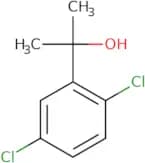
CAS:<p>Versatile small molecule scaffold</p>Formula:C7H4ClNO3S2Purity:Min. 95%Molecular weight:249.69 g/mol2-(2,5-Dichlorophenyl)propan-2-ol
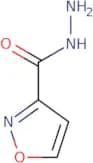
CAS:<p>Versatile small molecule scaffold</p>Formula:C9H10Cl2OPurity:Min. 95%Molecular weight:205.08 g/mol1,2-Oxazole-3-carbohydrazide
CAS:<p>1,2-Oxazole-3-carbohydrazide is an antibacterial agent that belongs to the class of isoxazoles. It has been shown to have antiplatelet properties and is a mesomorphic compound. This drug has also been shown to be active against a variety of bacteria, including Pseudomonas aeruginosa, Staphylococcus pyogenes, and Streptococcus pyogenes. 1,2-Oxazole-3-carbohydrazide has also been found to be effective in treating tuberculosis and may have antitubercular activity.</p>Formula:C4H5N3O2Purity:Min. 95%Molecular weight:127.1 g/mol1,2,5-Thiadiazole-3-carbohydrazide
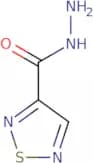
CAS:<p>Versatile small molecule scaffold</p>Formula:C3H4N4OSPurity:Min. 95%Molecular weight:144.16 g/molSpiro[5.5]undecan-2-amine hydrochloride
CAS:<p>Versatile small molecule scaffold</p>Formula:C11H22ClNPurity:Min. 95%Molecular weight:203.75 g/molSpiro[4.5]decan-7-amine hydrochloride
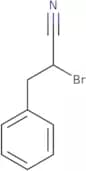
CAS:<p>Versatile small molecule scaffold</p>Formula:C10H20ClNPurity:Min. 95%Molecular weight:189.72 g/mol2-Bromo-3-phenylpropanenitrile
CAS:<p>Versatile small molecule scaffold</p>Formula:C9H8BrNPurity:Min. 95%Molecular weight:210.07 g/mol2-Bromo-3-(4-methylphenyl)propanenitrile
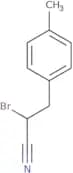
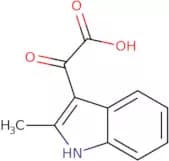
CAS:<p>Versatile small molecule scaffold</p>Formula:C10H10BrNPurity:Min. 95%Molecular weight:224.1 g/mol2-(2-Methyl-1H-indol-3-yl)-2-oxoacetic acid
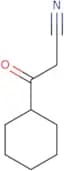
CAS:<p>Versatile small molecule scaffold</p>Formula:C11H9NO3Purity:Min. 95%Molecular weight:203.19 g/mol3-Cyclohexyl-3-oxopropanenitrile
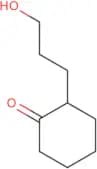
CAS:<p>Curvularia lunata is a fungus that produces 3-cyclohexyl-3-oxopropanenitrile, an alkylating agent. Curvularia lunata has been shown to be effective in the treatment of inflammatory diseases and allergic diseases. The mechanism of action for its anti-inflammatory effects is not yet known, but it may be due to its ability to reduce the levels of prostaglandins and leukotrienes. Curvularia lunata also contains a chemical called optically active 3-cyclohexyl-3-oxopropanenitrile, which can be used as a starting material for the synthesis of other optically active compounds. Curvularia lunata is used as a natural product to synthesize stereoselective compounds with high optical purity.</p>Formula:C9H13NOPurity:Min. 95%Molecular weight:151.21 g/mol2-(3-Hydroxypropyl)cyclohexan-1-one
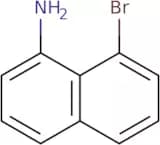
CAS:<p>Versatile small molecule scaffold</p>Formula:C9H16O2Purity:Min. 95%Molecular weight:156.22 g/mol8-bromonaphthalen-1-amine
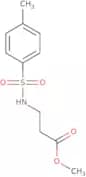
CAS:<p>8-Bromonaphthalen-1-amine is an organic compound that belongs to the dipole class of pyrazoles. It has a solute molecule and its orientation can be affected by the inclusion of other solutes. The interaction between 8-bromonaphthalen-1-amine and other molecules can be studied using structural studies and advances in computational chemistry. This compound can also be used to synthesize chiral compounds, as it is a useful synthetic precursor to trifluoride ion.</p>Formula:C10H8BrNPurity:Min. 95%Molecular weight:222.1 g/molMethyl 3-(4-methylbenzenesulfonamido)propanoate
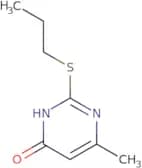
CAS:<p>Versatile small molecule scaffold</p>Formula:C11H15NO4SPurity:Min. 95%Molecular weight:257.31 g/mol6-Methyl-2-(propylsulfanyl)pyrimidin-4-ol
CAS:<p>Versatile small molecule scaffold</p>Formula:C8H12N2OSPurity:Min. 95%Molecular weight:184.26 g/mol10-Chloro-2-oxa-9-azatricyclo[9.4.0.0,3,8]pentadeca-1(15),3,5,7,9,11,13-heptaene
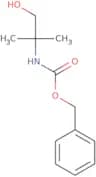
CAS:<p>Versatile small molecule scaffold</p>Formula:C13H8ClNOPurity:Min. 95%Molecular weight:229.66 g/mol2-(Cbz-amino)-2-methyl-1-propanol
CAS:<p>Versatile small molecule scaffold</p>Formula:C12H17NO3Purity:Min. 95%Molecular weight:223.27 g/mol6-Bromobenzo[d]isothiazol-3(2H)-one 1,1-dioxide
CAS:<p>Versatile small molecule scaffold</p>Formula:C7H4BrNO3SPurity:Min. 95%Molecular weight:262.08 g/mol6-Methoxybenzo[D]isothiazol-3(2H)-one 1,1-dioxide
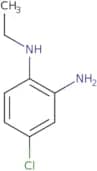
CAS:<p>Versatile small molecule scaffold</p>Formula:C8H7NO4SPurity:Min. 95%Molecular weight:213.21 g/mol4-Chloro-N1-ethylbenzene-1,2-diamine
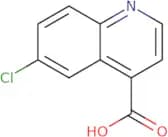
CAS:<p>Versatile small molecule scaffold</p>Formula:C8H11ClN2Purity:Min. 95%Molecular weight:170.64 g/mol6-Chloro-quinoline-4-carboxylic acid
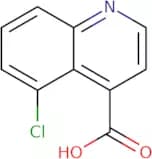
CAS:<p>Versatile small molecule scaffold</p>Formula:C10H6ClNO2Purity:Min. 95%Molecular weight:207.62 g/mol5-Chloroquinoline-4-carboxylic acid
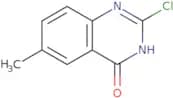
CAS:<p>Versatile small molecule scaffold</p>Formula:C10H6ClNO2Purity:Min. 95%Molecular weight:207.61 g/mol2-Chloro-6-methylquinazolin-4(3H)-one
CAS:<p>Versatile small molecule scaffold</p>Formula:C9H7ClN2OPurity:Min. 95%Molecular weight:194.62 g/molMethyl 2-[(prop-2-yn-1-yl)amino]acetate
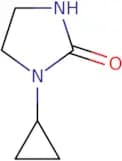
CAS:<p>Versatile small molecule scaffold</p>Formula:C6H9NO2Purity:Min. 95%Molecular weight:127.14 g/mol1-Cyclopropylimidazolidin-2-one
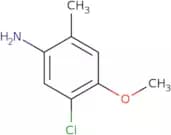
CAS:<p>Versatile small molecule scaffold</p>Formula:C6H10N2OPurity:Min. 95%Molecular weight:126.16 g/mol5-Chloro-4-methoxy-2-methylaniline
CAS:<p>Versatile small molecule scaffold</p>Formula:C8H10ClNOPurity:Min. 95%Molecular weight:171.63 g/mol2-[(Butylamino)methyl]phenol
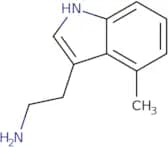
CAS:<p>Versatile small molecule scaffold</p>Formula:C11H17NOPurity:Min. 95%Molecular weight:179.26 g/mol2-(4-Methyl-1H-indol-3-yl)ethan-1-amine
CAS:Controlled Product<p>Versatile small molecule scaffold</p>Formula:C11H14N2Purity:Min. 95%Color and Shape:PowderMolecular weight:174.24 g/mol(3aR,6aS)-Rel-tetrahydro-cyclopenta[C]pyrrole-1,3(2H,3aH)-dione
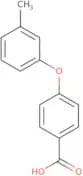
CAS:<p>Versatile small molecule scaffold</p>Formula:C7H9NO2Purity:Min. 95%Molecular weight:139.15 g/mol4-(3-Methylphenoxy)benzoic acid
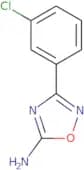
CAS:<p>Versatile small molecule scaffold</p>Formula:C14H12O3Purity:Min. 95%Molecular weight:228.24 g/mol3-(3-Chlorophenyl)-1,2,4-oxadiazol-5-amine
CAS:<p>Versatile small molecule scaffold</p>Formula:C8H6ClN3OPurity:Min. 95%Molecular weight:195.6 g/mol3-[4-(2-Methoxyphenyl)piperazin-1-yl]-3-oxopropanenitrile
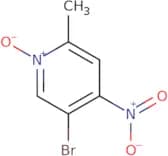
CAS:Controlled Product<p>Versatile small molecule scaffold</p>Formula:C14H17N3O2Purity:Min. 95%Molecular weight:259.3 g/mol5-Bromo-2-methyl-4-nitropyridine-N-oxide
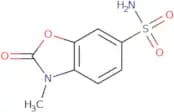
CAS:<p>Versatile small molecule scaffold</p>Formula:C6H5N2O3BrPurity:Min. 95%Molecular weight:233.01 g/mol3-Methyl-2-oxo-2,3-dihydro-1,3-benzoxazole-6-sulfonamide
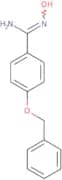
CAS:<p>Versatile small molecule scaffold</p>Formula:C8H8N2O4SPurity:Min. 95%Molecular weight:228.23 g/mol4-(Benzyloxy)-N'-hydroxybenzene-1-carboximidamide
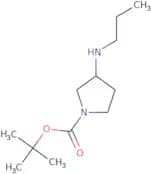
CAS:<p>Versatile small molecule scaffold</p>Formula:C14H14N2O2Purity:Min. 95%Molecular weight:242.27 g/moltert-Butyl 3-(propylamino)pyrrolidine-1-carboxylate
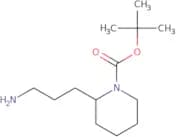
CAS:<p>Versatile small molecule scaffold</p>Formula:C12H24N2O2Purity:Min. 95%Molecular weight:228.33 g/moltert-Butyl 2-(3-aminopropyl)pyrrolidine-1-carboxylate
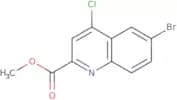
CAS:<p>Versatile small molecule scaffold</p>Formula:C13H26N2O2Purity:Min. 95%Molecular weight:242.36 g/molMethyl 6-bromo-4-chloroquinoline-2-carboxylate
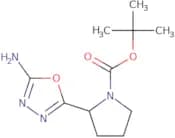
CAS:<p>Versatile small molecule scaffold</p>Formula:C11H7BrClNO2Purity:Min. 95%Molecular weight:300.54 g/moltert-Butyl 2-(5-amino-1,3,4-oxadiazol-2-yl)pyrrolidine-1-carboxylate
CAS:<p>Versatile small molecule scaffold</p>Formula:C11H18N4O3Purity:Min. 95%Molecular weight:254.29 g/moltert-Butyl 3-[(ethylamino)methyl]piperidine-1-carboxylate
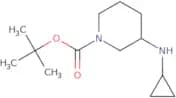
CAS:<p>Versatile small molecule scaffold</p>Formula:C13H26N2O2Purity:Min. 95%Molecular weight:242.36 g/mol3-Cyclopropylamino-piperidine-1-carboxylic acid tert-butyl ester
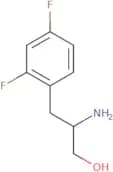
CAS:<p>Versatile small molecule scaffold</p>Formula:C13H24N2O2Purity:Min. 95%Molecular weight:240.35 g/mol2-Amino-3-(2,4-difluorophenyl)propan-1-ol
CAS:<p>Versatile small molecule scaffold</p>Formula:C9H11F2NOPurity:Min. 95%Molecular weight:187.19 g/mol1-{[4-(Aminomethyl)phenyl]methyl}piperidin-4-ol
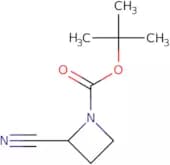
CAS:<p>Versatile small molecule scaffold</p>Formula:C13H20N2OPurity:Min. 95%Molecular weight:220.31 g/moltert-Butyl 2-cyanoazetidine-1-carboxylate
CAS:<p>Versatile small molecule scaffold</p>Formula:C9H14N2O2Purity:Min. 95%Molecular weight:182.22 g/moltert-Butyl 2-[(methanesulfonyloxy)methyl]azetidine-1-carboxylate
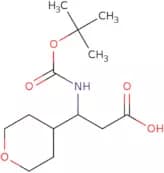
CAS:<p>Versatile small molecule scaffold</p>Formula:C10H19NO5SPurity:Min. 95%Molecular weight:265.33 g/mol3-(Boc-amino)-3-(4-tetrahydropyranyl)propanoic acid
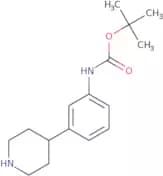
CAS:<p>Versatile small molecule scaffold</p>Formula:C13H23NO5Purity:Min. 95%Molecular weight:273.33 g/moltert-Butyl (3-(piperidin-4-yl)phenyl)carbamate
CAS:<p>Versatile small molecule scaffold</p>Formula:C16H24N2O2Purity:Min. 95%Molecular weight:276.37 g/moltert-Butyl N-[4-(piperidin-4-yl)phenyl]carbamate
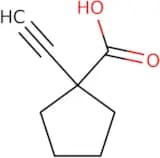
CAS:<p>Versatile small molecule scaffold</p>Formula:C16H24N2O2Purity:Min. 95%Molecular weight:276.37 g/mol1-Ethynylcyclopentanecarboxylic acid
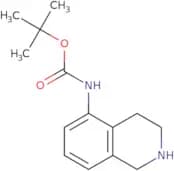
CAS:<p>Versatile small molecule scaffold</p>Formula:C8H10O2Purity:Min. 95%Molecular weight:138.16 g/moltert-Butyl N-(1,2,3,4-tetrahydroisoquinolin-5-yl)carbamate
CAS:<p>Versatile small molecule scaffold</p>Formula:C14H20N2O2Purity:Min. 95%Molecular weight:248.32 g/moltert-Butyl 3-{[(pyridin-3-ylmethyl)amino]methyl}pyrrolidine-1-carboxylate
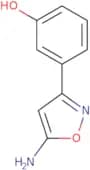
CAS:<p>Versatile small molecule scaffold</p>Formula:C16H25N3O2Purity:Min. 95%Molecular weight:291.39 g/mol3-(5-Aminoisoxazol-3-yl)phenol
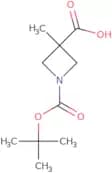
CAS:<p>Versatile small molecule scaffold</p>Formula:C9H8N2O2Purity:Min. 95%Molecular weight:176.17 g/mol1-(tert-Butoxycarbonyl)-3-methylazetidine-3-carboxylic acid
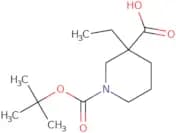
CAS:<p>Versatile small molecule scaffold</p>Formula:C10H17NO4Purity:Min. 95%Molecular weight:215.25 g/mol1-(tert-Butoxycarbonyl)-3-ethylpiperidine-3-carboxylic acid
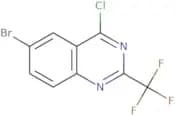
CAS:<p>Versatile small molecule scaffold</p>Formula:C13H23NO4Purity:Min. 95%Molecular weight:257.33 g/mol6-Bromo-4-chloro-2-(trifluoromethyl)quinazoline
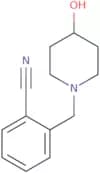
CAS:<p>Versatile small molecule scaffold</p>Formula:C9H3BrClF3N2Purity:Min. 95%Molecular weight:311.49 g/mol2-(4-Hydroxy-piperidin-1-ylmethyl)-benzonitrile
CAS:<p>Versatile small molecule scaffold</p>Formula:C13H16N2OPurity:Min. 95%Molecular weight:216.28 g/mol3-[(3-Methoxyphenyl)methyl]pyrrolidine
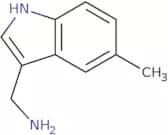
CAS:<p>Versatile small molecule scaffold</p>Formula:C12H17NOPurity:Min. 95%Molecular weight:191.27 g/mol(5-Methyl-1H-indol-3-yl)methylamine
CAS:<p>Versatile small molecule scaffold</p>Formula:C10H12N2Purity:Min. 95%Molecular weight:160.22 g/mol2-(5-Chloro-[1,2,4]thiadiazol-3-yl)-pyridine
CAS:<p>Versatile small molecule scaffold</p>Formula:C7H4ClN3SPurity:Min. 95%Molecular weight:197.64 g/mol4-(5-Chloro-[1,2,4]thiadiazol-3-yl)-morpholine
CAS:<p>Versatile small molecule scaffold</p>Formula:C6H8ClN3OSPurity:Min. 95%Molecular weight:205.66 g/mol4-Hydroxypiperidine-1-carboximidamide hydrochloride
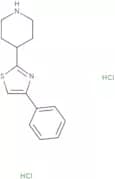
CAS:<p>Versatile small molecule scaffold</p>Formula:C6H14ClN3OPurity:Min. 95%Molecular weight:179.6 g/mol4-(4-Phenyl-1,3-thiazol-2-yl)piperidine dihydrochloride
CAS:<p>Versatile small molecule scaffold</p>Formula:C14H18Cl2N2SPurity:Min. 95%Molecular weight:317.3 g/mol2-Amino-6-chloroimidazo[1,2-b]pyridazine
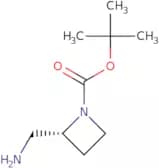
CAS:<p>Versatile small molecule scaffold</p>Formula:C6H5ClN4Purity:Min. 95%Molecular weight:168.59 g/mol(R)-2-Aminomethyl-1-Boc-azetidine
CAS:<p>Versatile small molecule scaffold</p>Formula:C9H18N2O2Purity:Min. 95%Molecular weight:186.25 g/mol(2-Propylcyclohexyl)methanamine
CAS:<p>Versatile small molecule scaffold</p>Formula:C10H21NPurity:Min. 95%Molecular weight:155.28 g/mol2-Chloro-1-{1-[(2-fluorophenyl)methyl]-2,5-dimethyl-1H-pyrrol-3-yl}ethan-1-one
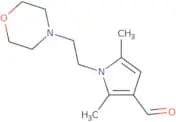
CAS:<p>Versatile small molecule scaffold</p>Formula:C15H15ClFNOPurity:Min. 95%Molecular weight:279.73 g/mol2,5-Dimethyl-1-(2-morpholin-4-yl-ethyl)-1H-pyrrole-3-carbaldehyde
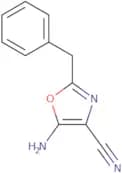
CAS:<p>Versatile small molecule scaffold</p>Formula:C13H20N2O2Purity:Min. 95%Molecular weight:236.31 g/mol5-Amino-2-benzyl-1,3-oxazole-4-carbonitrile
CAS:<p>Versatile small molecule scaffold</p>Formula:C11H9N3OPurity:Min. 95%Molecular weight:199.21 g/mol8-Bromo-6-methyl-1,2,3,4-tetrahydroquinoline
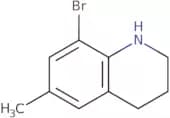
CAS:<p>Versatile small molecule scaffold</p>Formula:C10H12BrNPurity:Min. 95%Molecular weight:226.11 g/mol2,7-Dimethyl-3-phenylpyrazolo[1,5-a]pyrimidine-5-carboxylic acid
CAS:<p>Versatile small molecule scaffold</p>Formula:C15H13N3O2Purity:Min. 95%Molecular weight:267.28 g/mol7-tert-Butyl-2-methyl-3-phenylpyrazolo[1,5-a]pyrimidine-5-carboxylic acid
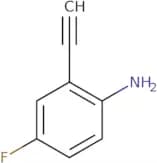
CAS:<p>Versatile small molecule scaffold</p>Formula:C18H19N3O2Purity:Min. 95%Molecular weight:309.4 g/mol2-Ethynyl-4-fluoroaniline
CAS:<p>2-Ethynyl-4-fluoroaniline is an organic compound that is used as a reagent for neutralizing strong and weak acids. It reacts with the acid to form an salt and water. The reaction proceeds at room temperature with high purity 2-ethynyl-4-fluoroaniline, which can be obtained in industrial quantities.</p>Formula:C8H6FNPurity:Min. 95%Molecular weight:135.14 g/molN-Boc-N'-methylthiourea
CAS:<p>Versatile small molecule scaffold</p>Formula:C7H14N2O2SPurity:Min. 95%Molecular weight:190.26 g/mol2-(3-Bromophenyl)-2-{[(tert-butoxy)carbonyl]amino}propanoic acid
CAS:<p>Versatile small molecule scaffold</p>Formula:C14H18BrNO4Purity:Min. 95%Molecular weight:344.2 g/molMethyl 2-(3-bromophenyl)-2-{[(tert-butoxy)carbonyl]amino}propanoate
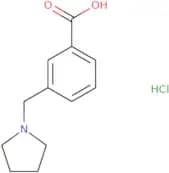
CAS:<p>Versatile small molecule scaffold</p>Formula:C15H20BrNO4Purity:Min. 95%Molecular weight:358.23 g/mol3-(Pyrrolidin-1-ylmethyl)benzoic acid hydrochloride
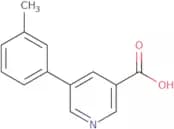
CAS:<p>Versatile small molecule scaffold</p>Formula:C12H15NO2·HClPurity:Min. 95%Molecular weight:241.72 g/mol5-(3-Methylphenyl)nicotinic acid
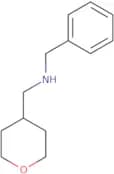
CAS:<p>Versatile small molecule scaffold</p>Formula:C13H11NO2Purity:Min. 95%Molecular weight:213.24 g/molBenzyl(oxan-4-ylmethyl)amine
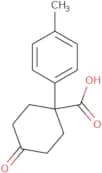
CAS:<p>Versatile small molecule scaffold</p>Formula:C13H19NOPurity:Min. 95%Molecular weight:205.3 g/mol1-(4-Methylphenyl)-4-oxocyclohexanecarboxylic acid
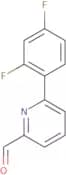
CAS:<p>Versatile small molecule scaffold</p>Formula:C14H16O3Purity:Min. 95%Molecular weight:232.27 g/mol6-(2,4-Difluorophenyl)pyridine-2-carbaldehyde
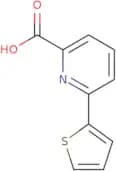
CAS:<p>Versatile small molecule scaffold</p>Formula:C12H7F2NOPurity:Min. 95%Molecular weight:219.19 g/mol6-Thien-2-ylpyridine-2-carboxylic acid
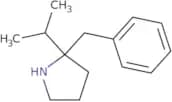
CAS:<p>Versatile small molecule scaffold</p>Formula:C10H7NO2SPurity:Min. 95%Molecular weight:205.23 g/mol2-Benzyl-2-(propan-2-yl)pyrrolidine
CAS:<p>Versatile small molecule scaffold</p>Formula:C14H21NPurity:Min. 95%Molecular weight:203.32 g/mol[2-(4-Methylmorpholin-2-yl)pyrimidin-5-yl]methanol
CAS:<p>Versatile small molecule scaffold</p>Formula:C10H15N3O2Purity:Min. 95%Molecular weight:209.24 g/mol5-Methyl-5H,6H,7H,8H-imidazo[1,2-a]pyridine-2-carboxylic acid
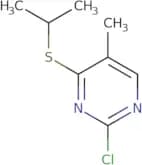
CAS:<p>Versatile small molecule scaffold</p>Formula:C9H12N2O2Purity:Min. 95%Molecular weight:180.2 g/mol2-Chloro-4-(isopropylthio)-5-methylpyrimidine
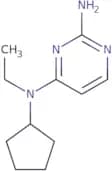
CAS:<p>Versatile small molecule scaffold</p>Formula:C8H11ClN2SPurity:Min. 95%Molecular weight:202.71 g/molN4-Cyclopentyl-N4-ethylpyrimidine-2,4-diamine
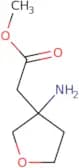
CAS:<p>Versatile small molecule scaffold</p>Formula:C11H18N4Purity:Min. 95%Molecular weight:206.29 g/molMethyl 2-(3-aminooxolan-3-yl)acetate
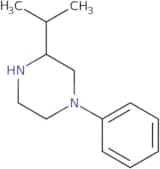
CAS:<p>Versatile small molecule scaffold</p>Formula:C7H13NO3Purity:Min. 95%Molecular weight:159.18 g/mol1-Phenyl-3-(propan-2-yl)piperazine
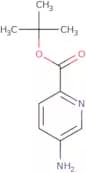
CAS:<p>Versatile small molecule scaffold</p>Formula:C13H20N2Purity:Min. 95%Molecular weight:204.31 g/moltert-Butyl 5-aminopyridine-2-carboxylate
CAS:<p>Versatile small molecule scaffold</p>Formula:C10H14N2O2Purity:Min. 95%Molecular weight:194.23 g/mol
![Bicyclo[2.2.2]octane-2-carbaldehyde](/_next/image/?url=https%3A%2Fstatic.cymitquimica.com%2Fproducts%2F3D%2Fthumb-webp%2FMCA02829.webp&w=3840&q=75)

![6-(2-Hydroxyethyl)-5-methyl[1,2,4]triazolo-[1,5-a]pyrimidin-7(4H)-one](/_next/image/?url=https%3A%2Fstatic.cymitquimica.com%2Fproducts%2F3D%2Fthumb-webp%2FMCA05306.webp&w=3840&q=75)
![Methyl 2-[2-(4-hydroxyphenyl)acetamido]acetate](/_next/image/?url=https%3A%2Fstatic.cymitquimica.com%2Fproducts%2F3D%2Fthumb-webp%2FMCA08672.webp&w=3840&q=75)
![Ethyl [1,2,4]triazolo[1,5-a]pyridine-2-carboxylate](/_next/image/?url=https%3A%2Fstatic.cymitquimica.com%2Fproducts%2F3D%2Fthumb-webp%2FMCA13558.webp&w=3840&q=75)
![Spiro[4.5]dec-3-en-2-one](/_next/image/?url=https%3A%2Fstatic.cymitquimica.com%2Fproducts%2F3D%2Fthumb-webp%2FMCA16749.webp&w=3840&q=75)
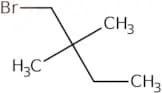
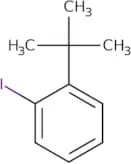
![[2-(Methoxymethyl)phenyl]methanol](/_next/image/?url=https%3A%2Fstatic.cymitquimica.com%2Fproducts%2F3D%2Fthumb-webp%2FMCA17288.webp&w=3840&q=75)
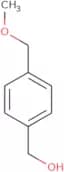
![6-Chlorothieno[2,3-b]pyridine](/_next/image/?url=https%3A%2Fstatic.cymitquimica.com%2Fproducts%2F3D%2Fthumb-webp%2FMCA22618.webp&w=3840&q=75)
![2-[4-(Trifluoromethyl)phenyl]morpholine oxalate](/_next/image/?url=https%3A%2Fstatic.cymitquimica.com%2Fproducts%2F3D%2Fthumb-webp%2FMCA24372.webp&w=3840&q=75)
![4-{[4-(Propan-2-yl)phenyl]sulfanyl}aniline](/_next/image/?url=https%3A%2Fstatic.cymitquimica.com%2Fproducts%2F3D%2Fthumb-webp%2FMCA24850.webp&w=3840&q=75)
![7-benzyl-2-methyl-5,6,7,8-tetrahydropyrido[3,4-d]pyrimidin-4(3H)-one](/_next/image/?url=https%3A%2Fstatic.cymitquimica.com%2Fproducts%2F3D%2Fthumb-webp%2FMCA25992.webp&w=3840&q=75)
![Pyrido[3,4-d]pyrimidin-4(3H)-one, 5,6,7,8-tetrahydro-2-methyl-, 2HCl](/_next/image/?url=https%3A%2Fstatic.cymitquimica.com%2Fproducts%2F3D%2Fthumb-webp%2FMCA26000.webp&w=3840&q=75)
![3-[(3-Aminopropyl)(methyl)phosphoryl]propan-1-amine](/_next/image/?url=https%3A%2Fstatic.cymitquimica.com%2Fproducts%2F3D%2Fthumb-webp%2FMCA27190.webp&w=3840&q=75)
![1H,2H,3H,4H,5H,6H-Cyclopenta[C]pyrrole-1,3-dione](/_next/image/?url=https%3A%2Fstatic.cymitquimica.com%2Fproducts%2F3D%2Fthumb-webp%2FMCA29138.webp&w=3840&q=75)
![1-Oxaspiro[5.5]undec-2-en-4-one](/_next/image/?url=https%3A%2Fstatic.cymitquimica.com%2Fproducts%2F3D%2Fthumb-webp%2FMCA32209.webp&w=3840&q=75)
![4-[3-(Dimethylamino)propoxy]aniline](/_next/image/?url=https%3A%2Fstatic.cymitquimica.com%2Fproducts%2F3D%2Fthumb-webp%2FMCA42488.webp&w=3840&q=75)
![Spiro[5.5]undecan-2-amine hydrochloride](/_next/image/?url=https%3A%2Fstatic.cymitquimica.com%2Fproducts%2F3D%2Fthumb-webp%2FMCA43954.webp&w=3840&q=75)
![Spiro[4.5]decan-7-amine hydrochloride](/_next/image/?url=https%3A%2Fstatic.cymitquimica.com%2Fproducts%2F3D%2Fthumb-webp%2FMCA43956.webp&w=3840&q=75)
![10-Chloro-2-oxa-9-azatricyclo[9.4.0.0,3,8]pentadeca-1(15),3,5,7,9,11,13-heptaene](/_next/image/?url=https%3A%2Fstatic.cymitquimica.com%2Fproducts%2F3D%2Fthumb-webp%2FMCA46961.webp&w=3840&q=75)
![6-Bromobenzo[d]isothiazol-3(2H)-one 1,1-dioxide](/_next/image/?url=https%3A%2Fstatic.cymitquimica.com%2Fproducts%2F3D%2Fthumb-webp%2FMCA47392.webp&w=3840&q=75)
![6-Methoxybenzo[D]isothiazol-3(2H)-one 1,1-dioxide](/_next/image/?url=https%3A%2Fstatic.cymitquimica.com%2Fproducts%2F3D%2Fthumb-webp%2FMCA47395.webp&w=3840&q=75)
![Methyl 2-[(prop-2-yn-1-yl)amino]acetate](/_next/image/?url=https%3A%2Fstatic.cymitquimica.com%2Fproducts%2F3D%2Fthumb-webp%2FMCA49040.webp&w=3840&q=75)
![2-[(Butylamino)methyl]phenol](/_next/image/?url=https%3A%2Fstatic.cymitquimica.com%2Fproducts%2F3D%2Fthumb-webp%2FMCA49873.webp&w=3840&q=75)
![(3aR,6aS)-Rel-tetrahydro-cyclopenta[C]pyrrole-1,3(2H,3aH)-dione](/_next/image/?url=https%3A%2Fstatic.cymitquimica.com%2Fproducts%2F3D%2Fthumb-webp%2FMCA50605.webp&w=3840&q=75)
![3-[4-(2-Methoxyphenyl)piperazin-1-yl]-3-oxopropanenitrile](/_next/image/?url=https%3A%2Fstatic.cymitquimica.com%2Fproducts%2F3D%2Fthumb-webp%2FMCA50879.webp&w=3840&q=75)
![tert-Butyl 3-[(ethylamino)methyl]piperidine-1-carboxylate](/_next/image/?url=https%3A%2Fstatic.cymitquimica.com%2Fproducts%2F3D%2Fthumb-webp%2FMKB58798.webp&w=3840&q=75)
![1-{[4-(Aminomethyl)phenyl]methyl}piperidin-4-ol](/_next/image/?url=https%3A%2Fstatic.cymitquimica.com%2Fproducts%2F3D%2Fthumb-webp%2FMKB58867.webp&w=3840&q=75)
![tert-Butyl 2-[(methanesulfonyloxy)methyl]azetidine-1-carboxylate](/_next/image/?url=https%3A%2Fstatic.cymitquimica.com%2Fproducts%2F3D%2Fthumb-webp%2FMKB58886.webp&w=3840&q=75)
![tert-Butyl N-[4-(piperidin-4-yl)phenyl]carbamate](/_next/image/?url=https%3A%2Fstatic.cymitquimica.com%2Fproducts%2F3D%2Fthumb-webp%2FMKB58958.webp&w=3840&q=75)
![tert-Butyl 3-{[(pyridin-3-ylmethyl)amino]methyl}pyrrolidine-1-carboxylate](/_next/image/?url=https%3A%2Fstatic.cymitquimica.com%2Fproducts%2F3D%2Fthumb-webp%2FMKB59127.webp&w=3840&q=75)
![3-[(3-Methoxyphenyl)methyl]pyrrolidine](/_next/image/?url=https%3A%2Fstatic.cymitquimica.com%2Fproducts%2F3D%2Fthumb-webp%2FMKB59485.webp&w=3840&q=75)
![2-(5-Chloro-[1,2,4]thiadiazol-3-yl)-pyridine](/_next/image/?url=https%3A%2Fstatic.cymitquimica.com%2Fproducts%2F3D%2Fthumb-webp%2FMKB62391.webp&w=3840&q=75)
![4-(5-Chloro-[1,2,4]thiadiazol-3-yl)-morpholine](/_next/image/?url=https%3A%2Fstatic.cymitquimica.com%2Fproducts%2F3D%2Fthumb-webp%2FMKB62392.webp&w=3840&q=75)
![2-Amino-6-chloroimidazo[1,2-b]pyridazine](/_next/image/?url=https%3A%2Fstatic.cymitquimica.com%2Fproducts%2F3D%2Fthumb-webp%2FMKB62509.webp&w=3840&q=75)

![2-Chloro-1-{1-[(2-fluorophenyl)methyl]-2,5-dimethyl-1H-pyrrol-3-yl}ethan-1-one](/_next/image/?url=https%3A%2Fstatic.cymitquimica.com%2Fproducts%2F3D%2Fthumb-webp%2FMKB68366.webp&w=3840&q=75)
![2,7-Dimethyl-3-phenylpyrazolo[1,5-a]pyrimidine-5-carboxylic acid](/_next/image/?url=https%3A%2Fstatic.cymitquimica.com%2Fproducts%2F3D%2Fthumb-webp%2FMKB83347.webp&w=3840&q=75)
![7-tert-Butyl-2-methyl-3-phenylpyrazolo[1,5-a]pyrimidine-5-carboxylic acid](/_next/image/?url=https%3A%2Fstatic.cymitquimica.com%2Fproducts%2F3D%2Fthumb-webp%2FMKB83348.webp&w=3840&q=75)

![2-(3-Bromophenyl)-2-{[(tert-butoxy)carbonyl]amino}propanoic acid](/_next/image/?url=https%3A%2Fstatic.cymitquimica.com%2Fproducts%2F3D%2Fthumb-webp%2FMKB91367.webp&w=3840&q=75)
![Methyl 2-(3-bromophenyl)-2-{[(tert-butoxy)carbonyl]amino}propanoate](/_next/image/?url=https%3A%2Fstatic.cymitquimica.com%2Fproducts%2F3D%2Fthumb-webp%2FMKB91368.webp&w=3840&q=75)
![[2-(4-Methylmorpholin-2-yl)pyrimidin-5-yl]methanol](/_next/image/?url=https%3A%2Fstatic.cymitquimica.com%2Fproducts%2F3D%2Fthumb-webp%2FMKC01875.webp&w=3840&q=75)
![5-Methyl-5H,6H,7H,8H-imidazo[1,2-a]pyridine-2-carboxylic acid](/_next/image/?url=https%3A%2Fstatic.cymitquimica.com%2Fproducts%2F3D%2Fthumb-webp%2FMKC04056.webp&w=3840&q=75)