Building Blocks
This section contains fundamental products for the synthesis of organic and biological compounds. Building blocks are the essential starting materials used to construct complex molecules through various chemical reactions. They play a critical role in drug discovery, material science, and chemical research. At CymitQuimica, we offer a diverse range of high-quality building blocks to support your innovative research and industrial projects, ensuring you have the essential components for successful synthesis.
Subcategories of "Building Blocks"
- Boronic Acids & Boronic Acid Derivatives(5,756 products)
- Chiral Building Blocks(1,242 products)
- Hydrocarbon Building Blocks(6,095 products)
- Organic Building Blocks(61,037 products)
Found 196139 products of "Building Blocks"
Sort by
Purity (%)
0
100
|
0
|
50
|
90
|
95
|
100
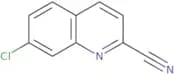
7-Chloroquinoline-2-carbonitrile
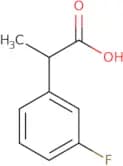
CAS:<p>Versatile small molecule scaffold</p>Formula:C10H5ClN2Purity:Min. 95%Molecular weight:188.61 g/mol2-(3-fluorophenyl)propanoic acid
CAS:<p>Versatile small molecule scaffold</p>Formula:C9H9O2FPurity:Min. 95%Molecular weight:168.16 g/mol1-[2-(2-Methylphenoxy)ethyl]piperazine
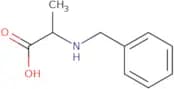
CAS:<p>Versatile small molecule scaffold</p>Formula:C13H20N2OPurity:Min. 95%Molecular weight:220.31 g/mol(2R)-2-(Benzylamino)propanoic acid
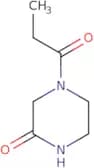
CAS:<p>Versatile small molecule scaffold</p>Formula:C10H13NO2Purity:Min. 95%Molecular weight:179.22 g/mol4-Propanoylpiperazin-2-one
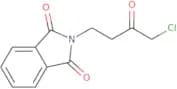
CAS:<p>Versatile small molecule scaffold</p>Formula:C7H12N2O2Purity:Min. 95%Molecular weight:156.18 g/mol2-(4-Chloro-3-oxobutyl)-2,3-dihydro-1H-isoindole-1,3-dione
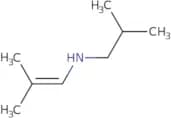
CAS:<p>Versatile small molecule scaffold</p>Formula:C12H10ClNO3Purity:Min. 95%Molecular weight:251.66 g/mol(2-Methylprop-1-en-1-yl)(2-methylpropyl)amine
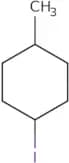
CAS:<p>Versatile small molecule scaffold</p>Formula:C8H17NPurity:Min. 95%Molecular weight:127.23 g/mol1-Iodo-4-methylcyclohexane
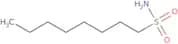
CAS:<p>Versatile small molecule scaffold</p>Formula:C7H13IPurity:Min. 95%Molecular weight:224.08 g/molOctane-1-sulfonamide
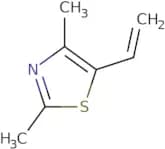
CAS:<p>Octane-1-sulfonamide (OSA) is a glycol ether that is used as a reagent for biological samples. It reacts with the hydroxyl group on proteins, which causes the compounds to become more hydrophobic and interact with each other. The OSAs are also reactive with fatty acids, which leads to cross-linking of cell membranes. This interaction may be related to the low light activity of OSA. Octane-1-sulfonamide can also bind cationic polymers, which may be useful in ophthalmic drugs.</p>Formula:C8H19NO2SPurity:Min. 95%Molecular weight:193.31 g/mol2,4-Dimethyl-5-vinylthiazole
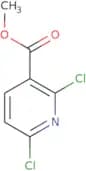
CAS:<p>Versatile small molecule scaffold</p>Formula:C7H9NSPurity:Min. 95%Molecular weight:139.22 g/molMethyl 2,6-dichloropyridine-3-carboxylate
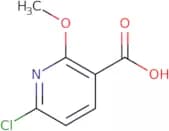
CAS:<p>Methyl 2,6-dichloropyridine-3-carboxylate is a carboxylic acid that can be synthesized by reacting 2,6-dichloropyridine with an acetyl chloride. It has been used in the synthesis of dopamine D2 receptor antagonists. The sulfoxide group in this compound may undergo alkaline hydrolysis to yield an anion and a nucleophilic adduct. This carboxylic acid also reacts with triethylamine to form esters. In addition, methyl 2,6-dichloropyridine-3-carboxylate is regioselective for the alpha position when it reacts with methyltetrahydrofuran.</p>Formula:C7H5Cl2NO2Purity:Min. 95%Molecular weight:206.03 g/mol6-Chloro-2-methoxynicotinic acid
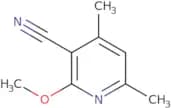
CAS:<p>6-Chloro-2-methoxynicotinic acid is a ketone that reacts with chlorine in the presence of light to form chlorinated products. It is a versatile intermediate for the synthesis of various compounds. 6-Chloro-2-methoxynicotinic acid is used in the synthesis of naphthacene, which is a precursor to dyes and pharmaceuticals. The reactivity of this compound depends on substituents located at the 2 position. Substituents cause sterically hindering effects and lead to different geometries and reactivities, such as attack by chlorine or substitution by hydrogen.</p>Formula:C7H6ClNO3Purity:Min. 95%Molecular weight:187.58 g/mol2-Methoxy-4,6-dimethylnicotinonitrile
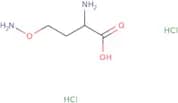
CAS:<p>2-Methoxy-4,6-dimethylnicotinonitrile is a photoreactive compound that reacts with UV light to produce an adduct. The 1-cyanonaphthalene group in 2-methoxy-4,6-dimethylnicotinonitrile undergoes a photochemical reaction to form an adduct with the benzene ring. It is postulated that the dimer and x-ray structural analysis of 2-methoxy-4,6-dimethylnicotinonitrile are stable and pyridine can be used as a solvent.</p>Formula:C9H10N2OPurity:Min. 95%Molecular weight:162.19 g/mol2-Amino-4-(aminooxy)butanoic acid dihydrochloride
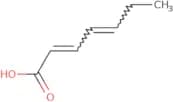
CAS:<p>2-Amino-4-(aminooxy)butanoic acid dihydrochloride is a cyclization product of the antibiotic cycloserine. It has been synthesised from 2-amino-4-oxobutanoic acid by the addition of hydrochloric acid and then heated to reflux for 20 hours. The purity of this product is >98%.<br>2-Amino-4-(aminooxy)butanoic acid dihydrochloride has been shown to be a homologue of canaline, which is an antibiotic used in the treatment of tuberculosis. This compound also has antibacterial activity, although it is less potent than cycloserine.</p>Formula:C4H12Cl2N2O3Purity:Min. 95%Molecular weight:207.05 g/mol(2E,4E)-Hepta-2,4-dienoic acid
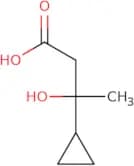
CAS:<p>(2E,4E)-Hepta-2,4-dienoic acid is an organic compound that belongs to the group of quinoline derivatives. It is a colorless liquid at room temperature and is soluble in organic solvents. This compound can be used as a dehydrohalogenating agent in the synthesis of mappicine and camptothecin derivatives. (2E,4E)-Hepta-2,4-dienoic acid can also react with ketocarboxylic acids to form carotenoid compounds. The chemical formula for this molecule is C8H10O3.</p>Formula:C7H10O2Purity:Min. 95%Molecular weight:126.15 g/mol3-Cyclopropyl-3-hydroxybutanoic acid
CAS:<p>Versatile small molecule scaffold</p>Formula:C7H12O3Purity:Min. 95%Molecular weight:144.17 g/mol3,3-Dimethyl-1,5-dioxa-9-azaspiro[5.5]undecane
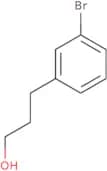
CAS:Controlled Product<p>Versatile small molecule scaffold</p>Formula:C10H19NO2Purity:Min. 95%Molecular weight:185.26 g/mol3-(3-Bromophenyl)propan-1-ol
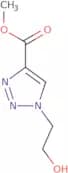
CAS:<p>Versatile small molecule scaffold</p>Formula:C9H11BrOPurity:Min. 95%Molecular weight:215.09 g/molMethyl 1-(2-hydroxyethyl)-1H-1,2,3-triazole-4-carboxylate
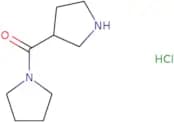
CAS:<p>Versatile small molecule scaffold</p>Formula:C6H9N3O3Purity:Min. 95%Molecular weight:171.15 g/mol3-(Pyrrolidine-1-carbonyl)pyrrolidine hydrochloride
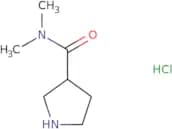
CAS:<p>Versatile small molecule scaffold</p>Formula:C9H17ClN2OPurity:Min. 95%Molecular weight:204.7 g/mol(3S)-N,N-Dimethyl-3-pyrrolidinecarboxamide hydrochloride
CAS:<p>Versatile small molecule scaffold</p>Formula:C7H15ClN2OPurity:Min. 95%Molecular weight:178.66 g/mol[(2R)-4,4-difluoropyrrolidin-2-yl]methanol hydrochloride
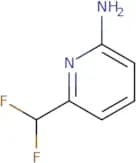
CAS:<p>Versatile small molecule scaffold</p>Formula:C5H10ClF2NOPurity:Min. 95%Molecular weight:173.59 g/mol2-Amino-6-(difluoromethyl)pyridine
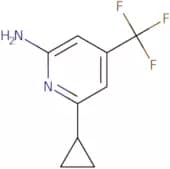
CAS:<p>Versatile small molecule scaffold</p>Formula:C6H6F2N2Purity:Min. 95%Molecular weight:144.13 g/mol6-Cyclopropyl-4-(trifluoromethyl)pyridin-2-amine
CAS:<p>Versatile small molecule scaffold</p>Formula:C9H9F3N2Purity:Min. 95%Molecular weight:202.18 g/mol4-Methoxy-2,6-dimethyl-N-[(piperidin-3-yl)methyl]benzene-1-sulfonamide hydrochloride
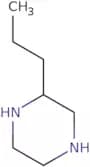
CAS:<p>Versatile small molecule scaffold</p>Formula:C15H25ClN2O3SPurity:Min. 95%Molecular weight:348.9 g/mol2-Propylpiperazine
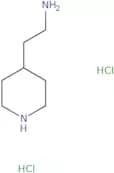
CAS:<p>Versatile small molecule scaffold</p>Formula:C7H16N2Purity:Min. 95%Molecular weight:128.22 g/mol4-(2-Aminoethyl)piperidine dihydrochloride
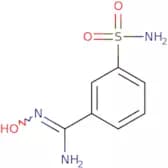
CAS:<p>Versatile small molecule scaffold</p>Formula:C7H18Cl2N2Purity:Min. 95%Molecular weight:201.14 g/molN'-Hydroxy-3-sulfamoylbenzimidamide
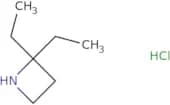
CAS:<p>Versatile small molecule scaffold</p>Formula:C7H9N3O3SPurity:Min. 95%Molecular weight:215.23 g/mol2,2-Diethylazetidine hydrochloride
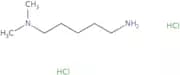
CAS:<p>Versatile small molecule scaffold</p>Formula:C7H16ClNPurity:Min. 95%Molecular weight:149.66 g/molN1,N1-Dimethylpentane-1,5-diamine dihydrochloride
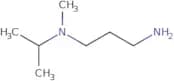
CAS:<p>Versatile small molecule scaffold</p>Formula:C7H20Cl2N2Purity:Min. 95%Molecular weight:203.15 g/mol(3-Aminopropyl)(methyl)(propan-2-yl)amine
CAS:<p>Versatile small molecule scaffold</p>Formula:C7H18N2Purity:Min. 95%Molecular weight:130.23 g/mol3-Chloro-4-phenyl-4H-1,2,4-triazole
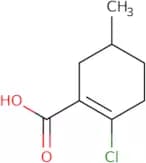
CAS:<p>Versatile small molecule scaffold</p>Formula:C8H6ClN3Purity:Min. 95%Molecular weight:179.6 g/mol2-Chloro-5-methylcyclohex-1-ene-1-carboxylic acid
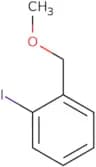
CAS:<p>Versatile small molecule scaffold</p>Formula:C8H11ClO2Purity:Min. 95%Molecular weight:174.62 g/mol1-Iodo-2-(methoxymethyl)benzene
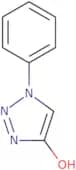
CAS:<p>Versatile small molecule scaffold</p>Formula:C8H9IOPurity:Min. 95%Molecular weight:248.06 g/mol1-Phenyl-1H-1,2,3-triazol-4-ol
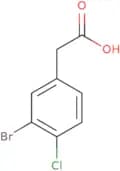
CAS:<p>Versatile small molecule scaffold</p>Formula:C8H7N3OPurity:Min. 95%Molecular weight:161.16 g/mol2-(3-Bromo-4-chlorophenyl)acetic acid
CAS:<p>Versatile small molecule scaffold</p>Formula:C8H6BrClO2Purity:Min. 95%Molecular weight:249.49 g/mol1-(2-bromo-4-nitrophenyl)ethanone
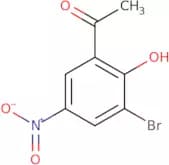
CAS:<p>Versatile small molecule scaffold</p>Formula:C8H6BrNO3Purity:Min. 95%Molecular weight:244.04 g/mol1-(3-Bromo-2-hydroxy-5-nitro-phenyl)-ethanone
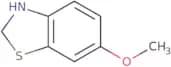
CAS:<p>Versatile small molecule scaffold</p>Formula:C8H6BrNO4Purity:Min. 95%Molecular weight:260.04 g/mol6-Methoxy-2,3-dihydro-1,3-benzothiazole
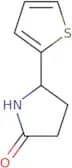
CAS:<p>Versatile small molecule scaffold</p>Formula:C8H9NOSPurity:Min. 95%Molecular weight:167.23 g/mol5-(Thiophen-2-yl)pyrrolidin-2-one
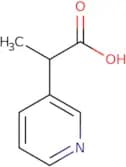
CAS:<p>Versatile small molecule scaffold</p>Formula:C8H9NOSPurity:Min. 95%Molecular weight:167.23 g/mol2-(Pyridin-3-yl)propanoic acid
CAS:<p>2-(Pyridin-3-yl)propanoic acid is a quinoline derivative that has been shown to be safe and effective in clinical trials. It is being tested for the treatment of type 2 diabetes, obesity, and metabolic syndrome. The oral administration of this drug inhibits the activity of dipeptidyl peptidase-4 (DPP-4), which is an enzyme involved in the degradation of insulin. This inhibition leads to increased levels of insulin in the blood and improved glucose tolerance. 2-(Pyridin-3-yl)propanoic acid interacts with other drugs through competitive inhibition at their binding sites on enzymes. Optimization experiments have shown that it can interact with pyridine compounds, which are found in many drugs including acetaminophen and caffeine.</p>Formula:C8H9NO2Purity:Min. 95%Molecular weight:151.16 g/mol2-Ethyl-5-nitrophenol
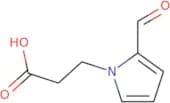
CAS:<p>Versatile small molecule scaffold</p>Formula:C8H9NO3Purity:Min. 95%Molecular weight:167.16 g/mol3-(2-Formyl-1H-pyrrol-1-yl)propanoic acid
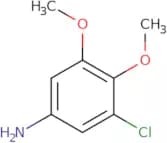
CAS:<p>Versatile small molecule scaffold</p>Formula:C8H9NO3Purity:Min. 95%Molecular weight:167.16 g/mol3-Chloro-4,5-dimethoxyaniline
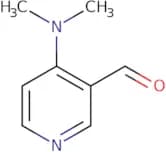
CAS:<p>Versatile small molecule scaffold</p>Formula:C8H10ClNO2Purity:Min. 95%Molecular weight:187.62 g/mol4-(Dimethylamino)pyridine-3-carbaldehyde
CAS:<p>Versatile small molecule scaffold</p>Formula:C8H10N2OPurity:Min. 95%Molecular weight:150.18 g/molN'-Hydroxy-2-phenoxyethanimidamide
CAS:<p>Versatile small molecule scaffold</p>Formula:C8H10N2O2Purity:Min. 95%Molecular weight:166.18 g/molMethyl 6-methyl-2-(methylsulfanyl)pyrimidine-4-carboxylate
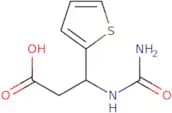
CAS:<p>Versatile small molecule scaffold</p>Formula:C8H10N2O2SPurity:90%MinMolecular weight:198.24 g/mol3-(Carbamoylamino)-3-(thiophen-2-yl)propanoic acid
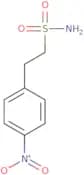
CAS:<p>3-(Carbamoylamino)-3-(thiophen-2-yl)propanoic acid is an organic compound that is used as a building block in the synthesis of complex carbohydrates. It has been shown to be a substrate for the modification of oligosaccharides and glycosylations, where it can be modified with methylation, fluorination, or click chemistry. 3-(Carbamoylamino)-3-(thiophen-2-yl)propanoic acid is also used in the synthesis of polysaccharides such as saccharide and glycoproteins. This product has high purity and is available at custom synthesis scales.</p>Formula:C8H10N2O3SPurity:Min. 95%Molecular weight:214.24 g/mol2-(4-Nitrophenyl)ethane-1-sulfonamide
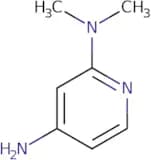
CAS:<p>Versatile small molecule scaffold</p>Formula:C8H10N2O4SPurity:Min. 95%Molecular weight:230.24 g/mol2-N,2-N-Dimethylpyridine-2,4-diamine
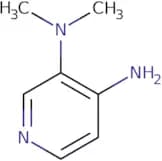
CAS:<p>Versatile small molecule scaffold</p>Formula:C7H11N3Purity:Min. 95%Molecular weight:137.18 g/molN3,N3-Dimethylpyridine-3,4-diamine
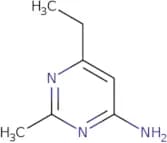
CAS:<p>Versatile small molecule scaffold</p>Formula:C7H11N3Purity:Min. 95%Molecular weight:137.18 g/mol6-Ethyl-2-methylpyrimidin-4-amine
CAS:<p>Versatile small molecule scaffold</p>Formula:C7H11N3Purity:Min. 95%Molecular weight:137.18 g/molN-[(1H-Pyrazol-3-yl)methyl]acetamide
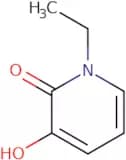
CAS:<p>Versatile small molecule scaffold</p>Formula:C6H9N3OPurity:Min. 95%Molecular weight:139.16 g/mol1-Ethyl-3-hydroxy-1,2-dihydropyridin-2-one
CAS:<p>1-Ethyl-3-hydroxy-1,2-dihydropyridin-2-one (EHDP) is a potential therapeutic agent for the treatment of Alzheimer's disease. It has been shown to inhibit the formation of amyloid beta peptides that are thought to cause Alzheimer's disease. EHDP may be effective in preventing or slowing the progression of Alzheimer's disease by blocking the production of amyloid beta peptides and by preserving long term potentiation in neurons. This compound is also capable of crossing the blood brain barrier and has been shown to bind to citric acid at high affinity.</p>Formula:C7H9NO2Purity:Min. 95%Molecular weight:139.15 g/mol3-(Furan-3-yl)propanoic acid
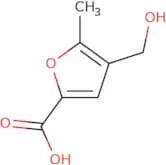
CAS:<p>Versatile small molecule scaffold</p>Formula:C7H8O3Purity:Min. 95%Molecular weight:140.14 g/mol4-(Hydroxymethyl)-5-methylfuran-2-carboxylic acid
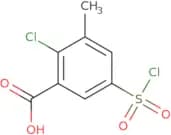
CAS:<p>Versatile small molecule scaffold</p>Formula:C7H8O4Purity:Min. 95%Molecular weight:156.14 g/mol2-Chloro-5-(chlorosulfonyl)-3-methylbenzoic acid
CAS:<p>Versatile small molecule scaffold</p>Formula:C8H6Cl2O4SPurity:Min. 95%Molecular weight:269.1 g/mol5-(Methylcarbamoyl)pentanoic acid
CAS:<p>Versatile small molecule scaffold</p>Formula:C7H13NO3Purity:Min. 95%Molecular weight:159.18 g/mol3-(3-Nitrophenyl)-1,2,4-oxadiazole
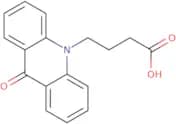
CAS:<p>Versatile small molecule scaffold</p>Formula:C8H5N3O3Purity:Min. 95%Molecular weight:191.14 g/mol4-(9-Oxo-9,10-dihydroacridin-10-yl)butanoic acid
CAS:<p>Versatile small molecule scaffold</p>Formula:C17H15NO3Purity:Min. 95%Molecular weight:281.3 g/molMethyl 2-chloro-2-(2-fluorophenyl)acetate
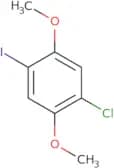
CAS:<p>Versatile small molecule scaffold</p>Formula:C9H8ClFO2Purity:Min. 95%Molecular weight:202.61 g/mol1-Chloro-4-iodo-2,5-dimethoxybenzene
CAS:<p>Versatile small molecule scaffold</p>Formula:C8H8ClIO2Purity:Min. 95%Molecular weight:298.5 g/mol2-Chloro-5-methanesulfonylbenzene-1-sulfonyl chloride
CAS:<p>Versatile small molecule scaffold</p>Formula:C7H6Cl2O4S2Purity:Min. 95%Molecular weight:289.2 g/mol[3-(Carbamoylamino)phenyl]boronic acid
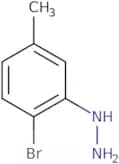
CAS:<p>Versatile small molecule scaffold</p>Formula:C7H9BN2O3Purity:Min. 95%Molecular weight:179.97 g/mol(2-Bromo-5-methylphenyl)hydrazine
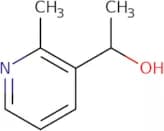
CAS:<p>Versatile small molecule scaffold</p>Formula:C7H9BrN2Purity:Min. 95%Molecular weight:201.06 g/mol1-(2-Methylpyridin-3-yl)ethan-1-ol
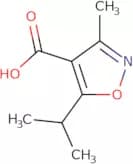
CAS:<p>Versatile small molecule scaffold</p>Formula:C8H11NOPurity:Min. 95%Molecular weight:137.18 g/mol5-Isopropyl-3-methylisoxazole-4-carboxylic acid
CAS:<p>Versatile small molecule scaffold</p>Formula:C8H11NO3Purity:Min. 95%Molecular weight:169.18 g/mol3-(6-Oxopiperidin-2-yl)propanoic acid
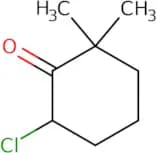
CAS:<p>Versatile small molecule scaffold</p>Formula:C8H13NO3Purity:Min. 95%Molecular weight:171.19 g/mol6-Chloro-2,2-dimethylcyclohexan-1-one
CAS:<p>Versatile small molecule scaffold</p>Formula:C8H13ClOPurity:Min. 95%Molecular weight:160.64 g/mol3-(2-Amino-4-methyl-6-oxo-1,6-dihydropyrimidin-5-yl)propanoic acid
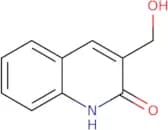
CAS:<p>Versatile small molecule scaffold</p>Formula:C8H11N3O3Purity:Min. 95%Molecular weight:197.19 g/mol3-(Hydroxymethyl)-2(1H)-quinolinone
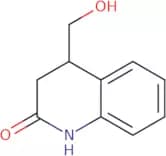
CAS:<p>3-(Hydroxymethyl)-2(1H)-quinolinone is a potent GABA antagonist with a low micromolar range of activity. It is used as a tool to evaluate the profile of GABA receptors and their kinetics, as well as to study the antagonistic activity at these receptors. 3-(Hydroxymethyl)-2(1H)-quinolinone has been shown to have antagonistic properties against glutamate and glycine receptors, although it does not bind to benzodiazepine or barbiturate binding sites. This drug has proapoptotic properties, which relates to its ability to induce neuronal cell death by apoptosis. 3-(Hydroxymethyl)-2(1H)-quinolinone also photolyzes in the presence of light and can be used for photodynamic therapy, which is an effective treatment for brain cancer.</p>Formula:C10H9NO2Purity:Min. 95%Molecular weight:175.19 g/mol4-(Hydroxymethyl)-1,2,3,4-tetrahydroquinolin-2-one
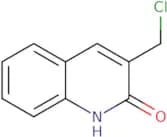
CAS:<p>Versatile small molecule scaffold</p>Formula:C10H11NO2Purity:Min. 95%Molecular weight:177.2 g/mol3-(Chloromethyl)-1,2-dihydroquinolin-2-one
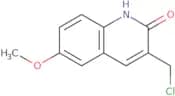
CAS:<p>Versatile small molecule scaffold</p>Formula:C10H8ClNOPurity:Min. 95%Molecular weight:193.63 g/mol3-(Chloromethyl)-6-methoxy-1,2-dihydroquinolin-2-one
CAS:<p>Versatile small molecule scaffold</p>Formula:C11H10ClNO2Purity:Min. 95%Molecular weight:223.65 g/mol2-Chloro-N-methyl-4-nitrobenzamide
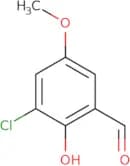
CAS:<p>Versatile small molecule scaffold</p>Formula:C8H7ClN2O3Purity:Min. 95%Molecular weight:214.6 g/mol3-Chloro-2-hydroxy-5-methoxybenzaldehyde
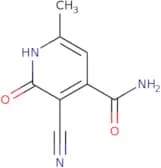
CAS:<p>Versatile small molecule scaffold</p>Formula:C8H7ClO3Purity:Min. 95%Molecular weight:186.59 g/mol3-Cyano-2-hydroxy-6-methylpyridine-4-carboxamide
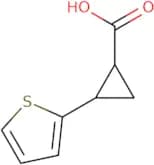
CAS:<p>Versatile small molecule scaffold</p>Formula:C8H7N3O2Purity:Min. 95%Molecular weight:177.16 g/mol2-Thiophen-2-yl-cyclopropanecarboxylic acid
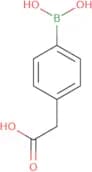
CAS:<p>Versatile small molecule scaffold</p>Formula:C8H8O2SPurity:Min. 95%Molecular weight:168.21 g/mol4-(Carboxymethyl)phenylboronic acid
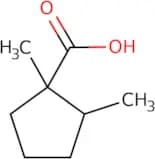
CAS:<p>4-(Carboxymethyl)phenylboronic acid is a corrosion inhibitor that is used in the production of polyvinyl chloride, polyvinyl alcohol, and ethylene glycol. It can be used as an additive to lubricating oils and fuels. 4-(Carboxymethyl)phenylboronic acid has been shown to inhibit the corrosion of lead in hydrochloric acid solutions. This compound has also been shown to inhibit the formation of silicon-sulfide complexes in polystyrene and polyvinyl chloride.</p>Formula:C8H9BO4Purity:Min. 95%Molecular weight:179.97 g/mol1,2-Dimethylcyclopentane-1-carboxylic acid
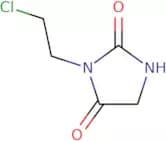
CAS:<p>Versatile small molecule scaffold</p>Formula:C8H14O2Purity:Min. 95%Molecular weight:142.2 g/mol3-(2-Chloroethyl)imidazolidine-2,4-dione
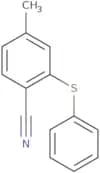
CAS:<p>3-(2-Chloroethyl)imidazolidine-2,4-dione (3CI) belongs to the class of intramolecular corroborating advances. It is a chemical compound that can be used in kinetic analyses of pathways and mechanisms. 3CI has been shown to lower the activation energy for reactions and quantification of benzyl yields. The mechanism of action is through the lowering of activation energies and by quantifying yields.</p>Formula:C5H7ClN2O2Purity:Min. 95%Molecular weight:162.57 g/mol4-Methyl-2-(phenylsulfanyl)benzonitrile
CAS:<p>Versatile small molecule scaffold</p>Formula:C14H11NSPurity:Min. 95%Molecular weight:225.31 g/mol4-Methyl-2-(phenylsulfanyl)benzoic acid
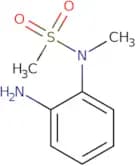
CAS:<p>Versatile small molecule scaffold</p>Formula:C14H12O2SPurity:Min. 95%Molecular weight:244.31 g/molN-(2-Aminophenyl)-N-methylmethanesulfonamide
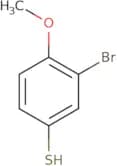
CAS:<p>Versatile small molecule scaffold</p>Formula:C8H12N2O2SPurity:Min. 95%Molecular weight:200.26 g/mol3-Bromo-4-methoxybenzene-1-thiol
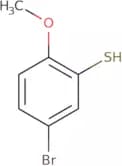
CAS:<p>Versatile small molecule scaffold</p>Formula:C7H7BrOSPurity:Min. 95%Molecular weight:219.1 g/mol5-Bromo-2-methoxybenzene-1-thiol
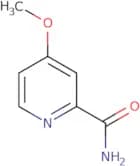
CAS:<p>Versatile small molecule scaffold</p>Formula:C7H7BrOSPurity:Min. 95%Molecular weight:219.1 g/mol4-Methoxy-pyridine-2-carboxylic acid amide
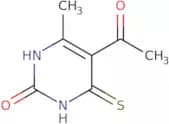
CAS:<p>4-Methoxy-pyridine-2-carboxylic acid amide is a multinuclear compound that can be classified as a pyridine molecule. It has anions that are capable of hydrogen bonding, which is important for its interaction with other molecules. The compound also mimics the properties of benzene and cyclic compounds. 4-Methoxy-pyridine-2-carboxylic acid amide has been shown to have magnetic properties and catalytic activity in the presence of counterion, such as hydrogen ions or sodium hydroxide.</p>Formula:C7H8N2O2Purity:Min. 95%Molecular weight:152.15 g/mol5-Acetyl-6-methyl-4-sulfanyl-1,2-dihydropyrimidin-2-one
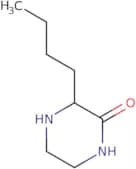
CAS:<p>Versatile small molecule scaffold</p>Formula:C7H8N2O2SPurity:Min. 95%Molecular weight:184.22 g/mol3-Butylpiperazin-2-one
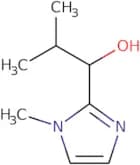
CAS:<p>Versatile small molecule scaffold</p>Formula:C8H16N2OPurity:Min. 95%Molecular weight:156.23 g/mol2-Methyl-1-(1-methyl-1H-imidazol-2-yl)propan-1-ol
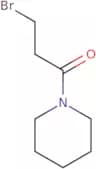
CAS:<p>Versatile small molecule scaffold</p>Formula:C8H14N2OPurity:Min. 95%Molecular weight:154.21 g/mol3-Bromo-1-(piperidin-1-yl)propan-1-one
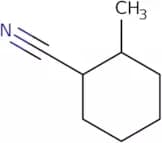
CAS:<p>Versatile small molecule scaffold</p>Formula:C8H14BrNOPurity:Min. 95%Molecular weight:220.11 g/mol2-Methylcyclohexane-1-carbonitrile
CAS:<p>2-Methylcyclohexane-1-carbonitrile is a phenoxide that is formed by the reaction of silicon and carbon. It has an empirical formula of C6H4O2NSi and a molecular weight of 122.14 g/mol. 2-Methylcyclohexane-1-carbonitrile has been found to yield a variety of products, including carbons, phenol, and cyclohexanol.</p>Formula:C8H13NPurity:Min. 95%Molecular weight:123.2 g/mol1-Azabicyclo[3.3.1]nonan-3-one hydrochloride
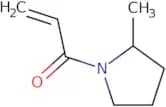
CAS:<p>Versatile small molecule scaffold</p>Formula:C8H14ClNOPurity:Min. 95%Molecular weight:175.7 g/mol1-(2-Methylpyrrolidin-1-yl)prop-2-en-1-one
CAS:<p>Versatile small molecule scaffold</p>Formula:C8H13NOPurity:Min. 95%Molecular weight:139.19 g/mol2-Cyano-N-(pyrimidin-2-yl)acetamide
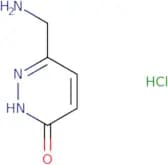
CAS:<p>Versatile small molecule scaffold</p>Formula:C7H6N4OPurity:Min. 95%Molecular weight:162.15 g/mol6-(Aminomethyl)pyridazin-3(2H)-one hydrochloride
CAS:<p>Versatile small molecule scaffold</p>Formula:C5H8ClN3OPurity:Min. 95%Molecular weight:161.59 g/mol(2S)-2-{[(tert-Butoxy)carbonyl]amino}-3-[(tert-butyldimethylsilyl)oxy]propanoic acid
CAS:<p>Versatile small molecule scaffold</p>Formula:C14H29NO5SiPurity:Min. 95%Molecular weight:319.47 g/mol(2S,3R)-2-{[(tert-Butoxy)carbonyl]amino}-3-[(tert-butyldimethylsilyl)oxy]butanoic acid
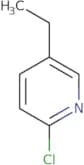
CAS:<p>Versatile small molecule scaffold</p>Formula:C15H31NO5SiPurity:Min. 95%Molecular weight:333.5 g/mol2-Chloro-5-ethylpyridine
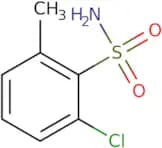
CAS:<p>2-Chloro-5-ethylpyridine is a chemical compound that belongs to the class of heterocyclic compounds. It is used as a catalyst in catalytic reduction and metabolic rate studies. This compound has been found to increase the production of flavopereirine, an important intermediate in the metabolism of plant polyphenols. 2-Chloro-5-ethylpyridine has also been shown to have an agonistic effect on the long term treatment of diabetes mellitus type 2. This agent has been shown to optimize yields and reduce hypoglycemic effects in animal models.</p>Formula:C7H8ClNPurity:Min. 95%Molecular weight:141.6 g/mol2-Chloro-6-methylbenzene-1-sulfonamide
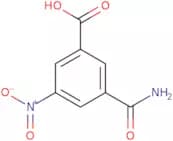
CAS:<p>Versatile small molecule scaffold</p>Formula:C7H8ClNO2SPurity:Min. 95%Molecular weight:205.66 g/mol3-carbamoyl-5-nitrobenzoic acid
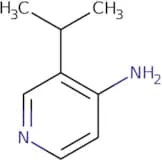
CAS:<p>Versatile small molecule scaffold</p>Formula:C8H6N2O5Purity:Min. 95%Molecular weight:210.15 g/mol3-Isopropylpyridin-4-amine
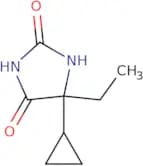
CAS:<p>Versatile small molecule scaffold</p>Formula:C8H12N2Purity:Min. 95%Molecular weight:136.2 g/mol5-Cyclopropyl-5-ethylimidazolidine-2,4-dione
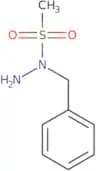
CAS:<p>Versatile small molecule scaffold</p>Formula:C8H12N2O2Purity:Min. 95%Molecular weight:168.19 g/molN-Benzylmethanesulfonohydrazide
CAS:<p>Versatile small molecule scaffold</p>Formula:C8H12N2O2SPurity:Min. 95%Molecular weight:200.26 g/mol5,6,7,8-Tetrahydrophthalazine-1,4-diamine
CAS:<p>Versatile small molecule scaffold</p>Formula:C8H12N4Purity:Min. 95%Molecular weight:164.2 g/mol1-Oxaspiro[4.4]nonan-3-one
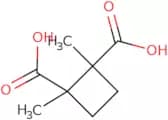
CAS:<p>Versatile small molecule scaffold</p>Formula:C8H12O2Purity:Min. 95%Molecular weight:140.18 g/mol1,2-Dimethylcyclobutane-1,2-dicarboxylic acid
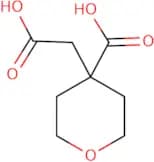
CAS:<p>Versatile small molecule scaffold</p>Formula:C8H12O4Purity:Min. 95%Molecular weight:172.18 g/mol4-(Carboxymethyl)oxane-4-carboxylic acid
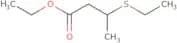
CAS:<p>Versatile small molecule scaffold</p>Formula:C8H12O5Purity:Min. 95%Molecular weight:188.18 g/molEthyl 3-(ethylsulfanyl)butanoate
CAS:<p>Versatile small molecule scaffold</p>Formula:C8H16O2SPurity:Min. 95%Molecular weight:176.28 g/mol1-(Aminomethyl)-N-methylcyclohexan-1-amine
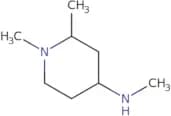
CAS:<p>Versatile small molecule scaffold</p>Formula:C8H18N2Purity:Min. 95%Molecular weight:142.24 g/molN,1,2-Trimethylpiperidin-4-amine
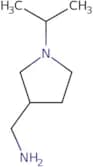
CAS:<p>Versatile small molecule scaffold</p>Formula:C8H18N2Purity:Min. 95%Molecular weight:142.24 g/mol(1-Isopropylpyrrolidin-3-yl)methylamine
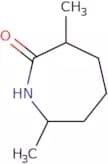
CAS:<p>Versatile small molecule scaffold</p>Formula:C8H18N2Purity:Min. 95%Molecular weight:142.24 g/mol3,7-Dimethylazepan-2-one
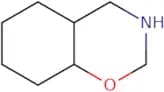
CAS:<p>Versatile small molecule scaffold</p>Formula:C8H15NOPurity:Min. 95%Molecular weight:141.21 g/molOctahydro-2H-1,3-benzoxazine
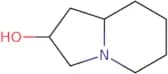
CAS:<p>Octahydro-2H-1,3-benzoxazine is a biomolecule that has been found in nature. It is an unsymmetrical molecule with a hydroxyl group at the terminal position on one of the six carbon atoms. Octahydro-2H-1,3-benzoxazine can be synthesized by metathesis reactions. This molecule can also undergo enantiospecific metathesis reactions and stereoselective carbinol additions.</p>Formula:C8H15NOPurity:Min. 95%Molecular weight:141.21 g/molOctahydroindolizin-2-ol
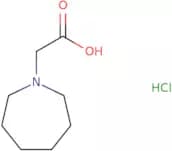
CAS:<p>Octahydroindolizin-2-ol is a bacteriostatic agent that inhibits the synthesis of RNA and DNA, which in turn prevents protein synthesis. It has been shown to be effective against fungus and lactam, as well as unraveling ribonucleotide chains. The chemical analysis of this compound shows that it contains an n-oxide group and a methoxy group. Octahydroindolizin-2-ol is extracted from the Oxytropis plant and has been found to be endophytic (living inside plants). This compound also has anti-viral properties, which are due to its ability to inhibit viral transcription by binding to viral RNA polymerase. Octahydroindolizin-2-ol is chemically related to swainsonine, a toxin produced by the endophytic fungus</p>Formula:C8H15NOPurity:Min. 95%Molecular weight:141.21 g/molAzepan-1-ylacetic acid hydrochloride
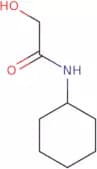
CAS:<p>Versatile small molecule scaffold</p>Formula:C8H16ClNO2Purity:Min. 95%Molecular weight:193.67 g/molN-Cyclohexyl-2-hydroxyacetamide
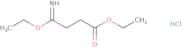
CAS:<p>Versatile small molecule scaffold</p>Formula:C8H15NO2Purity:Min. 95%Molecular weight:157.21 g/molEthyl 4-ethoxy-4-iminobutanoate hydrochloride
CAS:<p>Versatile small molecule scaffold</p>Formula:C8H16ClNO3Purity:Min. 95%Molecular weight:209.67 g/mol5,8-Diazaspiro[2.6]nonane
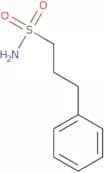
CAS:<p>Versatile small molecule scaffold</p>Formula:C7H14N2Purity:Min. 95%Molecular weight:126.2 g/mol3-Phenylpropane-1-sulfonamide
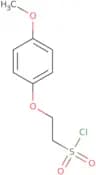
CAS:<p>3-Phenylpropane-1-sulfonamide is a synthetic drug that binds to the receptor tyrosine kinases and blocks the receptor system. It has been shown to be effective in reducing tumor growth in mice, although its mechanism of action remains unclear. 3-Phenylpropane-1-sulfonamide has also been shown to reduce cancer metastasis in mice. This drug binds to the quinoline derivatives and cyclic ligand, which are involved in hyperproliferative disorders such as cancer. 3-Phenylpropane-1-sulfonamide is also known for its ability to inhibit tumor cell proliferation by blocking hyperfunction through inhibition of receptor tyrosine kinases.</p>Formula:C9H13NO2SPurity:Min. 95%Molecular weight:199.27 g/mol2-(4-Methoxyphenoxy)ethane-1-sulfonyl chloride
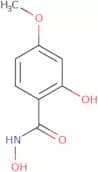
CAS:<p>Versatile small molecule scaffold</p>Formula:C9H11ClO4SPurity:Min. 95%Molecular weight:250.7 g/molN,2-Dihydroxy-4-methoxybenzamide
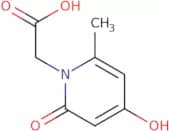
CAS:<p>Versatile small molecule scaffold</p>Formula:C8H9NO4Purity:Min. 95%Molecular weight:183.16 g/mol2-(4-Hydroxy-6-methyl-2-oxo-1,2-dihydropyridin-1-yl)acetic acid
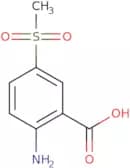
CAS:<p>Versatile small molecule scaffold</p>Formula:C8H9NO4Purity:Min. 95%Molecular weight:183.16 g/mol2-Amino-5-(methylsulfonyl)benzoic acid
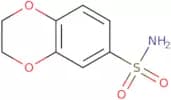
CAS:<p>Versatile small molecule scaffold</p>Formula:C8H9NO4SPurity:Min. 95%Molecular weight:215.22 g/mol2,3-Dihydro-1,4-benzodioxine-6-sulfonamide
CAS:<p>2,3-Dihydro-1,4-benzodioxine-6-sulfonamide is a pyruvate kinase inhibitor that has been shown to modulate the activity of this enzyme in human cancer cells. The inhibition of this enzyme leads to an accumulation of pyruvate and a decrease in ATP, which causes cell death by apoptosis. 2,3-Dihydro-1,4-benzodioxine-6-sulfonamide has also been shown to have anticancer activity against several types of cancer cells. It is not active against bacteria such as Mycobacterium tuberculosis and Clostridium perfringens.</p>Formula:C8H9NO4SPurity:Min. 95%Molecular weight:215.23 g/mol2-(4-Bromophenyl)-2H-1,2,3-triazole-4-carboxylic acid
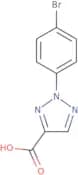
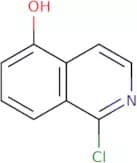
CAS:<p>Versatile small molecule scaffold</p>Formula:C9H6BrN3O2Purity:Min. 95%Molecular weight:268.07 g/mol1-Chloroisoquinolin-5-ol
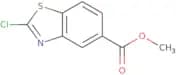
CAS:<p>Versatile small molecule scaffold</p>Formula:C9H6ClNOPurity:Min. 95%Molecular weight:179.6 g/molMethyl 2-chloro-1,3-benzothiazole-5-carboxylate
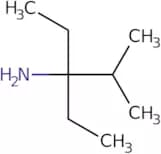
CAS:<p>Versatile small molecule scaffold</p>Formula:C9H6ClNO2SPurity:Min. 95%Molecular weight:227.67 g/mol3-Ethyl-2-methylpentan-3-amine
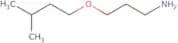
CAS:<p>Versatile small molecule scaffold</p>Formula:C8H19NPurity:Min. 95%Molecular weight:129.24 g/mol3-(3-Methylbutoxy)propan-1-amine
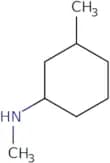
CAS:<p>Versatile small molecule scaffold</p>Formula:C8H19NOPurity:Min. 95%Molecular weight:145.24 g/molN,3-Dimethylcyclohexan-1-amine
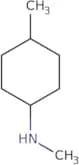
CAS:<p>Versatile small molecule scaffold</p>Formula:C8H17NPurity:Min. 95%Molecular weight:127.23 g/molN,4-Dimethylcyclohexan-1-amine
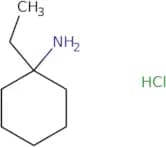
CAS:<p>Versatile small molecule scaffold</p>Formula:C8H17NPurity:Min. 95%Molecular weight:127.23 g/mol1-Ethylcyclohexan-1-amine hydrochloride
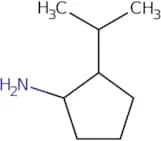
CAS:<p>Versatile small molecule scaffold</p>Formula:C8H18ClNPurity:Min. 95%Molecular weight:163.69 g/mol2-(Propan-2-yl)cyclopentan-1-amine
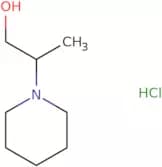
CAS:<p>Versatile small molecule scaffold</p>Formula:C8H17NPurity:Min. 95%Molecular weight:127.23 g/mol2-(Piperidin-1-yl)propan-1-ol hydrochloride
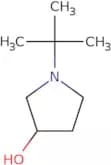
CAS:<p>Versatile small molecule scaffold</p>Formula:C8H18ClNOPurity:Min. 95%Molecular weight:179.69 g/mol1-tert-Butylpyrrolidin-3-ol
CAS:<p>Versatile small molecule scaffold</p>Formula:C8H17NOPurity:Min. 95%Molecular weight:143.23 g/mol2-[4-(2-Hydroxyethyl)-1-piperazinyl]acetamide hydrochloride
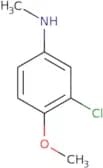
CAS:<p>Versatile small molecule scaffold</p>Formula:C8H17N3O2Purity:Min. 95%Molecular weight:187.24 g/mol3-Chloro-4-methoxy-N-methylaniline
CAS:<p>Versatile small molecule scaffold</p>Formula:C8H10ClNOPurity:Min. 95%Molecular weight:171.62 g/mol1-[2-(4-Bromophenoxy)ethyl]-4-methylpiperazine dihydrochloride
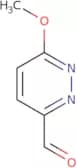
CAS:<p>Versatile small molecule scaffold</p>Formula:C13H21BrCl2N2OPurity:Min. 95%Molecular weight:372.1 g/mol6-Methoxypyridazine-3-carbaldehyde
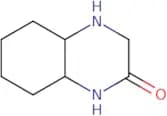
CAS:<p>Versatile small molecule scaffold</p>Formula:C6H6N2O2Purity:Min. 95%Molecular weight:138.12 g/molDecahydroquinoxalin-2-one
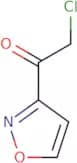
CAS:<p>Decahydroquinoxalin-2-one is a mitochondrial membrane potential stabilizer. It binds to the imine moiety of the mitochondrial membrane and prevents collapse of the mitochondrial membrane potential, which is essential for cell survival. Decahydroquinoxalin-2-one also has an antiproliferative effect on cancer cells. The proapoptotic activity of decahydroquinoxalin-2-one has been shown in some studies; however, this activity has not been demonstrated in all cases, suggesting that it may have other mechanisms of action. Decahydroquinoxalin-2-one is currently being studied as a possible treatment for cancer and Parkinson’s disease.</p>Formula:C8H14N2OPurity:Min. 95%Molecular weight:154.21 g/mol2-Chloro-1-(1,2-oxazol-3-yl)ethan-1-one
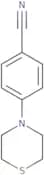
CAS:<p>Versatile small molecule scaffold</p>Formula:C5H4ClNO2Purity:Min. 95%Molecular weight:145.54 g/mol4-(Thiomorpholin-4-yl)benzonitrile
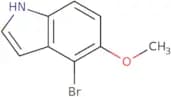
CAS:<p>Versatile small molecule scaffold</p>Formula:C11H12N2SPurity:Min. 95%Molecular weight:204.29 g/mol4-Bromo-5-methoxy-1H-indole
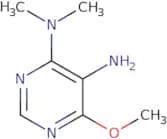
CAS:<p>Versatile small molecule scaffold</p>Formula:C9H8NOBrPurity:Min. 95%Molecular weight:226.06 g/mol6-Methoxy-4-N,4-N-dimethylpyrimidine-4,5-diamine
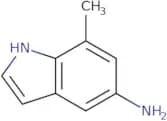
CAS:<p>Versatile small molecule scaffold</p>Formula:C7H12N4OPurity:Min. 95%Molecular weight:168.2 g/mol7-Methyl-1H-indol-5-amine
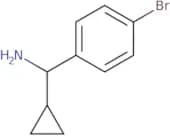
CAS:<p>Versatile small molecule scaffold</p>Formula:C9H10N2Purity:Min. 95%Molecular weight:146.19 g/mola-Cyclopropyl-4-bromo-benzylamine
CAS:<p>Versatile small molecule scaffold</p>Formula:C10H12BrNPurity:Min. 95%Molecular weight:226.11 g/mol2-[5-Amino-3-(pyridin-3-yl)-1H-pyrazol-1-yl]ethan-1-ol
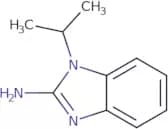
CAS:<p>Versatile small molecule scaffold</p>Formula:C10H12N4OPurity:Min. 95%Molecular weight:204.23 g/mol2-Amino-1-isopropylbenzimidazole
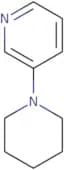
CAS:<p>Versatile small molecule scaffold</p>Formula:C10H13N3Purity:Min. 95%Molecular weight:175.23 g/mol3-(Piperidin-1-yl)pyridine
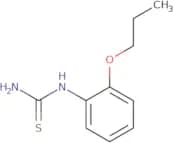
CAS:<p>Versatile small molecule scaffold</p>Formula:C10H14N2Purity:Min. 95%Molecular weight:162.23 g/mol(2-Propoxyphenyl)thiourea
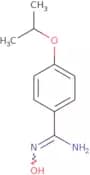
CAS:<p>Versatile small molecule scaffold</p>Formula:C10H14N2OSPurity:Min. 95%Molecular weight:210.3 g/molN'-Hydroxy-4-(propan-2-yloxy)benzene-1-carboximidamide
CAS:<p>Versatile small molecule scaffold</p>Formula:C10H14N2O2Purity:Min. 95%Molecular weight:194.23 g/mol2-Ethyl-N,N-dimethyl-5-nitrobenzene-1-sulfonamide
CAS:<p>Versatile small molecule scaffold</p>Formula:C10H14N2O4SPurity:Min. 95%Molecular weight:258.3 g/mol2-Amino-4-(morpholine-4-sulfonyl)phenol
CAS:<p>Versatile small molecule scaffold</p>Formula:C10H14N2O4SPurity:Min. 95%Molecular weight:258.3 g/mol3-Methyl-3-phenylazetidine hydrochloride
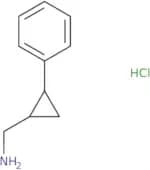
CAS:<p>Versatile small molecule scaffold</p>Formula:C10H14ClNPurity:Min. 95%Molecular weight:183.68 g/mol(2-Phenylcyclopropyl)methanamine hydrochloride
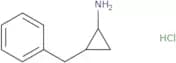
CAS:<p>Versatile small molecule scaffold</p>Formula:C10H14ClNPurity:Min. 95%Molecular weight:183.68 g/mol2-Benzylcyclopropan-1-amine hydrochloride
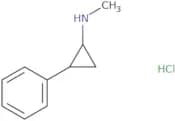
CAS:<p>Versatile small molecule scaffold</p>Formula:C10H14ClNPurity:Min. 95%Molecular weight:183.68 g/molN-Methyl-2-phenylcyclopropan-1-amine hydrochloride
CAS:<p>Versatile small molecule scaffold</p>Formula:C10H14ClNPurity:Min. 95%Molecular weight:183.68 g/mol2-Methyl-2-phenylcyclopropan-1-amine hydrochloride
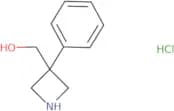
CAS:<p>Versatile small molecule scaffold</p>Formula:C10H14ClNPurity:Min. 95%Molecular weight:183.68 g/mol(3-Phenylazetidin-3-yl)methanol hydrochloride
CAS:<p>Versatile small molecule scaffold</p>Formula:C10H14ClNOPurity:Min. 95%Molecular weight:199.68 g/mol5-Amino-5,6,7,8-tetrahydronaphthalen-1-ol
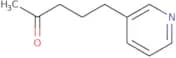
CAS:<p>Versatile small molecule scaffold</p>Formula:C10H13NOPurity:Min. 95%Molecular weight:163.22 g/mol5-(Pyridin-3-yl)pentan-2-one
CAS:<p>Versatile small molecule scaffold</p>Formula:C10H13NOPurity:Min. 95%Molecular weight:163.22 g/mol1-Phenylpyrrolidin-3-ol
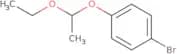
CAS:<p>Adriamycin, also known as 1-Phenylpyrrolidin-3-ol, is a chemotherapy drug that is used to treat various types of cancer. It is classified as a chemotherapeutic agent and is an inhibitor of DNA synthesis. Adriamycin has been shown to be active against human fibrosarcoma, leukemia HL-60, and promyelocytic leukemia cells in vitro. In addition, it has been found to be effective against resistant T-cell leukemia and lymphocytic leukemia cells. This drug inhibits the proliferation of tumor cells by binding to DNA and preventing RNA synthesis or protein synthesis in the cell's ribosomes. Adriamycin also binds to leucovorin, which is a form of folic acid that prevents its toxicity in the body.</p>Formula:C10H13NOPurity:Min. 95%Molecular weight:163.22 g/mol1-Bromo-4-(1-ethoxyethoxy)benzene
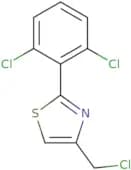
CAS:<p>Versatile small molecule scaffold</p>Formula:C10H13BrO2Purity:Min. 95%Molecular weight:245.11 g/mol4-(Chloromethyl)-2-(2,6-dichlorophenyl)-1,3-thiazole
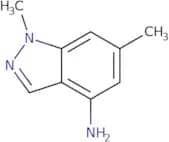
CAS:<p>Versatile small molecule scaffold</p>Formula:C10H6Cl3NSPurity:Min. 95%Molecular weight:278.6 g/mol1,6-Dimethyl-1H-indazol-4-amine
CAS:<p>Versatile small molecule scaffold</p>Formula:C9H11N3Purity:Min. 95%Molecular weight:161.2 g/mol(1H-Indol-2-ylmethyl)methylamine
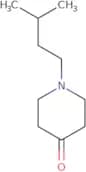
CAS:<p>Versatile small molecule scaffold</p>Formula:C10H12N2Purity:Min. 95%Molecular weight:160.22 g/mol1-Isopentyltetrahydro-4(1H)-pyridinone
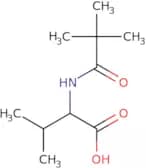
CAS:<p>Versatile small molecule scaffold</p>Formula:C10H19NOPurity:Min. 95%Molecular weight:169.26 g/mol2-(2,2-Dimethylpropanamido)-3-methylbutanoic acid
CAS:<p>Versatile small molecule scaffold</p>Formula:C10H19NO3Purity:Min. 95%Molecular weight:201.26 g/mol2-Bromo-1-(1-pyrrolidinyl)-1-ethanone
CAS:<p>2-Bromo-1-(1-pyrrolidinyl)-1-ethanone (2BP) is an acetylcholine analog that inhibits the cck-a, or acetylcholine receptor. It is a prodrug that is converted by thiourea into the active 2BP analog. 2BP has been shown to inhibit the binding of both nicotinic and muscarinic acetylcholine receptors in rat brain tissue. The affinity of this drug for the human cck-a receptor was found to be approximately 10 times less than for rat cck-a receptor. This indicates that 2BP may not be effective in humans because it does not bind well to the human receptor.</p>Formula:C6H10BrNOPurity:Min. 95%Molecular weight:192.06 g/mol(2S)-2-(Carbamoylamino)-3-(4-hydroxyphenyl)propanoic acid
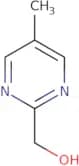
CAS:<p>2-Amino-3-(4-hydroxyphenyl)propanoic acid is a proteinogenic amino acid that is essential for humans and other animals. It can be synthesized by the human body in sufficient quantities from the amino acid phenylalanine, so it is not considered an essential dietary component. This amino acid can also be found in dairy products, eggs, soybeans, and peanuts. 2-Amino-3-(4-hydroxyphenyl)propanoic acid (2S)-2-(Carbamoylamino)-3-(4-hydroxyphenyl)propanoic acid) has been shown to reduce insulin resistance in diabetic rats. In addition, it has been shown to increase the uptake of glucose into muscle cells. 2S)-2-(Carbamoylamino)-3-(4-hydroxyphenyl)propanoic acid is formed as a result of carbamylation of lys</p>Formula:C10H12N2O4Purity:Min. 95%Molecular weight:224.21 g/mol(5-Methylpyrimidin-2-yl)methanol
CAS:<p>Versatile small molecule scaffold</p>Formula:C6H8N2OPurity:Min. 95%Molecular weight:124.14 g/moltert-butyl N-[3-(benzylamino)propyl]carbamate
CAS:<p>Versatile small molecule scaffold</p>Formula:C15H24N2O2Purity:Min. 95%Molecular weight:264.4 g/mol6-Amino-5-methylquinolin-2-ol
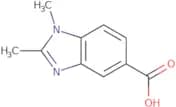
CAS:<p>Versatile small molecule scaffold</p>Formula:C10H10N2OPurity:Min. 95%Molecular weight:174.2 g/mol1,2-Dimethylbenzodiazole-5-carboxylic acid
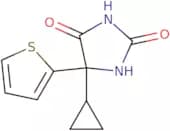
CAS:<p>Versatile small molecule scaffold</p>Formula:C10H10N2O2Purity:Min. 95%Molecular weight:190.2 g/mol5-Cyclopropyl-5-(thiophen-2-yl)imidazolidine-2,4-dione
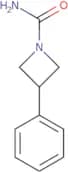
CAS:<p>Versatile small molecule scaffold</p>Formula:C10H10N2O2SPurity:Min. 95%Molecular weight:222.27 g/mol3-Phenylazetidine-1-carboxamide
CAS:<p>Versatile small molecule scaffold</p>Formula:C10H12N2OPurity:Min. 95%Molecular weight:176.2 g/molMethyl 1,2,3,4-tetrahydroquinoxaline-6-carboxylate
CAS:<p>Versatile small molecule scaffold</p>Formula:C10H12N2O2Purity:Min. 95%Molecular weight:192.21 g/mol2-Chloro-5-(propane-2-sulfonyl)benzoic acid
CAS:<p>Versatile small molecule scaffold</p>Formula:C10H11ClO4SPurity:Min. 95%Molecular weight:262.71 g/molN-[(3,4-Dichlorophenyl)methyl]cyclopropanamine
CAS:<p>Versatile small molecule scaffold</p>Formula:C10H11Cl2NPurity:Min. 95%Molecular weight:216.1 g/mol4-Oxo-3,4-dihydro-2H-1-benzopyran-6-carboxylic acid
CAS:<p>Versatile small molecule scaffold</p>Formula:C10H8O4Purity:Min. 95%Molecular weight:192.17 g/molN-(2-Furylmethyl)-N-(thien-2-ylmethyl)amine
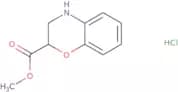
CAS:<p>Versatile small molecule scaffold</p>Formula:C10H11NOSPurity:Min. 95%Molecular weight:193.27 g/molMethyl 3,4-dihydro-2H-1,4-benzoxazine-2-carboxylate hydrochloride
CAS:<p>Versatile small molecule scaffold</p>Formula:C10H12ClNO3Purity:Min. 95%Molecular weight:229.66 g/molMethyl 2,3-dimethyl-5-nitrobenzoate
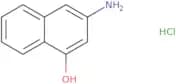
CAS:<p>Versatile small molecule scaffold</p>Formula:C10H11NO4Purity:Min. 95%Molecular weight:209.2 g/mol3-Aminonaphthalen-1-ol hydrochloride
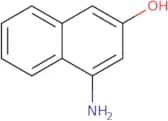
CAS:<p>Versatile small molecule scaffold</p>Formula:C10H10ClNOPurity:Min. 95%Molecular weight:195.64 g/mol4-Aminonaphthalen-2-ol
CAS:<p>4-Aminonaphthalen-2-ol is a synthetic reagent that is used in organic chemistry. It can be prepared from the reaction of chlorides and benzofurans, which are synthesized from an electrophilic aromatic substitution reaction with sodium hydroxide. The efficiency of this process can be enhanced by using imidazole as a solvent or as a catalyst for the reaction. 4-Aminonaphthalen-2-ol is also used in the synthesis of imidazole derivatives, such as 2-(4-aminophenyl)imidazo[1,2-a]pyridine.</p>Formula:C10H9NOPurity:Min. 95%Molecular weight:159.18 g/mol5-Methyl-4-phenyl-2,3-dihydro-1,3-thiazol-2-one
CAS:<p>Versatile small molecule scaffold</p>Formula:C10H9NOSPurity:Min. 95%Molecular weight:191.25 g/mol4-Cyano-3,5-dimethylbenzoic acid
CAS:<p>Versatile small molecule scaffold</p>Formula:C10H9NO2Purity:Min. 95%Molecular weight:175.18 g/mol5-Methoxyquinolin-1-ium-1-olate
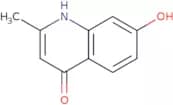
CAS:<p>Versatile small molecule scaffold</p>Formula:C10H9NO2Purity:Min. 95%Molecular weight:175.2 g/mol2-Methyl-4,7-quinolinediol
CAS:<p>Versatile small molecule scaffold</p>Formula:C10H9NO2Purity:Min. 95%Molecular weight:175.18 g/mol(4-Propoxyphenyl)methanol
CAS:<p>4-Propoxyphenyl Methanol is a nonnutritive sweetener that is approximately 200 times sweeter than sucrose. It is used as an additive to sugar substitutes, tabletop sweeteners, and soft drinks. 4-Propoxyphenyl Methanol is not metabolized by the body and has no known health risks.</p>Formula:C10H14O2Purity:Min. 95%Molecular weight:166.22 g/mol2-Bromo-1-{1H-pyrrolo[2,3-b]pyridin-3-yl}ethan-1-one
CAS:Controlled Product<p>Versatile small molecule scaffold</p>Formula:C9H7BrN2OPurity:Min. 95%Molecular weight:239.07 g/mol2-{1H-Pyrrolo[2,3-b]pyridin-3-yl}ethan-1-ol
CAS:<p>Versatile small molecule scaffold</p>Formula:C9H10N2OPurity:Min. 95%Molecular weight:162.19 g/mol2-Ethoxypentanoic acid
CAS:<p>Versatile small molecule scaffold</p>Formula:C7H14O3Purity:Min. 95%Molecular weight:146.18 g/molmethyl 5-(aminomethyl)-2-chlorobenzoate hydrochloride
CAS:<p>Versatile small molecule scaffold</p>Formula:C9H11Cl2NO2Purity:Min. 95%Molecular weight:236.1 g/molOctahydropentalene-2-carboxamides
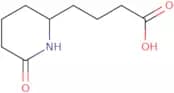
CAS:<p>Versatile small molecule scaffold</p>Formula:C9H15NOPurity:Min. 95%Molecular weight:153.2 g/mol4-(6-Oxopiperidin-2-yl)butanoic acid
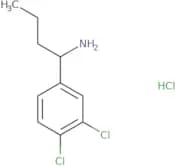
CAS:<p>Versatile small molecule scaffold</p>Formula:C9H15NO3Purity:Min. 95%Molecular weight:185.22 g/mol1-(3,4-Dichlorophenyl)butan-1-amine hydrochloride
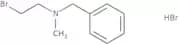
CAS:<p>Versatile small molecule scaffold</p>Formula:C10H14Cl3NPurity:Min. 95%Molecular weight:254.6 g/molBenzyl(2-bromoethyl)methylamine hydrobromide
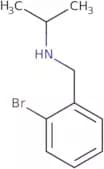
CAS:<p>Versatile small molecule scaffold</p>Formula:C10H15Br2NPurity:Min. 95%Molecular weight:309.04 g/molN-(2-Bromobenzyl)propan-2-amine
CAS:<p>Versatile small molecule scaffold</p>Formula:C10H14BrNPurity:Min. 95%Molecular weight:228.13 g/mol

![1-[2-(2-Methylphenoxy)ethyl]piperazine](/_next/image/?url=https%3A%2Fstatic.cymitquimica.com%2Fproducts%2F3D%2Fthumb-webp%2FQCA48903.webp&w=3840&q=75)
![3,3-Dimethyl-1,5-dioxa-9-azaspiro[5.5]undecane](/_next/image/?url=https%3A%2Fstatic.cymitquimica.com%2Fproducts%2F3D%2Fthumb-webp%2FQCA53586.webp&w=3840&q=75)
![[(2R)-4,4-difluoropyrrolidin-2-yl]methanol hydrochloride](/_next/image/?url=https%3A%2Fstatic.cymitquimica.com%2Fproducts%2F3D%2Fthumb-webp%2FQCC59371.webp&w=3840&q=75)
![4-Methoxy-2,6-dimethyl-N-[(piperidin-3-yl)methyl]benzene-1-sulfonamide hydrochloride](/_next/image/?url=https%3A%2Fstatic.cymitquimica.com%2Fproducts%2F3D%2Fthumb-webp%2FQCD85068.webp&w=3840&q=75)




![N-[(1H-Pyrazol-3-yl)methyl]acetamide](/_next/image/?url=https%3A%2Fstatic.cymitquimica.com%2Fproducts%2F3D%2Fthumb-webp%2FQDA03058.webp&w=3840&q=75)





![[3-(Carbamoylamino)phenyl]boronic acid](/_next/image/?url=https%3A%2Fstatic.cymitquimica.com%2Fproducts%2F3D%2Fthumb-webp%2FQDA08466.webp&w=3840&q=75)




![1-Azabicyclo[3.3.1]nonan-3-one hydrochloride](/_next/image/?url=https%3A%2Fstatic.cymitquimica.com%2Fproducts%2F3D%2Fthumb-webp%2FQDA15482.webp&w=3840&q=75)

![(2S)-2-{[(tert-Butoxy)carbonyl]amino}-3-[(tert-butyldimethylsilyl)oxy]propanoic acid](/_next/image/?url=https%3A%2Fstatic.cymitquimica.com%2Fproducts%2F3D%2Fthumb-webp%2FQDA18125.webp&w=3840&q=75)
![(2S,3R)-2-{[(tert-Butoxy)carbonyl]amino}-3-[(tert-butyldimethylsilyl)oxy]butanoic acid](/_next/image/?url=https%3A%2Fstatic.cymitquimica.com%2Fproducts%2F3D%2Fthumb-webp%2FQDA18126.webp&w=3840&q=75)
![1-Oxaspiro[4.4]nonan-3-one](/_next/image/?url=https%3A%2Fstatic.cymitquimica.com%2Fproducts%2F3D%2Fthumb-webp%2FQDA19932.webp&w=3840&q=75)

![5,8-Diazaspiro[2.6]nonane](/_next/image/?url=https%3A%2Fstatic.cymitquimica.com%2Fproducts%2F3D%2Fthumb-webp%2FQDA20753.webp&w=3840&q=75)
![2-[4-(2-Hydroxyethyl)-1-piperazinyl]acetamide hydrochloride](/_next/image/?url=https%3A%2Fstatic.cymitquimica.com%2Fproducts%2F3D%2Fthumb-webp%2FQDA22811.webp&w=3840&q=75)
![1-[2-(4-Bromophenoxy)ethyl]-4-methylpiperazine dihydrochloride](/_next/image/?url=https%3A%2Fstatic.cymitquimica.com%2Fproducts%2F3D%2Fthumb-webp%2FQDA23668.webp&w=3840&q=75)
![2-[5-Amino-3-(pyridin-3-yl)-1H-pyrazol-1-yl]ethan-1-ol](/_next/image/?url=https%3A%2Fstatic.cymitquimica.com%2Fproducts%2F3D%2Fthumb-webp%2FQDA87078.webp&w=3840&q=75)








![tert-butyl N-[3-(benzylamino)propyl]carbamate](/_next/image/?url=https%3A%2Fstatic.cymitquimica.com%2Fproducts%2F3D%2Fthumb-webp%2FQDA91408.webp&w=3840&q=75)


![N-[(3,4-Dichlorophenyl)methyl]cyclopropanamine](/_next/image/?url=https%3A%2Fstatic.cymitquimica.com%2Fproducts%2F3D%2Fthumb-webp%2FQDA91975.webp&w=3840&q=75)






![2-Bromo-1-{1H-pyrrolo[2,3-b]pyridin-3-yl}ethan-1-one](/_next/image/?url=https%3A%2Fstatic.cymitquimica.com%2Fproducts%2F3D%2Fthumb-webp%2FQDA92973.webp&w=3840&q=75)
![2-{1H-Pyrrolo[2,3-b]pyridin-3-yl}ethan-1-ol](/_next/image/?url=https%3A%2Fstatic.cymitquimica.com%2Fproducts%2F3D%2Fthumb-webp%2FQDA92976.webp&w=3840&q=75)